




1. Why many tourists are interested in the best time to visit Fansipan
1.1. Fansipan's scenery changes distinctly with each season of the year
Unlike many tourist destinations that are only beautiful during a specific period, Fansipan is a place where the landscape changes very distinctly with the seasons. Thanks to its location at an altitude of 3,143m amidst the Hoang Lien Son Mountains, it possesses the characteristic climate of the Northwest highlands with temperatures much lower than in the plains.
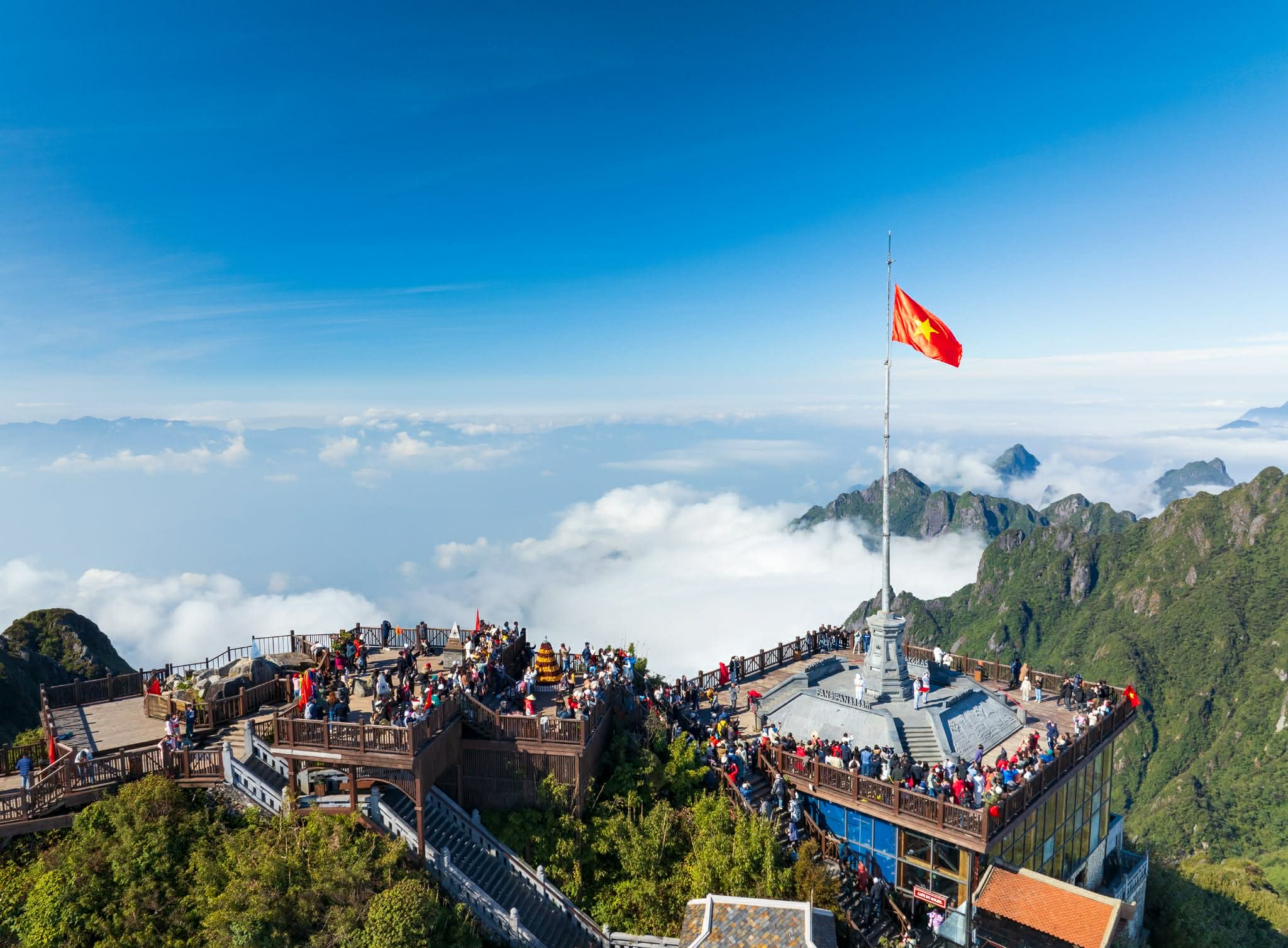
Each season of the year, Fansipan brings its own beauty. (Source: Collected)
At each time of the year, Fansipan peak dons a different color. Spring is full of peach blossoms and bustling festivals. Summer features floating white seas of clouds and a pleasant cool climate. Autumn brings a clear blue sky and the best views of the year. Meanwhile, winter impresses with a mystical misty layer and sometimes rare frost or snowfall in Vietnam.
1.2. Each period offers a different pilgrimage experience
More than just a famous check-in spot, Fansipan is also a large spiritual cultural complex amidst the northwestern skies. Therefore, many people pay special attention to the space and emotions experienced during their pilgrimage.
Some wish to visit in early spring to pray for peace and immerse themselves in the spiritual festival atmosphere on the sacred peak. Others prefer a less crowded time to leisurely walk the La Han path, hear temple bells ringing amidst the clouds, or stand silently before the Great Buddha Statue of Amitabha in a tranquil space. Thus, choosing the best time to visit Fansipan also depends on each tourist's personal emotions and desires.
1.3. Weather significantly affects cloud hunting and sightseeing experiences
Due to its altitude of over 3,000m, the weather at Fansipan changes quite rapidly within a day. Some mornings offer clear skies with vast, beautiful seas of clouds, but just a few hours later, mist can cover the paths.
If you visit at the right time, tourists can easily admire the panoramic view of the Hoang Lien Son mountain range, Muong Hoa valley, or the white sea of clouds below the mountain. Conversely, if the weather is bad, visibility can be significantly limited. This is also why many people research thoroughly before planning their trip to Fansipan.
👉 BOOK FANSIPAN CABLE CAR TICKETS NOW HERE!
2. Fansipan in Spring Experience
2.1. Early Year Festival Atmosphere on Fansipan Peak
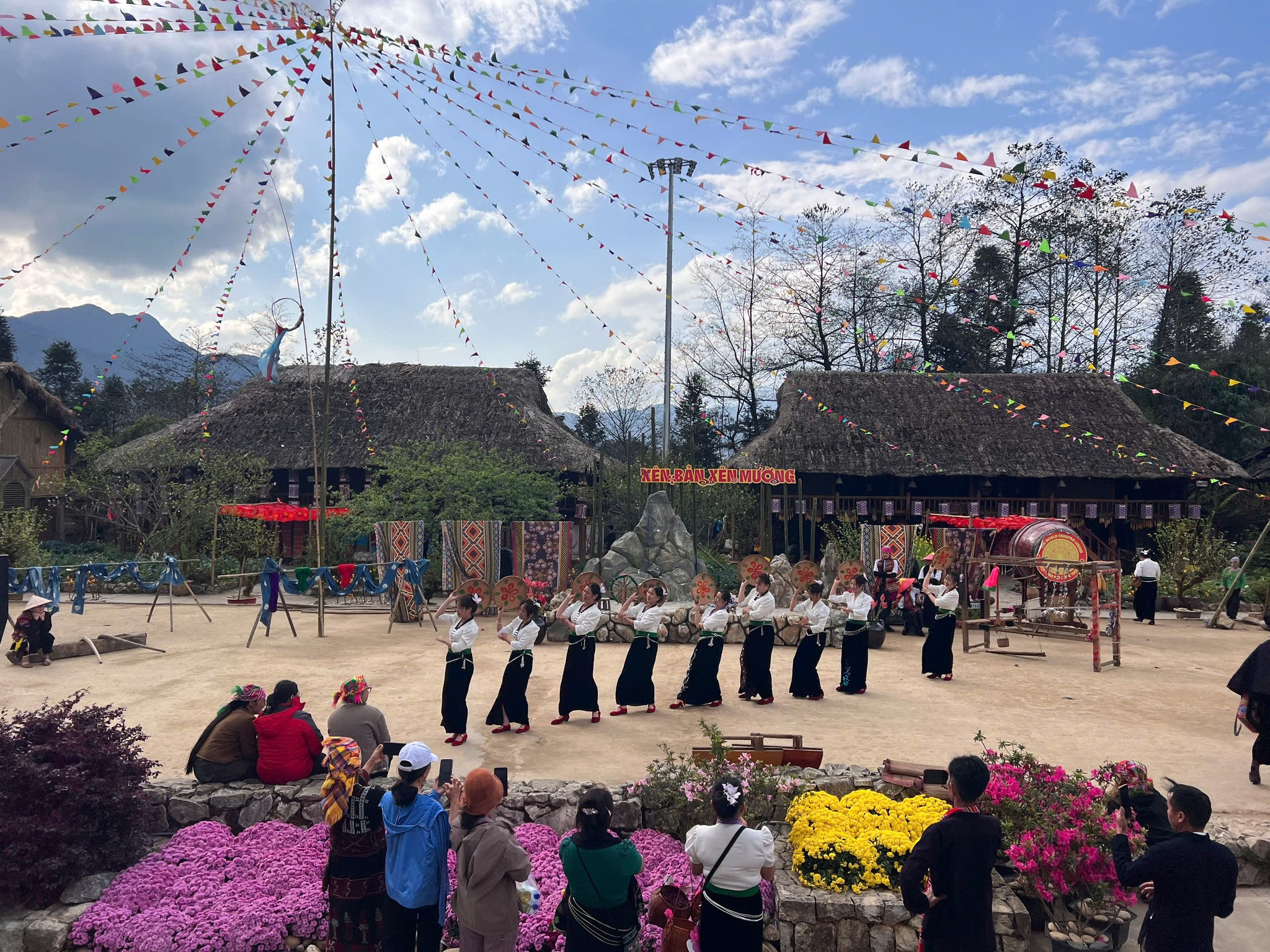
The lively atmosphere of the early spring festival at Fansipan attracts a large number of tourists. (Source: Collected)
From approximately the first to the third lunar month, Fansipan enters its biggest festival season of the year. Visitors can participate in incense offering and prayer ceremonies for peace at Bao An Zen Pagoda, Bich Van Zen Pagoda, or Kim Son Bao Thang Pagoda amidst the floating sea of clouds. The early spring atmosphere makes the pilgrimage journey even more special as groups of devout people walk the Arhat path with temple bells echoing through the mountains and forests. For many families, this is the most meaningful time to pray for peace and a prosperous new year.
2.2. Flower season blooms vibrantly amidst the Northwest mountains
Spring is also when Fansipan is filled with the colors of flowers. Peach blossoms, plum blossoms, and many other highland flowers begin to bloom along the mountain slopes. The space, both sacred and poetic, creates a very special feeling that few places can offer. Especially around March, many areas at Sun World Fansipan Legend enter the season of roses and rhododendrons in full bloom. The vibrant colors standing out against the green mountains and white clouds make Fansipan's scenery even more captivating.
3. Experiencing Fansipan in Summer
3.1. Cool air amidst the Northwest summer
While many places in the North enter the hot and sunny period, Fansipan enjoys pleasant weather with average temperatures ranging from 18 to 25 degrees Celsius. This is why summer is a favorite choice for many families and groups of tourists looking for relaxation combined with spiritual visits. The air on the mountaintop is always cool, especially in the early morning and late afternoon. Breezes carrying moisture from the sea of clouds make the journey through spiritual sites much more relaxing.
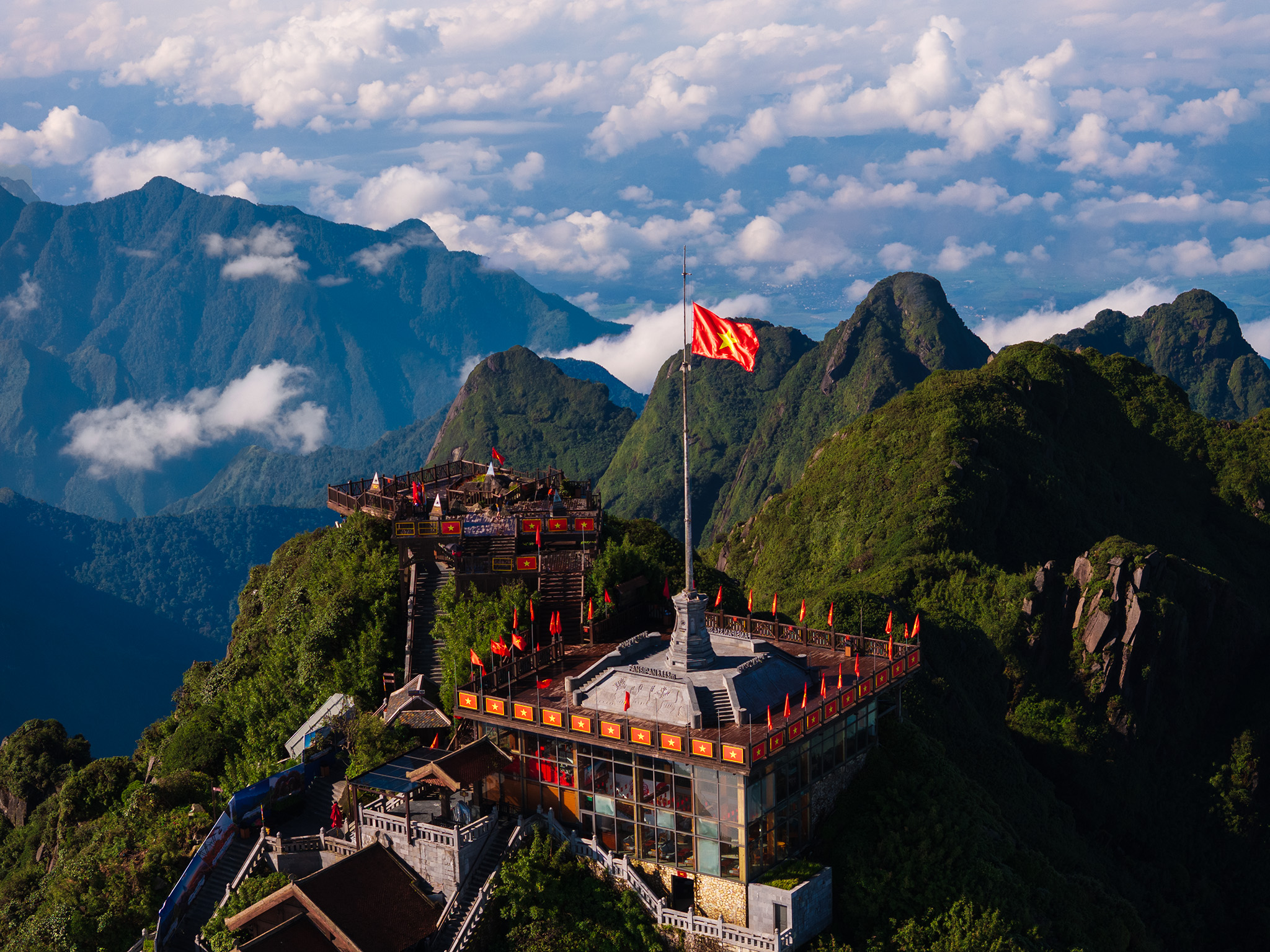
Cool and fresh air on Fansipan peak during summer days. (Source: Collected)
3.2. Opportunity to hunt for beautiful sea of clouds
After short summer rains, Fansipan often features a thick and beautiful sea of clouds. From the cable car cabin, visitors can see layers of white clouds drifting leisurely among the Hoang Lien Son mountain ranges, creating an incredibly impressive scene. This is also the time many people choose to take check-in photos at the Fansipan landmark or in front of the Great Buddha Statue of Amitabha amidst the majestic cloud and sky scenery.
4. Experiencing Fansipan in Autumn
4.1. Clear skies and the best visibility of the year
From September to November is considered the period with the most stable weather at Fansipan. There are fewer rains, the air is dry, and the clear blue sky allows for much farther visibility compared to other seasons.
This is when visitors can fully admire the beauty of the Hoang Lien Son mountain range, Muong Hoa valley, and successive layers of mountains stretching to the horizon. Many photographers also choose autumn to capture the best photos at Fansipan thanks to the stable light and clear scenery.
4.2. Emotional Northwestern golden season
Autumn is also the time when the terraced fields in Sa Pa enter the ripe rice season. From the cable car cabin or high points at Fansipan, visitors can see golden terraced fields winding around the mountainsides, creating the characteristic scenery of the Northwest. The combination of golden rice season, blue sky, and white sea of clouds leads many to believe this is the most beautiful time to visit Fansipan if one wants to both pilgrimage and admire nature.
Compared to spring or summer holidays, the number of tourists in autumn is usually more pleasant. As a result, visitors can leisurely stroll through Bich Van Zen Monastery, the Great Buddha Pagoda, or the Arhat path without excessive crowds. The quiet space amidst the mountains and forests also makes the pilgrimage journey more profound and emotional.
5. Experiencing Fansipan in Winter
5.1. Sea of fog covering the mountain peak
From December to January, Fansipan enters the coldest season of the year. Dense fog appears, making the entire spiritual complex seem immersed in a mystical space. Ancient temple roofs, Buddha statues, or dewy stone steps create a very different feeling compared to other seasons. For many visitors, this is the time when Fansipan carries its most distinct sacredness.
5.2. Opportunity to see frost and snowfall
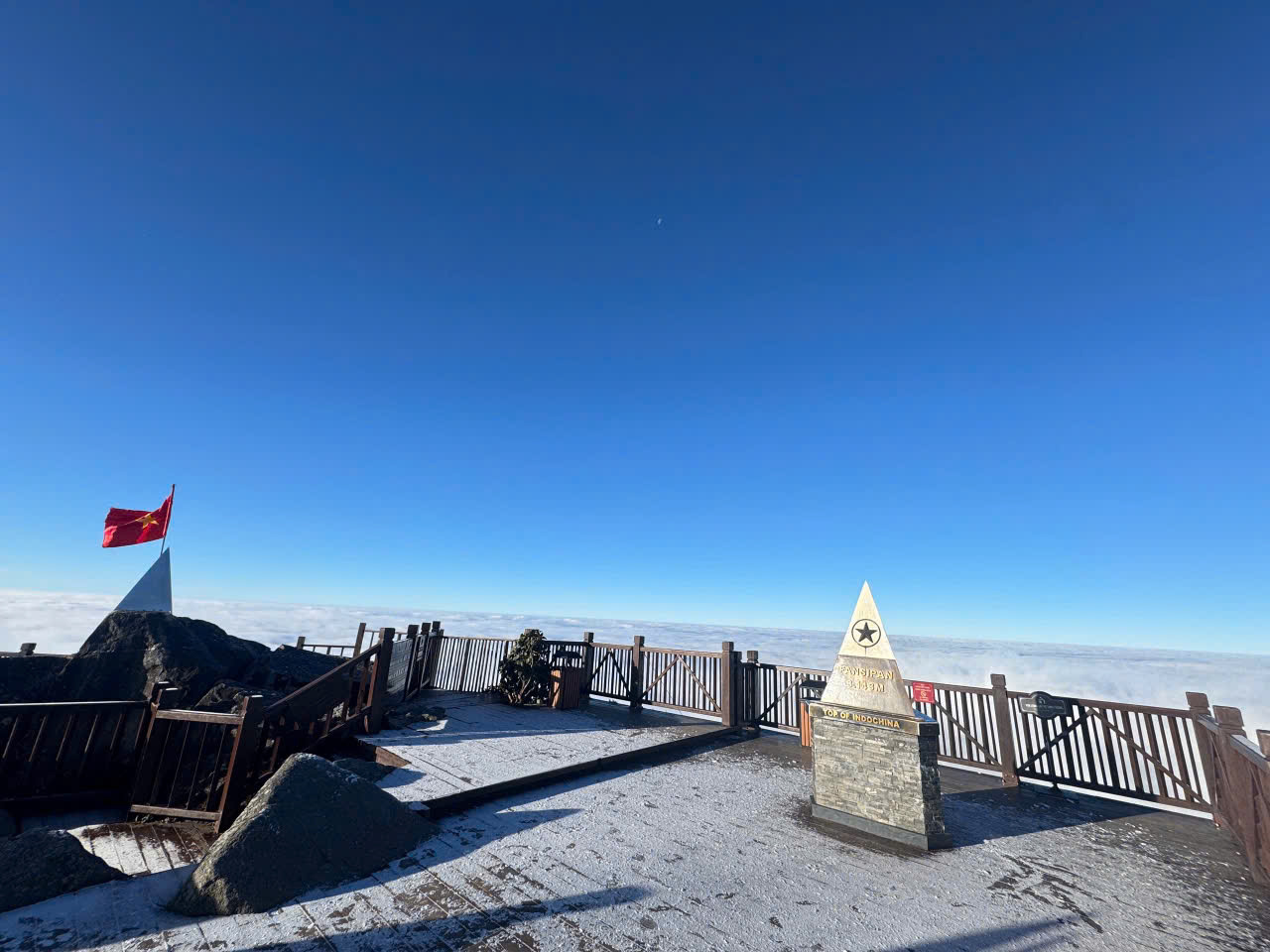
Frosty scenery appears on Fansipan peak during cold winter air outbreaks. (Source: Collected)
During strong cold spells, Fansipan peak sometimes experiences frost and snow. This is a rare phenomenon in Vietnam, thus attracting many tourists to experience it. The scenery of spiritual structures covered with a layer of white frost amidst the mountains and forests of the Northwest creates a beauty that is both majestic and special.
6. Unmissable Experiences at Sun World Fansipan Legend Across Seasons
6.1. Traveling by Fansipan Cable Car
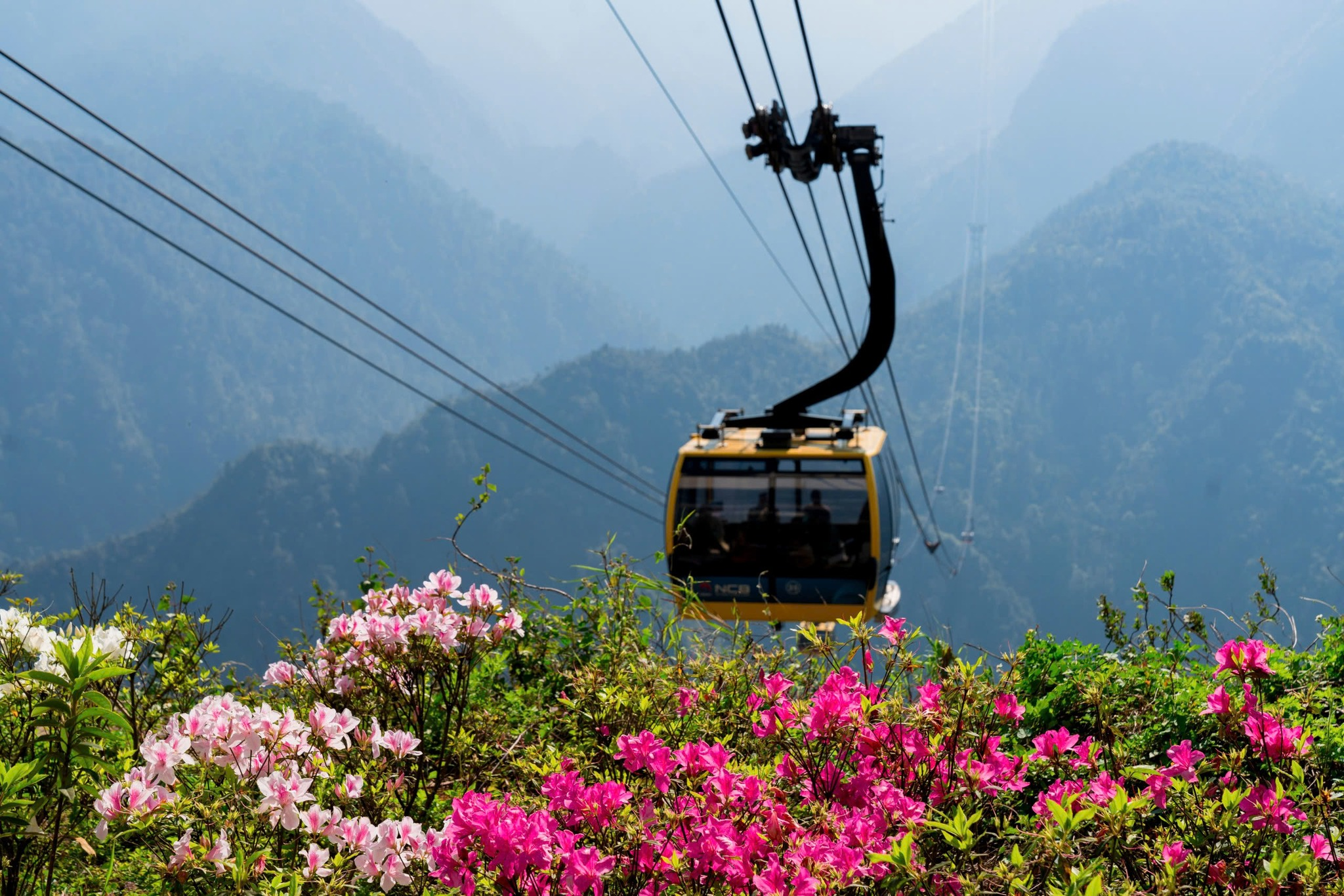
Fansipan Cable Car takes visitors across the majestic Hoang Lien Son valley. (Source: Collected)
The journey to conquer Fansipan by cable car is always an experience that impresses many tourists from the very first moments. In just about 15 minutes in the cabin, visitors can pass through layers of white clouds and capture the majestic beauty of the Hoang Lien Son mountain range from above. Through the cabin's transparent glass, the entire Muong Hoa valley appears soft with terraced fields stretching along the mountainside, interspersed with small villages hidden in the clouds.
👉 BOOK FANSIPAN CABLE CAR TICKETS HERE!
6.2. Muong Hoa Mountain Train
The Muong Hoa mountain train is one of the special constructions of Sun World Fansipan Legend, connecting the central area of Sapa with the Hoang Lien cable car station. The route is about 2 km long and is designed in a classic European style, creating a luxurious and romantic feeling amidst the Northwest mountains.
The journey on the train lasts only about 6 minutes but is enough for visitors to feel the unique beauty of the Muong Hoa valley at different times of the year. Early morning is the time most people love because the thin mist covers the valley, creating a dreamy, picturesque scene. As the train slowly glides past green hillsides and terraced fields, visitors feel as if they are stepping onto a cloud-piercing train amidst the vast Hoang Lien Son range.
6.3. Check in at Fansipan Peak and the National Flag Tower
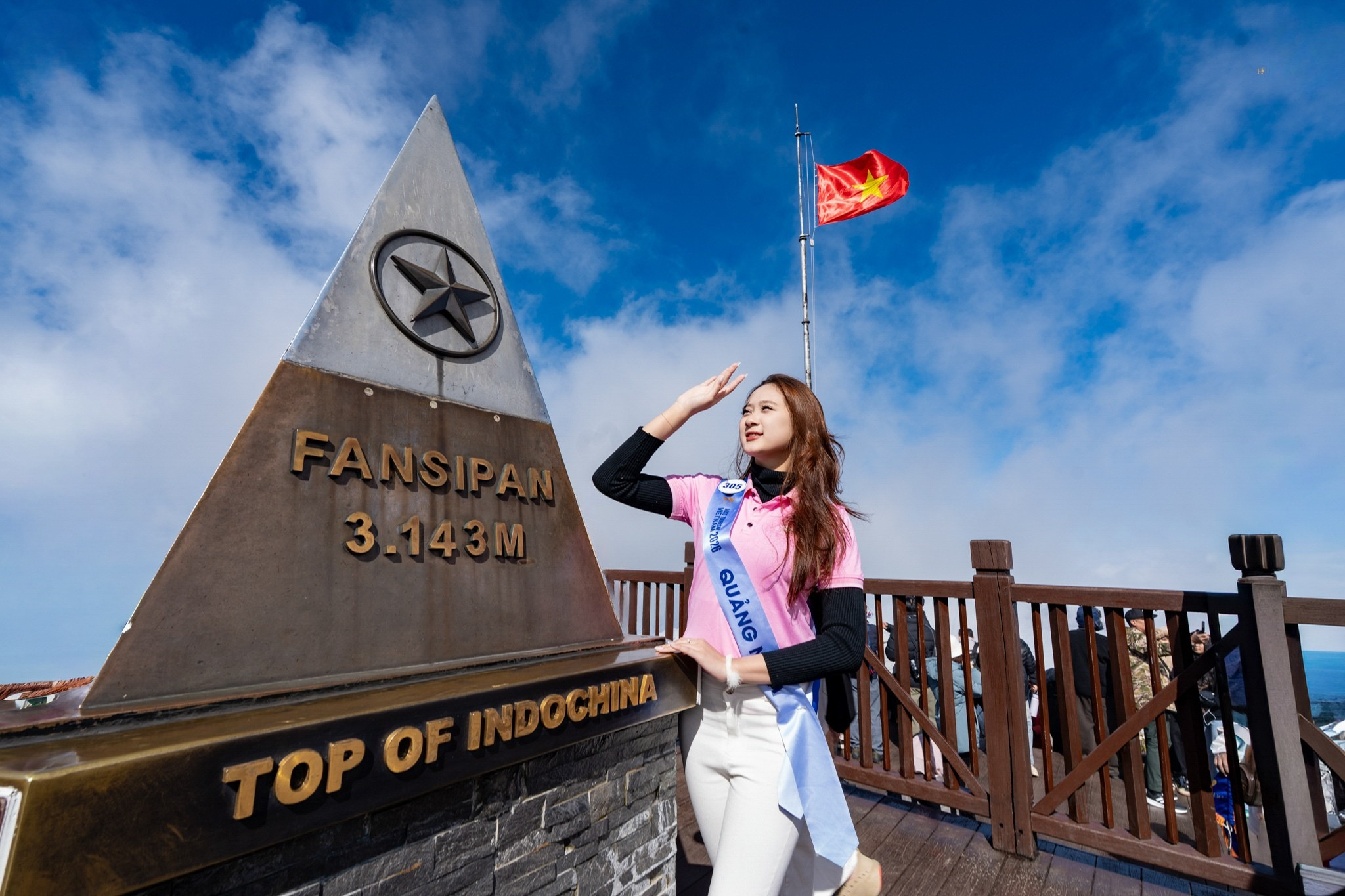
The moment tourists touch the Fansipan milestone on the roof of Indochina. (Source: Collection)
One of the most special moments at Sun World Fansipan Legend is the moment of setting foot on the Fansipan peak, 3,143m high, and checking in with the national flag pole on the roof of Indochina. After the journey overcoming stone steps amidst a sea of clouds, the feeling of touching the Fansipan milestone always brings a sense of pride and indescribable emotion. From the summit area, visitors can gaze out at the panoramic view of the Hoang Lien Son mountain range with successive layers of mountains.
6.4. Sa Pa Rose Valley
Amidst the characteristic cool climate of the Northwestern highlands, the rose valley at Sun World Fansipan Legend appears like a vibrant fairy garden amidst clouds and sky. With a vast area and hundreds of thousands of rose bushes of all kinds, this place has become a favorite stop for many tourists on their journey to explore Fansipan.
Not only roses, but visitors also have the opportunity to admire many flowers characteristic of the high mountains such as hydrangeas, white calla lilies, or azaleas blooming at an altitude of over 2,000m. In spring and early summer, when Sa Pa's weather is cool and less rainy, the entire valley enters its most beautiful phase with flowers covering the space.
Each season of the year, Fansipan offers a unique beauty and feeling to visitors. If you love the festive atmosphere and early year pilgrimages, spring will be a suitable choice. If you want to enjoy the cool climate and hunt for seas of clouds, summer is the ideal time. Meanwhile, autumn is suitable for those who love clear blue skies and the most distinct Northwestern scenery. And winter is for tourists who love the mystical beauty amidst mist, clouds, and cold.
Therefore, to choose the best time to visit Fansipan, the key is not only the weather but also depends on the experience each person desires. Regardless of the season, the journey to the sacred Fansipan peak always brings a special feeling of immersing oneself amidst the sea of clouds, majestic nature, and the peaceful spiritual space of the roof of Indochina.


