




1. Introduction to the ancient houses of ethnic groups at Ban May
1.1. Where are the ancient houses of ethnic groups at Ban May located
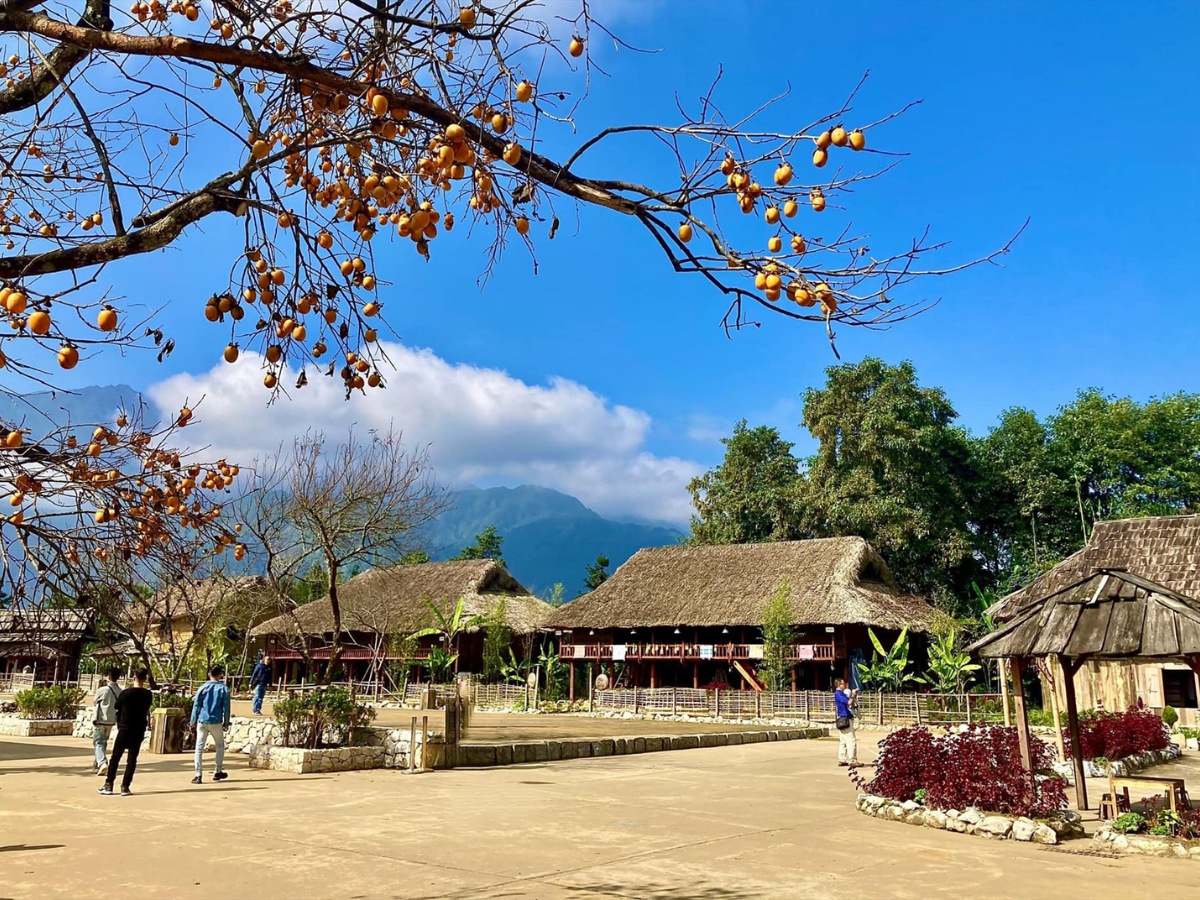
Ancient houses of ethnic groups in Ban May, Sa Pa – Lao Cai, within the Sun World Fansipan Legend complex. (Source: Collected)
Ancient houses of ethnic groups in Ban May are located in the Sa Pa – Lao Cai area, within the cultural – tourism complex of Sun World Fansipan Legend. The space is situated amidst a characteristic cold mountainous region, surrounded by green vegetation and a cool climate year-round.
If Sa Pa is likened to an ink wash painting, then Ban May is its most classic corner, where the breath of tradition remains intact. Compared to other famous attractions, Ban May offers a more peaceful feeling: not noisy, not crowded, suitable for tourists who love exploring cultural depth.
1.2. Why the ancient houses of ethnic groups in Ban May attract tourists
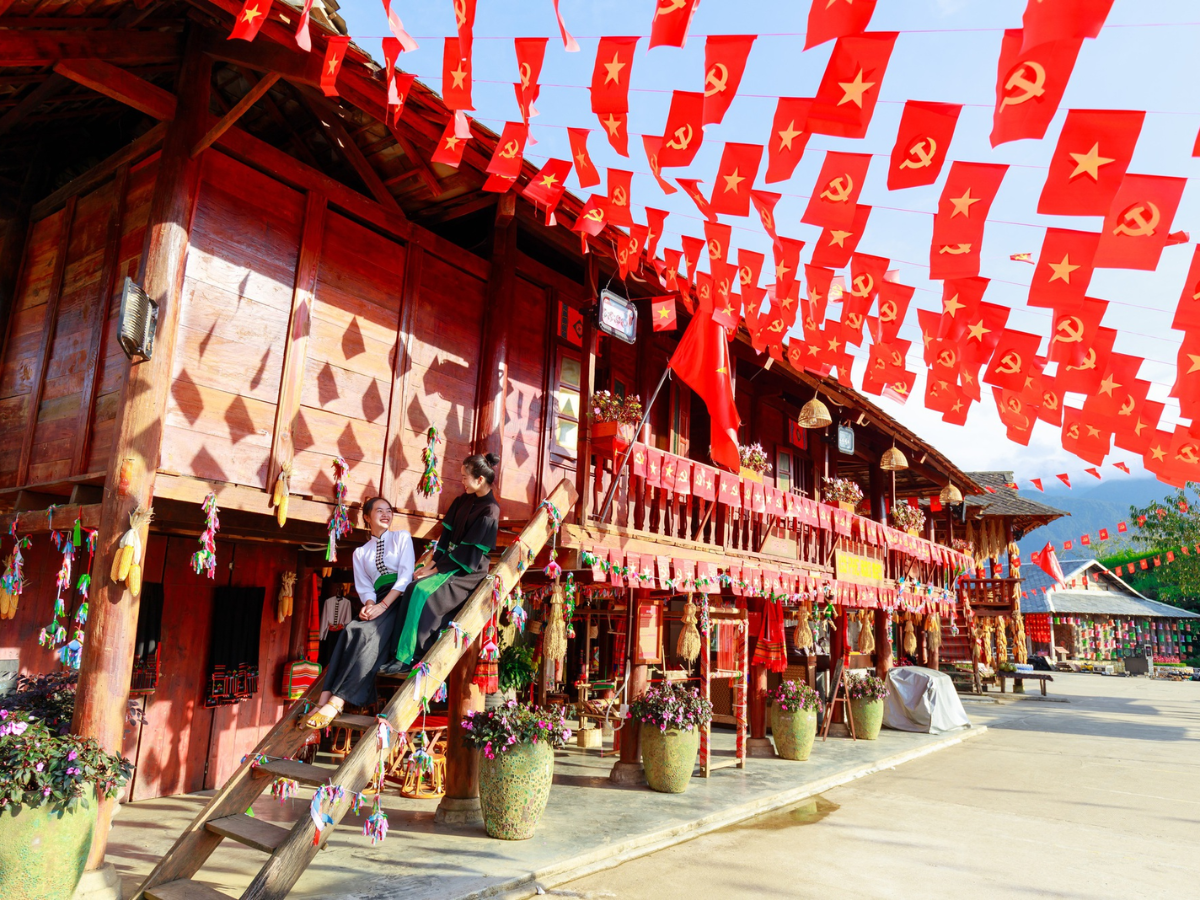
The ancient houses in Ban May are restored from the original houses of the Northwestern people. (Source: Collected)
This small village is not a mere imitation village. The ancient houses of ethnic groups in Ban May are all restored from original houses, relocated from remote areas of the Northwest, preserving their original structure, materials, and cultural spirit.
This is what allows visitors to fully appreciate the rustic simplicity: hand-saw marks on the logs, rammed earth walls, time-worn roof frames… Ban May does not "act" or "put on a show", but strives to restore the most realistic values that once existed in the lives of ethnic people.
Furthermore, Ban May is also a venue for many vibrant cultural and artistic activities, turning a visit into a series of experiences rather than just sightseeing. It is also a destination that greatly contributes to preserving cultural heritage, connecting local people with tourists in the most authentic way.
1.3. Ethnic groups recreated at Ban May
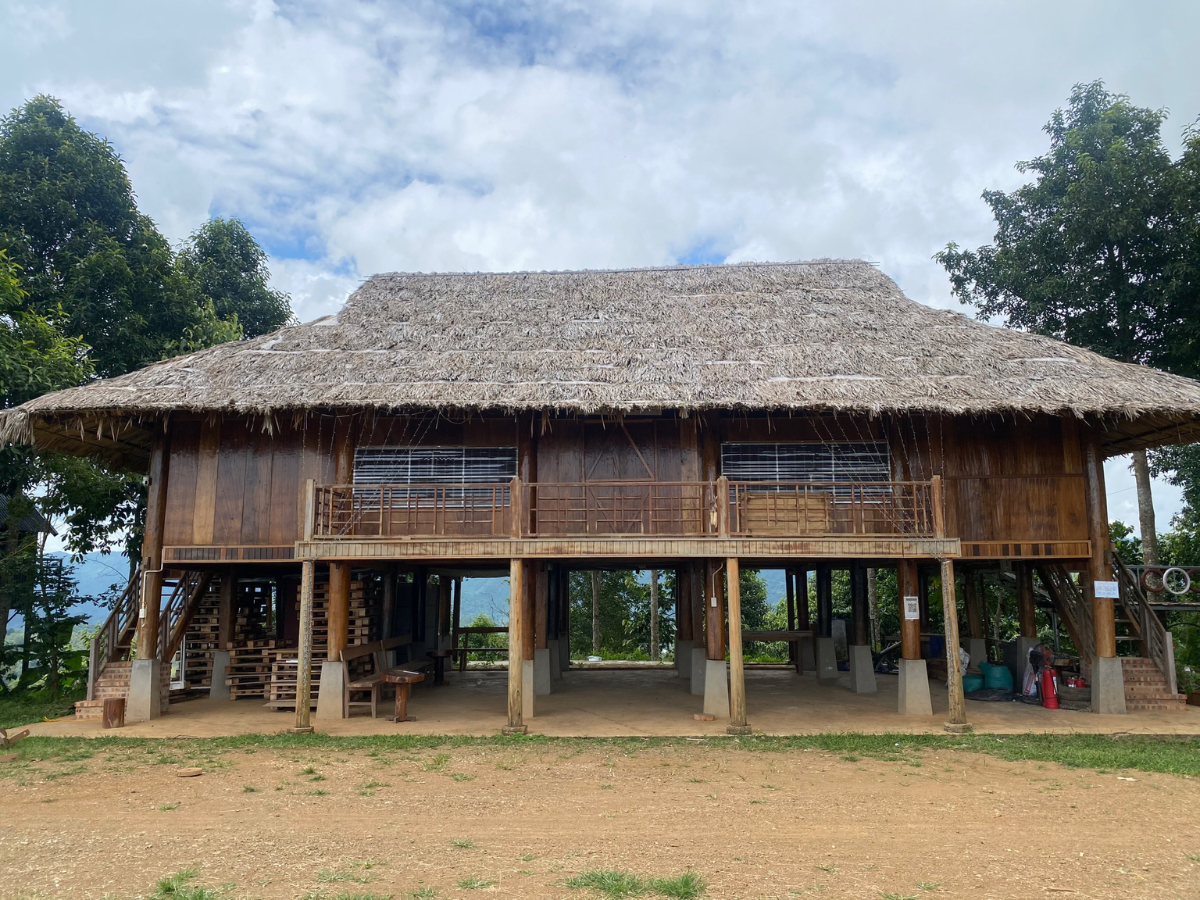
Entering the space of Ban May, you feel like you are traversing a miniature map of Northwestern culture. (Source: Collected)
When entering this space, you feel like you are traversing a miniature map of Northwestern culture. The ancient houses of ethnic groups at Ban May represent: H'Mong Sa Pa, H'Mong Dien Bien, Dao, Tay, Giay, Xa Pho, Ha Nhi…
Each ethnic group possesses its own architectural style, from roof shape, materials, construction methods to daily life within. Thanks to this diversity, Ban May has become a tourist destination that helps visitors compare, observe, and understand the richness of culture in the same mountainous region but with different customs and lives.
2. Architecture and Value of Ancient Ethnic Houses
2.1. Traditional Architectural Features of Each Ethnic Group
What captivates many visitors to Ban May is that each house bears architectural imprints that are "terroir-specific" – meaning the structure reflects the natural conditions where that ethnic group lives.
Tay people's houses:
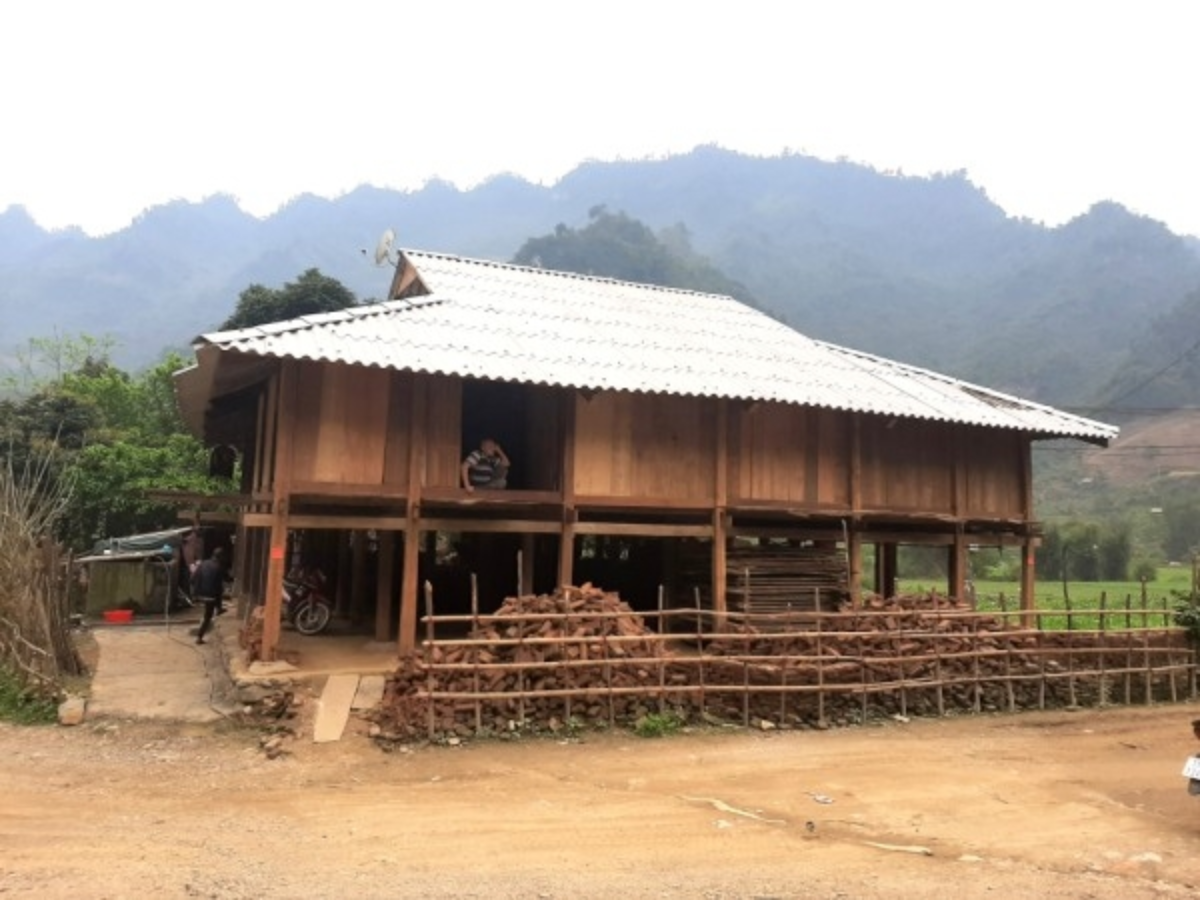
The houses of the Tay people are built as stilt houses made of wood with roofs thatched with leaves or yin-yang tiles. (Source: Collected)
Characterized by stilt house structures made of wood, with roofs thatched with leaves or yin-yang tiles. The stilt houses are high to avoid humidity, serving as a cozy and communal space for family activities. Large pillars create a sense of sturdiness, reflecting a lifestyle closely connected to the mountains and forests.
Rammed earth houses of the Ha Nhi people:
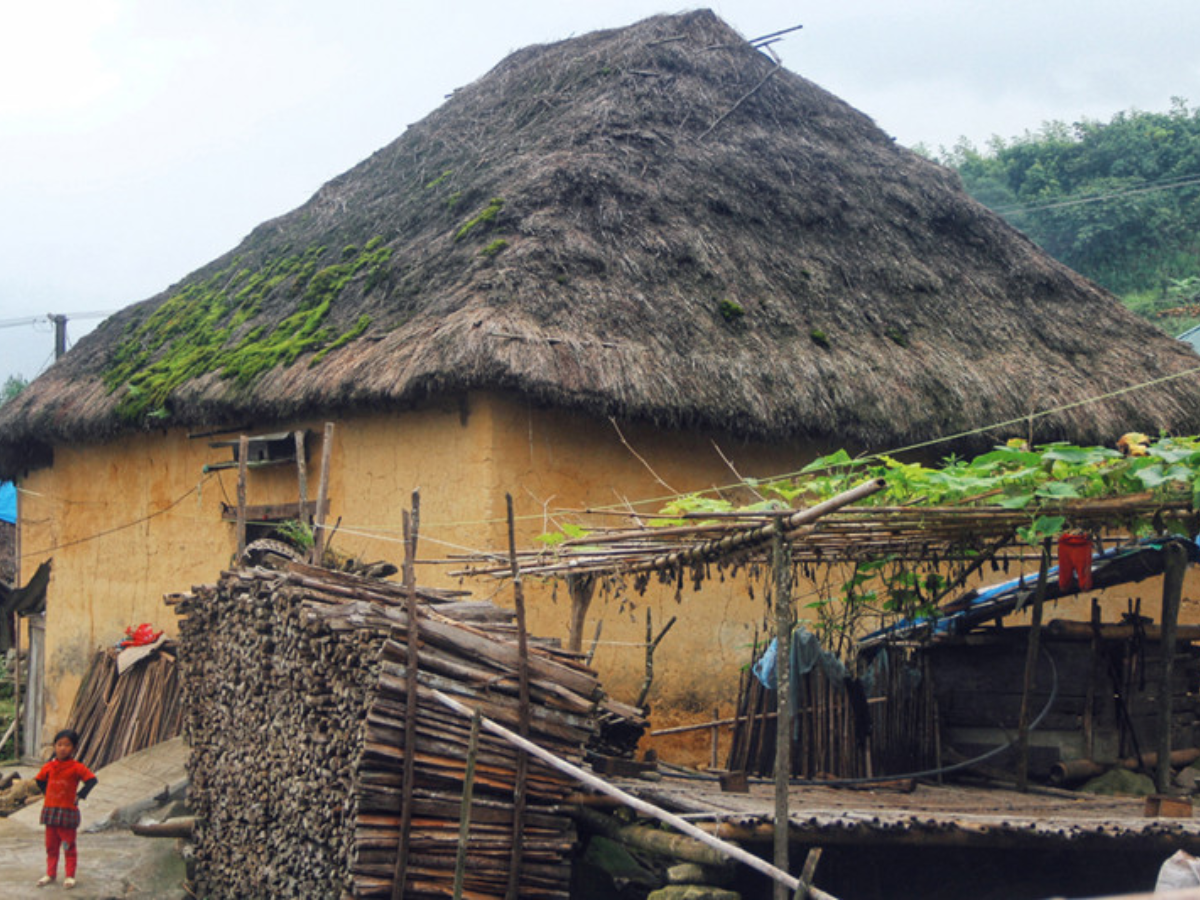
Rammed earth houses of the Ha Nhi people have solid rammed earth walls that help warm in winter and cool in summer. (Source: Collected)
Earth is compacted by human labor, forming solid walls that keep warm in winter and cool in summer. Thick walls, earthen roofs or grass roofs are characteristic of their nature-harmonious lifestyle.
Houses of the Dao people:
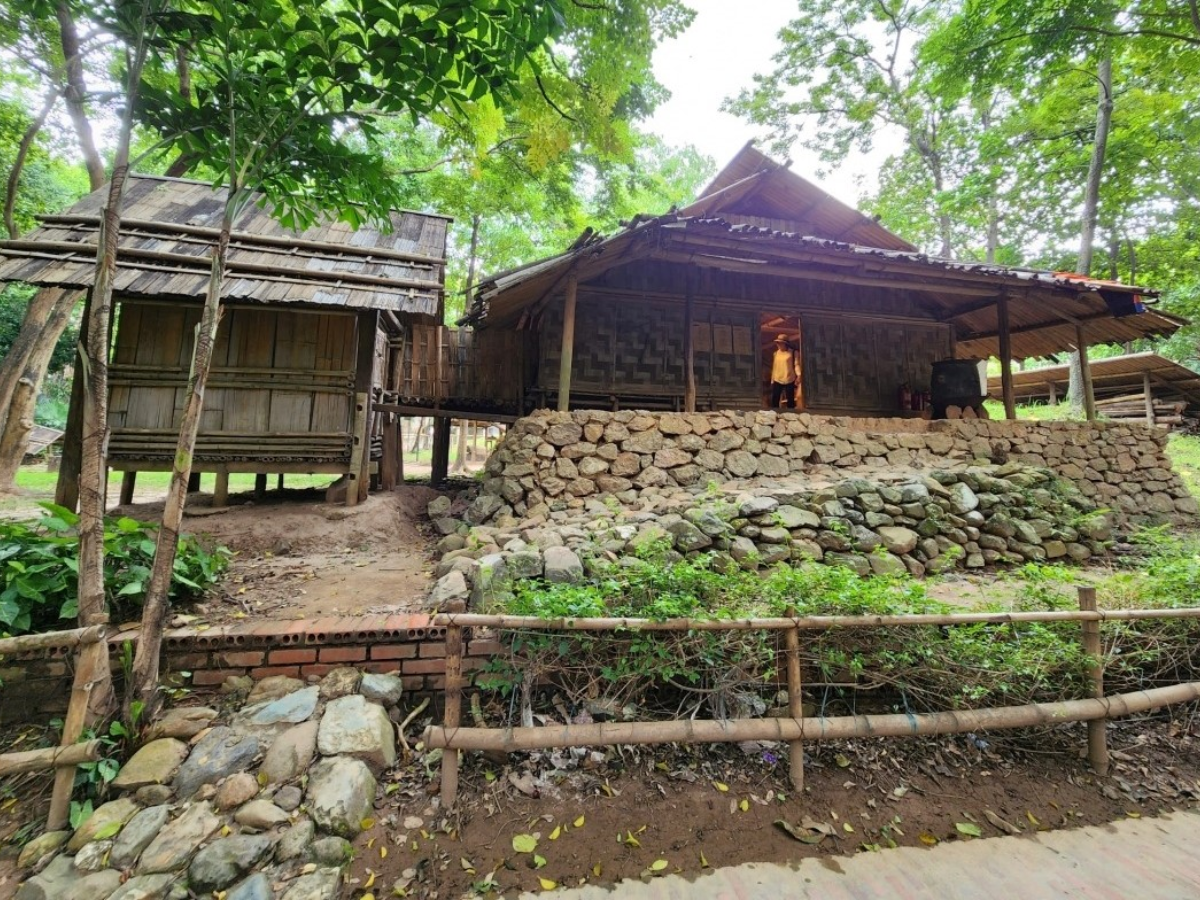
House of the Dao people with sloped roofs to resist strong winds, simple interiors, and a spacious kitchen as the center. (Source: Collected)
Low-lying houses, sloped roofs to resist strong winds in high mountain areas. Simple interiors, a spacious kitchen area is the center of daily life.
House of the H'Mong people:
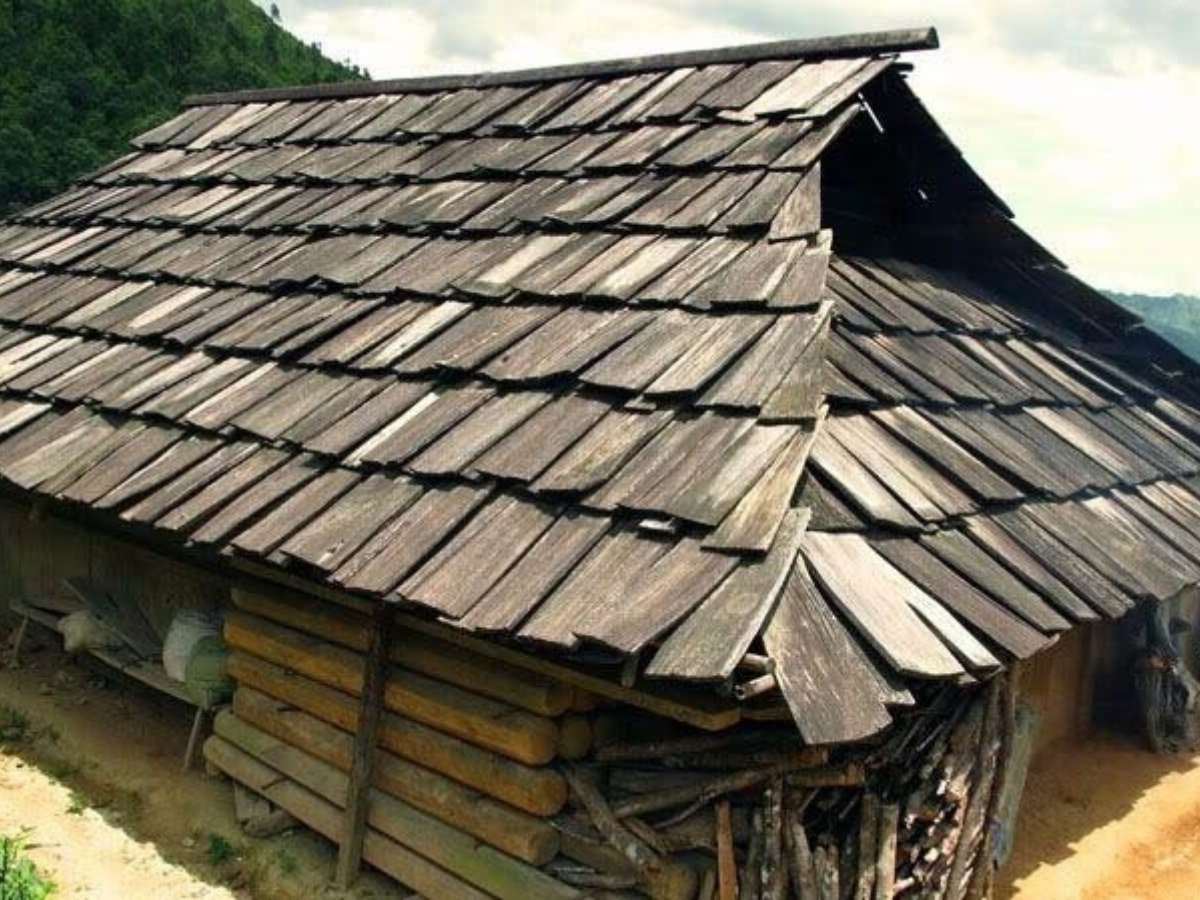
The Hmong people's houses are sturdy and secluded, suitable for the harsh mountain weather conditions. (Source: Collected)
Wood is the main material, often with stone fences around them. Roofs are covered with po mu wood or tile. The houses of the Hmong people exhibit sturdiness and seclusion, suitable for harsh weather conditions.
Houses of the Giay and Xa Pho people:
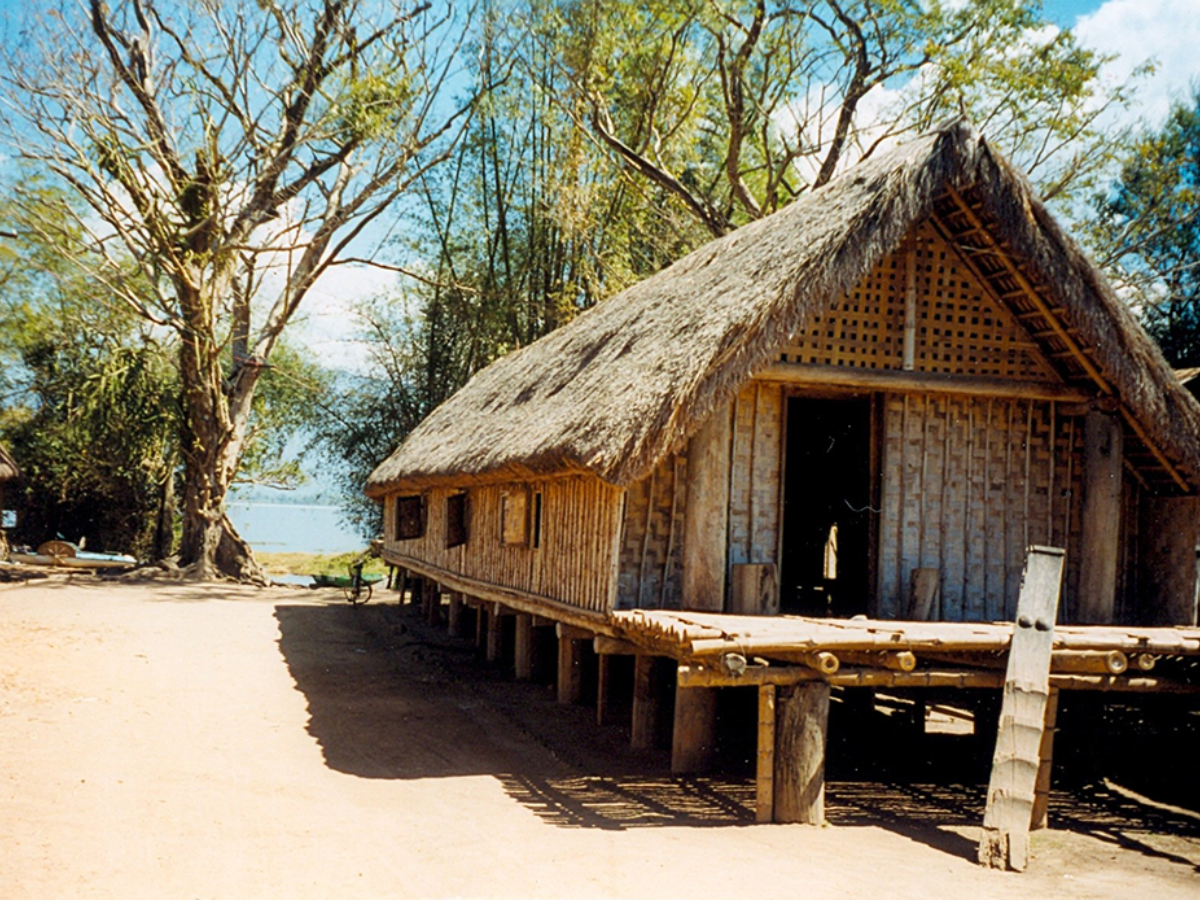
The houses of the Giay and Xa Pho people combine earth-based houses and stilt houses to create a light and airy architecture suitable for agriculture. (Source: Collected)
The combination of earth-based houses and stilt houses, depending on the living region. The architecture is gentle, airy, and convenient for agricultural cultivation.
The special point is that all these architectural styles appear at the ancient houses of ethnic groups in Ban May, allowing visitors to travel through each village without having to move too far.
2.2. Process of relocating and restoring ancient houses in Ban May
One of the most surprising things for visitors is that many ancient houses here are relocated in their original form from distant villages. To bring a house to Ban May, a thorough survey is conducted, selecting houses with great age, ensuring they still retain their old structure. Each wooden beam, stone, patch of earth… is meticulously marked before dismantling, to ensure that when reassembled, it retains its original position and shape.
The restoration process takes place with the participation of the local people themselves – those who best understand how to build houses according to their ethnic customs. Thanks to this, each house in Ban May carries the "soul" of its original village. The structure, materials, and spirit of the house are all preserved intact. This is not a recreated architecture, but a revival of houses that have endured a long time in remote mountainous areas.
2.3. Symbolic meaning and cultural value
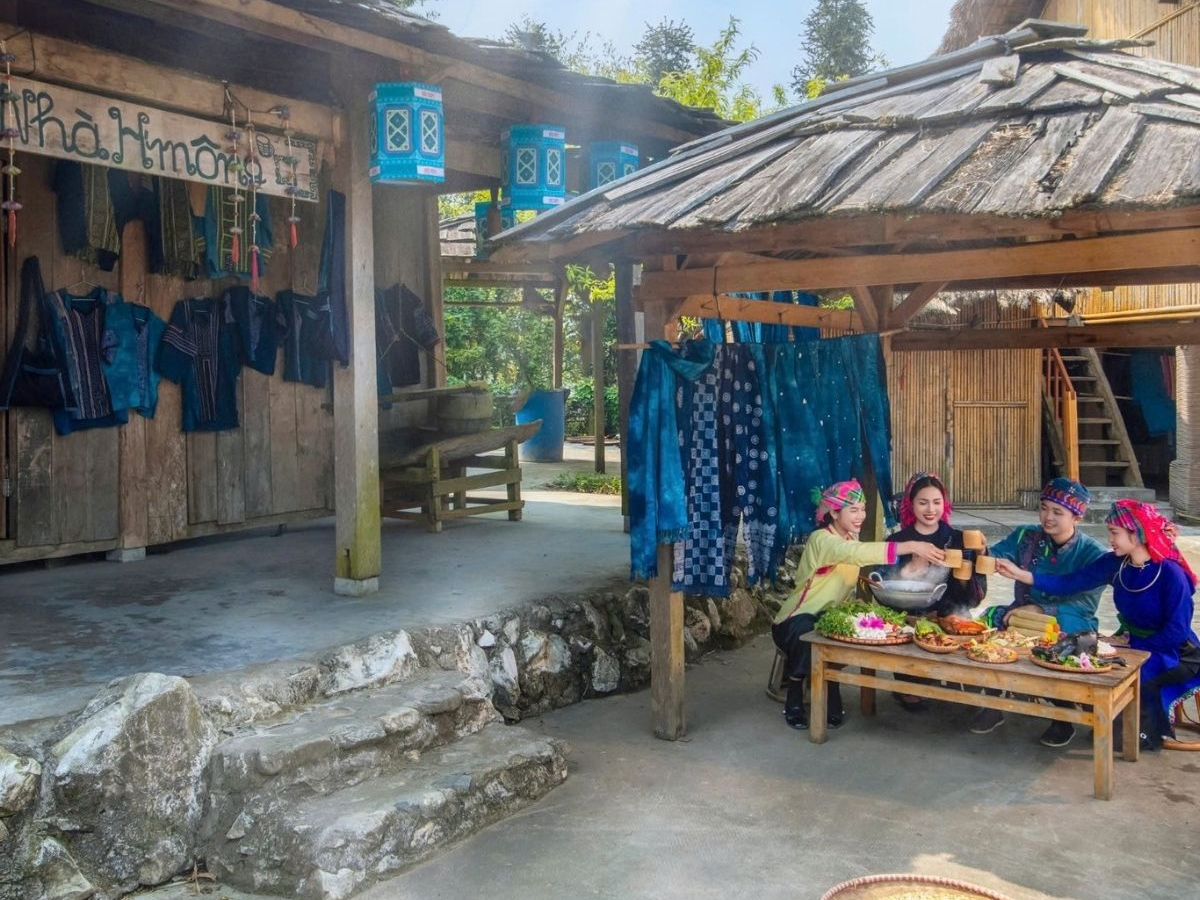
Highland houses are centers of life, reflecting beliefs and community cohesion. (Source: Collected)
In highland culture, the house is always the center of life. It is not only a place of shelter but also reflects the worldview, beliefs, family organization, and community ties. Therefore, the ancient houses of ethnic groups in Ban May hold value as "living documents." A burning hearth tells of the tradition of gathering, an altar tells of ancestral beliefs, and a stone fence speaks of protection and the characteristic seclusion of the Hmong people.
Looking deeper, the architecture of the house also reflects the ethnic people's interaction with nature: they choose materials readily available in the forest, craft them with their hands, and build according to directions favorable to the climate. These aspects demonstrate the resilience, wisdom, and adaptability of mountain dwellers over hundreds of years.
3. Cultural Experiences at Ancient Ethnic Houses
3.1. Experiencing Life with Ethnic Communities
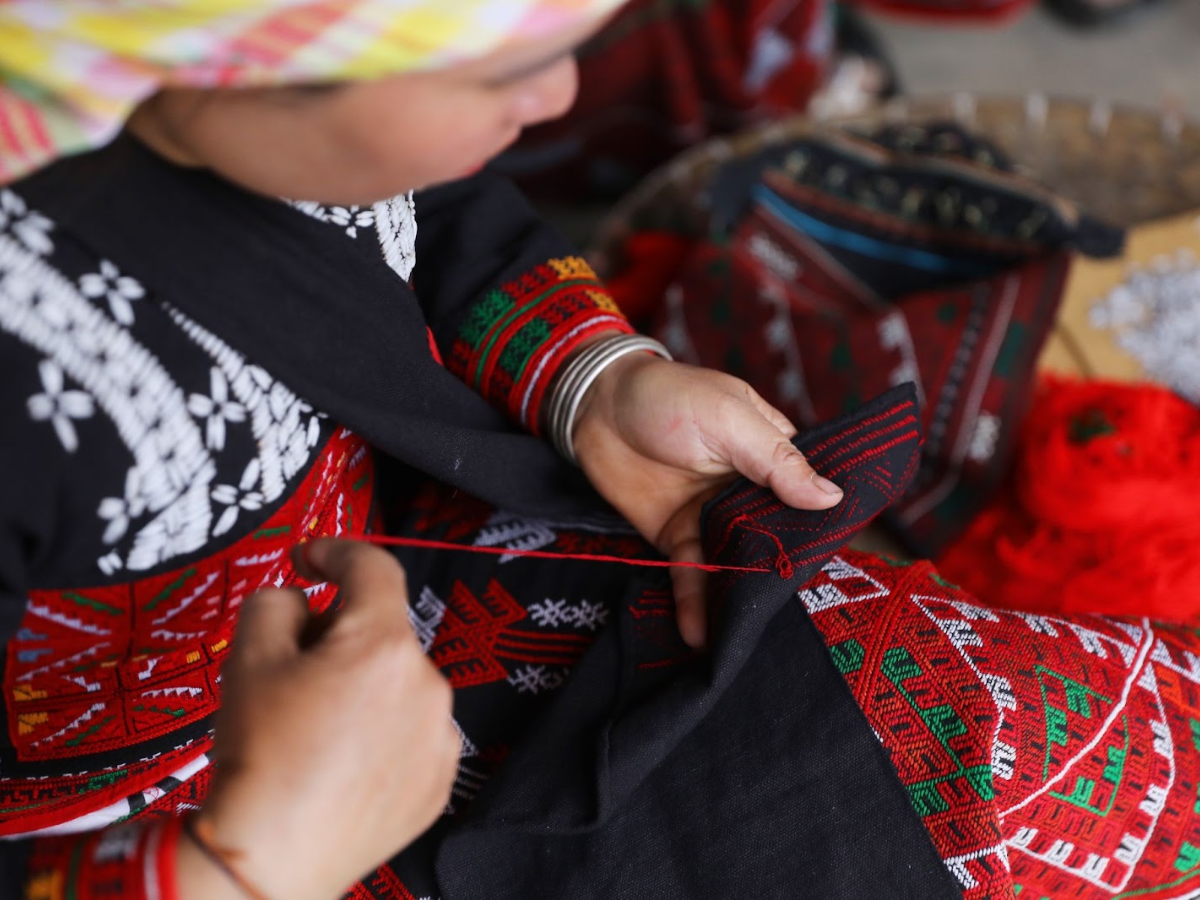
Visitors to Ban May can directly participate in the lives of each ethnic group. (Source: Collected)
One of the things that delights many visitors to Ban May is the opportunity to directly participate in the lives of each ethnic group. In the space of the ancient ethnic houses at Ban May, you can try cooking traditional dishes by the fire, wear ethnic costumes with vibrant patterns, or join local people in activities such as pounding sticky rice cakes, playing the khen, dyeing fabric, and spinning flax.
The atmosphere within the ancient houses makes every experience more authentic. For example, when you sit in a rammed-earth house to enjoy a hot cup of tea, the sound of the wind whistling through the roof gaps and the light filtering through the small window will make you vividly feel the old highland life. Many bloggers have shared that they feel like they are living life at a slower pace, realizing that culture is sometimes found in the simplest things.
3.2. Cultural space and traditional art activities
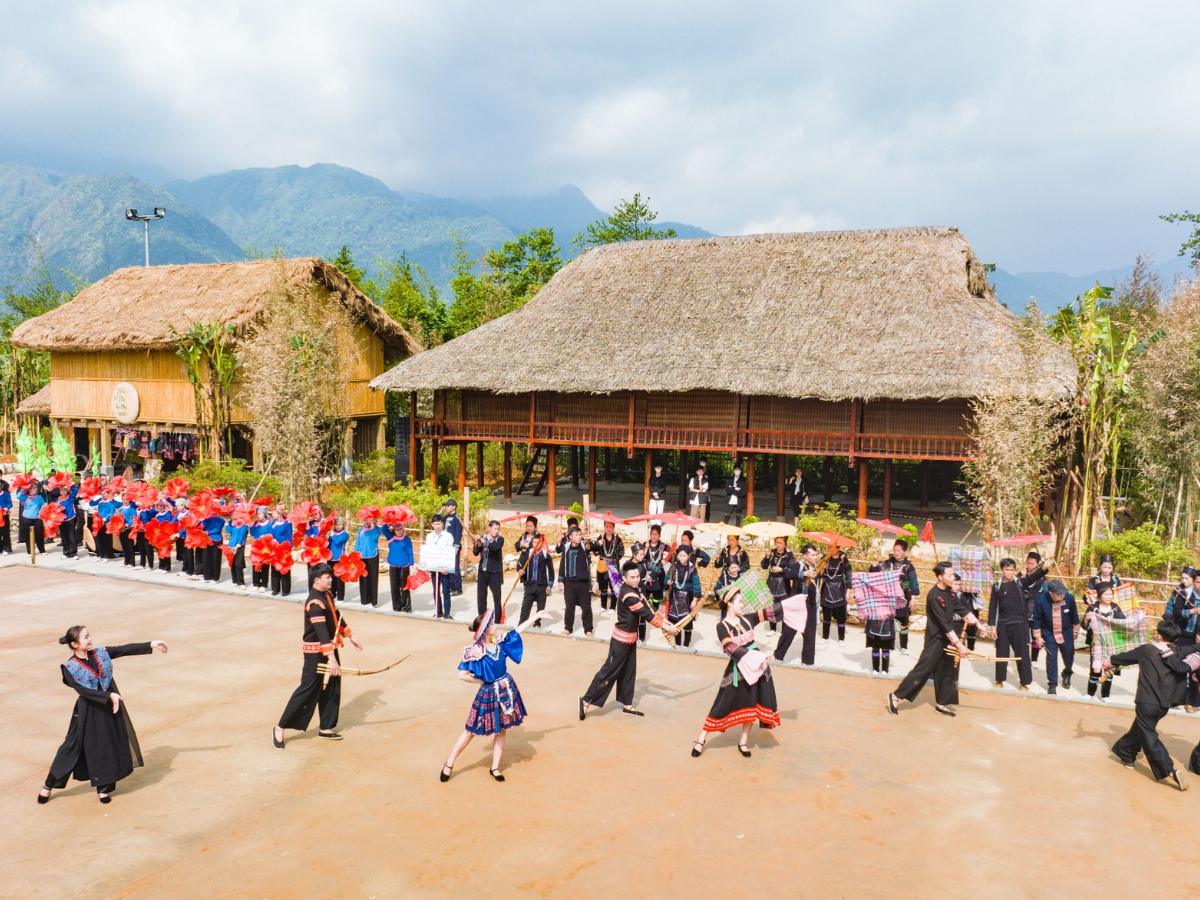
May Village also organizes many special cultural and artistic programs throughout the day. (Source: Compilation)
Not only stopping at visiting houses, May Village is also a place where special cultural and artistic programs take place. Visitors here often easily hear the sound of H'Mong people's khen echoing in the space, or the warm sound of Tay people's then singing. During festivals, performances of xoe dance, bell dance, and knife dance create a bustling atmosphere, drawing tourists into a colorful cultural whirl.
May Village also organizes many handicraft workshops such as fabric weaving, silver jewelry making, indigo dyeing, or cooking traditional dishes. These activities are not only experiential but also help tourists understand more deeply the cultural significance of each item and pattern.
3.3. Explore auxiliary spaces: market and exhibition area
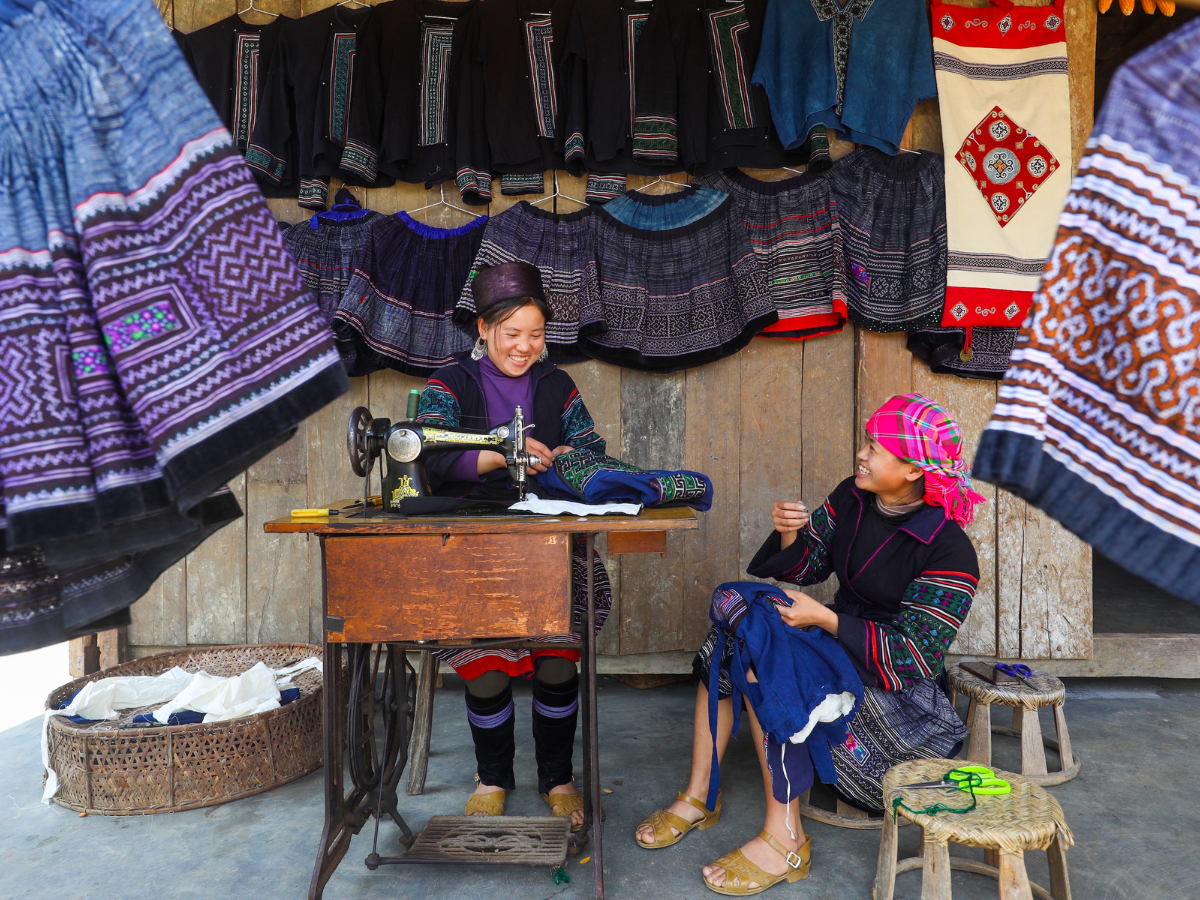
The small market in Ban May is a great place to find specialties and handicrafts. (Source: Collected)
If you want to buy specialties or traditional handicrafts, the small market in Ban May is a must-visit place. Here, brocade fabric, handmade silver jewelry, machetes, musical instruments, and many specialties such as wild honey, corn wine, and dried apple-bear fruit are sold.
In addition to the market, there is also an exhibition space introducing the history, customs, and architecture of the ethnic groups in the area. From here, visitors gain a more visual understanding of the cultural context of each house.
Located within the Sun World Fansipan Legend ecosystem, the journey to discover Ban May can be seamlessly connected with the Fansipan cable car or other tourist attractions – an advantage that makes many tourists choose to visit here during their Sa Pa itinerary.
4. Cultural Preservation and Development Values at Ban May
4.1. Preservation of Highland Tangible and Intangible Heritage
The ancient houses in Ban May are not only built for tourism but also serve as a way to preserve highland heritage in the context of rapid urbanization. From the architecture, household items, to customs – everything is preserved, introduced, and vividly passed on to visitors.
The collaboration of artisans and the local people themselves has helped preserve many crafts at risk of disappearing, such as linen weaving, indigo dyeing, and silver crafting. This is the special value of Ban May: preservation through experience, rather than being confined to a museum.
4.2. Tourism Development and Livelihoods for the People
The ancient ethnic houses in Ban May also play a role in promoting livelihoods for highland residents. People directly participate in tourism activities: art performances, selling handicrafts, leading tours, guiding experiences… As a result, cultural values are disseminated while the people maintain stable incomes. This is a highly appreciated community tourism model because it creates a balance between economic development and identity preservation.
4.3. Educational Role and Inspiration
Not only serving tourists, Ban May has also become an ideal destination for groups of students, and artists to research and experience. Workshops on architecture, culture, traditional crafts, or ethnic history are regularly organized, helping the younger generation understand and appreciate Vietnamese cultural values more.
5. Suggested Itinerary for Exploring Ancient Houses and Ban May
5.1. Half-day or Full-day Itinerary in Ban May
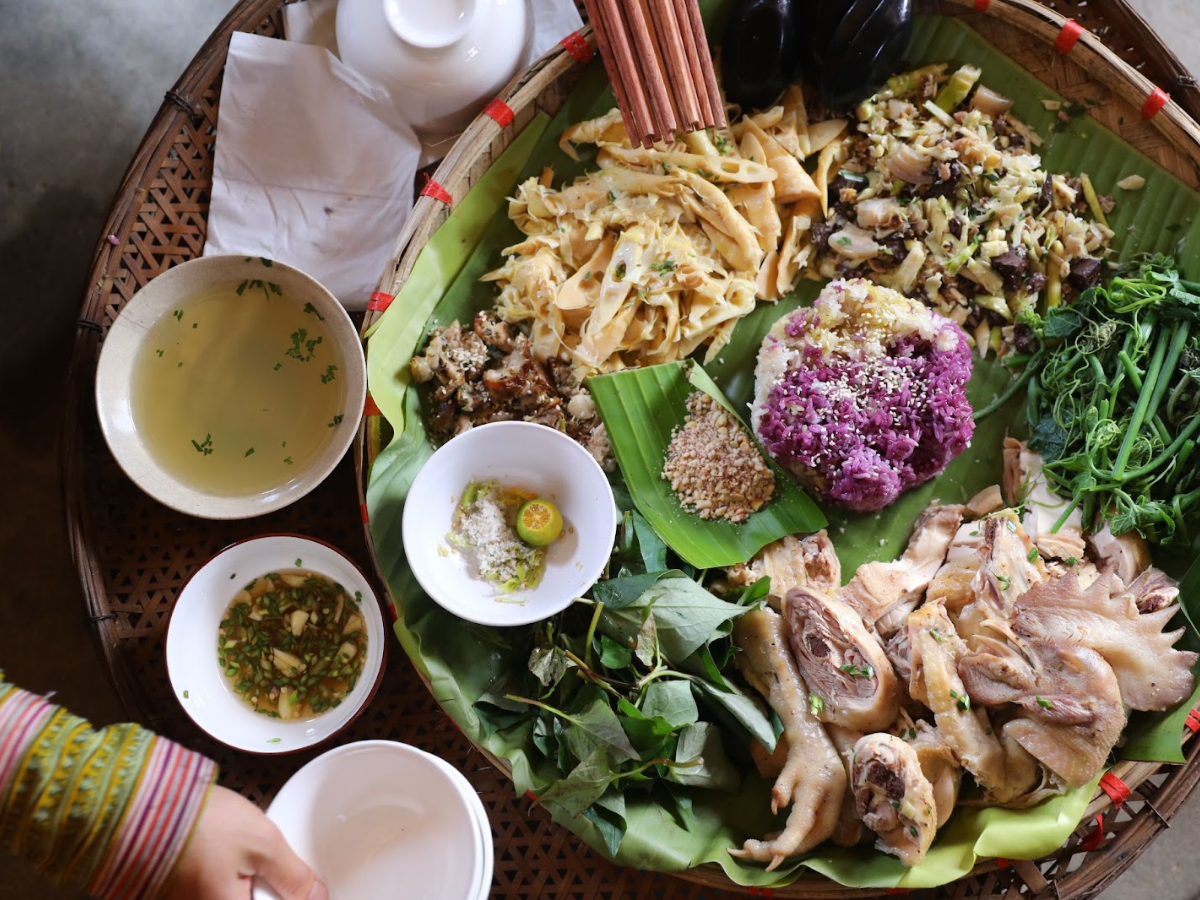
With half a day, you can wander around the village, visit ancient houses, try on traditional costumes, and enjoy highland dishes. (Source: Collected)
With half a day, visitors can wander around the village, visit each ancient house, chat with locals, try on ethnic costumes, and enjoy some highland dishes. If you spend a whole day, you can add workshops such as fabric weaving, traditional cooking, or watch art performances in the afternoon.
The most beautiful time to visit is in the morning when the sun is gentle, or in the afternoon when the mist descends, creating a very "Sapa" atmosphere.
5.2. Combine with entertainment at the Sun World Fansipan Legend ecosystem

From Ban May you can move to the Fansipan cable car area to continue your journey. (Source: Collected)
After visiting the ancient houses of ethnic groups in Ban May, you can easily move to the Fansipan cable car area to continue your journey. From here, visitors can go up to the Fansipan peak – the roof of Indochina, visit spiritual sites, admire the sea of clouds, or combine it with participating in art programs. In the evening, you can return to Sa Pa town to wander the night market or enjoy local specialties.
5.3. Preparation Tips and Cultural Notes
To make your trip more complete, you should prepare warm clothing because the weather in Ban May is quite cold, especially in the early morning and late afternoon. Sneakers or soft-soled shoes will help you move easily on stone-paved or dirt paths. When entering the ancient houses, you should pay attention to your behavior: limit sitting in the worship area, avoid touching items without permission, and especially respect the customs of each ethnic group. A camera or a phone with good storage capacity is essential, as every corner here is beautiful in its own unique way.
The ancient houses of ethnic groups in Ban May are not just a check-in spot but a journey that takes you back in time, returning to the values that have nurtured the culture of the Northwest for hundreds of years. In a space that is both rustic and serene, you will see Sa Pa in a different way: deeper, quieter, and more distinctive.
If you want your Sa Pa trip this time to be not only beautiful but also culturally profound, Ban May is definitely a destination worth spending a whole day exploring.


