




Venturing into these rustic settlements offers an unforgettable glimpse into the lives of indigenous communities who have thrived in the mountains for centuries. Before you set out on foot to explore winding dirt trails, gaining a bird's eye view of the entire Muong Hoa Valley offers a breathtaking perspective on how these communities are intricately woven into the mountainside. Securing your cable car tickets in advance to ascend the region's highest peak is a highly recommended first step, allowing for an overall aerial view of the beauty of Sa Pa. Whether you are seeking an authentic homestay, a soothing herbal bath, or a holistic cultural experience, this comprehensive guide will walk you through the top seven ethnic villages you must visit in Sapa.
1. May Village at Sun World Fansipan Legend: the cultural starting point
Before embarking on enduring treks through the deep valleys, visiting Sun World Fansipan Legend provides a distinctly logical and enriching mindset for your journey. Instead of wandering into the sprawling villages randomly, you gain a holistic understanding of the landscape and the people you are about to explore.
1.1 May village: a living museum of northwestern cultures
Located right at the foot of Fansipan mountain overlooking the Muong Hoa valley, May Village is not just a replica; it is a sanctuary for the original architecture of seven ethnic groups: the H’mong (Sapa & Dien Bien), Dao, Tay, Giay, Xa Pho, and Ha Nhi. Every structure here is an original ancient house, meticulously relocated and reassembled by master artisans to preserve the authentic materials and techniques of the highlands.
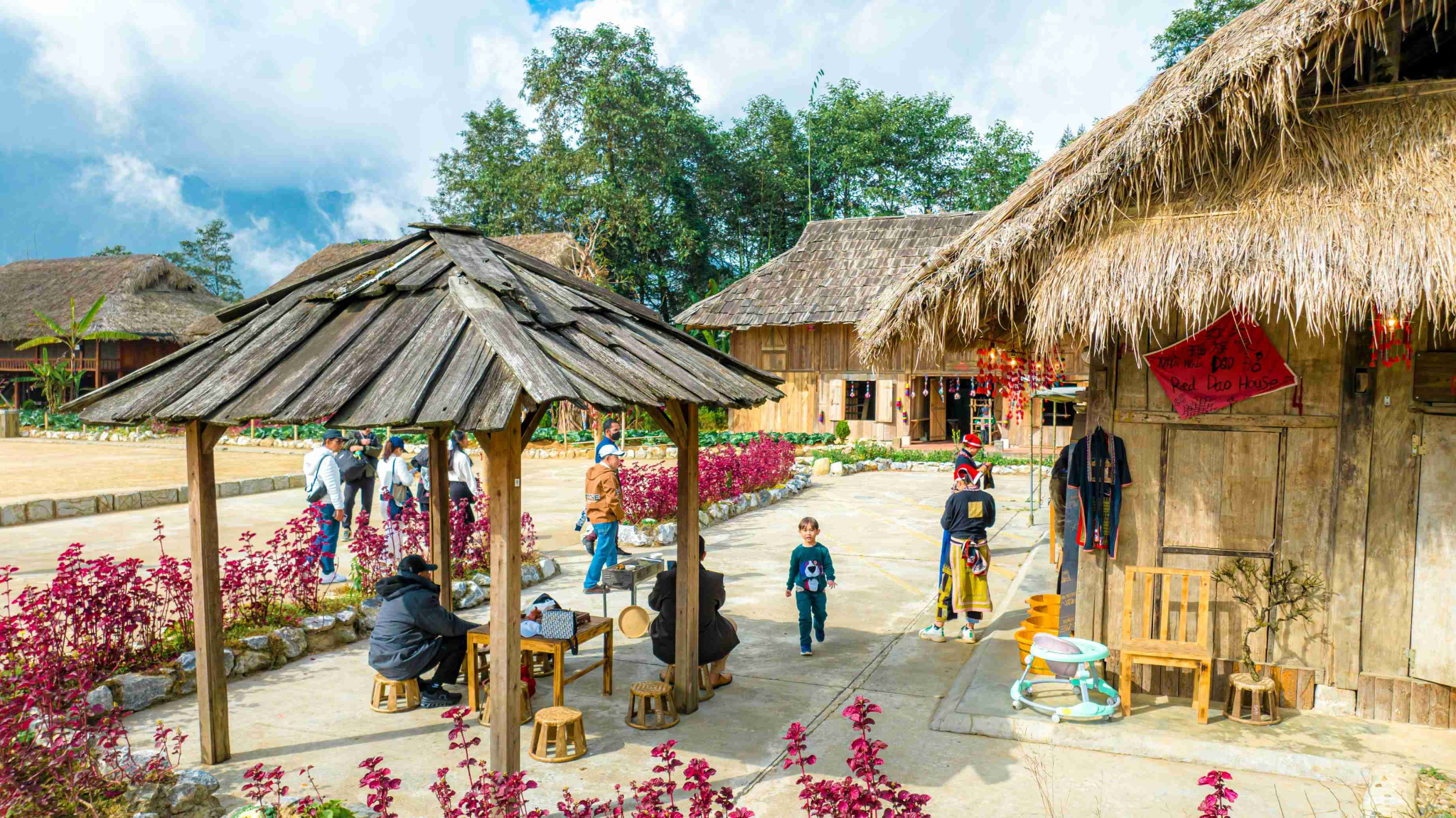
May village is an all-in-one cultural experience for tourist visiting Sa Pa (Source: Collected)
Visitors can explore the unique architectural contrast between the thick, rammed-earth walls of the Ha Nhi homes and the elegant wooden stilt houses of the Tay and Giay people. Beyond the structures, May Village offers a "real-touch" experience. You can step into a traditional kitchen to cook colorful sticky rice and thang co with local families, try on intricate brocade costumes, or participate in sacred rituals like the Gau Tao or Nhan Song festivals. This space serves as a vivid visual summary for the Sapa cultural journey you are about to experience.
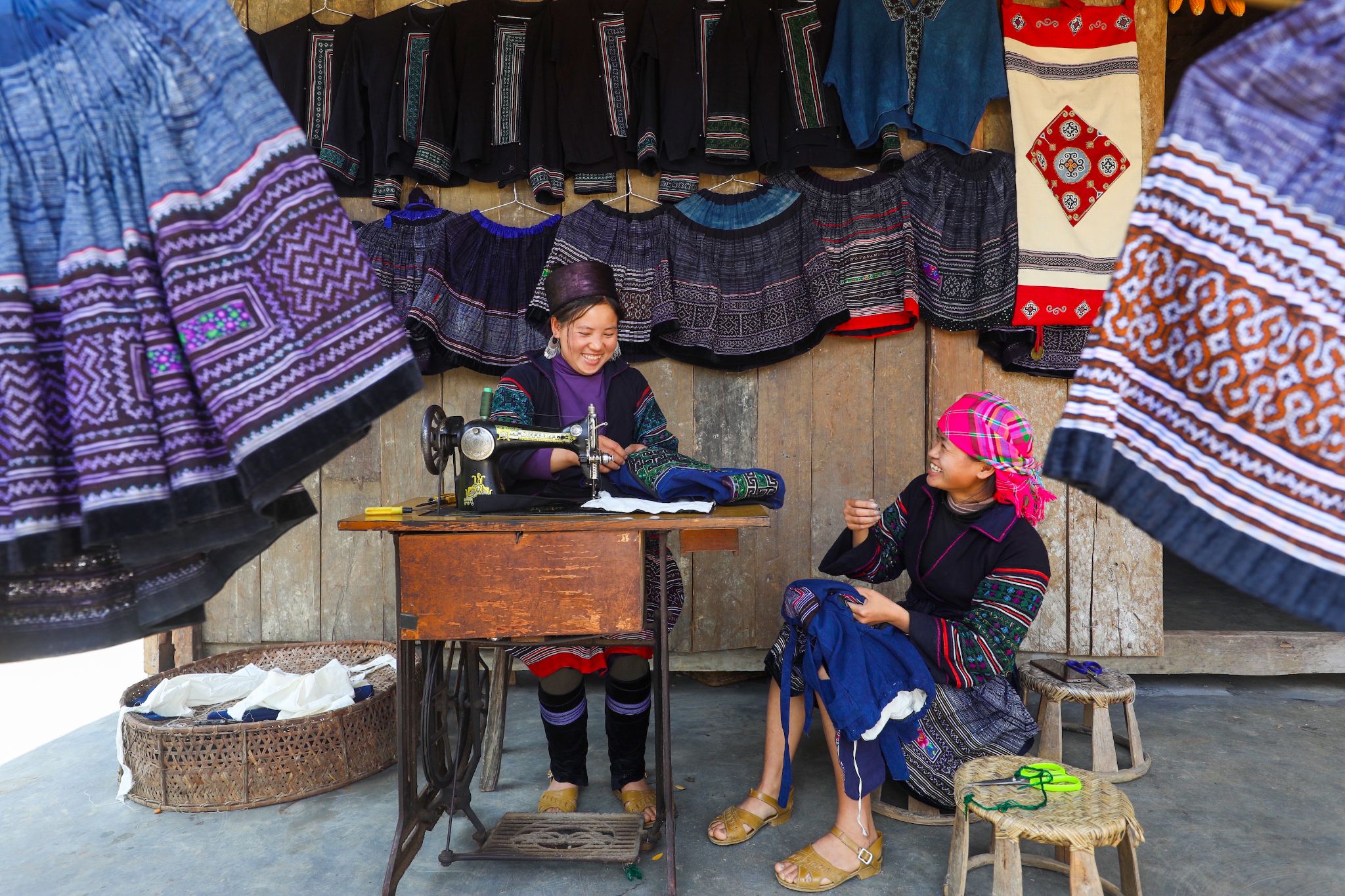
Visitors could also experience making the traditional clothes themselves with the guidance of the artisans (Source: Collected)
Beyond the architecture, May Village offers a deeply interactive sensory experience. You can watch local female artisans masterfully weave vibrant brocade from raw hemp, forge traditional farming tools by hand, and carve intricate silver jewelry.
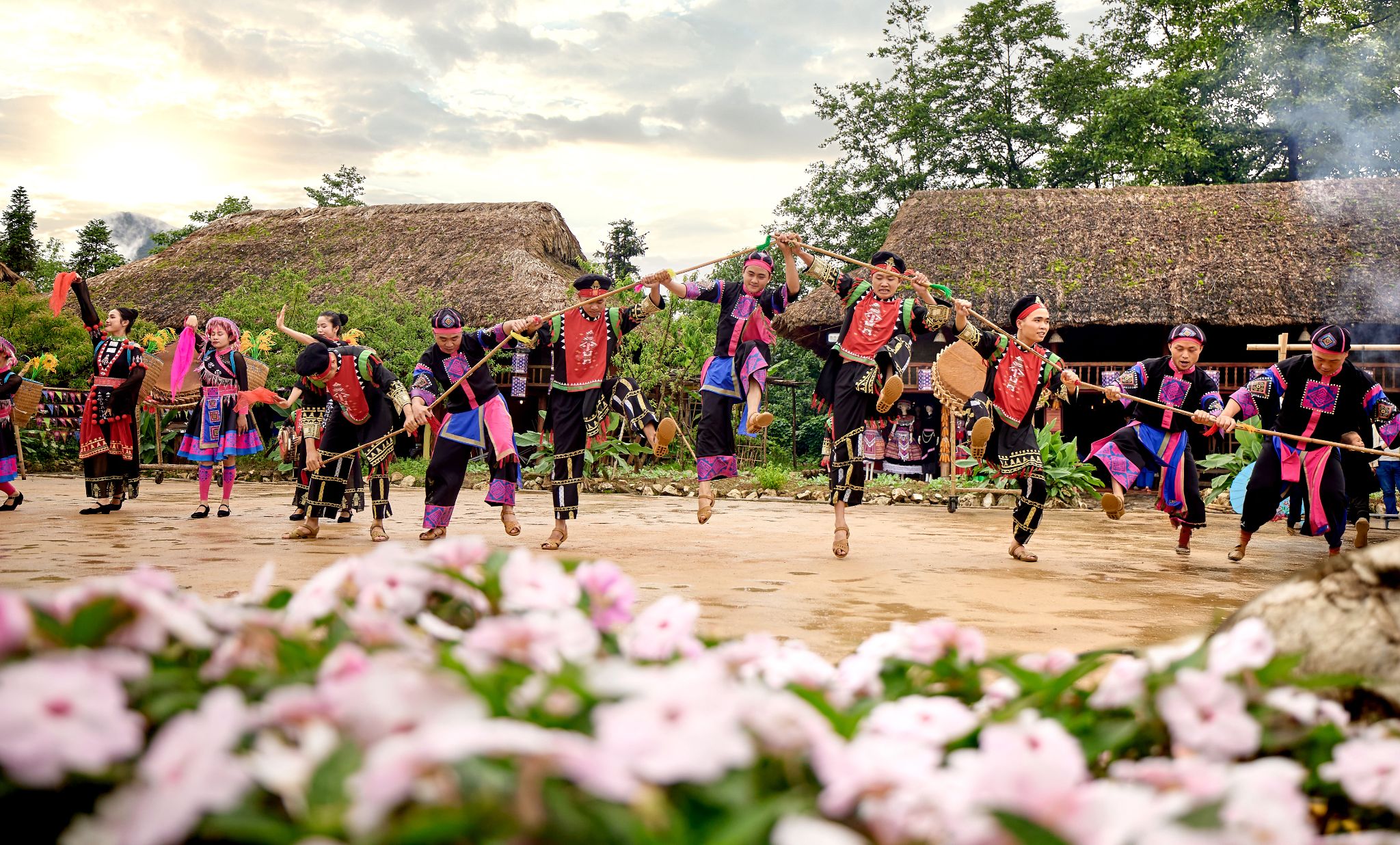
The iconic “Dinh thien du ky” show in May village (Source: Collected)
The village truly comes alive with its daily cultural performances. Visitors often find themselves captivated by the hypnotic rhythm of the H'mong Khen bamboo pipe dances, the joyful and communal Sap bamboo dancing, and even authentic reenactments of traditional highland weddings. Furthermore, it is a fantastic spot to sample regional gastronomy. You can taste colorful sticky rice, bamboo tube rice, and deeply flavorful smoked meats prepared directly over open fires by the local communities. This space serves as a vivid and comprehensive visual summary for the Sapa cultural journey you are about to experience.
1.2 A panoramic view of the villages from the cable car

The beautiful “golden harvest season” aerial view from the record-breaking cable car (Source: Collected)
As the cable car cabin gradually leaves the departure station, the entire network of ethnic villages reveals itself like a living topographic map. From high above, the terraced fields of Lao Chai and Ta Van look like golden ribbons winding along the flowing waters of the Muong Hoa stream. This incredible aerial perspective helps you truly appreciate the grandeur of nature and the extraordinary efforts of the local farmers in carving these agricultural marvels onto steep mountain slopes over hundreds of years.
2. Top 7 ethnic villages to visit in Sapa
Once you have gathered a comprehensive overview from the heights of Fansipan, it is time to step into the heart of the valleys and explore the top seven ethnic villages that define Sapa's authentic charm.
2.1 Cat Cat village: the cultural hub of the Black H'mong
Located a mere 3 kilometers from the bustling center of Sapa town, Cat Cat village is the most accessible and arguably the most popular ethnic village for visitors. Belonging entirely to the Black H'mong ethnic group, this settlement is nestled in a picturesque valley surrounded by towering peaks and the gentle murmur of the local stream. Its proximity to the town center makes it an excellent morning excursion.
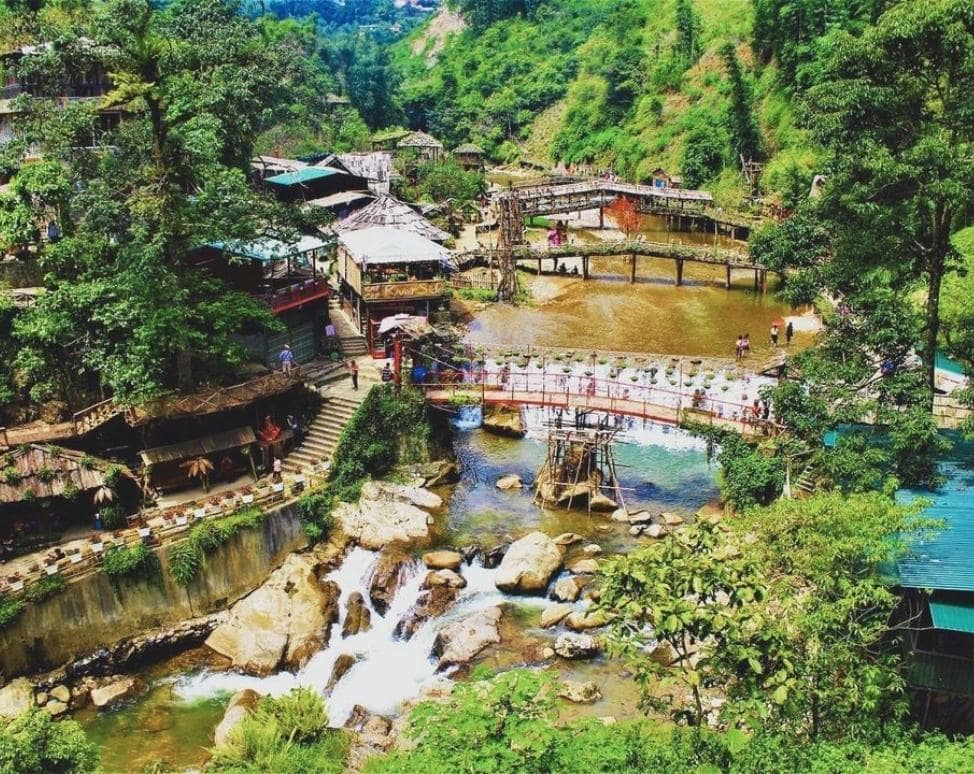
The iconic giant water wheels and stone-paved paths of Cat Cat Village offer a picturesque glimpse into the heart of Black H'mong traditions. (Source: Collected)
As you walk down the small stone paved streets through the village center, you will be greeted by a vibrant display of traditional culture. Cat Cat places a strong emphasis on handicraft preservation. Visitors can observe local female artisans meticulously weaving brocade, dyeing fabrics with natural indigo plants gathered from the surrounding hillsides, and crafting intricate silver jewelry using techniques passed down through multiple generations. The central highlight of Cat Cat is the stunning Tien Sa waterfall and the historic hydroelectric power plant built by the French colonialists in the early twentieth century.
2.2 Ta Phin village: home to the Red Dao herbal baths
Journeying about 14 kilometers northeast of Sapa town toward Lao Cai city brings you to the enchanting Ta Phin village. Unlike the steep mountain slopes of other Sapa valleys, Ta Phin is situated in a wide and relatively flat valley. This unique geography provides a tranquil and open contrast to the rugged mountains surrounding it.
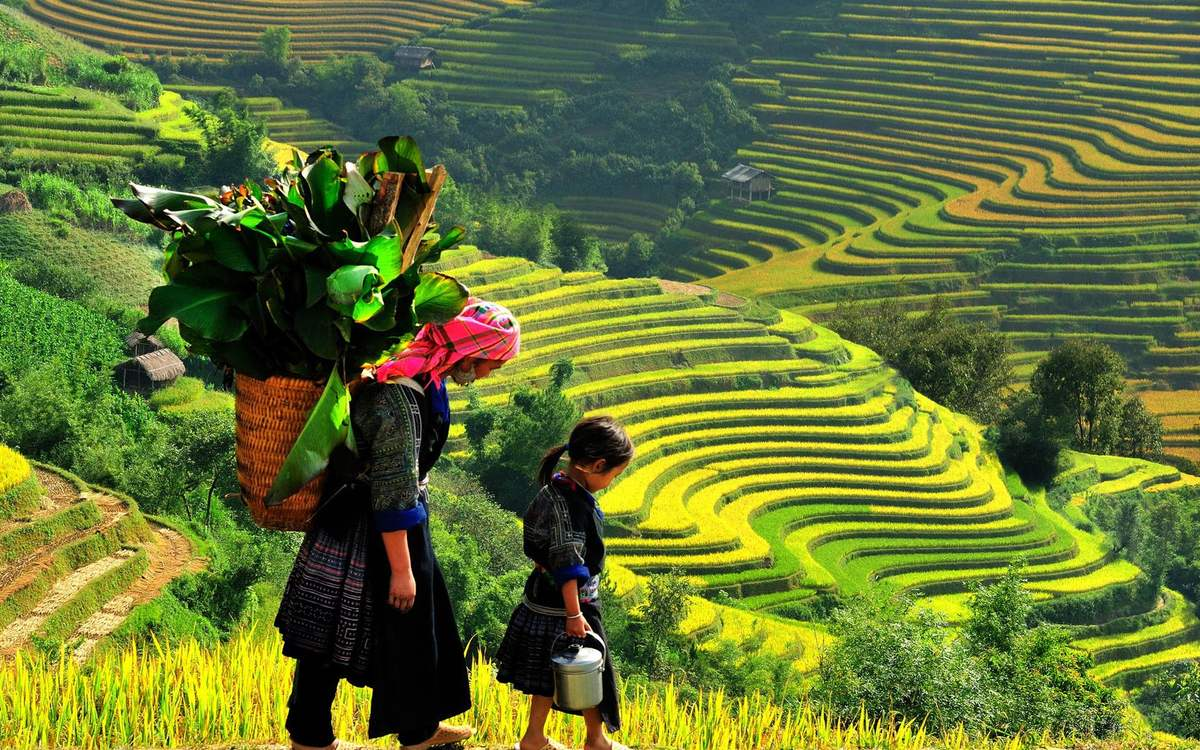
A tranquil corner of Ta Phin Village, the legendary home of the Red Dao people and their world-renowned herbal bath culture. (Source: Collected)
Ta Phin is predominantly home to the Red Dao ethnic group. This community is revered throughout Vietnam for their profound knowledge of herbal medicine, making the village the authentic birthplace of the famous Red Dao herbal bath. The bath formula consists of a complex mix of medicinal leaves, barks, and roots gathered from the deep alpine forests. This unique blend is known to relieve muscle aches, improve blood circulation, and rejuvenate tired trekkers. Soaking in a steaming wooden tub right in the heart of Ta Phin is an absolute must do experience.
2.3 Lao Chai village: terraced fields and breathtaking valleys
Heading roughly 9 kilometers southwest of Sapa town, you will arrive at the sweeping landscapes of Lao Chai village. If you have ever marveled at iconic photographs of Sapa's golden terraced fields, there is a very high probability they were captured exactly here.
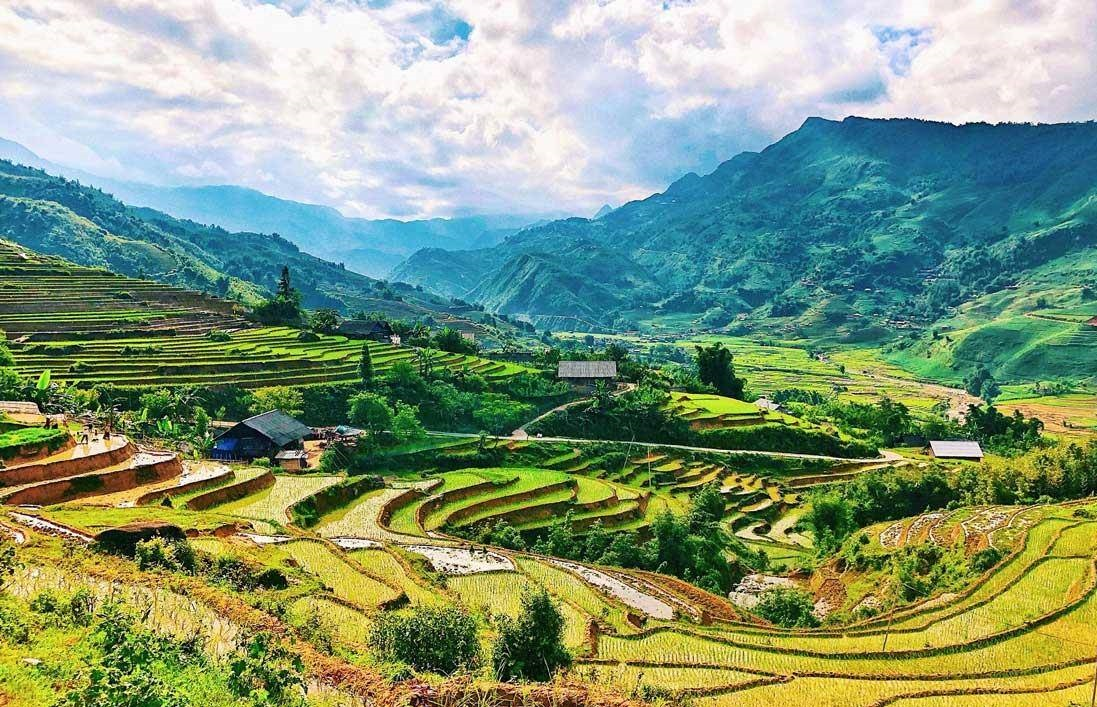
Golden waves of terraced fields cascading down the mountainside in Lao Chai, backed by the majestic Hoang Lien Son range. (Source: Collected)
Lao Chai is a sprawling Black H'mong village where rustic wooden houses are intertwined beautifully with cascading rice terraces. With its back resting against the majestic Hoang Lien Son mountain range and the life-giving Muong Hoa stream flowing right through its heart, Lao Chai boasts what many consider the most spectacular landscape in all of Sapa. Trekking through Lao Chai allows you to witness the daily agricultural life of the H'mong people up close. It is a place where the pace of life is dictated entirely by the rhythm of the sun and the natural agricultural cycle.
2.4 Ta Van village: the vibrant community of the Giay people
Just 3 kilometers further down the valley from Lao Chai, the landscape transitions smoothly into Ta Van village. This is the traditional domain of the Giay ethnic community. Because Lao Chai and Ta Van are located along the same continuous trekking route in the Muong Hoa Valley, they are frequently combined into a single tourist itinerary commonly known as the Lao Chai to Ta Van trek.
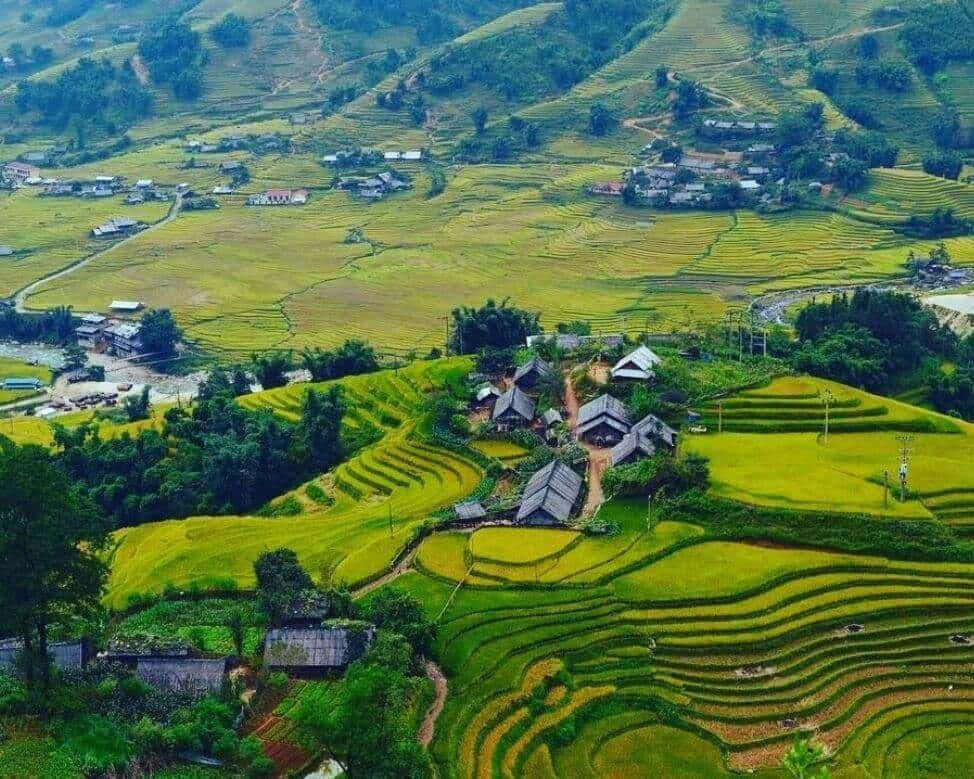
The rustic charm of Ta Van Village, where the Giay community welcomes travelers with 100-year-old wooden houses and riverside dining. (Source: Collected)
The terraced rice fields in Ta Van are exceptionally beautiful as they dip deeply into the valley floor where the Muong Hoa stream widens and flows more gently. What sets Ta Van apart is its robust infrastructure for immersive travel. It has experienced the most rapid development of homestay services in the region, offering a plethora of lodging options. Tourists visiting Ta Van can stop for lunch at local riverside restaurants to savor regional dishes like smoked buffalo meat and bamboo tube rice.
2.5 Ho village: a tranquil Tay settlement
For those willing to venture further off the beaten track, Ho village awaits about 30 kilometers from Sapa town, continuing in the same direction past Lao Chai and Ta Van. This small and serene valley is located at the downstream section of the Muong Hoa stream and is home primarily to the Tay ethnic group. The Tay have a much smaller population in Sapa compared to the H'mong and Dao, making a visit here a uniquely different cultural experience.
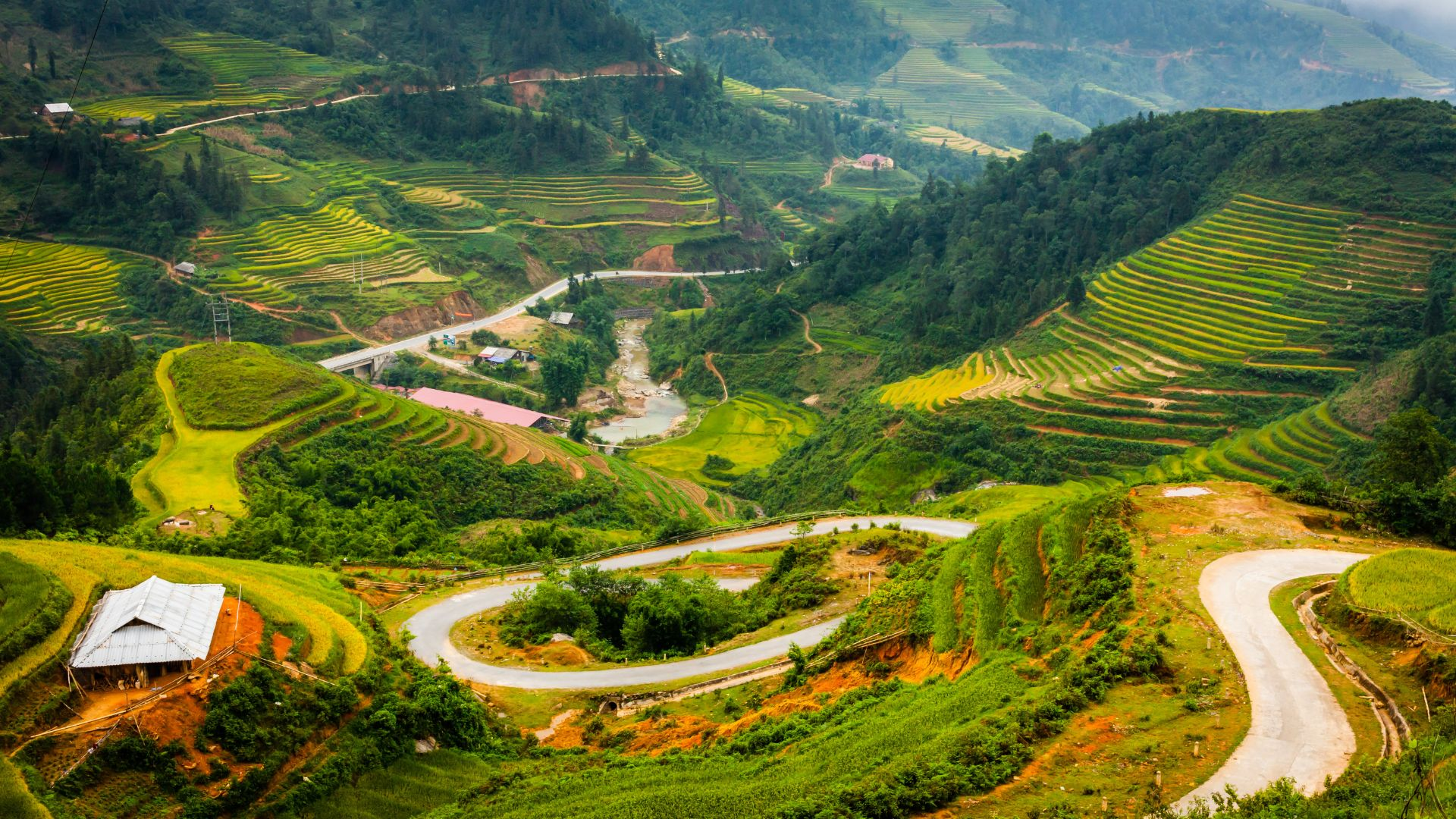
A peaceful Tay settlement tucked away at the end of the Muong Hoa stream, offering a serene escape far off the beaten track. (Source: Collected)
The architectural highlight of Ho village is the traditional Tay stilt houses. Built elevated off the ground to protect against wild animals and the damp earth, these large wooden structures offer cool breezes in the humid summer and retain comfortable warmth in the winter. The most compelling reason to visit Ho village is the holistic homestay experience where guests can sleep in a traditional stilt house and bathe in the pristine local stream.
2.6 Sin Chai village: an authentic H'mong gem
If you are looking for an untouched cultural experience very close to the town center, Sin Chai village is your ideal destination. Located just 2 kilometers past the popular Cat Cat village, it is incredibly accessible yet remarkably devoid of the heavy tourist foot traffic found in neighboring areas.
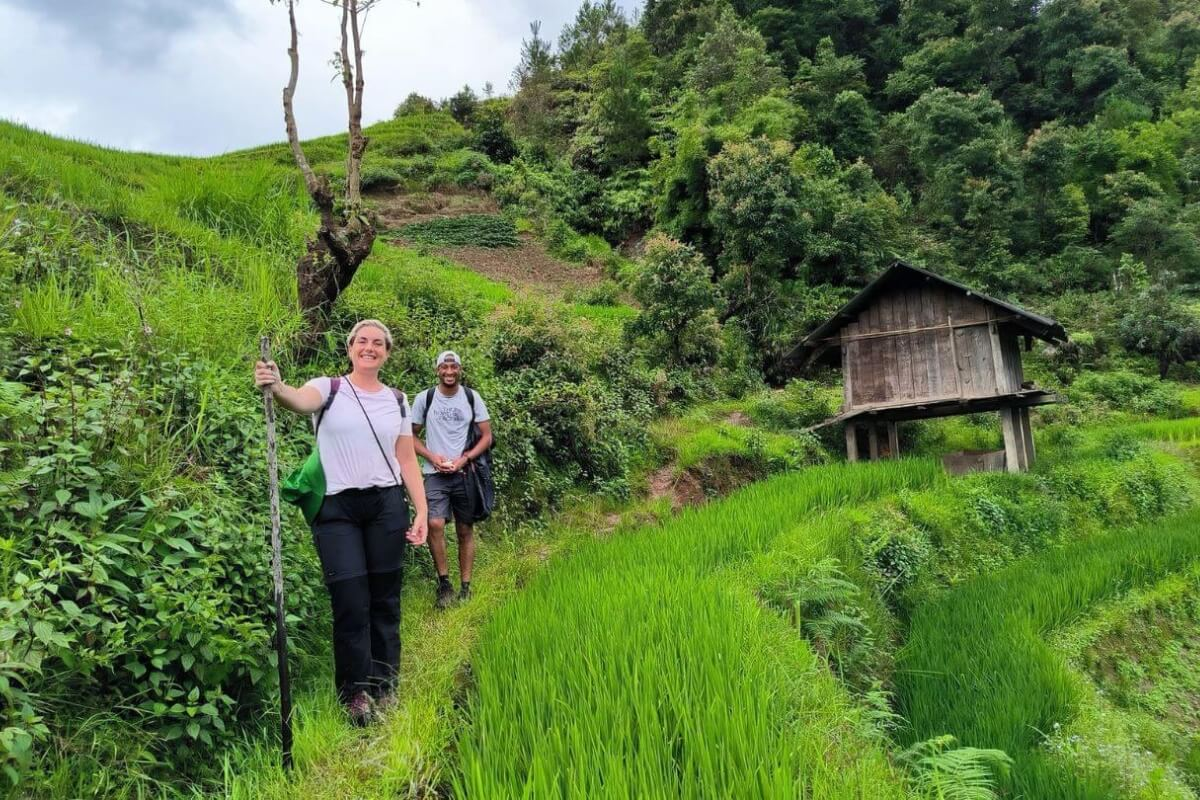
Untouched and serene, Sin Chai Village remains a pure testament to the traditional wood-walled architecture and raw lifestyle of the H'mong. (Source: Collected)
Sin Chai is a pure and traditional Black H'mong village. It serves as the perfect location for visitors to observe and learn about the native and uncommercialized way of life. The typical H'mong wood walled houses line the small dirt road from the beginning to the end of the settlement. Sin Chai offers a quiet and contemplative walk through a living highland community that continues to deeply honor its ancient agricultural roots.
2.7 Y Linh Ho village: the ultimate trekking experience
Often overlooked by casual tourists due to its challenging access, Y Linh Ho village is an absolute paradise for dedicated trekking enthusiasts. Situated on the southern outskirts of Sapa, Y Linh Ho can be seen from the main roads looking down, feeling deceivingly close to the town center. However, due to extreme topographical differences and steep inclines, getting down to the village is a thrilling and physically demanding challenge.

The rugged beauty of Y Linh Ho, a hidden paradise for trekkers seeking authentic encounters amidst bamboo forests and steep terraces. (Source: Collected)
The experience here is entirely about the journey. Trekking along the narrow dirt trails through the fields of Y Linh Ho provides a profound sense of isolation and raw adventure. It is a memorable experience that rewards hikers with spectacular and uninterrupted views along with deeply authentic interactions with local farmers diligently working their lands.
3. Practical tips for visiting Sapa's ethnic villages
To ensure your journey through Sapa is safe, respectful, and fully optimized, keep these essential travel tips in mind for your itinerary.
3.1 Hire a local guide
As noted by many experienced travelers, hiring a local H'mong or Dao guide is highly recommended. Not only do they easily navigate the confusing and unmarked mountain trails, but they also act as vital cultural bridges. They can translate for you, share personal insights into village life, and introduce you to local customs.
3.2 Prepare proper trekking gear
The trails connecting Y Linh Ho, Lao Chai, and Ta Van can become extremely muddy and slippery, especially after a brief mountain rain shower. Invest in a good pair of waterproof trekking shoes with strong grip and always carry a lightweight raincoat in your daypack to handle the unpredictable mountain weather.
3.3 Respect the indigenous culture
When visiting these ethnic villages, always ask for verbal permission or gesture politely before taking close up photographs of the locals, especially older individuals and young children. Avoid giving money or candy directly to children on the street, as it encourages a culture of begging. Instead, support the local economy directly by purchasing handmade crafts from the artisans or eating at locally owned restaurants.
Sapa is much more than a scenic mountain retreat. It is a living and breathing tapestry of human resilience, rich indigenous traditions, and sheer agricultural brilliance. Exploring the ethnic villages in this region allows you to touch the very soul of northwestern Vietnam, from the bustling handicraft centers of Cat Cat to the soothing herbal baths of Ta Phin and the deep trekking routes of Y Linh Ho.
By starting your journey from the cultural hub of May village and gaining a panoramic perspective from the Fansipan cable car, you create a perfectly balanced travel narrative. You gain a comprehensive understanding of the landscape from above before finally experiencing the warm hospitality of the locals firsthand on the valley floor. Pack your bags, prepare your itinerary carefully, and get ready for an expedition that will profoundly capture your heart and ignite your enduring sense of adventure.


