


1. What makes Sa Pa’s local food special?
The best local food in Sa Pa tells a story that goes beyond individual dishes. Located high in the mountains of Northwest Vietnam, Sa Pa has a culinary identity shaped by its cool climate, locally grown produce and the food traditions of ethnic communities living across the surrounding valleys and villages. Meals here tend to be warming, hearty and rich in regional ingredients, making food an essential part of experiencing the destination.
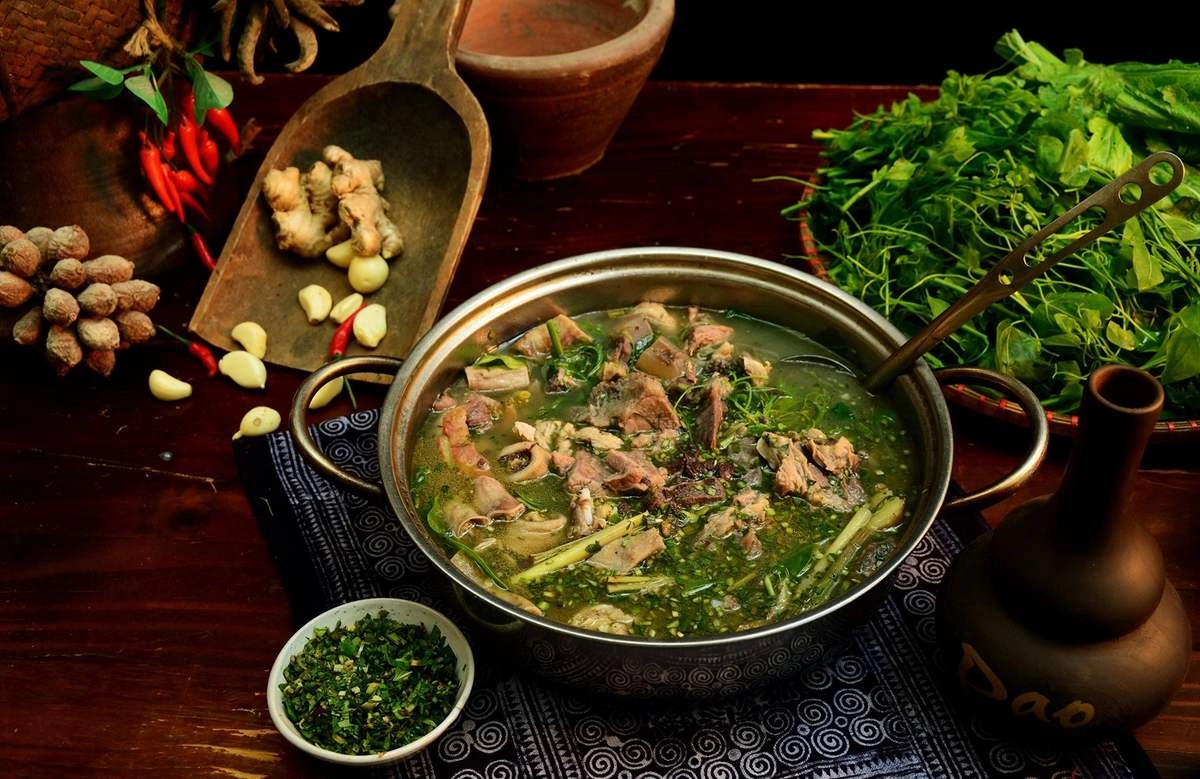
One of the defining characteristics of Sa Pa cuisine is its connection with the mountain environment. Fresh vegetables thrive in the cooler temperatures, while herbs and spices commonly used across Northwest Vietnam bring distinctive aromas to grilled meats, stews and other local dishes. Salmon and sturgeon raised in the region’s cold-water conditions have also become familiar ingredients on menus throughout Sa Pa, particularly in steaming hotpots served during chilly evenings.
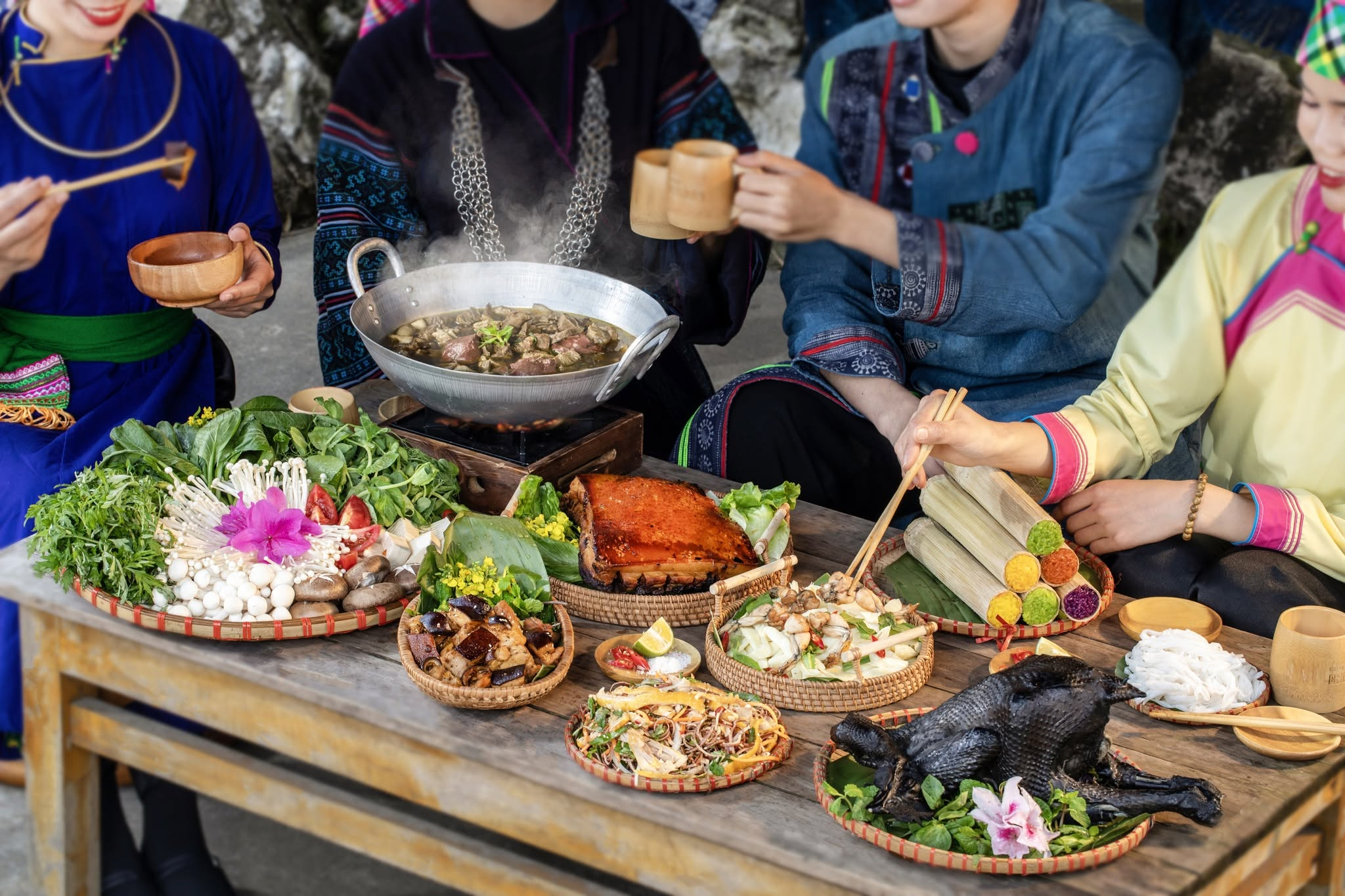
Fresh ingredients and Northwest flavors give Sa Pa cuisine its distinctive mountain character (Source: Collected)
Local food also reflects the cultural diversity of the region. Sa Pa and its surrounding areas are home to communities including the H’Mong, Dao, Tay and Giay, each contributing to the broader culinary landscape of the northern highlands. Traditional cooking techniques such as grilling, smoking and slow cooking are closely associated with this food culture, while ingredients such as mountain herbs, local pork, sticky rice and seasonal vegetables appear in many meals.
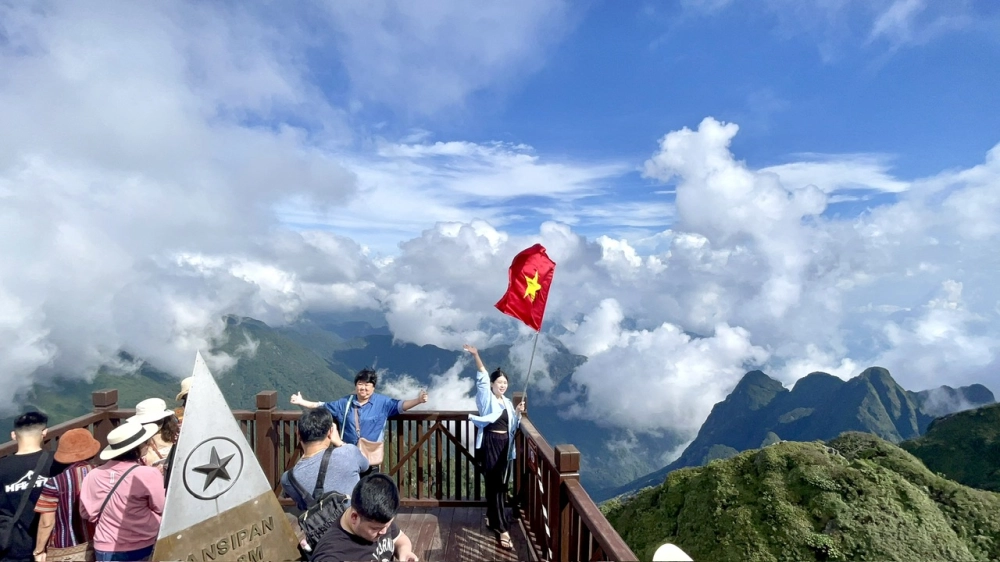
For travelers, discovering the best local food in Sa Pa is therefore as much about atmosphere and culture as flavor. A steaming hotpot after returning from Fansipan, charcoal-grilled dishes on a cool evening or a simple meal of local pork, com lam and mountain vegetables can all reveal a different side of the destination. Exploring these flavors alongside Sa Pa’s villages, markets and mountain landscapes creates a more complete introduction to life in Northwest Vietnam.
2. Best local food to try in Sa Pa
Exploring the best local food in Sa Pa is a chance to discover much more than the dishes commonly found in restaurants around town. From recipes associated with ethnic communities to ingredients grown in the cool highland climate, Sa Pa’s food scene reveals many different aspects of Northwest Vietnamese cuisine.
2.1. Thang co – a traditional highland specialty
Thang co is one of the most distinctive dishes associated with the mountainous regions of northern Vietnam, particularly H’Mong culinary culture. Traditionally prepared as a hearty stew, it is slowly cooked with meat and a combination of herbs and spices, producing a rich broth with a strong, recognizable aroma.
Historically, thang co was closely connected with community gatherings and highland markets, where large pots of the dish could be shared among groups of people. Today, visitors can find thang co at local restaurants in Sa Pa, including versions adapted to travelers who may be trying this traditional dish for the first time.
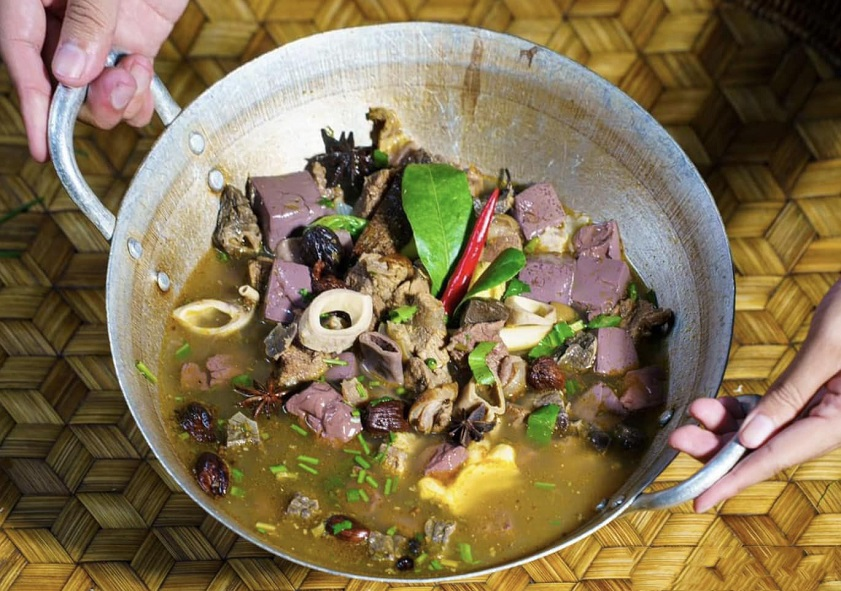
Thang co offers visitors a taste of the long-established culinary traditions of Vietnam’s northern highlands (Source: Collected)
More than simply a dish to tick off a food list, thang co provides an opportunity to understand the communal character of highland cuisine and the culinary traditions that have been preserved across generations.
2.2. Sa Pa salmon – a signature of the cool mountain climate
Salmon has become one of the most recognizable foods associated with modern Sa Pa. Thanks to the region’s cool climate and cold-water conditions, salmon can be raised locally and is now widely served at restaurants throughout the destination.
Salmon hotpot is perhaps the best-known preparation, particularly during Sa Pa’s chilly evenings. Thin slices of fish are cooked in a steaming broth together with mushrooms, tofu and fresh vegetables, creating a warming meal that is especially suitable for families and groups.
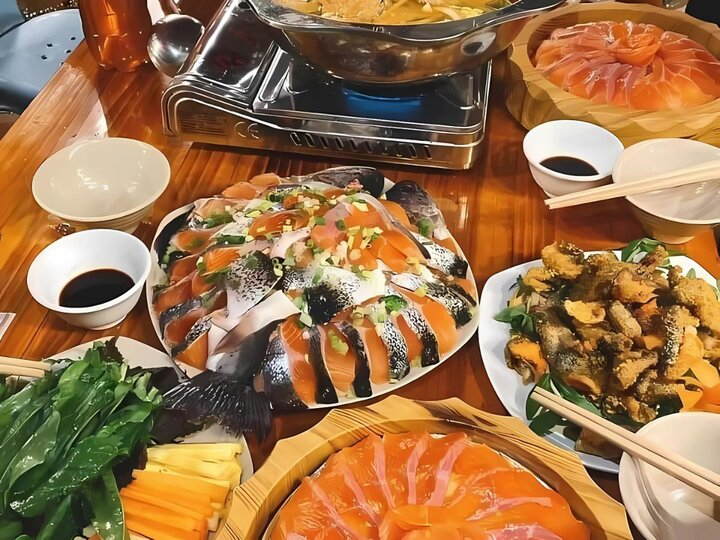
Sa Pa salmon is particularly popular in warming hotpots served during the destination’s cool evenings (Source: Collected)
Salmon can also be prepared in other ways, from grilled dishes to salads and other restaurant specialties. This versatility makes it an accessible choice for first-time visitors looking for a local ingredient without venturing immediately into the stronger flavors of traditional highland cuisine.
2.3. Black chicken – a distinctive highland ingredient
Black chicken, locally known as ga den, is another specialty visitors may encounter while exploring Sa Pa. This small local chicken is recognizable by its darker skin and is appreciated for its firm meat and rich flavor.
One of the most popular ways to enjoy black chicken is grilled, often with aromatic herbs or local seasonings. It may also be prepared in soups and other warming dishes, making it particularly appealing in Sa Pa’s cooler climate.
For travelers interested in ingredients closely connected with highland communities, black chicken provides an alternative to the pork and fish dishes more commonly highlighted on tourist menus. Sharing a grilled chicken alongside vegetables and other regional dishes can make for a satisfying evening meal after exploring Sa Pa.
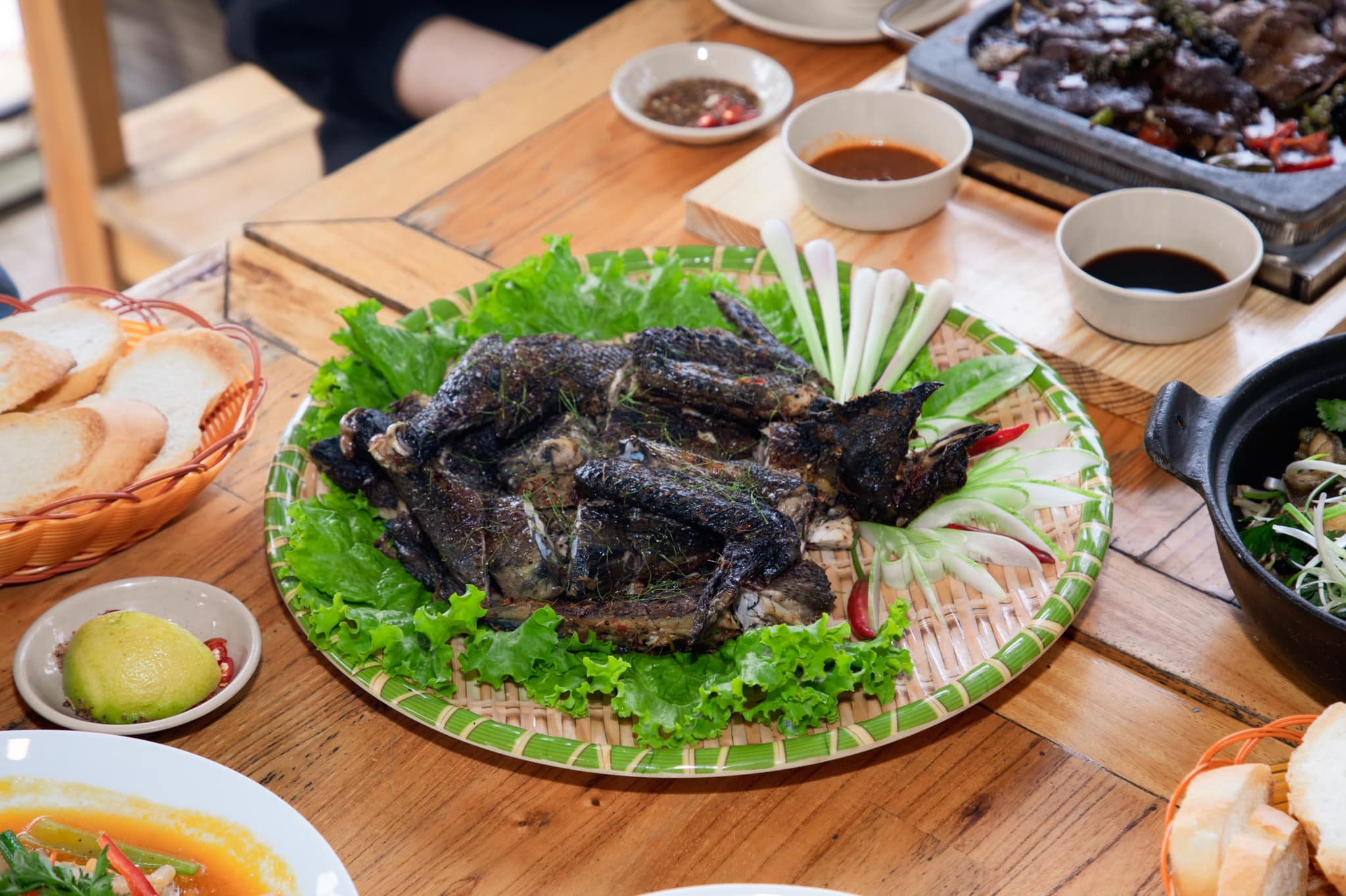
Grilled black chicken is a flavorful specialty to try during a journey through Sa Pa and Northwest Vietnam (Source: Collected)
2.4. Five-colored sticky rice – a colorful highland specialty
Five-colored sticky rice, or xoi ngu sac, immediately stands out for its vibrant appearance. Traditionally associated with ethnic communities in northern Vietnam, the dish features sticky rice prepared in several colors, with natural ingredients traditionally used to create the different shades.
Beyond its appearance, the dish carries cultural significance and is often connected with festivals, celebrations and important community occasions. Its soft, chewy texture and gentle flavor also make it one of the more approachable traditional foods for international travelers.
Visitors may encounter five-colored sticky rice at markets, local restaurants or cultural destinations around Sa Pa. Trying it alongside other regional dishes provides an easy introduction to the relationship between food, tradition and community life in the northern highlands.
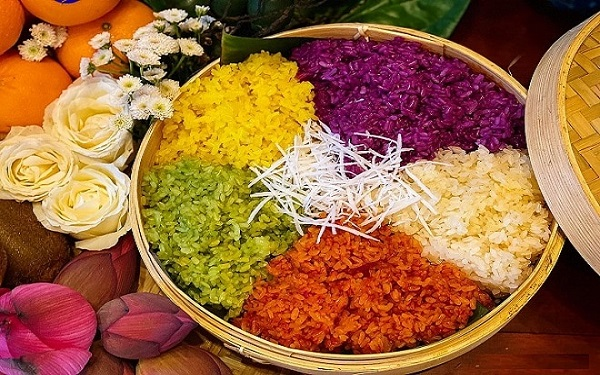
Five-colored sticky rice brings together distinctive colors, traditional preparation and the culinary culture of northern Vietnam (Source: Collected)
2.5. Mam da – a seasonal mountain vegetable
Among Sa Pa’s less familiar specialties is mam da, a mountain vegetable associated with the region’s cold climate. Its name, which can be translated literally as “stone sprout,” reflects the vegetable’s compact appearance and distinctive structure.
Mam da can be prepared simply by boiling or stir-frying, allowing its naturally crisp texture and subtle sweetness to remain the focus. It may also be served alongside meat dishes as part of a larger meal.
Unlike dishes available throughout the year, mam da is seasonal, so travelers may not always find it during every visit. When it is available, however, it offers an opportunity to experience an ingredient closely linked to Sa Pa’s climate and agricultural conditions.
2.6. Men men – a simple taste of H’Mong food culture
Men men is a traditional dish made from finely ground corn and closely associated with H’Mong cuisine in Vietnam’s northern mountainous regions. Rather than being boiled like ordinary corn, the ground corn is carefully steamed to create a soft, crumbly texture.
The dish reflects a practical food tradition shaped by life in highland areas, where corn has historically been an important crop. Men men itself has a relatively simple flavor and is generally eaten together with other dishes rather than treated as a standalone restaurant specialty.
For travelers seeking the best local food in Sa Pa beyond the dishes most commonly promoted to tourists, men men offers a different perspective. Its appeal lies not in elaborate presentation but in the connection between food, agriculture and everyday life among highland communities.
3. Tips for experiencing local food in Sa Pa
Discovering the best local food in Sa Pa is not simply about finding a list of famous dishes. Seasonal ingredients, local dining habits and the cultural setting can all influence the experience. A few practical tips can help first-time visitors explore Sa Pa cuisine in a more authentic and enjoyable way.
3.1. Look for seasonal ingredients and local specialties
Sa Pa’s cuisine changes subtly with the seasons, particularly when it comes to fresh mountain produce. Vegetables such as mam da are not necessarily available throughout the year, while different greens and agricultural products appear according to local growing conditions.
Instead of arriving with a fixed checklist, travelers can ask restaurants which vegetables and regional ingredients are currently in season. This approach can lead to dishes that are fresher and more representative of the time of year. During colder months, warming foods such as thang co, salmon hotpot and grilled dishes can also feel especially suited to Sa Pa’s mountain climate.
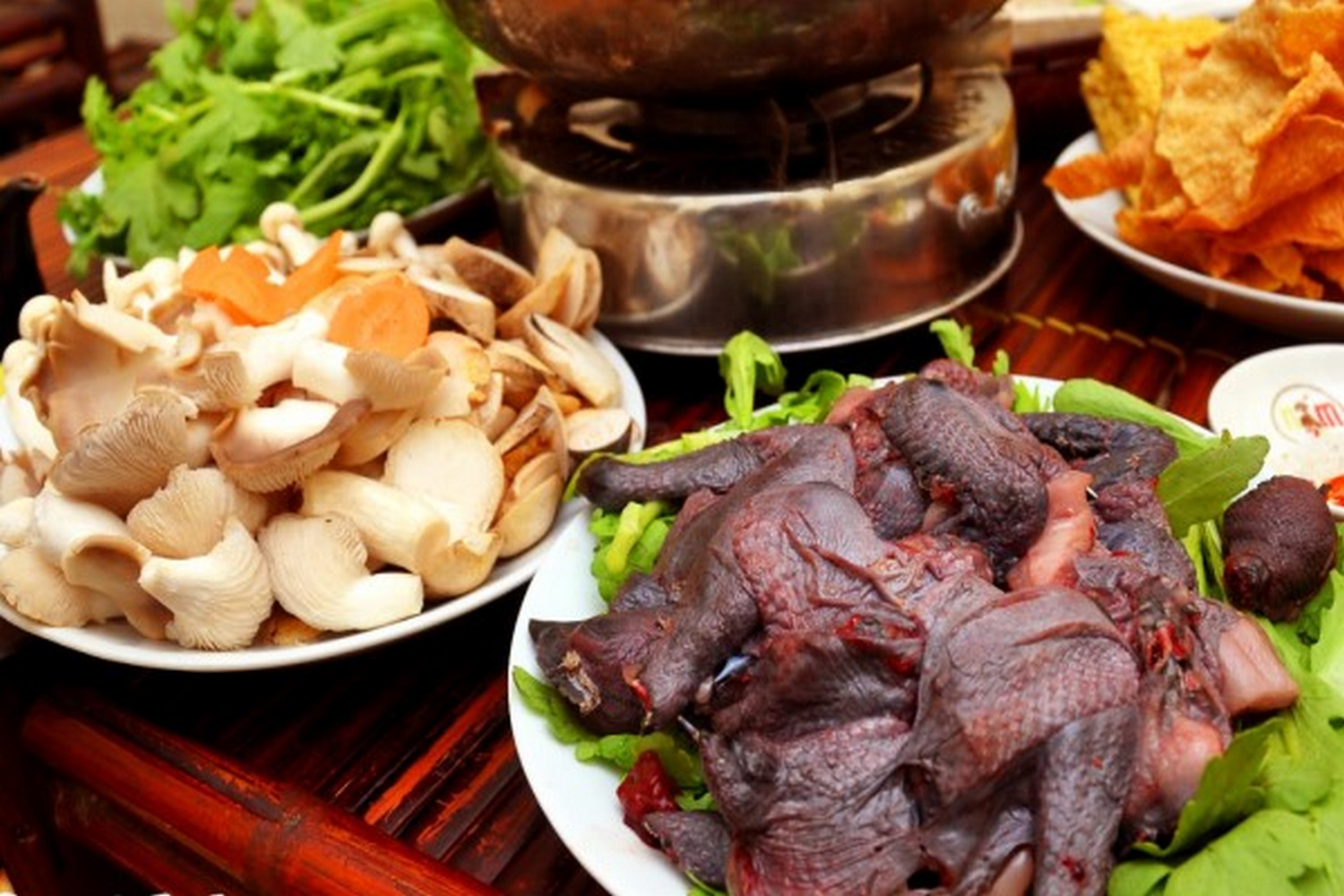
Seasonal ingredients are an important part of discovering the local flavors of Sa Pa (Source: Collected)
3.2. Explore local markets and cultural spaces
Restaurants are not the only places to discover Sa Pa cuisine. Markets and cultural spaces can provide additional context for the ingredients and food traditions found across the region. Travelers may encounter local vegetables, herbs, corn products, dried or smoked foods and other ingredients associated with everyday highland cooking.
Visiting these places also helps connect individual dishes with the communities behind them. Foods such as men men, five-colored sticky rice and thang co have cultural stories that extend beyond their ingredients, reflecting agricultural practices, festivals and community traditions across Northwest Vietnam.
For visitors heading to Fansipan, May Village at Sun World Fansipan Legend offers another opportunity to explore the cultural character of the Northwest through traditional architecture, crafts and performances. Combining these experiences with regional cuisine can make local food feel like part of the wider journey rather than a separate activity.
Exploring highland cultural spaces provides greater context for the food traditions of Northwest Vietnam (Source: Collected)
3.3. Order several dishes to share
Many local specialties are better suited to sharing than eating individually. Hotpots, grilled chicken and other larger dishes can easily form the center of a group meal, accompanied by sticky rice, seasonal vegetables or smaller regional specialties.
For two or more travelers, ordering several different dishes is also an effective way to experience more flavors without making every meal overly heavy. A group could, for example, combine a warming fish dish with black chicken, vegetables and sticky rice, then save more distinctive specialties such as thang co for another meal.
This approach is particularly useful on a short trip. Rather than trying to fit every famous dish into one sitting, spreading different flavors across lunch and dinner allows travelers to appreciate each experience at a more comfortable pace.
3.4. Ask about ingredients and preparation before ordering
Some traditional dishes in the northern highlands can be unfamiliar to first-time visitors, both in terms of ingredients and preparation. Asking restaurant staff about what goes into a dish before ordering can help travelers choose foods that match their preferences and dietary requirements.
This is particularly useful when trying traditional recipes such as thang co or dishes containing regional herbs and seasonings. Travelers with allergies, religious dietary requirements or specific restrictions should communicate these clearly, as ingredients used in broths, marinades and sauces may not always be obvious from the menu. Ultimately, the easiest way to discover the best local food in Sa Pa is to remain curious and try a mixture of familiar and lesser-known dishes. Combining iconic specialties with seasonal produce and foods connected to local communities offers a much richer introduction to Sa Pa’s culinary identity.
Exploring Sa Pa through its cuisine reveals a side of the destination that goes far beyond mountain scenery. Each dish, from thang co and salmon to colorful sticky rice and seasonal vegetables, reflects local ingredients, climate and the culinary traditions of Northwest Vietnam. To experience the best local food in Sa Pa, mix iconic specialties with lesser-known dishes, explore seasonal flavors and leave room for unexpected discoveries along the journey.