


1. Incense Burner Islet (Hon Dinh Huong) – prominent symbol of Ha Long Bay
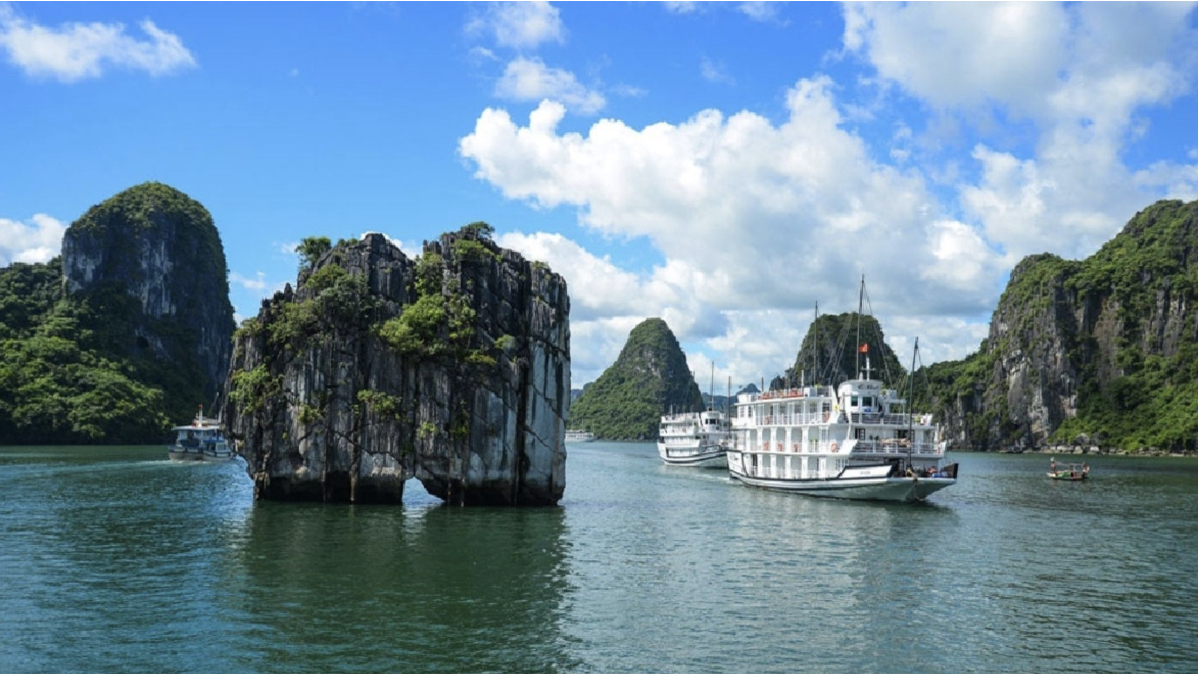
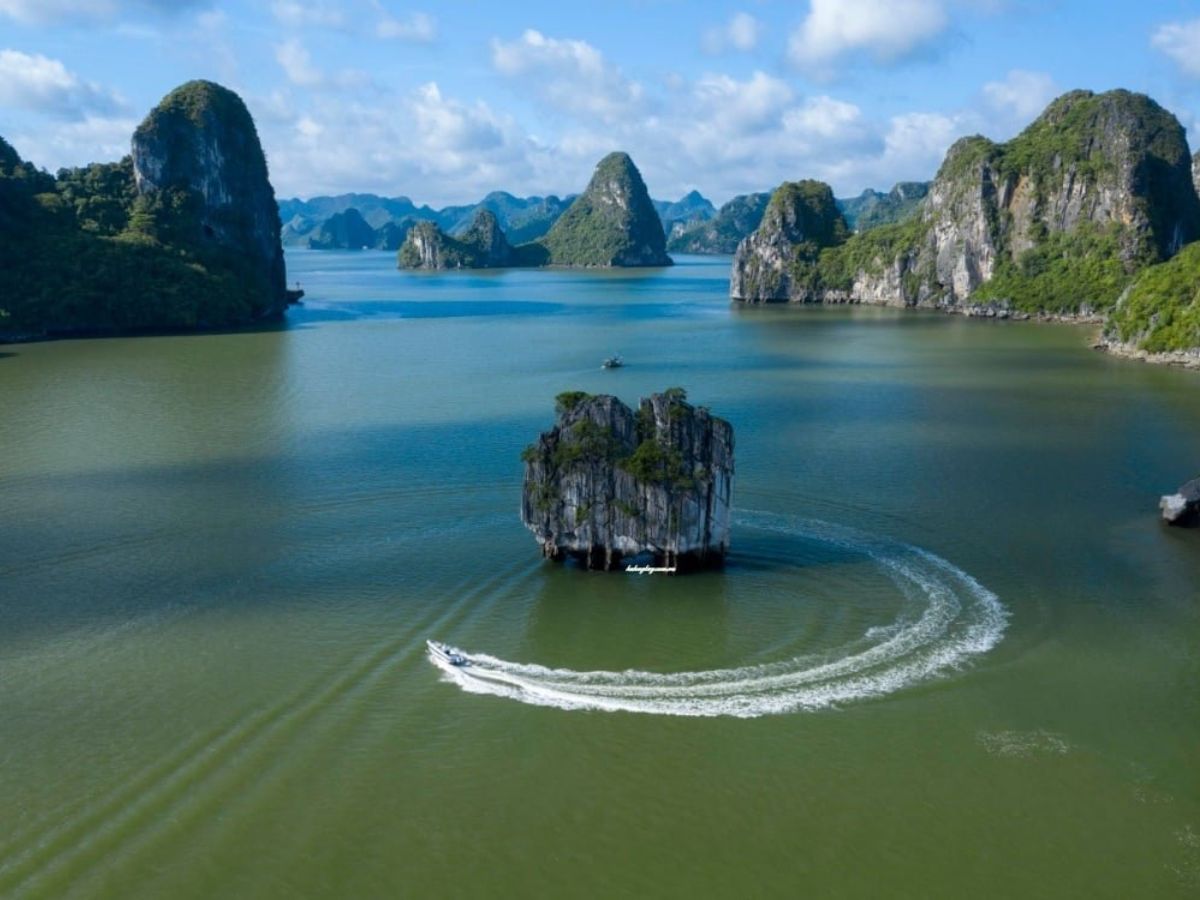
Hon Dinh Huong stands out with its unique incense burner shape, nestled amidst the turquoise waters and majestic limestone scenery . (Source: Collected)
Hon Dinh Huong is a prominent symbol of Ha Long Bay, distinguished by its unique incense burner shape amidst the turquoise waters and majestic limestone landscape. Beyond attracting tourists with its natural beauty, the rock also holds deep cultural and spiritual value, becoming a familiar image on the 200,000 VND polymer banknote.
1.1. Where is Hon Dinh Huong located?
Situated within the vast complex of Ha Long Bay, Hon Dinh Huong is located in the center of Ha Long City, Quang Ninh Province. The rock possesses coordinates of 106°56’–107°37’ East longitude and 20°43’–21°09’ North latitude, positioned southwest of Dau Go Island, near famous caves such as Ba Hang Cave and Sung Sot Cave.
Hon Dinh Huong appears in three main tourist routes of the bay, allowing visitors to easily combine visits to prominent spots during their journey. From Bai Chay pier, the distance is only about 6 km; from Tuan Chau harbor, it is 4 km; and from the center of Ha Long City, it is about 20 km to the southeast. This convenient location makes the rock an unmissable stop on any tour exploring the natural world heritage site of Ha Long.
1.2. Why has Hon Dinh Huong become a symbol of Ha Long?
The image of Hon Dinh Huong is not only familiar to tourists but also appears on the 200,000 VND polymer banknote, demonstrating its cultural value and special status in the hearts of Vietnamese people. When looking at the banknote, everyone associates it with the majestic beauty and natural essence of the country.
The highlight that makes Hon Dinh Huong unique is its shape resembling a sturdy four-legged incense burner, standing amidst the turquoise waters – a rare natural structure in the world. Over time, sea waves and wind have sculpted unique erosion marks on the rock's surface, highlighting the characteristic Karst topography of Ha Long Bay, which has been recognized as a UNESCO Natural World Heritage site twice.
Beyond its scenic value, Hon Dinh Huong is also a symbol of spiritual culture. The image of the sacred incense burner serves as a reminder of the contributions of past generations, embodying the tradition of "drinking water, remembering its source." Local fishermen have long offered sincere prayers before setting out to sea, entrusting their hopes for safety to this rock.
2. Exploring the shape and structure of Hon Dinh Huong

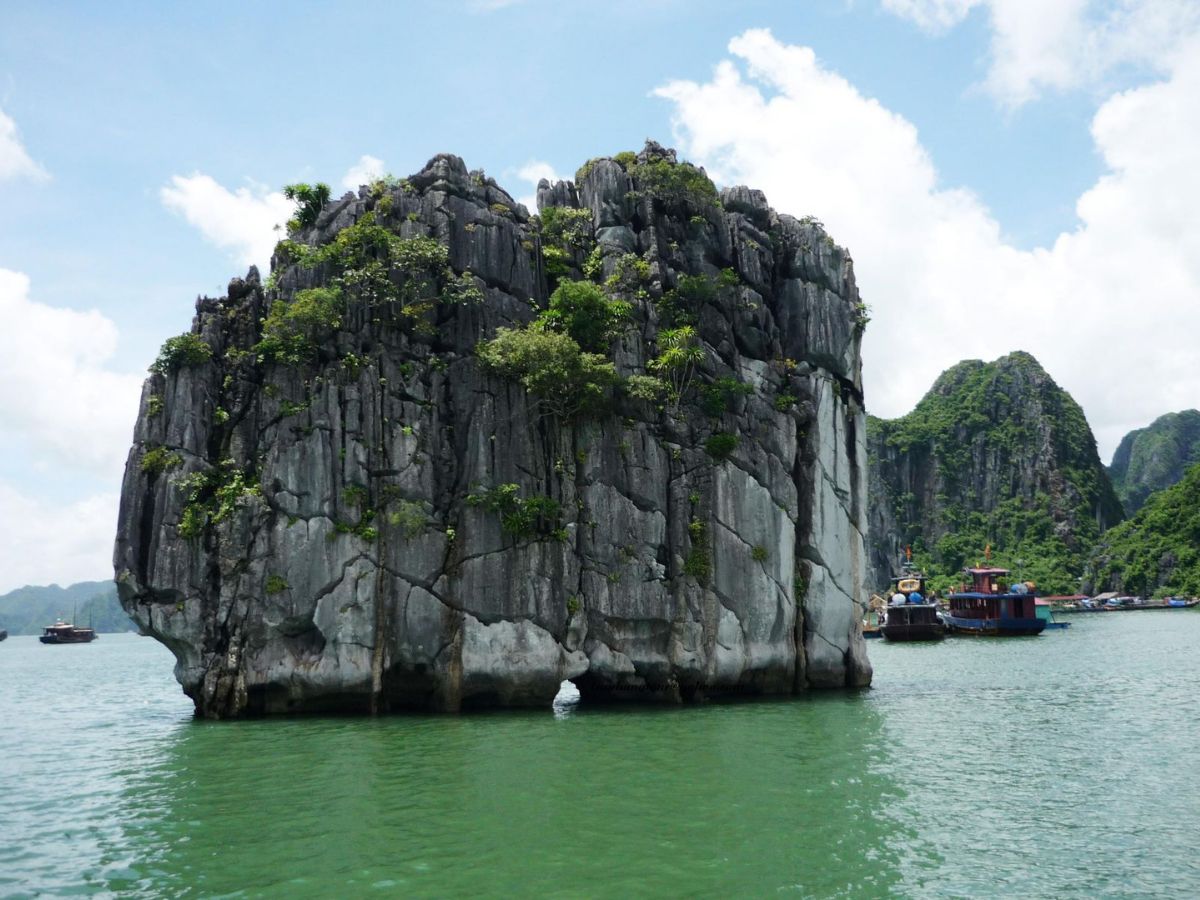
Hon Dinh Huong islet with its unique incense burner shape amidst the clear blue water. (Source: Collected)
Hon Dinh Huong islet attracts tourists not only because of its central location in Ha Long Bay but also for its unique shape resembling an ancient incense burner, standing firm amidst the clear blue water. The beauty of the rock formation changes with the tide and light, offering spectacular natural moments, ideal for admiration and capturing impressive photos.
2.1. Unique Shape Characteristics of Hon Dinh Huong Islet
Hon Dinh Huong islet has been gifted a unique form by nature, standing out amidst the clear blue waters of Ha Long Bay. The massive limestone khối đá possesses the appearance of an ancient incense burner, with its imposing body supported by four slender yet sturdy stone legs. Despite enduring millions of years of wind, waves, and harsh weather, the rock formation remains standing, becoming a symbol of nature's resilience.
The formation of Hon Dinh Huong islet is the result of continuous erosion by tides and complex geological factors. The relentless action of sea waves has carved layers of rock over time, creating characteristic patterns and fissures that reflect the formation history of Ha Long Bay's unique tropical karst system.
2.2. Spectacular Transformations with the Tide
The beauty of Hon Dinh Huong islet changes dynamically with the tide and the light throughout the day, presenting vastly different natural scenes. When the tide rises, a large part of the rock's body is almost submerged, with only the peak emerging like a sacred flame in the sea. As the tide recedes, the four stone legs become visible along with natural cracks, reminding visitors of the earth's long developmental process.
To capture impressive photos, visitors should stand or photograph from a boat approximately 20–50 meters away from Hon Dinh Huong islet, making it easy to fully capture the incense burner shape against the backdrop of the blue water. The ideal times to admire and photograph are early morning or late afternoon, when the gentle sunlight casts a golden hue on the water, highlighting the unique details of the rock formation. Especially, when the tide is low, it's a great opportunity to capture the full view of the four stone legs supporting the majestic rock mass.
3. History and Cultural Significance of Hon Dinh Huong Islet
A familiar symbol on the 200,000 VND banknote – Hon Dinh Huong Rock. (Source: Collected)
Hon Dinh Huong Rock is not only a prominent natural wonder of Ha Long Bay but also holds deep cultural and spiritual value for Vietnamese people. The natural incense burner shape of the rock formation evokes the tradition of "drinking water, remembering its source" and has become a national symbol, appearing on the 200,000 VND banknote, and is also a place where fishermen offer prayers before each fishing trip.
3.1. Role as evidence of Ha Long Bay's geological heritage
Hon Dinh Huong Rock is a typical symbol reflecting the geological formation history of Ha Long Bay's Karst landscape. Over millions of years, erosion, corrosion, and natural impacts have created unique patterns, cracks, and shapes on the rock surface, testifying to the continuous development of the tropical Karst system. Scientists both domestically and internationally recognize Hon Dinh Huong Rock as a prime example, contributing to the affirmation of the bay's global geological value.
It is precisely due to this unique geological characteristic that Ha Long Bay was recognized by UNESCO as a World Natural Heritage site. Not only attracting tourists with its majestic scenery, Hon Dinh Huong Rock also holds significant scientific value, opening up research opportunities for experts on the formation and evolution of the rare tropical karst system in the world.
3.2. Cultural, spiritual significance, and national symbol
For Vietnamese people, Hon Dinh Huong Rock is not just a natural wonder but also a profound spiritual symbol. The rock formation's shape resembling a natural incense burner evokes memories of incense sticks honoring ancestors, embodying the tradition of "drinking water, remembering its source." When admiring Hon Dinh Huong Rock, every visitor feels the value of gratitude towards ancestors and the spiritual meaning tied to the nation's history.
The appearance of Hon Dinh Huong Rock on the 200,000 VND banknote further confirms this symbol's special place in the Vietnamese consciousness, while also conveying cultural values and connecting the past with modern life.
For coastal fishermen, Hon Dinh Huong Rock holds deep spiritual significance. Before each fishing trip, they respectfully offer prayers, entrusting their hopes for peace, good fortune, and bountiful catches. Thus, Hon Dinh Huong Rock is not only a natural wonder but also an inseparable part of the cultural and spiritual life of the coastal community.
4. Guide to visiting Hon Dinh Huong Rock in 2025

Tourists check-in on a rowing boat when visiting Hon Dinh Huong. (Source: Collected)
Visiting Hon Dinh Huong in 2025 becomes easy and convenient thanks to the main tourist routes of Ha Long Bay, allowing visitors to admire the rock from many unique perspectives. The ideal time to check-in is morning or afternoon, when the light is soft and the water reflects the scenery, helping you capture beautiful photos of this famous symbol.
4.1. Tourist routes for easy viewing of Hon Dinh Huong
Visitors can easily admire Hon Dinh Huong through three main tour routes of Ha Long Bay: route number 1, number 2, and number 5. These routes are designed for boats to move past the rock at an ideal distance, making the journey lasting from 4 to 8 hours from Bai Chay or Tuan Chau harbor convenient and complete. Route 1 often combines visits to Sung Sot Cave and Titop Island, route 2 visits Thien Cung Cave and Dau Go Cave, while route 5 offers a diverse experience with many other outstanding points of the bay.
In 2025, for a complete sightseeing experience, visitors should choose a full-day package tour with a covered boat, equipped with full safety equipment. Many reputable travel companies arrange a 15–20 minute stop for visitors to take photos and observe Hon Dinh Huong from various angles. Choosing combined tours helps optimize time, cost, and explore other highlights on Ha Long Bay.
4.2. Ideal locations and times to check-in at Hon Dinh Huong
The ideal time to photograph Hon Dinh Huong is in the morning from 7:00–9:00 AM or in the afternoon from 3:00–5:00 PM, when the light is gentle and the scenery becomes magical. At this time, the water reflects the sunlight, creating a sparkling effect, highlighting the rock's distinctive shape. It is advisable to avoid shooting at noon, as harsh sunlight can create strong shadows, diminishing the natural beauty of the landscape.
The best position for shooting is on the deck of the boat or a canoe, maintaining a distance of 20–50 meters from Hon Dinh Huong to capture its entire shape without distortion. Visitors should use a wide-angle camera or a high-quality phone, combining the waves and the sky as a background to add depth to the photo. The afternoon is also a great time for backlight shots, when the silhouette of Hon Dinh Huong stands out against the brilliant golden water.
5. Outstanding experiences when visiting Hon Dinh Huong
5.1. Check-in, sightseeing, and feeling the original beauty
When admiring Hon Dinh Huong from the boat, visitors are easily captivated by the sacred yet majestic beauty of the rock amidst the vast sea and sky. Its natural shape resembling an incense burner evokes a sense of solemnity, as if protecting those standing before this wonder.
A memorable experience is observing the changing shapes and nuances of Hon Dinh Huong at different times of the day. Visitors can take photos, record videos, check-in from various angles, and listen to explanations about the cultural, historical, and geological values of the rock. Photography enthusiasts will find inspiration from the interplay of light, water, and rock, creating unique natural works of art.
5.2. Combine visits to other outstanding nearby tourist spots

Travel experience at Sun World Ha Long. (Source: Collected)
A reasonable itinerary when visiting Dinh Huong Islet is to combine it with surrounding highlights.
Sun World Ha Long: Located in Bai Chay, Sun World Ha Long is a modern entertainment complex with many attractive games. Visitors can experience the park, entertainment areas, and utility services within a large-scale tourism ecosystem. The combination of natural exploration and modern entertainment offers a diverse and complete journey for all visitors.
Thien Cung Cave: This is one of the most famous caves in Ha Long Bay, nổi bật with its diverse and vibrant stalactite system. Visitors will be impressed by the uniquely shaped stalactites, evoking the mystical beauty of nature. Thien Cung Cave is also likened to a "palace amidst the sea", offering a fascinating exploration experience for visitors.
Dau Go Cave: Dau Go Cave is historically significant as President Ho Chi Minh once visited during his trips to Ha Long. The cave features unique natural rock formations and a tranquil atmosphere, suitable for sightseeing and historical exploration. Visitors can admire the scenery while feeling the historical value of this place.
Sung Sot Cave: Sung Sot Cave stands out with its vast, magnificent space and impressive giant stalactites. It is one of the most attractive caves for tourists thanks to its exquisite natural beauty. Visiting the cave, visitors will feel as if they have entered a magical world in the heart of the bay.
Ti Top Island: Ti Top Island is famous for its fine white sandy beach and clear blue waters, ideal for swimming and relaxing. The island also has a viewpoint from the hilltop, offering a panoramic view of the beautiful Ha Long Bay. It is an ideal stop for outdoor activities and photography.
6. Notes when visiting Dinh Huong Islet

Enjoy the full joy and magnificent beauty of Ha Long Bay. (Source: Collected)
When visiting Hon Dinh Huong, visitors should note to choose safe transportation and protect personal equipment from contact with seawater, to ensure a convenient and complete experience. At the same time, complying with regulations, not littering or climbing on rocks helps protect the precious natural heritage of Ha Long Bay for future generations.
When visiting Hon Dinh Huong, visitors should prioritize choosing large boats or covered canoes to ensure comfort, avoid sun, and be convenient for taking photos.
Electronic devices need to be carefully preserved, avoiding direct contact with seawater and humidity.
Protecting the heritage is the shared responsibility of all visitors to Ha Long Bay. Absolutely do not litter into the water, do not climb on rocks or take anything as a souvenir. Every small action contributes to preserving the pristine beauty of Hon Dinh Huong and the entire bay for future generations.
Strictly adhering to the regulations of the management authorities and tourism laws is also a way to show respect for the natural world heritage, while enhancing a safe and sustainable sightseeing experience.
With its unique shape and prominent location in the bay, Hon Dinh Huong has become an unmissable characteristic symbol when exploring Ha Long. Visitors can admire the majestic landscape, take stunning photos, and enjoy the peaceful natural space around. Visit Hon Dinh Huong during your 2025 travel itinerary to fully experience its unique beauty and memorable moments in the heart of Ha Long Bay.