



1. Overview of Hoang Thanh Thang Long Sun Legacy City
The Sun Mega City super-urban area in the south of Hanoi is opening an unprecedented "journey back in time" in the North, with the highlight being a cultural tourism complex recreating the Hoang Thanh Thang Long of the Ly – Tran dynasties.
1.1. Sun Legacy City – The "cultural heart" of the Sun Mega City super-urban area
Sun Mega City is strategically located, about 50km from the center of Hanoi, equivalent to a 45-minute journey. The project includes three component super-urban areas, of which Sun Legacy City is considered a "hidden gem". This subdivision is positioned as a tourism, cultural, and entertainment complex, serving as the "soul" and "cultural heart" of the entire Sun Mega City project.
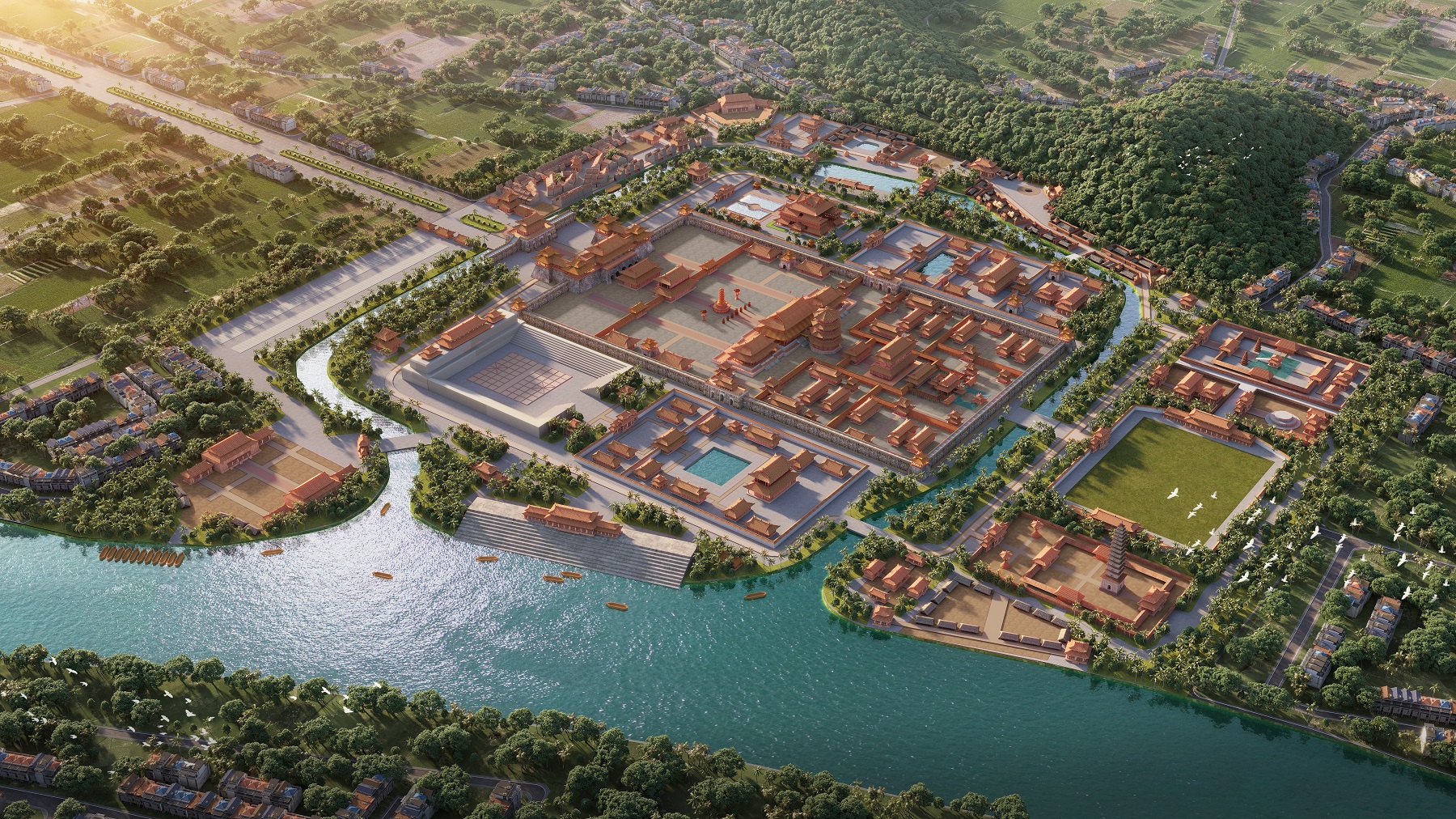
Imperial Citadel of Thang Long at Sun Legacy City. (Source: Illustrative perspective photo)
The complex recreating the Imperial Citadel of Thang Long at Sun Legacy City is where Sun Group Corporation has painstakingly researched to reconstruct the architecture of the Forbidden Citadel of Thang Long during the Ly – Tran dynasties (11th–14th centuries), aiming to create an international-class cultural destination. Here, visitors are invited to "step into a journey back in time" to feel a part of the quintessence of Vietnam through its imperial architectural works.
1.2. Planning Concept – A Symphony Between Past and Present
The choice of this location to recreate the Imperial Citadel of Thang Long was not accidental. This cultural tourism complex is located in the former Ha Nam (now Ninh Binh province), majestically at the foot of Long Doi Son mountain and near the legendary Chau River. This area bears deep historical significance as it is associated with King Ly Cong Uan's historic relocation of the capital from Hoa Lu (Ninh Binh) to Dai La (Thang Long) in 1010.
Notably, the architectural and cultural inspiration is drawn from precious vestiges remaining in this land. The nearly 1,000-year-old Sung Thien Dien Linh stele on the summit of Long Doi Son mountain, the calligraphy of King Ly Nhan Tong, is the only surviving original text from the Ly dynasty that mentions the Thang Long Capital along with symbols such as the Forbidden Citadel, Doan Mon, and Dien Huu Pagoda. It is the legend and precious heritage from the land of "Long Doi mountain, Chau River" that have contributed to recreating the most brilliant period in Vietnam's cultural flow.
2. Heritage Space and Iconic Structures within the Imperial Citadel of Thang Long Sun Legacy City
The complex recreating the Imperial Citadel of Thang Long Sun Legacy City is meticulously designed to emulate the "ancient wonder" with enduring historical and cultural value, recreating the overall layout akin to a miniature Thang Long capital. The architecture is inspired by the Ly – Tran art – the peak period of aesthetics, religion, and power.
2.1. Iconic Structures of Imperial Authority
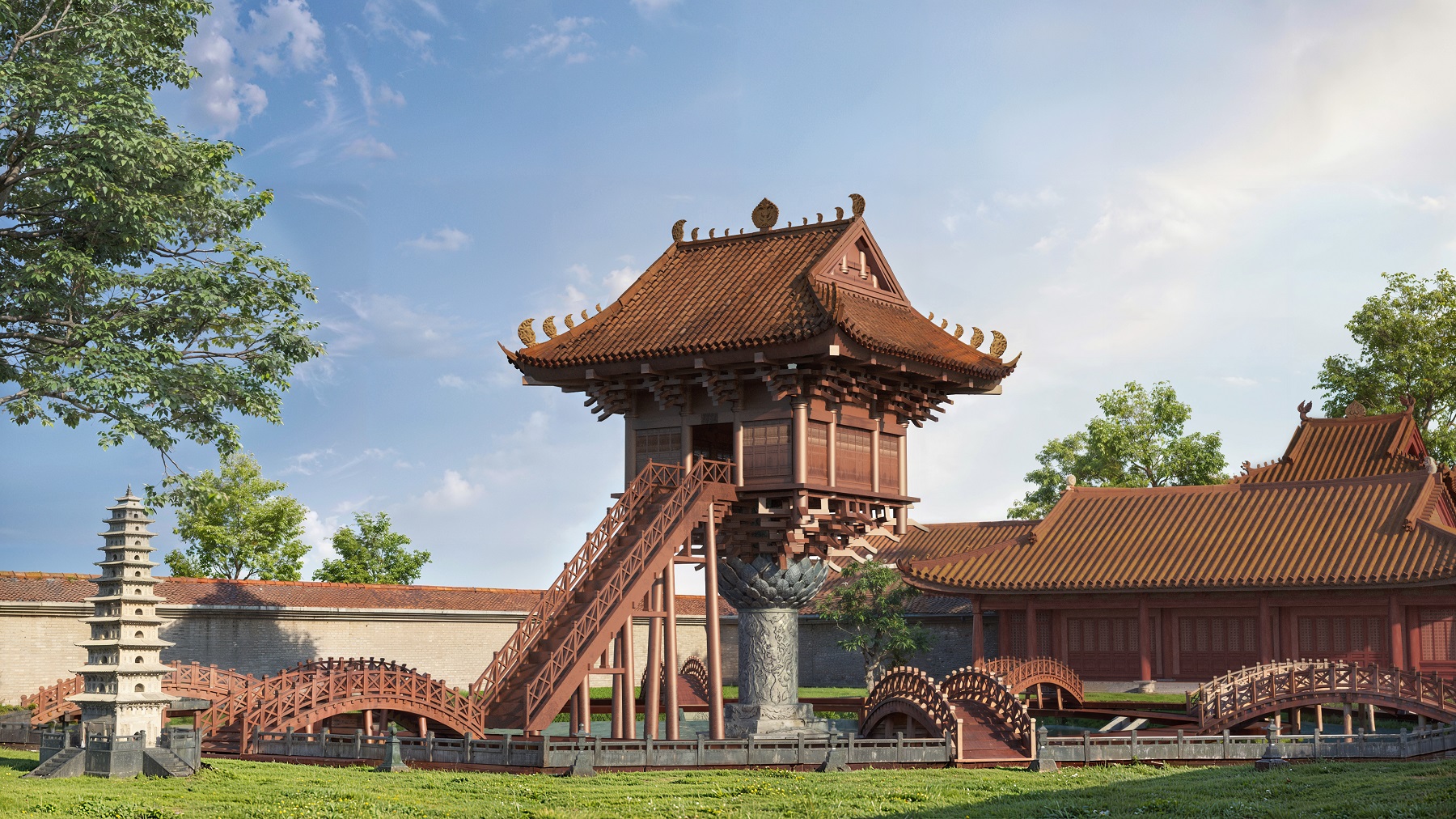
Reconstructed complex of "ancient wonders" carrying historical - cultural values imprinted for millennia. (Source: Illustrative perspective photo)
Magnificent structures simulating Thang Long Imperial Citadel not only reach the pinnacle of architectural aesthetics but also reflect the grandeur and supreme authority of the golden age court:
Dai Hung Gate: This is a majestic city gate, marking the beginning of a historical exploration journey, meticulously recreated inspired by Doan Mon of the Le So period and Bac Mon of the Nguyen period. Dai Hung Gate features a base with a platform and gate with 3 entrances, an upper level with a pavilion, and is connected to the city wall.
Ngu Phuong Tinh Lau: A symbol of majesty, this structure is recreated in a platform-style design. Ngu Phuong Tinh Lau consists of five lower gates (three main, two auxiliary) and five upper pavilions, bearing the distinct architectural imprint of the Ly – Tran dynasties, despite influences from the Tang – Song styles.
Dien Thien An: The heart of the Imperial Citadel, where Ly – Tran kings held court, managed state affairs, and received civil and military officials. The Palace exudes grandeur and supreme authority, with lacquered and gilded wooden pillars and intricate carvings, reflecting the outstanding architectural level and the prosperity of the dynasty.
Dien Tap Hien and Dien Giang Vo: These two structures complement Dien Thien An, embodying the perfect balance between civil administration and military prowess of the Ly – Tran dynasty. Dien Tap Hien, located to the left of Dien Thien An, features an elegant and tranquil design, serving as a gathering place for civil and military officials before royal audiences. Dien Giang Vo, situated to the right of Dien Thien An, was the center for military training, hosting martial demonstrations and imperial guard reviews, symbolizing military strength.
Hau Cung Area: Recreating the living space of the Queen and the King, comprising numerous palaces. This area includes opulent reconstructed palaces such as Long Duc Palace, Nghinh Xuan Palace, Thuy Hoa Palace, Thuong Duong Palace, along with Truong Xuan Palace (the King's residence).
2.2. Cultural, Academic, and Spiritual Space
The reconstructed complex of Hoang Thanh Thang Long Sun Legacy City also recreates religious and academic spaces, allowing visitors to gain deep insights into Buddhism and Confucianism of this era:
Van Mieu – Quoc Tu Giam: Inspired by Vietnam's first university, the Van Mieu – Quoc Tu Giam area is a dedicated reconstruction aiming to recreate a cultural and educational center, honoring the values of civilization and knowledge.
Dien Huu Pagoda (One Pillar Pagoda): This iconic architectural work of the Ly period, associated with the miraculous dream of King Ly Thai Tong, is meticulously recreated within the complex.
Thap Bao Thien: This structure, one of the renowned "An Nam Tu Dai Khi" (Four Great Treasures of Annam), is also vividly recreated.
Den Quang Chieu: A symbol of Buddhist faith during the Ly – Tran period. These lanterns were typically placed before major gates like Dai Hung Gate or Ngu Phuong Tinh Lau. The purpose of the Den Quang Chieu festival was to "illuminate" the compassion and benevolence of Buddhism for all people.
Quan Vo Area and Thao Truong: The Quan Vo Area is recreated to depict the military class of Dai Viet with an open architectural style, reflecting a simple, upright, and martial lifestyle. Connected to the Quan Vo Area is the Thao Truong, simulating the ancient military training grounds, where traditional human chess games and traditional martial arts performances will be held for visitors to experience.
3. Multi-dimensional Experiential Ecosystem and Modern Technology
The reconstructed complex of Hoang Thanh Thang Long at Sun Legacy City goes beyond mere architectural simulation, opening a journey to explore ancient Thang Long through a multi-dimensional experiential ecosystem of culture, education, and entertainment. The project is designed for visitors not only to "see" history but also to "live within" the ancient imperial space.
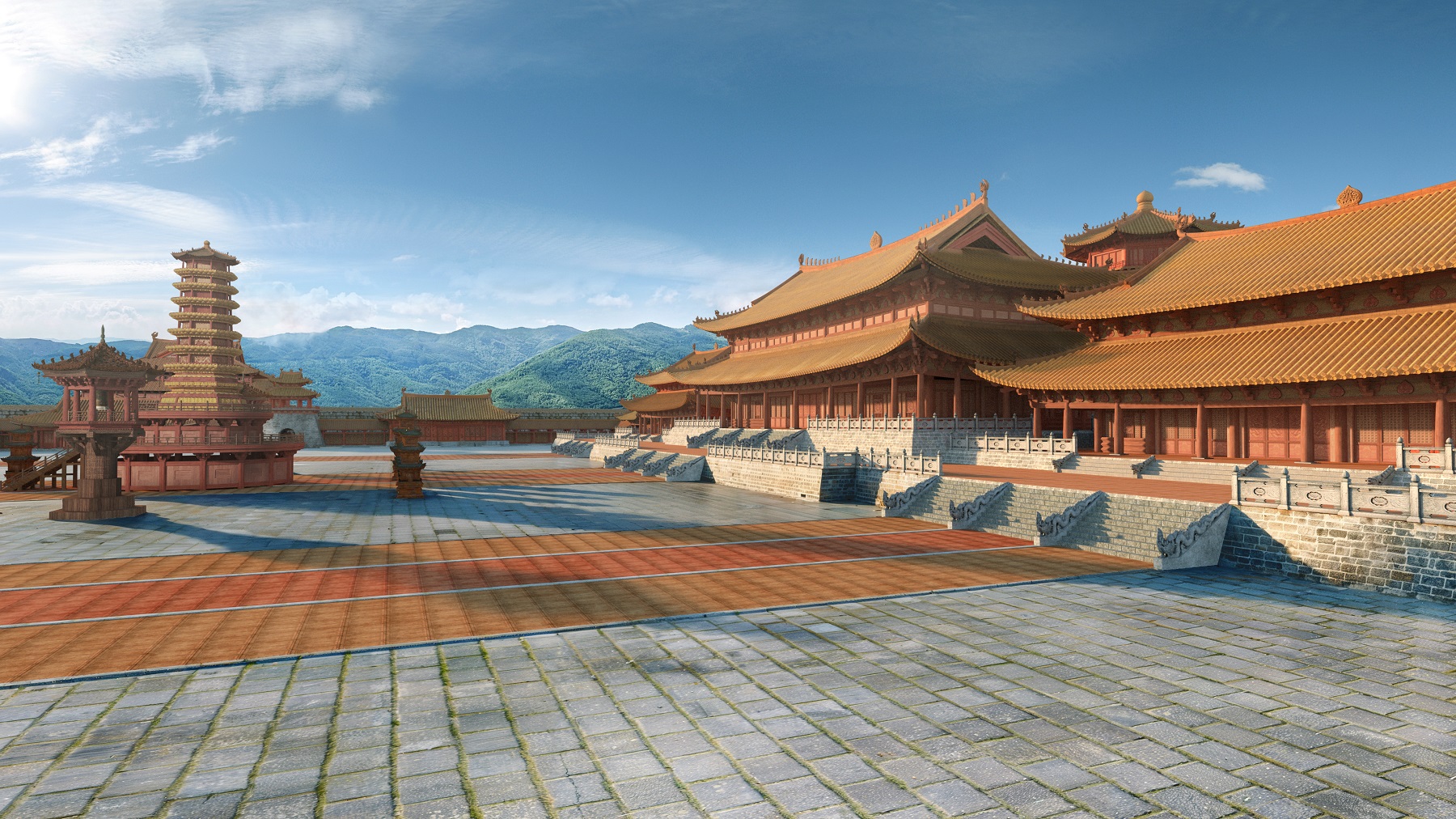
A multidimensional experience ecosystem and modern technology. (Source: Illustrative perspective photo)
3.1. Interactive Experiences and Everyday Culture
The socio-cultural life of the two golden dynasties, Ly – Tran, will be recreated in detail and vividly:
Immersive Experiences: Visitors can don ancient costumes, learn calligraphy, or enjoy the quintessence of royal cuisine.
Folk and Educational Activities: At the Thao Truong area (a simulation of ancient military training grounds), visitors can participate in traditional Co Nguoi (human chess) games and experience traditional martial arts. The Quan Van - Quoc Tu Giam area also hosts educational activities such as calligraphy gatherings, calligraphy workshops, and specialized scientific seminars.
Urban and Craft Village Spaces: The daily life of ancient Kinh Ky residents is recreated through the bustling Urban Street area with two-story houses with tiled roofs, simulating a vibrant trading atmosphere. This area also features an ancient Communal House and traditional Craft Villages (such as pottery, silk weaving, carving) allowing visitors to directly experience local culture and ancient professions.
3.2. Live-Action Shows and High-Tech Applications
To enhance attractiveness and emotional depth, the complex utilizes modern entertainment technology to recreate historical legends and rituals.
Bach Dang Live-Action Show: This is the most anticipated show, using a 10,000m2 water stage to simulate the heroic historical naval battle on the Bach Dang River. The program seamlessly combines lighting effects, 3D mapping projection technology, holograms, and multi-dimensional sound.
Restored Traditional Festivals: In the Central Square area, Sun Group organizes a series of art shows and recreations of traditional festivals during the Ly – Tran dynasties. A prime example is the Quang Chieu Lantern Festival, aiming to "illuminate" the light of compassion and benevolence of Buddhism to all people. Other festivals such as the lantern festival and the Tich Dien (Ploughing) festival will also be held annually.
International-Scale Historical Costume Film Studio: The Thang Long Imperial Citadel complex also aims to develop into a large-scale historical costume film studio, expected to be the cradle for historical cinematic works rich in Vietnamese identity. This model is similar to China's famous Hengdian World Studios. This will not only serve tourism but also contribute to promoting Vietnamese culture through cinema.
Technology Enhancing Experience: During the recreation process, modern technologies such as holograms, 3D mapping, and direct interaction are applied to preserve the soul of traditional culture while providing a vivid and authentic experience for visitors.
4. Vision and Mission of Thang Long Imperial Citadel Sun Legacy City
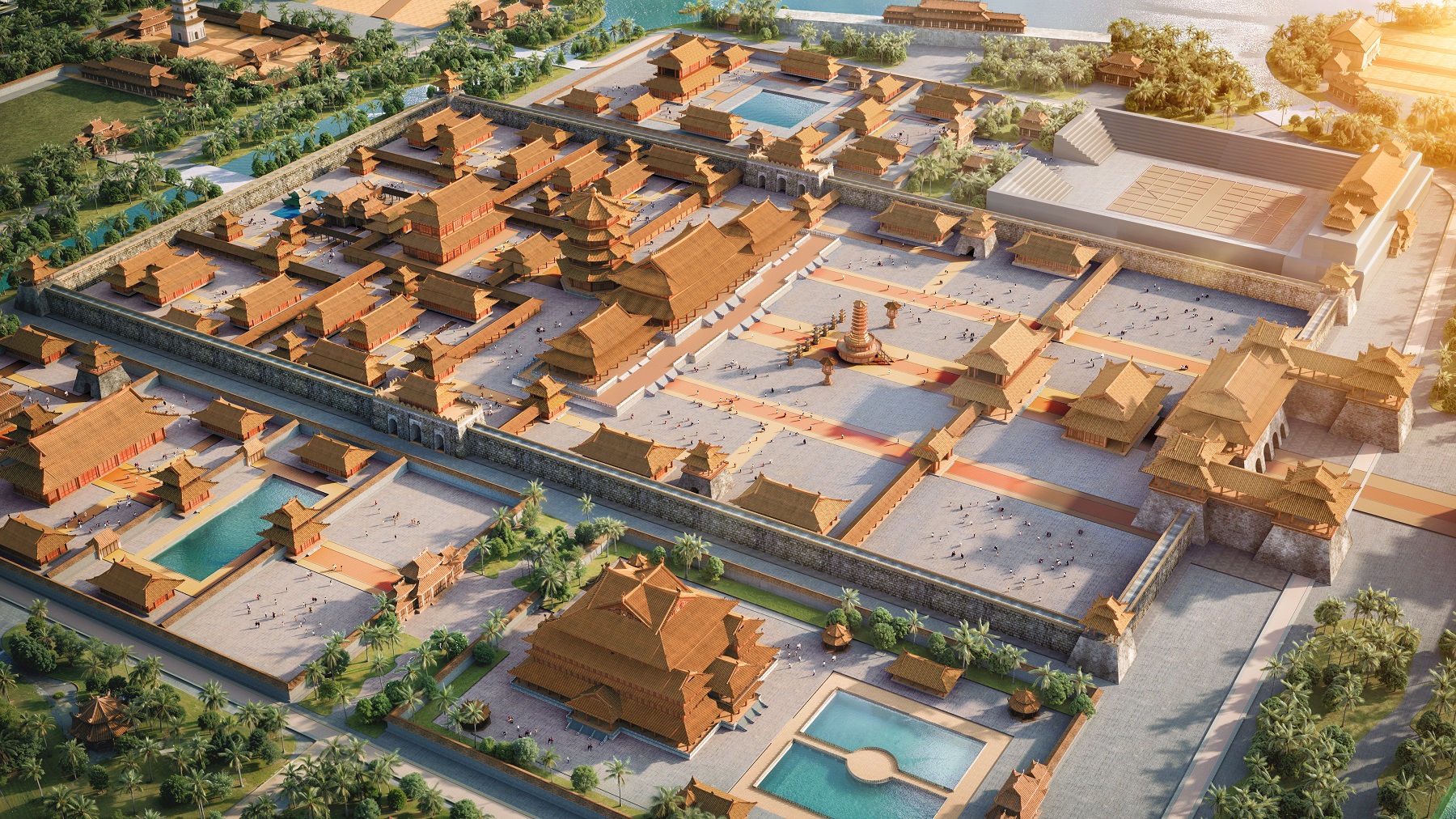
History is vividly and authentically recreated, helping visitors deeply feel the quintessence of Vietnam. (Source: Illustrative perspective photo)
Beyond the meaning of a multi-functional integrated super-city, the cultural tourism complex recreating the Imperial Citadel of Thang Long in Sun Legacy City is built by Sun Group with a noble mission: to become a solid "bridge" connecting a thousand years of glorious history with the dynamic contemporary life. This is where history is vividly and authentically recreated, taking visitors on "a journey back in time" to deeply feel the quintessence of Vietnam.
4.1. Cultural mission and awakening national pride
The recreation of the Thang Long Imperial Citadel during the Ly-Tran dynasties is not merely an architectural restoration, but also a journey to revive the thousand-year-old cultural values of the nation.
The project aims to build a bridge between the past and the present, respecting and listening to the messages of history and origins. This complex fully awakens the spirit and majesty of the Ly-Tran dynasties, contributing to fostering national pride in the hearts of visitors and the community.
Moreover, the Imperial Citadel recreation complex is educational, preserving and sustainably developing culture. The Quan Van – Quoc Tu Giam area, the Quan Vo area, and the Thao Truong will be venues for experiential educational activities such as calligraphy workshops, calligraphy masterclasses, historical talks, and direct experiences of Vietnamese martial arts spirit, especially targeting the younger generation.
4.2. International stature and film studio model development
With meticulous and unique investment, the Imperial Citadel of Thang Long recreation complex is expected to become an international-class historical and cultural destination, extending Vietnamese culture far and wide:
Equalling Hengdian: Sun Mega City is expected to become an international-class cultural destination, on par with China's famous "Hengdian World Studios" model. Hengdian World Studios has proven its success by using the voice of heritage to touch people's desire to live and experience culture.
Historical Film Studio: This complex aims to develop into a large-scale ancient costume film studio, ideal for producing historical films rich in Vietnamese identity, thereby promoting Vietnam's cultural image to the world.
Modern Technology: The combination of ancient architecture and modern technology such as holograms, 3D mapping, and direct interaction, makes this complex not just an entertainment park, but a space with cultural and artistic depth.
4.3. Tourism development driver
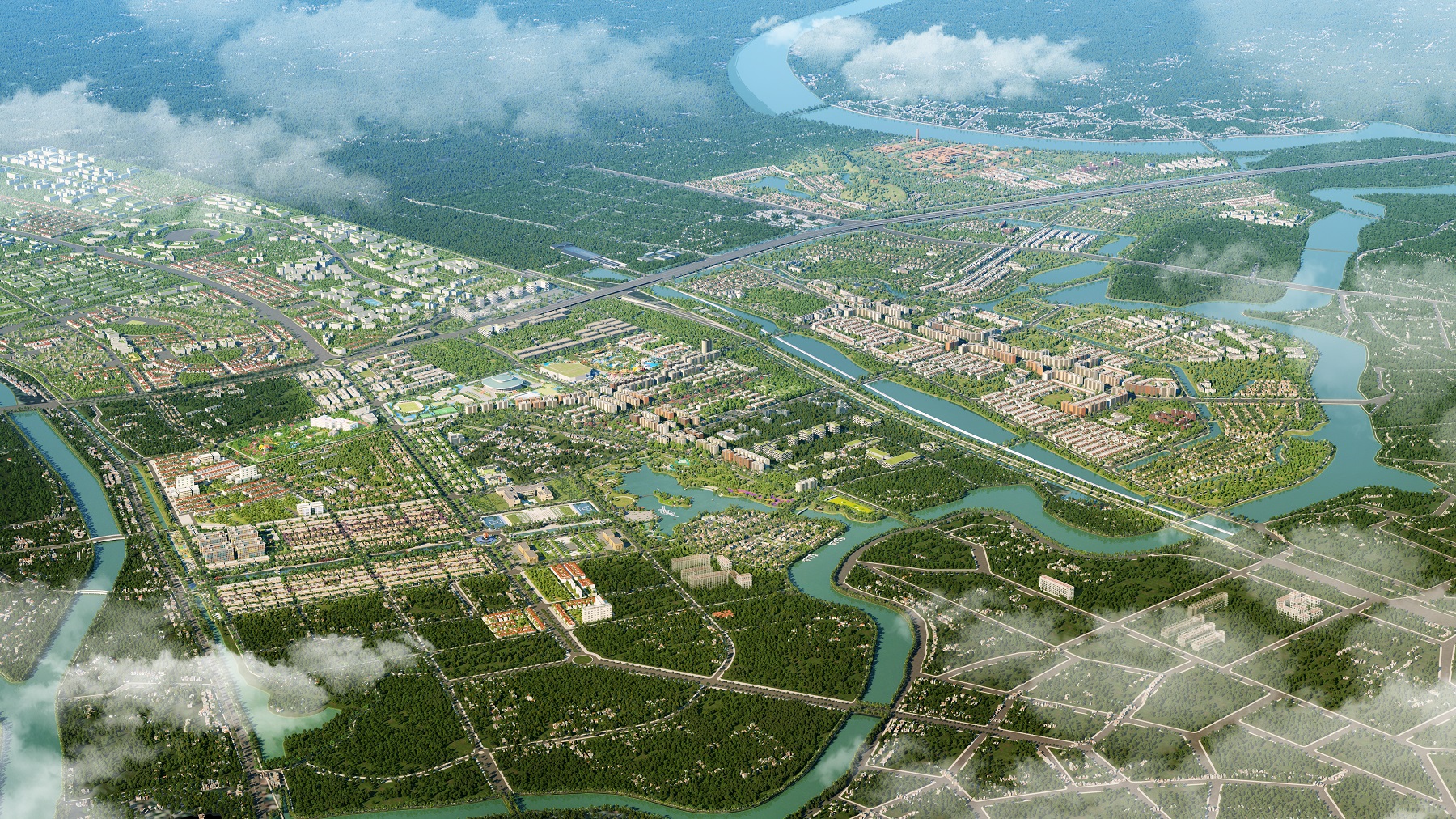
Economic and tourism development driver for the southern gateway of Hanoi. (Source: Illustrative perspective photo)
The Sun Mega City project, with a scale of 1,690 hectares, is predicted to soon ignite strong growth momentum for the southern Hanoi area. The presence of this unique cultural tourism complex will attract a large number of domestic and international tourists, contributing to the economic and tourism development of the southern gateway area of Hanoi.
Not only creating distinct value for tourists and the community, the complex recreating the Imperial Citadel of Thang Long Sun Legacy City also demonstrates Sun Group's strategic vision in developing tourism linked with cultural preservation, creating long-term values. The complex is expected to elevate tourism in the Red River Delta region and Vietnamese tourism in general.
Imperial Citadel of Thang Long Sun Legacy City is not just an architectural work, but a "brilliant symphony" of architecture, culture, and people, where the glorious past meets the dynamic present. With meticulous investment and thorough research based on historical materials and the dedication of Sun Group, this complex promises to become a new cultural symbol of Vietnam, a true "link" bringing history closer to the public and making the land of Doi Mountain, Chau River a new focal point on the world's tourism map.


