




1. Overview of Ho Quoc Pagoda (Phu Quoc)
1.1. Where is Ho Quoc Pagoda (Phu Quoc)?
Ho Quoc Pagoda, also known as Truc Lam Ho Quoc Zen Monastery, is one of the most famous and sacred pagodas in Phu Quoc. The pagoda is located in the Southeast of the island, about 20 km from the center of Duong Dong and only 10 km from the airport, making it very convenient for travel. This is a typical destination in the southern part of the island, where the beauty of mountains, sea, and a pure spiritual space converges.
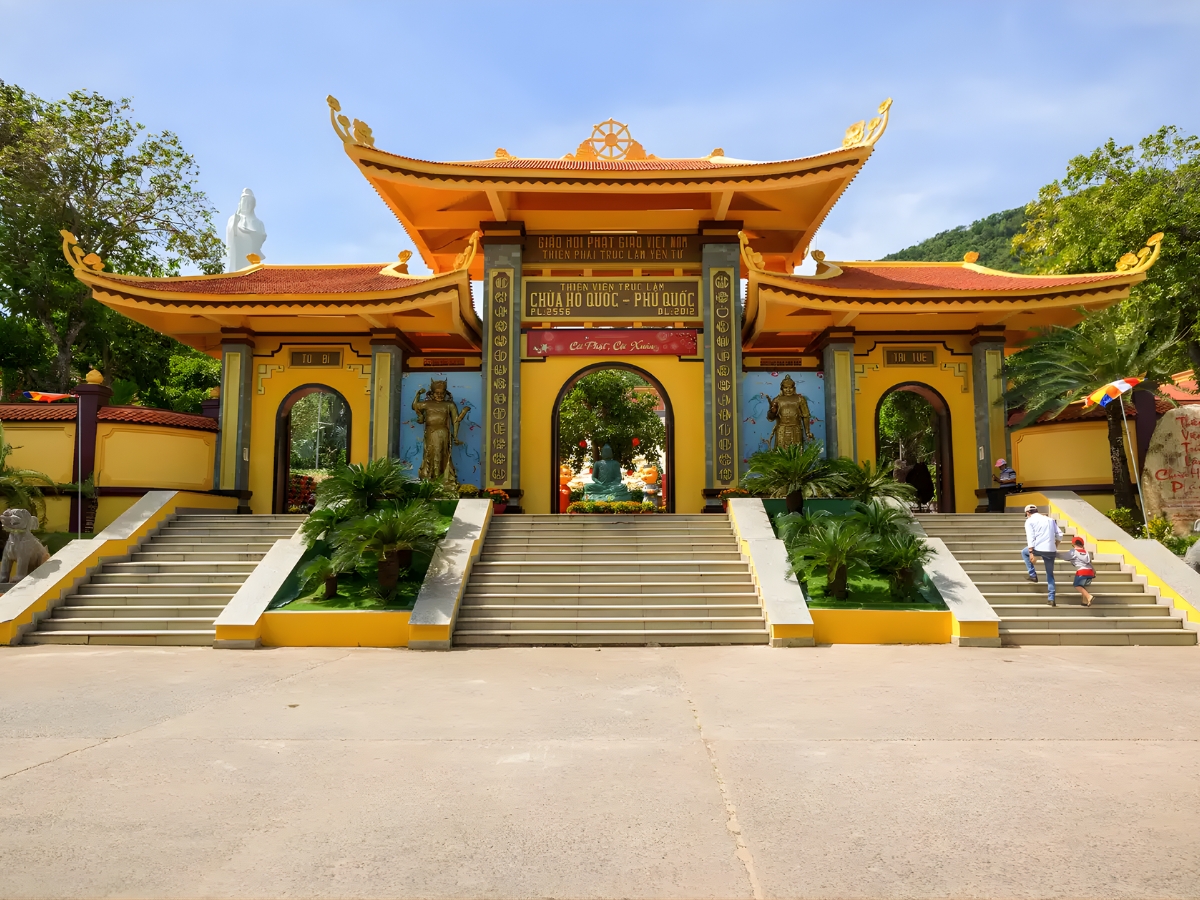
Ho Quoc Pagoda is one of the most famous and sacred pagodas in Phu Quoc. (Source: Collected)
The pagoda is built on a mountainside facing the sea, offering a vast view and a rare majestic landscape. From the pagoda gate looking out, visitors can see the endless blue sea stretching out, creating a feeling of both sacredness and peace. Located within a journey combining spirituality, relaxation, and nature exploration, Ho Quoc Pagoda is not only a place for pilgrimage and worship but also a sanctuary for visitors to find peace amidst the tranquil space of sky, clouds, and islands.
1.2. History of formation and development of Ho Pagoda
The formation process of Ho Quoc Pagoda is associated with important milestones in the development journey of the largest spiritual complex on Ngoc Island. The pagoda broke ground on October 14, 2011, within a spiritual complex spanning a total area of 110 hectares, with the pagoda occupying about 12%. After more than a year of construction, on December 14, 2012, the pagoda was officially inaugurated, marking the birth of a large-scale religious structure deeply imbued with the architectural style of Truc Lam Yen Tu Buddhism.
From 2013 to 2014, the pagoda continued to be invested in and further completed with many important sections, creating a harmonious, majestic, and solemn overall space amidst the mountains, forests, and the sea and sky of Phu Quoc. With its imposing architecture, serene landscape, and sea-facing location, Ho Quoc Pagoda quickly became a prominent spiritual destination, attracting thousands of Buddhists and visitors annually for sightseeing, worship, and seeking inner peace.
2. Discover the unique architecture of Ho Quoc Pagoda (Phu Quoc)
2.1. Architectural style bearing the imprint of the Ly - Tran dynasties
Ho Quoc Pagoda is built in the style of Truc Lam Yen Tu Buddhism, bearing the distinct architectural imprint of the Ly – Tran dynasties, the most prosperous period of Vietnamese Buddhism. The entire pagoda is designed with curved tiled roofs and gracefully curved eaves, clearly reflecting the characteristics of traditional national architecture. The pillars and beams are made from precious ironwood, intricately carved with dragon motifs, lotus flowers, and patterns carrying profound spiritual meaning.
The overall layout of the pagoda harmoniously blends mountains, sea, and sky, honoring the majestic natural scenery of Ngoc Island while embodying the Zen philosophy of "living in accordance with nature" of Truc Lam Buddhism. The dominant colors of wood brown and tile red create a warm, solemn, yet approachable atmosphere, allowing visitors to clearly feel the tranquility and peace spreading through every corner of the pagoda upon arrival.
2.2. The unique Ho Quoc Pagoda Truc Lam Zen Monastery complex
The complex of Ho Quoc Pagoda (Phu Quoc) is designed in the traditional architectural style of the Truc Lam Zen sect, exuding majesty and grandeur while harmonizing with the natural scenery of mountains and sea. Each section within the pagoda's grounds carries profound spiritual significance, reflecting the virtuous spirit and life philosophy of Vietnamese Buddhism.
The Tam Quan Gate is the first structure to welcome visitors to Ho Quoc Pagoda (Phu Quoc). The gate is divided into three pathways, symbolizing the three paths leading to enlightenment. The main gate is the Dia Giac Gate, with the Bat Nhi Gate and Giai Thoat Gate on either side, representing the journey of practice to achieve peace and liberation.
Passing through the Tam Quan Gate leads to the spacious and airy Thien Tinh courtyard, surrounded by green trees and flowers. Standing out in the space is a nearly three-meter-tall jade Buddha statue, crafted from precious jade with exquisite details. The Buddha statue shines against the blue sky and vast sea, bringing a sense of purity and peace to worshippers. From the main courtyard, visitors will ascend 70 stone steps to reach the Main Hall. On both sides of the path are intricately carved dragon figures from the Tran dynasty, symbolizing power and protection. Inside the Main Hall is a majestic statue of the Buddha, surrounded by 18 Arhat statues and bas-reliefs depicting stories from Buddhist history.
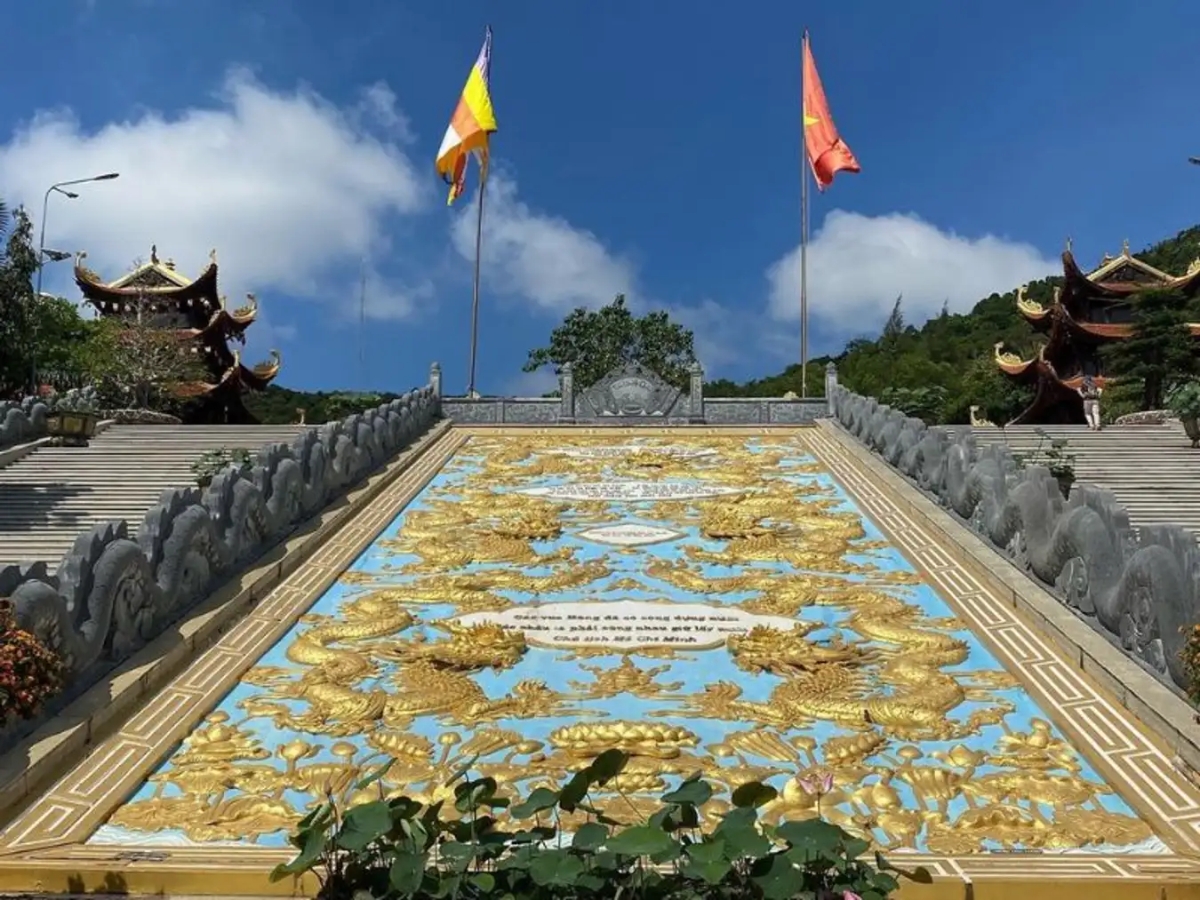
Stone steps carved with dragon figures from the Tran Dynasty. (Source: Collected)
Behind the main hall is the Ancestral Temple, where the Three Holy Patriarchs are worshipped, including Tran Nhan Tong, Phap Loa, and Huyen Quang – the founding patriarchs of the Truc Lam Yen Tu Zen sect. This is a solemn and tranquil space, where visitors and Buddhists stop to pay homage, expressing gratitude for the great merits of the ancestors.
3. Some notable activities at Ho Quoc Pagoda (Phu Quoc)
3.1. Worship and pray for peace
Upon arriving at Ho Quoc Pagoda (Phu Quoc), visitors often begin their journey by worshipping and offering incense to pray. No elaborate offerings are needed; a stick of fragrant incense, a bouquet of fresh flowers, or a simple fruit tray is enough to show sincerity. Amidst the sacred space, the echoing temple bells and the gently rising incense smoke help the soul settle, cleansing all worries. Many people come here not only to pray for peace and prosperity but also to find tranquility and balance in life after busy days.
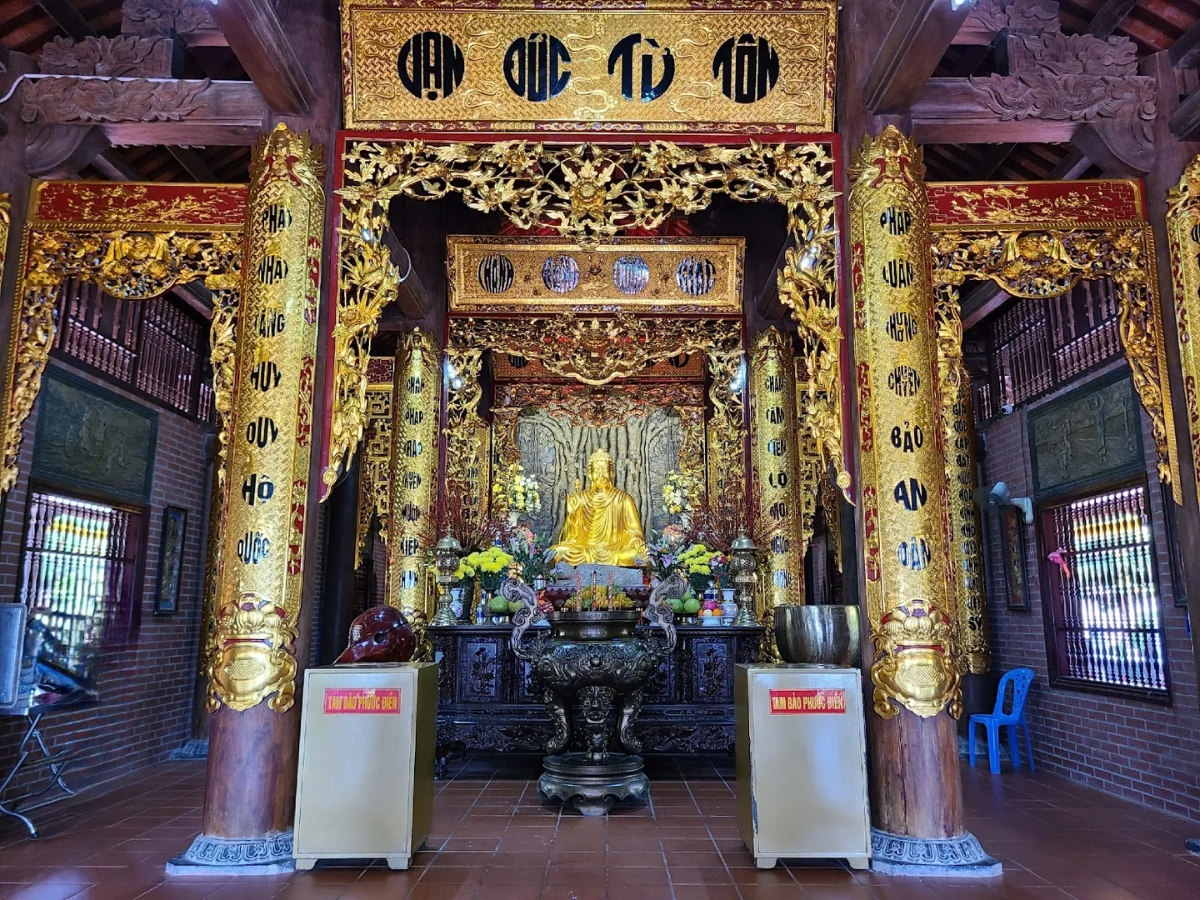
Visitors can come to worship, pray for peace and luck at Ho Quoc Pagoda. (Source: Collected)
3.2. Sightseeing and photography
The special feature of Ho Quoc Pagoda (Phu Quoc) lies in its beautiful location, with its back against the mountain and facing the sea. From the pagoda grounds, visitors can admire the panoramic view of the vast blue sea and the clear sky in the distance. Every early morning or at sunset, sunlight dyes the curved tiled roofs yellow, casting reflections on the sparkling sea water, creating a serene and poetic scene. The fresh air, gentle sea breeze, and echoing temple bells make this an ideal destination for those seeking peace amidst nature.
3.3. Learning about the culture and history of Ho Quoc Pagoda
Besides worshiping, visiting the various structures within Ho Quoc Pagoda (Phu Quoc) is also an interesting experience that helps visitors understand more about Buddhist culture. The majestic Main Hall, the solemn Ancestral House, and the exquisite bas-reliefs all tell the story of the pagoda's formation and development, along with profound philosophies of life. Each architectural line, each statue, or carved detail reflects the spirit of practice and Vietnamese Buddhist art.
On major holidays such as the full moon, the first day of the lunar month, Lunar New Year, or the Vu Lan Festival, Ho Quoc Pagoda (Phu Quoc) becomes bustling yet retains its inherent solemnity. Visitors and Buddhists offer incense, pray, and participate in traditional ceremonies in a sacred and warm atmosphere. This is not only a place to place spiritual faith but also a unique cultural rendezvous, helping everyone feel more deeply the spirit of compassion and good deeds of Buddhism.
4. Suggestions for some tourist spots in the south of the island near Ho Quoc Pagoda (Phu Quoc)
Located in the South Island area, Ho Quoc Pagoda Phu Quoc is not only a famous spiritual destination but also a convenient stopover for tourists to combine with exploring many attractive surrounding landmarks. The South Island area is considered the "tourist heart" of Phu Quoc, with a blend of natural beauty, culture, and modern entertainment facilities, offering visitors a complete and colorful journey.
4.1. Phu Quoc Prison
Not far from Ho Quoc Pagoda (Phu Quoc) , visitors can visit Phu Quoc Prison, a special historical relic associated with the nation's fierce war years. It was once a place where tens of thousands of revolutionary soldiers were imprisoned, a testament to the indomitable spirit, strong will, and passionate patriotism of the Vietnamese people during the struggle for independence.
Today, Phu Quoc Prison has become an important historical attraction, vividly recreating tragic stories through a system of models, images, and authentically displayed artifacts. Visitors arriving here not only learn about the heroic past but also gain a deeper appreciation for the value of peace and gratitude towards those who sacrificed for the country.
4.2. Sun World Hon Thom
From Ho Quoc Pagoda (Phu Quoc) , visitors can travel to Sun World Hon Thom, one of the most modern entertainment and resort destinations on the Jade Island. The journey begins with a ride on the world's longest three-rope sea-crossing cable car, offering visitors a panoramic view of the deep blue sea and sky, the chain of large and small islands, and the gentle white-capped waves below. This is not just a means of transportation but also one of the most impressive experiences that any tourist visiting Phu Quoc wants to try.
Upon arriving at Hon Thom, visitors can enjoy themselves to the fullest at the modern Aquatopia water park with over 20 exciting games, or experience challenging and adventurous games at Exotica village. After moments of excitement, visitors can relax on the white sandy beach, swim in the clear blue water, or participate in fun activities such as kayaking, parasailing, jet skiing, or underwater walking to see coral. Sun World Hon Thom is not only a place for entertainment but also a space to enjoy the joy, energy, and vibrant beauty of the Jade Island.
4.3. Sunset Town
After leaving Hon Thom, visitors can continue their journey to Sunset Town, a coastal town with a distinctive European style in the heart of Phu Quoc. This is an ideal stopover for strolling along cobblestone streets, shopping at charming small stores, enjoying diverse cuisine, or admiring the sea and sky in a romantic and peaceful atmosphere.
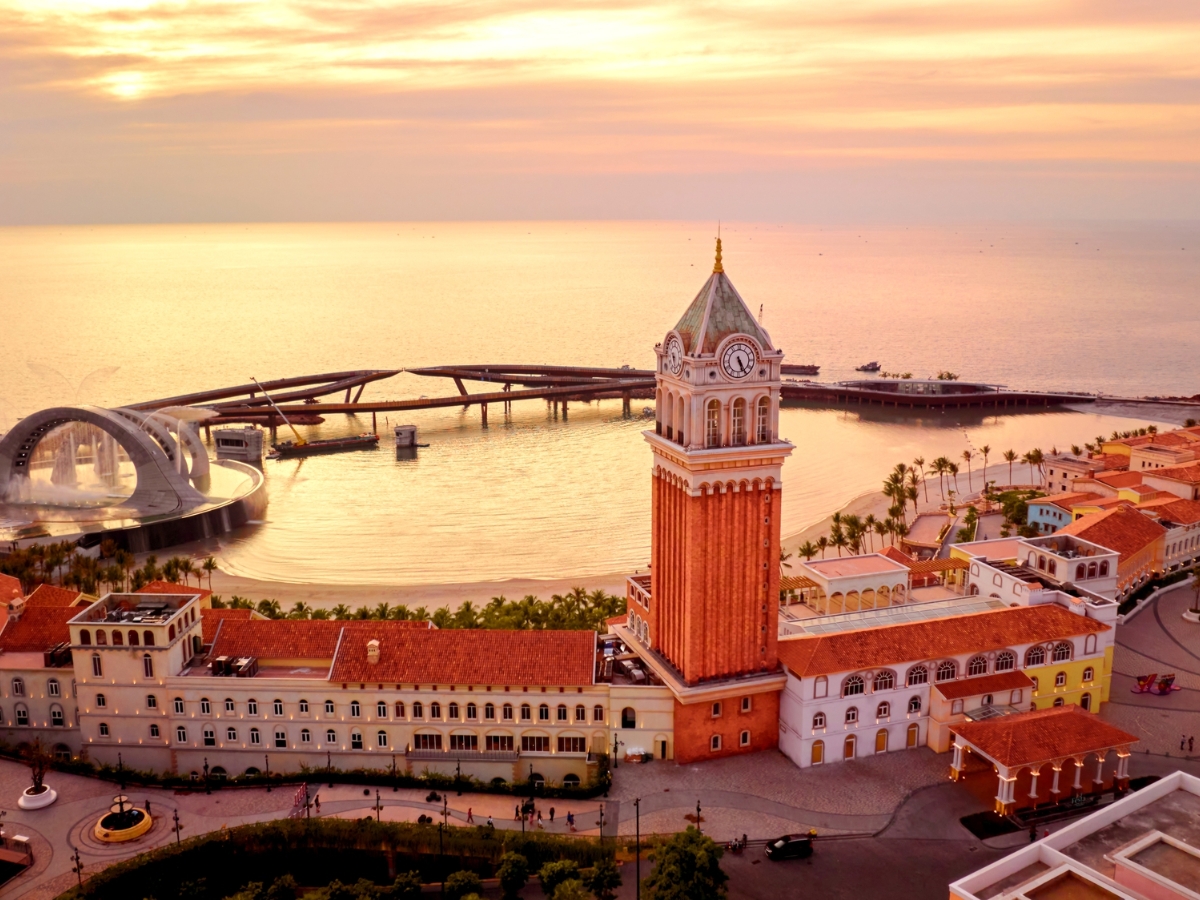
Stunning sunset scenery at Sunset Town (Hoang Hon Town). (Source: Sun World)
As sunset descends, Sunset Town seems to don a brilliant golden robe, reflecting on the sparkling sea. Visitors can admire this beautiful scene at Kiss Bridge, an iconic work symbolizing love amidst the sea. In the evening, visitors can enjoy the Kiss of the Sea show – a spectacular performance combining light, water, and fireworks, bringing breathtaking and emotional moments. Notably, the Symphony of the Sea – Season 2 program is expected to return in November 2025, promising to continue captivating visitors with elaborate and high-class performances, solidifying Sunset Town's position as one of the most outstanding destinations in South Phu Quoc Island.
With its serene atmosphere, majestic landscape, and profound spiritual value, Ho Quoc Pagoda (Phu Quoc) is an ideal stop for those seeking peace amidst the Jade Island. This place is not only a sacred site for worship and prayer but also a beautiful scenic spot, blending mountains, forests, and the sea. If you are planning a trip to Phu Quoc, take time to visit Ho Quoc Pagoda, immerse yourself in the tranquil space, listen to the resonant temple bells, and feel the peace spreading from this monastic sanctuary amidst the vast sky and sea.


