




1. General Introduction to the Fallen Church Bell Tower
The Fallen Church Bell Tower is located in Hai Tien commune, Ninh Binh province, and is the remaining ruin of the once magnificent Sacred Heart church from the early 20th century. After many years of sea encroachment, subsidence, and erosion by wind and waves, most of the structure has collapsed, leaving only the bell tower standing alone amidst the Xương Điền beach. It is precisely this unfinished and desolate state that creates a special beauty, making the bell tower a unique highlight in the natural landscape of the coastal region.
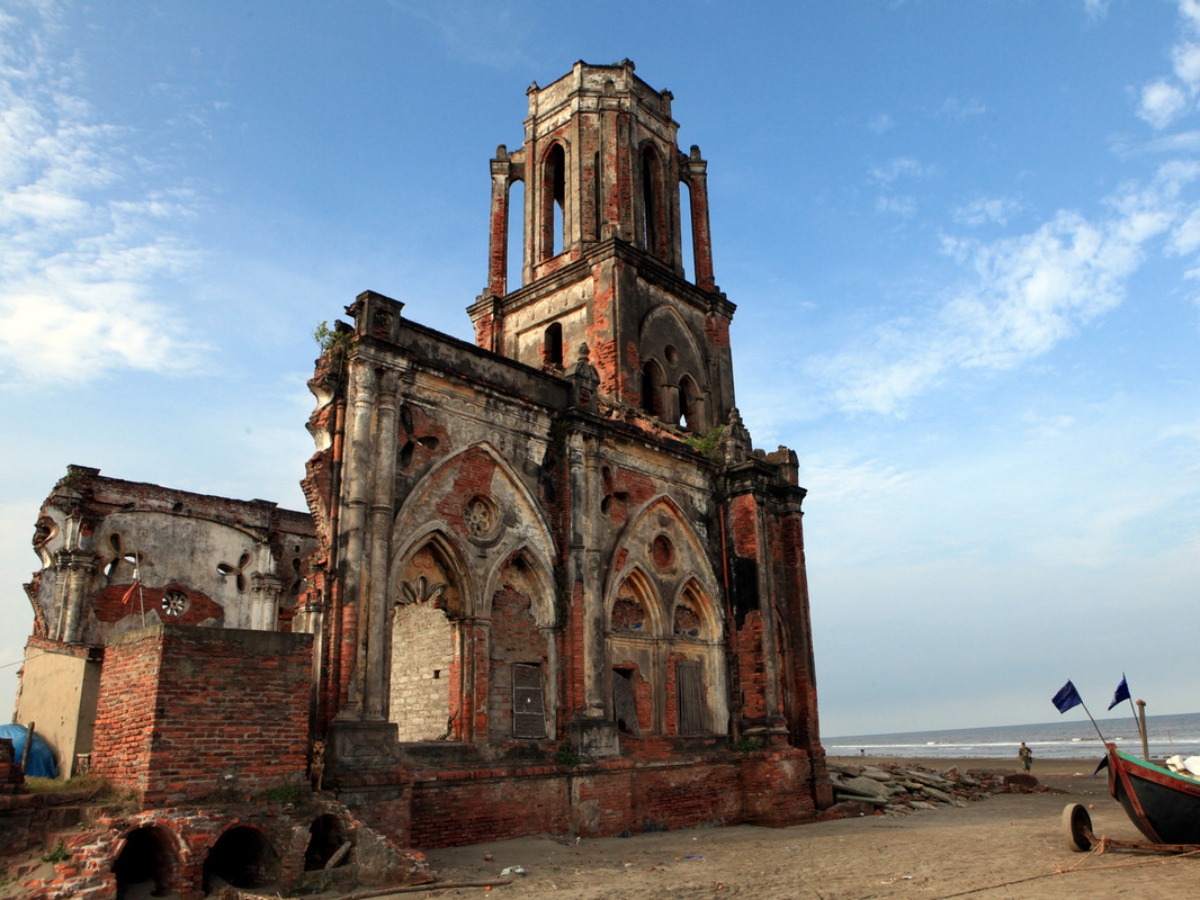
The Collapsed Church Bell Tower is located in Hai Tien commune, Ninh Binh province. (Source: Thai Nguyen Newspaper)
Today, the Collapsed Church Bell Tower is considered one of the most impressive check-in and photo-hunting spots in Ninh Binh. When dawn breaks or dusk falls, golden light stretches across the sea, reflecting on the old walls, creating an artistic scene. The solemn yet romantic beauty of the bell tower makes visitors clearly feel the harmony between nature and the traces of time, bringing an unforgettable experience in the journey to explore the coastal area of Hai Hau.
2. History and Origin of the Collapsed Church Bell Tower
2.1. The Original Church and the Process of Coastal Erosion
The Heart Church, the predecessor of the Collapsed Church Bell Tower, was first built in 1877 with a small scale and simple architecture. The structure was then only over 252 m², 14 m long, 7 m wide, and thatched with grass, serving religious activities for the coastal Catholic community of Hai Ly. However, from the second decade of the 20th century, this area began to be strongly eroded by the sea, causing the area around the church to be gradually washed away. Facing the risk of collapse, the parishioners moved the church about 3 km inland to ensure safety.
In 1917, the Heart Church was rebuilt for the second time at a new location with a larger scale, designed by a French architect. The construction was completed in 1927, featuring a campus of 9,330 m², 47 m long and 15 m wide, with a characteristic European architecture including arched windows, intricate patterns, and a bell tower up to 27 m high. The 15 m high vaulted ceiling and many elaborate decorative details made the church one of the most beautiful religious structures in the Hai Hau coastal area at that time. But with the strong encroachment of the sea and the harshness of the weather, the Heart of Jesus Church and several other churches had to be moved further inland and were built for the third time.
In 2005, storm number 7, with its terrible destructive power, swept away the entire outer dike and 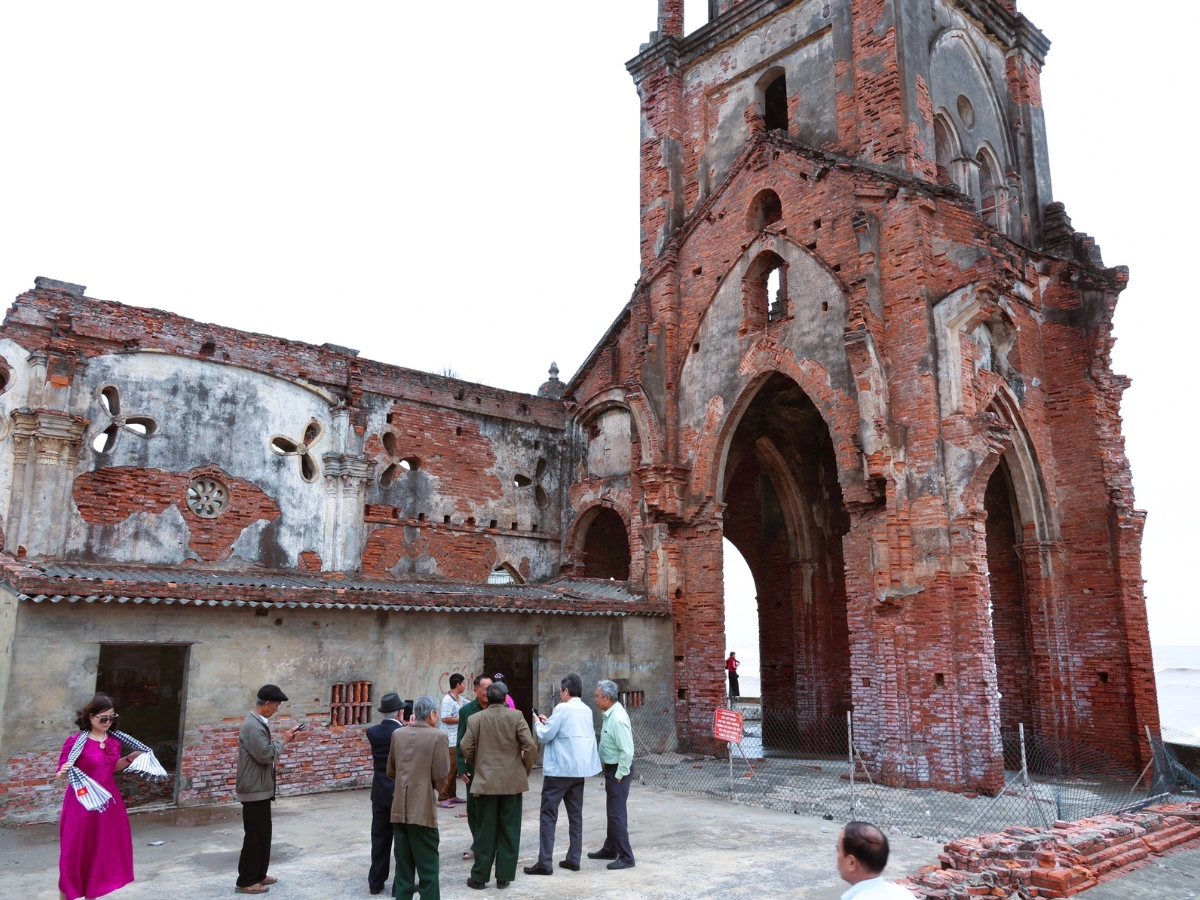
The ruined church bell tower is the remaining part of the Church of the Heart after many times of sea erosion. (Source: Bao Thanh Nien newspaper)
2.2. Cultural and Historical Value
The Ruined Church Bell Tower is not only an architectural ruin left after natural changes but also carries deep cultural and historical value for the Hai Hau coastal region. The structure is a mark of the missionary process, religious activities, and the community life of parishioners for over a century. Although only the bell tower and a few old walls remain, this place still preserves the beauty of early 20th-century European architecture, reflecting the cultural exchange between the West and local beliefs. For the local people, the bell tower is not only a witness to time but also a symbol of resilience, recalling a prosperous fishing village that once existed on the Xuong Dien coast.
3. Architecture and Distinctive Features of the Ruined Church Bell Tower
3.1. Remaining Architecture
The remaining architecture of the Ruined Church Bell Tower creates a unique beauty, both ancient and evocative. Although time and sea waves have eroded most of the structure, the towering bell tower and patches of mottled red brick walls still retain the majestic appearance of an old European church. The wide arched doorways, straight vertical wall columns, and traces of exquisite decorative patterns are evident despite fading over the years. It is this starkness amidst the sea and sky, along with the moss covering the brick and stone surfaces, that has transformed the bell tower into a ruin with a rare artistic beauty, attracting tourists and photography enthusiasts for admiration and creation.
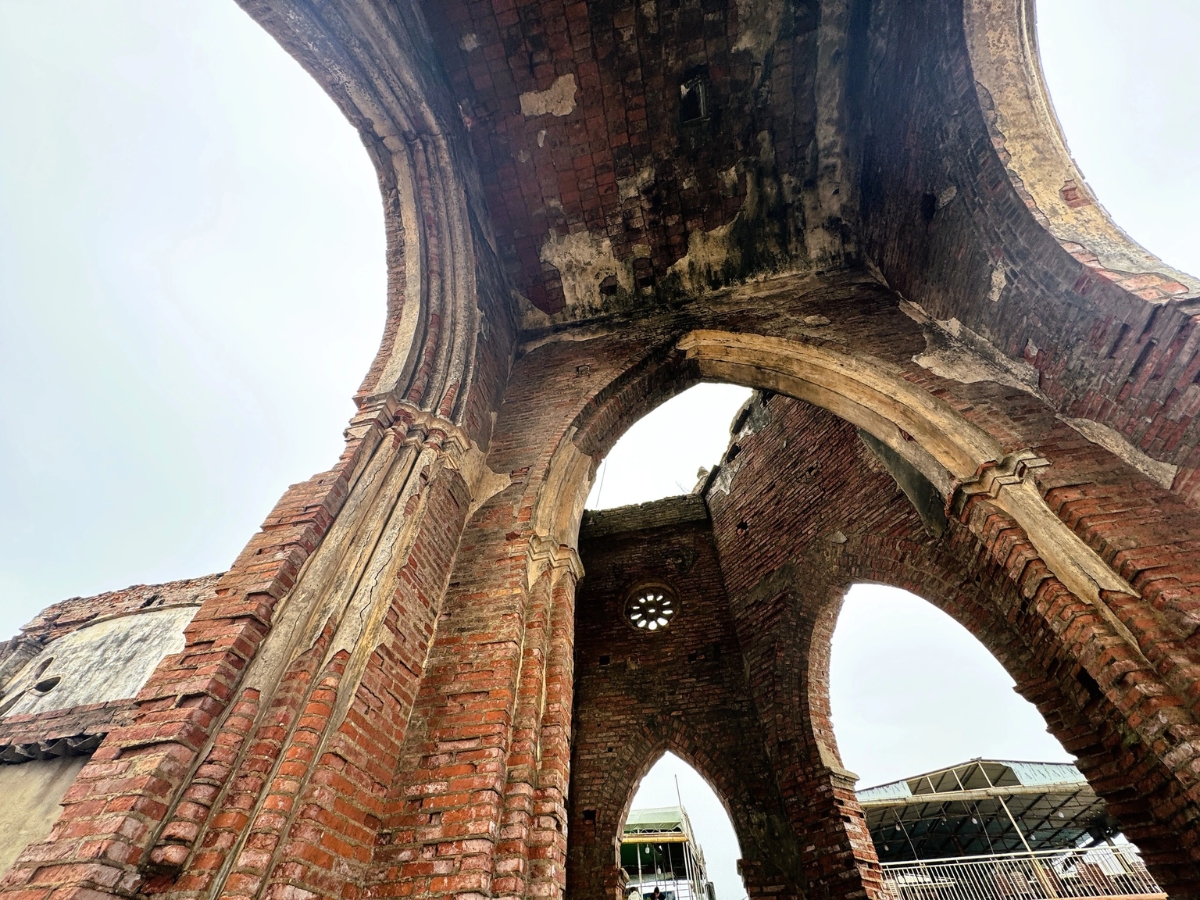
Church walls and bell tower, viewed from the inside. (Source: Thanh Nien Newspaper)
3.2. Surrounding Space
The space surrounding the ruined church bell tower is precisely what contributes to the special allure of this landmark. The bell tower stands on a wide sandy beach, where the waves of Xương Điền sea crash against the shore day and night, lending the landscape an ever-present sense of vastness and power. When the tide recedes, the expansive tidal flats are revealed, reflecting the sky and the silhouette of the old bell tower, creating breathtakingly beautiful scenes. During sunset or sunrise, golden hues wash over the sea and the ruins, evoking a solemn yet poetic atmosphere, making this an ideal stop for travelers who love exploration and the simple beauty of Nam Dinh's coast.
4. Tips for Visiting the Ruined Church Bell Tower
4.1. Safety Precautions
When visiting the ruined church bell tower, tourists must pay special attention to safety as this is a ruin that has been eroded by the sea for decades. The structure now consists only of the tower and some old wall sections; its integrity is no longer sound. Therefore, visitors must absolutely refrain from climbing the bell tower or leaning against the walls to avoid the risk of collapse or falling. Observing from a moderate distance is both safe and ensures visitors can fully appreciate the beauty of the relic.
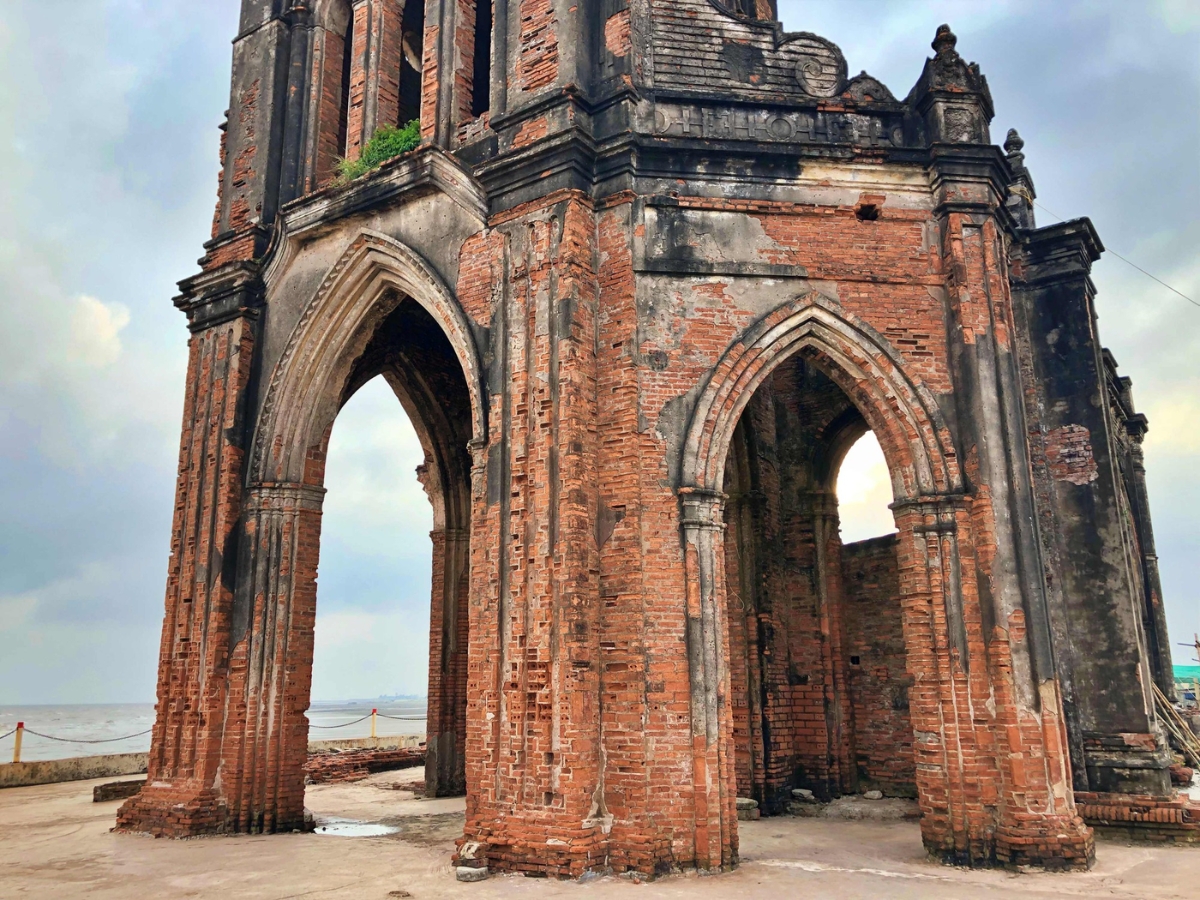
Note: do not climb or lean on the bell tower for safety. (Source: Collected)
In addition, the bell tower area is located close to the sea, so the water level changes quite rapidly with the tide. Visitors need to monitor the rising and falling tides, especially avoid standing too close to the sea edge during times of strong waves or high tide to ensure absolute safety. If taking photos in the early morning or late afternoon, visitors should also pay attention to slippery sand and wear suitable footwear to move around more easily.
4.2. Civilized Behavior
When visiting the ruined church bell tower, visitors should maintain a respectful attitude as this was once a religious structure associated with the local community's spiritual life. Dressing modestly and politely will show respect for the sacred space the relic represents. In addition, visitors need to maintain general hygiene, not litter, or carve on the remaining brick walls. Even a small action contributes to preserving the landscape, helping the ruins continue to be preserved so that future generations can admire the unique beauty of this place.
4.3. Combine Visits with Famous Ninh Binh Attractions
After exploring the tranquil and emotional beauty of the ruined church bell tower, visitors can continue their journey with many attractive destinations in Ninh Binh and surrounding areas. Combining visits to multiple landmarks in one trip will bring diverse experiences, from the sea, architecture, culture to modern entertainment. Here are some outstanding suggestions for visitors:
Hai Tien - Hai Hau Beach: A spacious, clean beach with clear blue water and a cool atmosphere. Visitors can stroll along the long sandy shore, watch the mesmerizing sunrise, and enjoy fresh seafood right at the seaside eateries.
Phat Diem Cathedral: One of the most beautiful ancient cathedral complexes in Vietnam, featuring a unique architectural blend of Vietnamese tradition and Gothic style. The vast, peaceful, and artistic space makes it an unmissable stop.
Coastal Craft Villages: Visitors can learn about the lives of fishermen through craft villages producing fish sauce, sea salt, or dried seafood. This is also an opportunity to buy local specialties as gifts for relatives and friends.
Sun World Ha Nam: With a diverse system of games, a large water park, and modernly designed landscapes, this place is an ideal choice for visitors who want a change of scenery and enjoy vibrant entertainment activities.
Times Square: A modern, spacious area highlighted by the Trong Doi Tam symbol and a magnificent system of lights and water music. This is an ideal place for an evening stroll, taking photos, and feeling the youthful rhythm of the area.

Time Square possesses a vast, modern space along with the giant Trống Đọi Tam symbol. (Source: Cong Ly Newspaper)
The ruined church bell tower is not just a ruin amidst the sky and sea but also a symbol of enduring vitality, preserving layers of historical memories of the Hải Hậu coastal region. The scenery, both serene and romantic, especially at dawn or dusk, makes this place an unforgettable stop for all visitors. If you are looking for a unique destination to admire the beauty of time and capture emotional photos, plan a visit to the ruined church bell tower during your exploration of Nam Định.


