



1. General Introduction to the Bai Dinh Pagoda Festival
1.1. Overview and Organization Time
The Bai Dinh Pagoda Festival is one of the largest spring festivals in the North, taking place at the Bai Dinh Pagoda complex, located in Tay Hoa Lu ward, Ninh Binh province. This is an important cultural – spiritual event, attracting hundreds of thousands of visitors from all directions at the beginning of each year. With its large scale and deep historical – religious value, the Bai Dinh Pagoda Festival has become a characteristic symbol of spring in the ancient capital region of Hoa Lu.
The Bai Dinh Pagoda Festival officially opens on the 6th day of the Lunar New Year annually, following the ceremony of opening the pagoda gates and beating the drum to open the festival. From this moment, the festival lasts until the end of the 3rd lunar month, becoming one of the longest-running festivals in Vietnam. During this entire period, visitors can participate in many cultural – religious activities taking place continuously within the grounds of the old Bai Dinh Pagoda and the new pagoda.
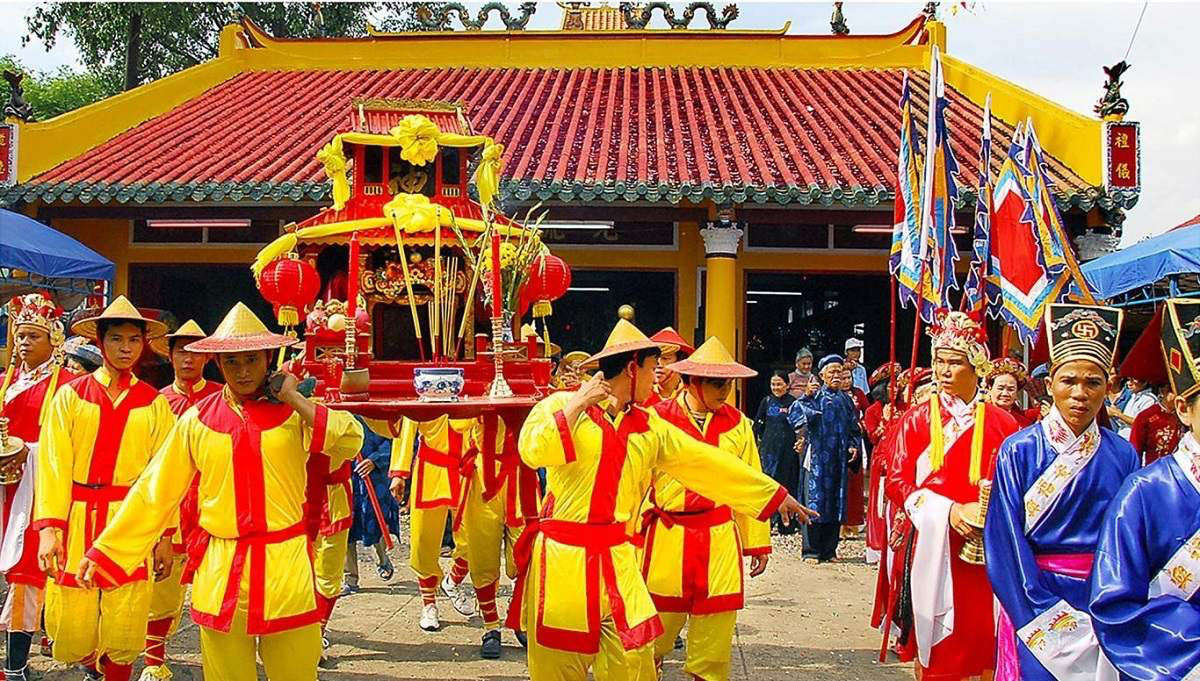
The Bai Dinh Pagoda Festival opens on the 6th day of the Lunar New Year, attracting tens of thousands of visitors to Ninh Binh every spring. (Source: Collected)
1.2. Spiritual cultural significance
The Bai Dinh Pagoda Festival commemorates Saint Nguyen Minh Khong, a famous monk of the Ly dynasty, who made great contributions to building the ancient Bai Dinh Pagoda, curing the king and people, and is also considered the ancestor of Vietnam's bronze casting craft.
The festival is also an occasion for people to pray for peace, luck, health, and prosperity for the whole year. Traditional rituals such as incense offering, sacrificial rites, water procession… are solemnly performed, recreating spiritual activities from the Dai Viet era. The Bai Dinh Pagoda Festival plays a special role in the cultural life of the people of Ninh Binh and visitors from all directions. It is a space for early spring spiritual activities imbued with the identity of Vietnamese Buddhism, contributing to the preservation of the folk cultural values of the ancient capital Hoa Lu region. The festival creates opportunities for cultural exchange, expands the spiritual tourism activities of Ninh Binh province, and is a familiar spring destination for Vietnamese people during Tet.
Thanks to the combination of historical, cultural, and spiritual values, the Bai Dinh Pagoda Festival not only has religious significance but also becomes an important driving force in the tourism development of Ninh Binh, contributing positively to the community's spiritual life.
2. Origin and history of formation
2.1. Origin associated with Saint Nguyen Minh Khong
The Bai Dinh Pagoda Festival originates from the folk belief of worshipping Saint Nguyen Minh Khong, a national preceptor of the Ly dynasty, famous for his contributions to spreading Buddhism, curing the people and King Ly Than Tong.
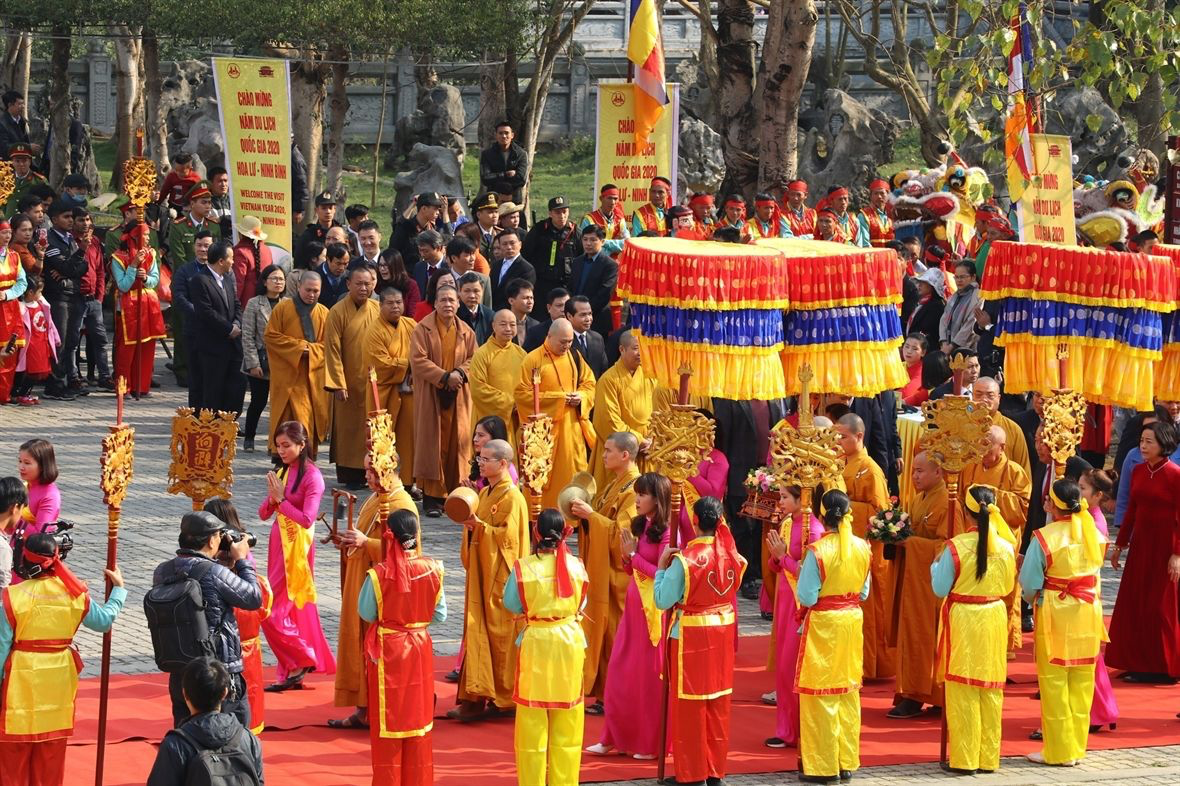
The vibrant atmosphere of the early spring festival at Bai Dinh pagoda complex. (Source: Collected)
According to historical documents in Ninh Binh, he was the one who founded the ancient Bai Dinh pagoda, and is also considered the founder of the bronze casting craft, and the disseminator of many cultural and spiritual values to the ancient capital region.
Legend has it that during his journey to find medicinal herbs to cure the king, Nguyen Minh Khong set foot on Bai Dinh mountain, found spiritual energy converging, so he established a hermitage for cultivation and built a pagoda to worship Buddha. From then on, people worshipped him as a protective deity, bringing peace and protection to the community.
2.2. Legend and Formation of Bai Dinh Pagoda
The Bai Dinh pagoda complex consists of two areas:
Ancient Bai Dinh Pagoda: located on the mountain, including caves dedicated to Buddha, deities, a temple dedicated to Saint Nguyen Minh Khong, and Tam The Hall. This is where traces of Ly dynasty Buddhist history are preserved.
New Bai Dinh Pagoda area: built from 2003, gradually completed through many phases to honor Buddhist values, restore a large-scale spiritual space, suitable for modern religious and tourism needs.
Both areas form a large spiritual complex of Vietnam, famous for many records such as the largest bronze Buddha statue in Asia, the longest Arhat corridor in Vietnam… This complex forms the foundation for the Bai Dinh pagoda festival to develop strongly.
2.3. Development of the Festival
The Bai Dinh pagoda festival has been formed for a long time, associated with the death anniversary of Saint Nguyen Minh Khong and the custom of praying for peace of the residents of the ancient capital. Through many periods, the festival was interrupted due to war, but after the renovation period, the festival was completely restored and its scale expanded.
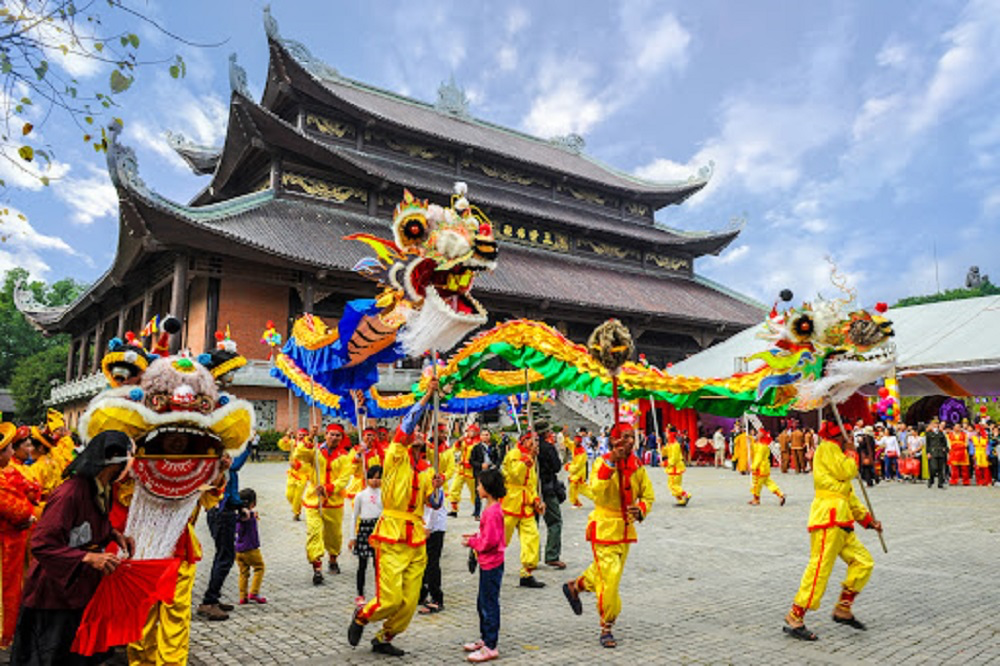
The Bai Dinh Pagoda Festival is associated with the death anniversary of Saint Nguyen Minh Khong and the custom of praying for peace of the ancient capital's residents. (Source: Collected)
Nowadays, the Bai Dinh Pagoda Festival is held annually from the 6th day of Tet to the end of the 3rd lunar month, with two main parts:
The ceremony part is rich in Buddhist rituals and the worship of Saint Nguyen
The festival part includes cultural activities, arts, folk games, and community activities
3. Notable rituals and activities
3.1 Procession – Ceremony – Incense offering
The palanquin procession ceremony is an important opening ritual in the Bai Dinh Pagoda Festival. The palanquin honoring Saint Nguyen Minh Khong is carried from the ancient pagoda through sacred sites within the complex, showing reverence for the national preceptor who greatly contributed to the development of Buddhism and healing the people. The procession group includes flag bearers, ritual music teams, elders, and local people in traditional attire, creating a solemn atmosphere.
The sacrificial ceremony is performed by male and female ritual teams according to traditional rituals. The ritual rounds are performed with drums, gongs, eulogies, and solemn rites, aiming to pray for national peace and prosperity, favorable weather, and well-being for the community.
The system of rituals in the Bai Dinh Pagoda Festival deeply reflects the spiritual life of Vietnamese people. It is a combination of folk beliefs, Buddhism, and gratitude towards ancestors. The rituals help connect the community, educate traditions of kindness, and nurture inner peace in everyone when entering the new year.
3.2 Cultural – Artistic – Entertainment activities
Besides the solemn ceremony part, the Bai Dinh Pagoda Festival also features many artistic – entertainment activities bearing the distinct identity of the Northern Delta region.
Traditional art performances: including Cheo singing, Van singing, festival drumming, and folk music performances. The performances are staged in the vast grounds, creating a vibrant festival atmosphere throughout the spring season.
Folk games: such as wrestling, cockfighting, tug-of-war, stick pushing, and ball throwing. These are activities that attract a large number of people and tourists, recreating the traditional way of life of Vietnamese people from ancient times to the present.
Community cultural space: features handicraft stalls and local specialty product display counters, helping tourists understand more about the culture of the ancient land of Hoa Lu.
3.3 Activities for tourists
The Bai Dinh Pagoda Festival is also an occasion for tourists to experience Vietnam's largest spiritual space.
Visiting Vietnam's largest pagoda complex: Tourists can admire the giant bronze Buddha statue, kilometer-long Arhat corridors, Ngoc Well (Jade Well), and many architectural works associated with national and international records.
Taking photos for check-ins during the festival season: The spring atmosphere and the magnificent landscape of Bai Dinh create many beautiful photo opportunities, suitable for tourists to keep early year memories.
Enjoy Ninh Binh cuisine: such as mountain goat, burnt rice, eel vermicelli, Kim Son wine... These dishes contribute to enriching the tourist experience throughout the festival season.
4. Experiences for tourists
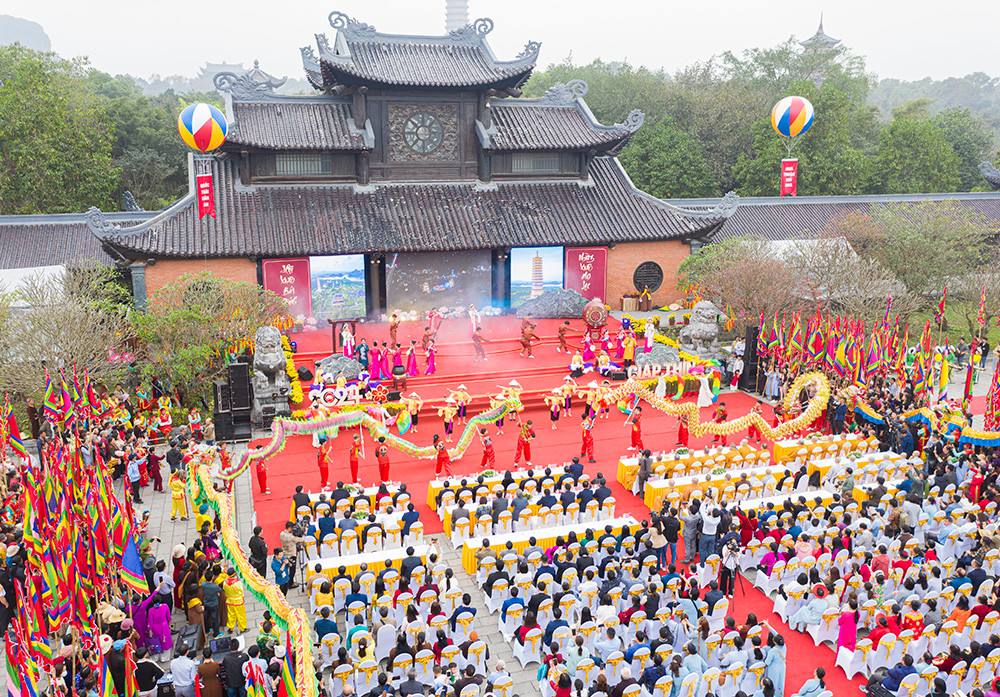
Diverse activities at the Bai Dinh Pagoda Festival. (Source: Collected)
Attending the Bai Dinh Pagoda Festival is an opportunity for visitors to immerse themselves in the unique cultural and spiritual space of the ancient capital region. Some typical experiences that visitors should not miss include:
After the incense offering ceremony, many visitors flock to sacred areas such as Tam The Temple, Quan Am Temple, or the ancient Bai Dinh Pagoda to pray for blessings. This is a popular custom symbolizing wishes for luck, peace, and a favorable start to the new year.
The journey of climbing hundreds of stone steps leading to the ancient pagoda is one of the traditional experiences of the festival. Visitors can exercise their bodies while admiring the rocky mountain scenery and the ancient pagoda space bearing traces of the Ly dynasty.
During the festival season, many small stages organize performances of Hat Van and Hat Cheo, allowing visitors to appreciate the sophistication of Vietnamese traditional art. This is a rare occasion to enjoy spiritual art right within the sacred space of the pagoda.
5. Combine itinerary with other nearby destinations
After attending the Bai Dinh Pagoda Festival, visitors can easily combine their trip with visits to many famous surrounding tourist attractions, creating a complete cultural – natural – spiritual journey.
Trang An: Just about a 15-minute drive from Bai Dinh Pagoda, Trang An is a UNESCO World Cultural and Natural Heritage site. Visitors can take a boat ride along the clear blue waters, explore submerged caves, and admire the majestic limestone mountain complex. This is an ideal combination for a spring trip.
Hoa Lu Ancient Capital: Hoa Lu Ancient Capital is located near Bai Dinh Pagoda and was the center of power in Vietnam during the Dinh – Tien Le dynasties. Visitors can explore Dinh Tien Hoang Temple, Le Dai Hanh Temple, ancient citadel gates, and many valuable relics, gaining a deeper understanding of the historical context of the formation of the Dai Co Viet state.
Mua Cave: Mua Cave is famous for its 500 stone steps leading to the peak of Ngoa Long Mountain, where visitors can enjoy a panoramic view of Tam Coc and the rice fields from above. This is the most beautiful photo spot in Ninh Binh, especially during the festival season and harvest time.
Tam Coc – Bich Dong: Dubbed the "Ha Long Bay on land", Tam Coc – Bich Dong captivates visitors with its scenery of rivers blending with mountains and natural caves. Bich Dong is also an ancient pagoda with architecture harmonizing with the limestone mountains, very close to tourist spots in western Ninh Binh.
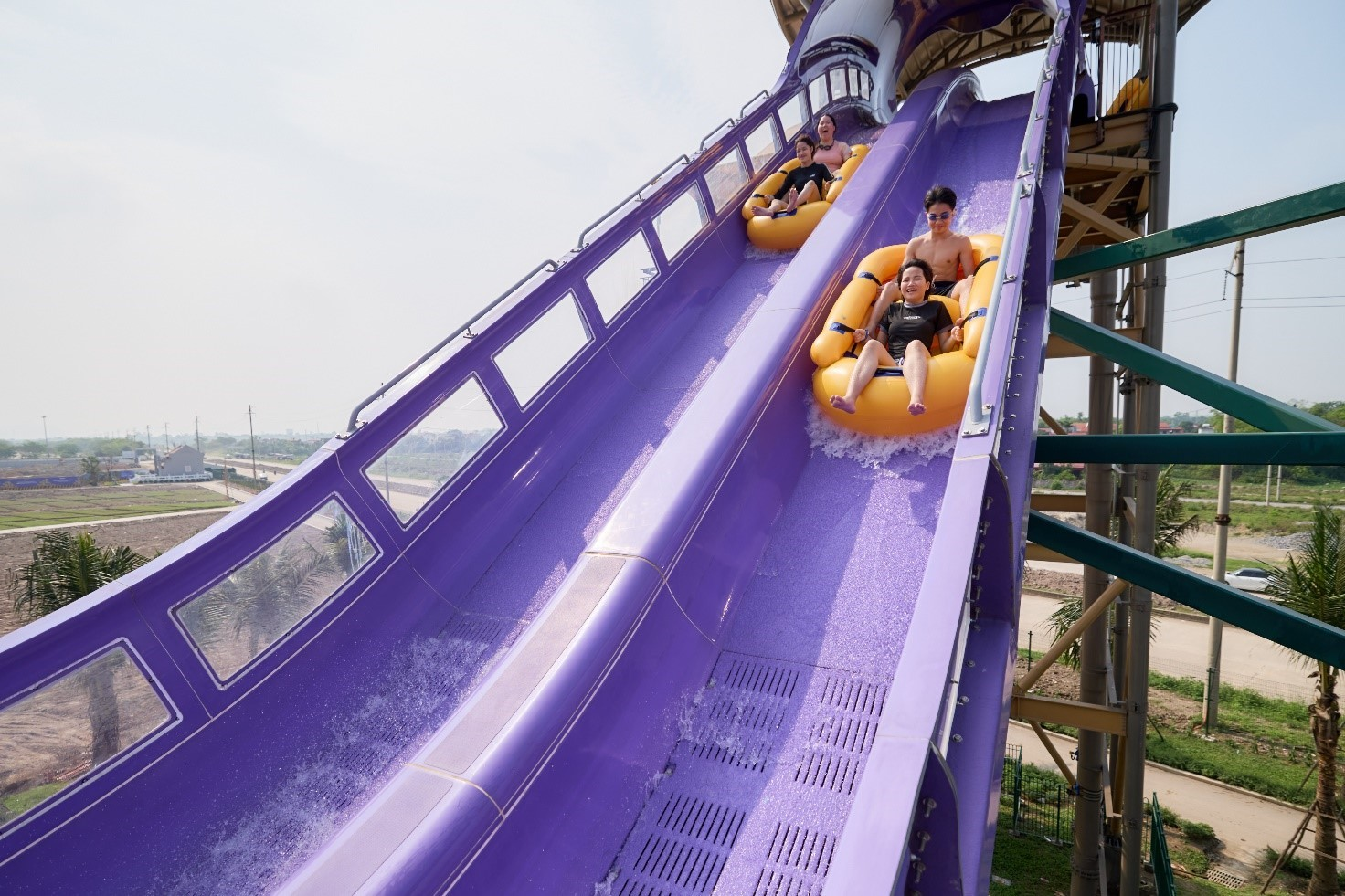
Sun World Ha Nam with a series of exciting games. (Source: Collected)
Sun World Ha Nam: Just about 35-40 minutes from Bai Dinh, Sun World Ha Nam is an ideal play - entertainment - space after the festival schedule. Inspired by the traditional water puppetry art, this place gathers many diverse entertainment games, suitable for all ages.
Bai Dinh Pagoda Festival is not only a large-scale spring festival of Ninh Binh but also a cultural - spiritual symbol deeply imprinted with Vietnamese Buddhism. With origins linked to Saint Nguyen Minh Khong, the traditional ritual system and sacred space of the largest pagoda complex in Vietnam, the festival brings visitors a blend of belief, history, and spring travel experience. The festival contributes to preserving the cultural values of the ancient capital Hoa Lu, creating a unique identity for Ninh Binh, and is a meaningful New Year gathering point for locals and tourists alike.


