




1. Overview of Kim Son Sedge Craft Village
1.1. Sedge Craft: Over 200 Years of Development
Kim Son, a former district of Ninh Binh province, has long been known as the "sedge land" thanks to its spacious terrain and coastal alluvial plains, suitable for the growth of sedge. According to records, the Kim Son land was heavily reclaimed starting in 1829 under the reign of Nguyen Cong Tru - transforming from a marshy area with reeds into a settlement for cultivating and developing the traditional sedge craft.
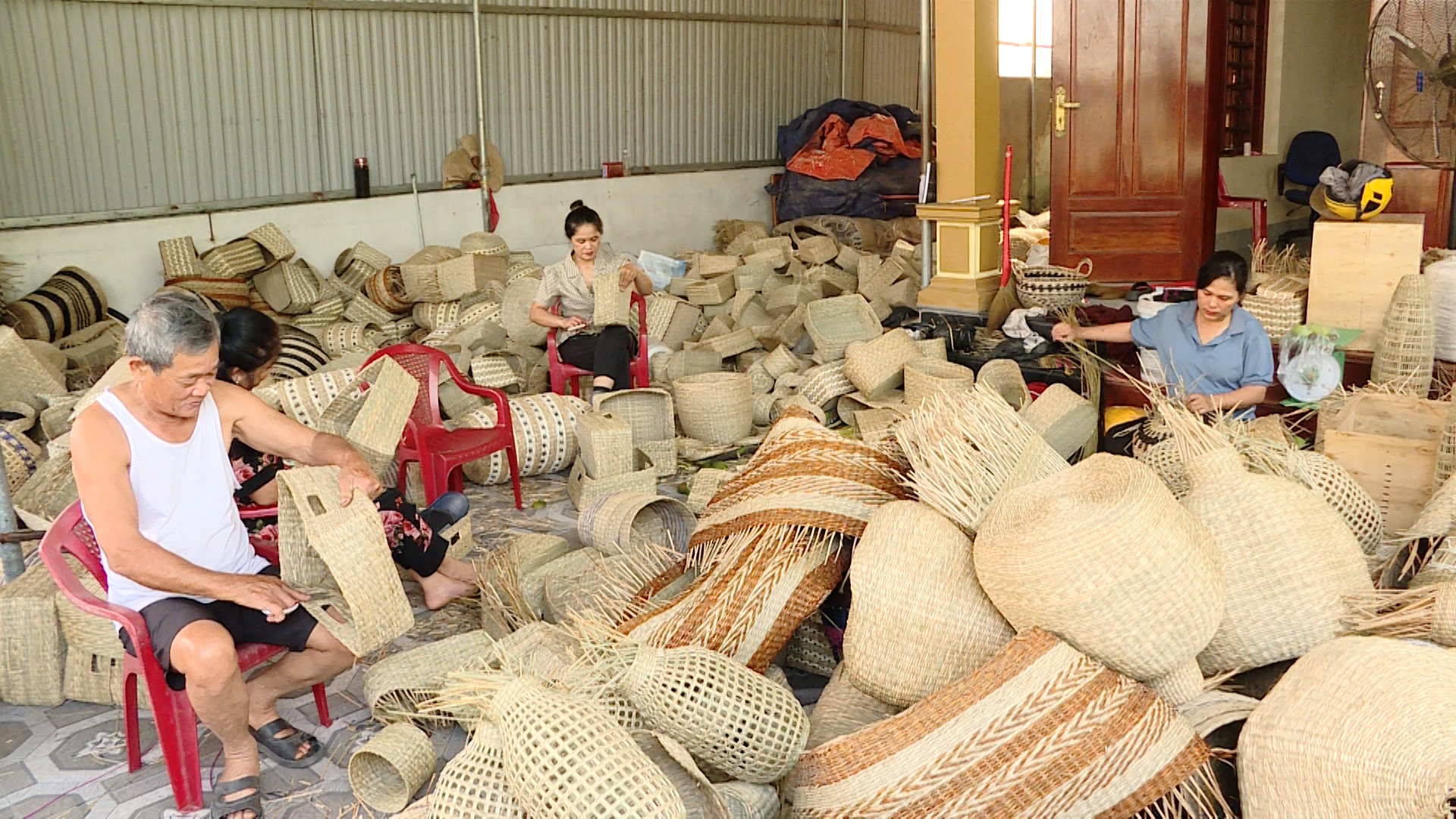
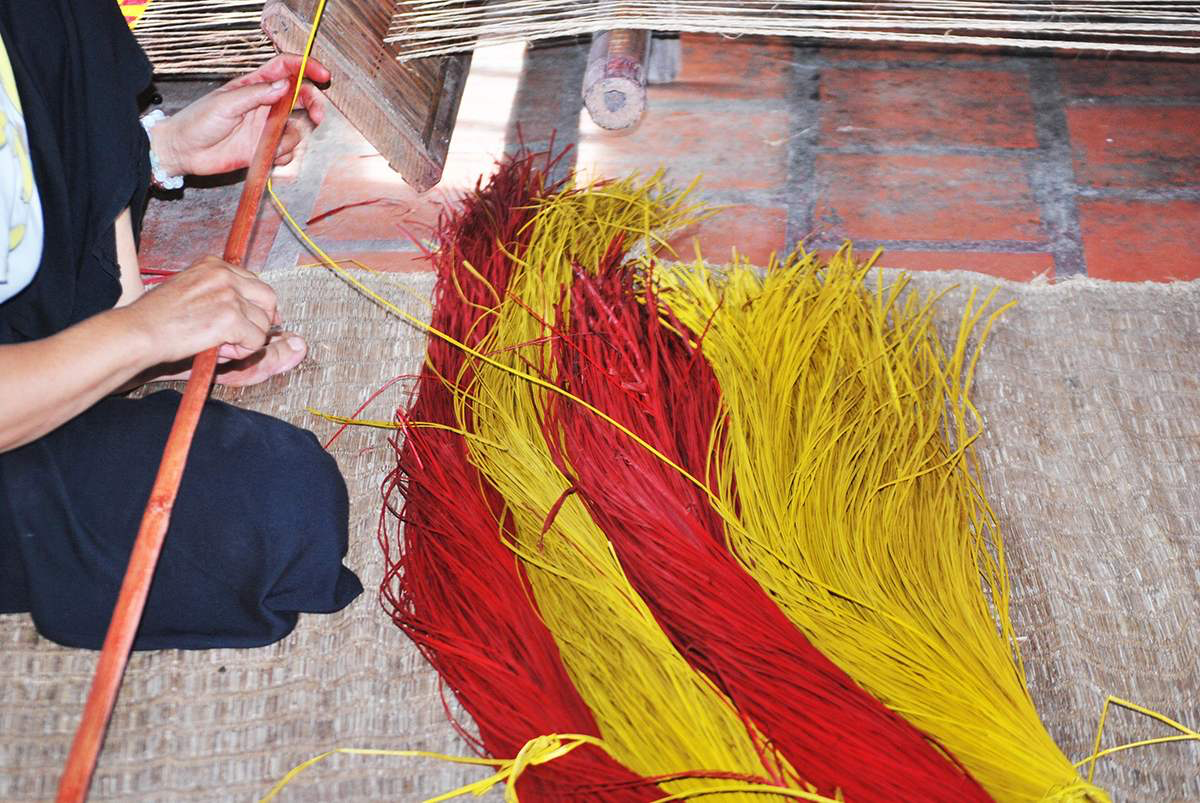
Visitors watch artisans split sedge, dye it, and twist the fibers – a manual labor process that remains unchanged to this day. (Source: Collected)
For over two centuries, the sedge craft in Kim Son has been passed down, developed, and established its reputation. From sedge mats used in daily life, the craft has expanded to produce many handicraft items: carpets, handbags, woven boxes, baskets, conical hats, hats, meeting domestic and export demands.
Many households in Kim Son have been involved in the craft for generations, making the sedge craft not just a side job, but a main occupation, creating a stable livelihood for the community. The Kim Son sedge weaving village is therefore considered one of Ninh Binh's typical traditional craft villages.
1.3 Why the Craft Village is a Favorite Tourist Destination
The coastal rural culture is deeply traditional: Sandbanks, rice fields, and sedge fields interspersed with canals create a rustic, authentic landscape, different from the noisy city. Tourists seeking peace and the original beauty of the countryside often choose Kim Son.
Attractive traditional handicraft experiences: When visiting the village, tourists not only buy products but also witness firsthand the process of growing sedge, harvesting, splitting, drying, and weaving, gaining a deeper understanding of the value of handicraft products and appreciating the artisans' efforts.
Unique, easy-to-carry handicraft products: From mats, carpets, baskets, conical hats, bags to woven boxes and trays, all are lightweight, easy to carry, and bear distinctive cultural imprints. They are very easy for domestic or international tourists to use or give as souvenirs.
Combining rural tourism – community – cultural experience: Kim Son sedge village is not only a production site but also a space for tourists to learn more about the history of land reclamation, people's lives, labor, and the diligent spirit of the North Vietnamese coastal people.
Thanks to these factors, Kim Son sedge village continues to attract tourists seeking cultural – natural – traditional experiences, especially on itineraries combined with Ninh Binh tourism.
2. Featured Experiences at Kim Son Sedge Craft Village
2.1. Admiring the Sedge Season in Kim Son
The sedge season in Kim Son usually starts from April to September, when the weather is dry and the coastal alluvial soil has the appropriate salinity and moisture. This is the most beautiful time for tourists to observe the entire traditional sedge-making process.
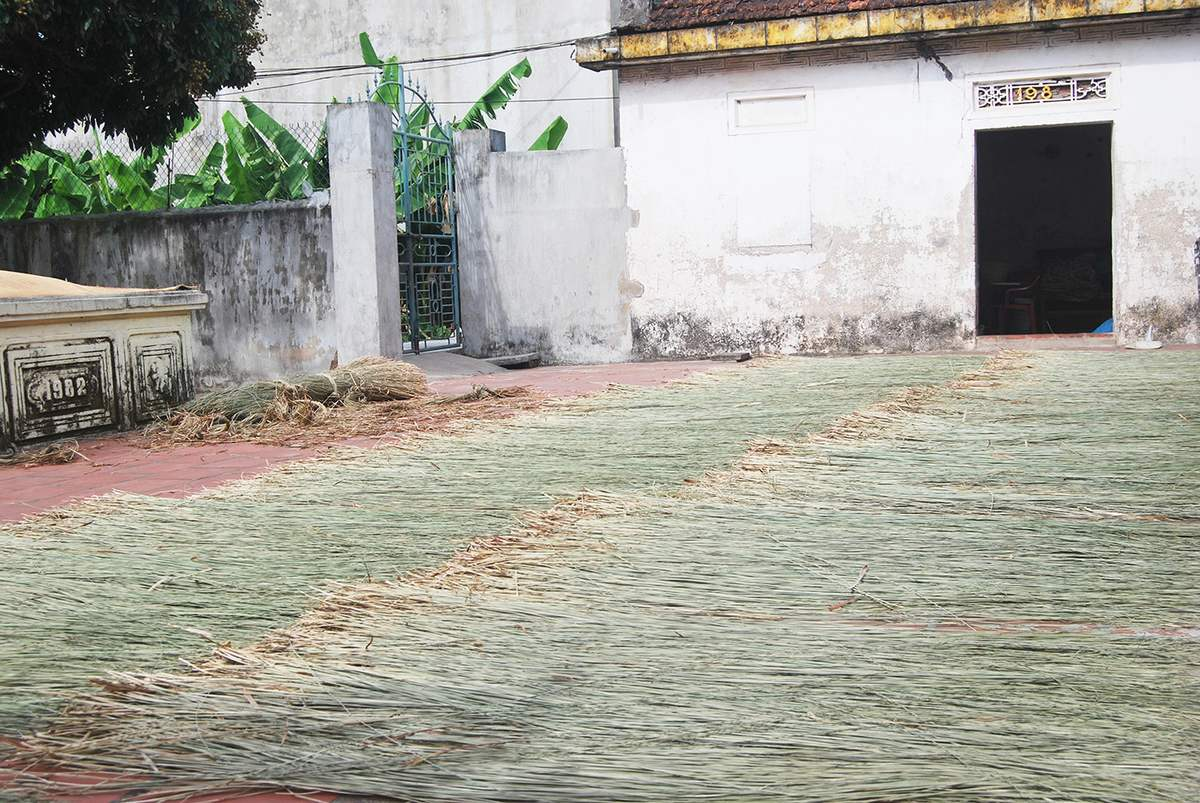
Sedge is dried into long mats on brick yards – a familiar image of the craft village over two centuries old. (Source: Collected)
Process of growing and caring for sedge: Sedge is grown in the alluvial plains along the coast of Kim Son – where the land is newly formed, suitable for the plant to develop tall stems and strong fibers. People plant in long rows, caring for it using manual methods, preserving the natural character of the land.
Harvesting – drying – dyeing: When the sedge matures, people cut it into bundles, wash it clean, then dry it on dirt yards or brick surfaces. This is the most characteristic image of Kim Son that tourists love to capture. After drying, the sedge is dyed yellow, brown, or kept in its natural color, then softened to make it easy to weave.
Ecological value of the sedge craft: Growing sedge not only creates income for the people but also contributes to preserving the alluvial plain ecosystem, preventing coastal erosion, and creating a natural green belt. This is why the sedge craft in Kim Son is always prioritized by Ninh Binh province for preservation in traditional agricultural and handicraft development programs.
2.2. Experience sedge weaving with artisans
Tourists visiting the Kim Son sedge craft village can directly experience weaving under the guidance of artisans – those who have dedicated their lives to the craft.
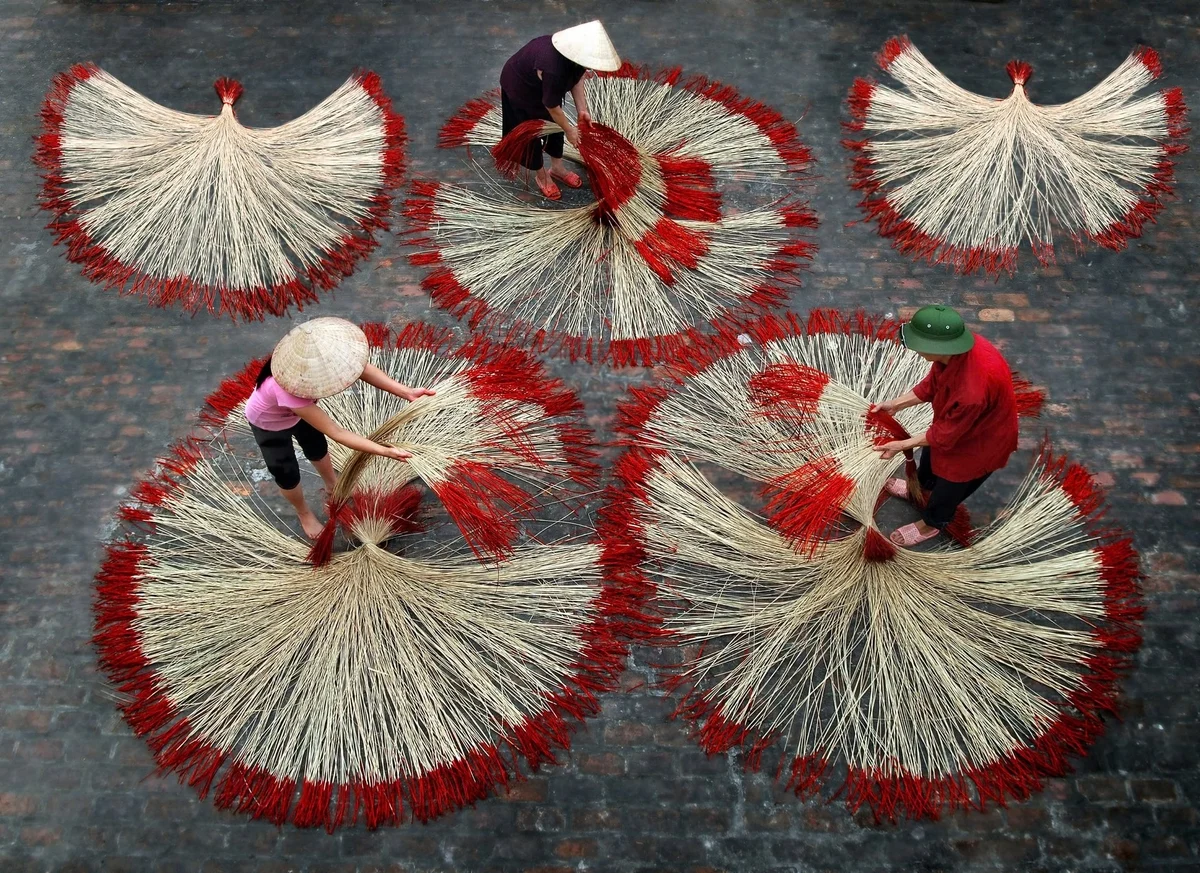
People of Kim Son harvest sedge in the coastal alluvial area – an area reclaimed in 1829 during the Nguyen Cong Tru era. (Source: Collected)
Basic weaving steps:
Select soft twisted sedge fibers and classify by thickness
Create the initial frame (weave the base)
Weave fibers in a simple style: plain weave or double weave
Shape small products such as coasters, mini trays
Edit and finish the edges with thin sedge fibers
Artisans will guide through each step so visitors can feel the meticulousness and perseverance of the craft. These are all easy-to-make products, completable in 15–40 minutes, suitable for international tourists, families, and young children.
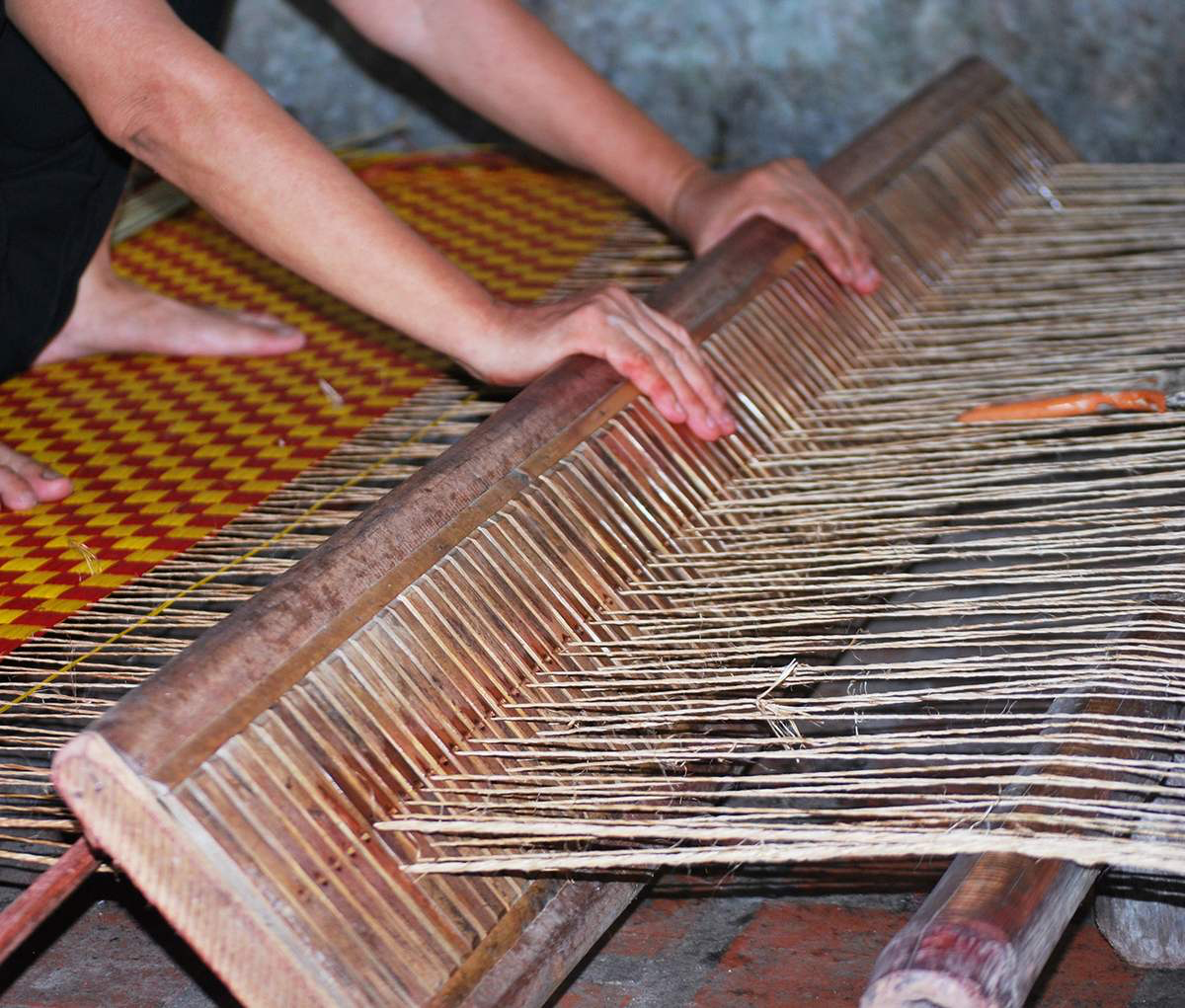
Single weave, double weave – basic techniques of the sedge craft. (Source: Collected)
Depending on the facility, experience prices usually range:
30,000 – 50,000 VND: try weaving mini products
60,000 – 100,000 VND: 30–60 minute workshop with a product to take home
These activities are highly rated by many tourists as very worthwhile because they offer a genuine cultural experience.
2 .3. Buy authentic Kim Son handicrafts
Kim Son is famous for its quality handicrafts, natural colors, and high durability. Some popular items include: sedge mats, traditional sedge carpets, baskets, handbags, storage boxes, tablecloths, woven trays, hats, sedge-woven hats, and sedge decor – export furniture. Many Kim Son products have achieved OCOP 3–4 star ratings, receiving high praise for their quality and artisanal craftsmanship.
Kim Son sedge workshop with a complete production process from fiber to finished product – a place chosen by many tourists for shopping. (Source: Collected)
Suggestions for reputable shopping places in Kim Son:
Kim Son sedge craft village: where many long-standing sedge weaving households are concentrated
Kim Son sedge weaving cooperative: specializing in export orders, stable quality
Establishments near Phat Diem Stone Church: convenient for tourists to combine sightseeing and shopping
Ria Market (Kim Son): a place selling many sedge products at reasonable prices
Tourists should choose establishments with display areas, product stamps, or OCOP identification labels to ensure origin and quality.
3. Best time to visit Kim Son
3.1. Sedge harvest season
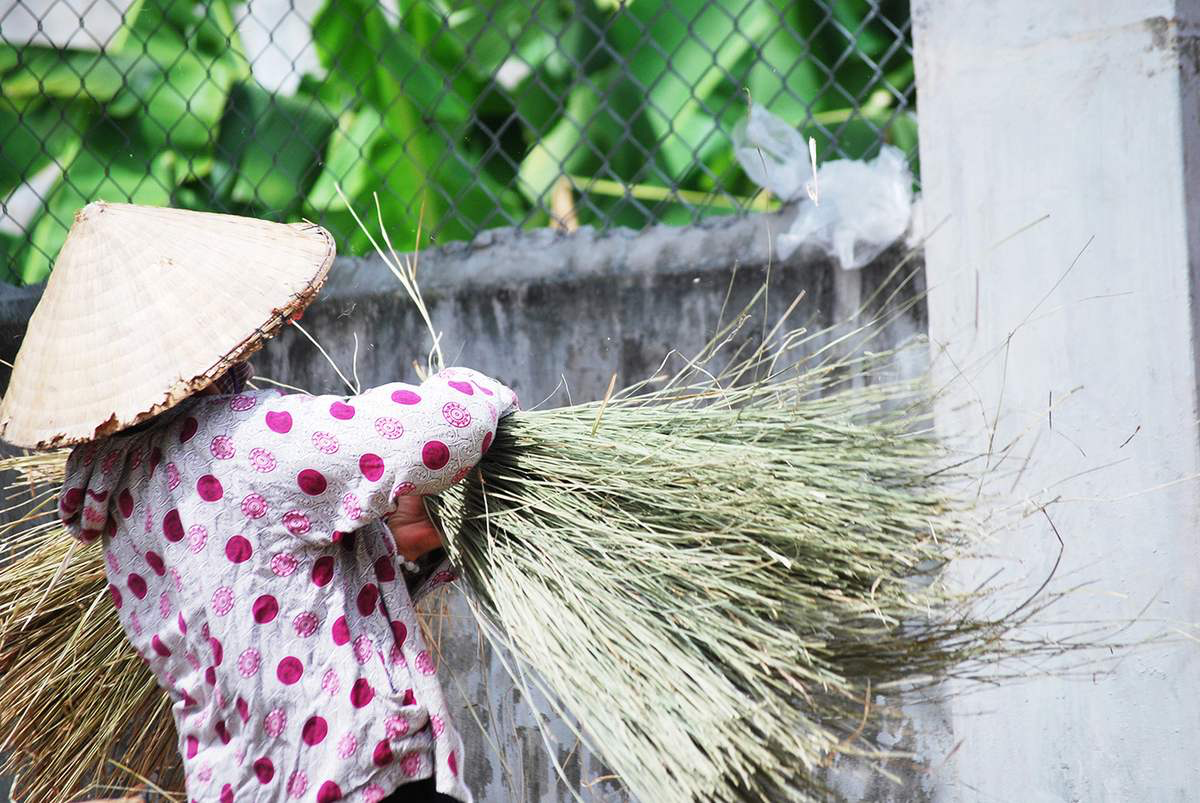
Reed season from April to September – drying yards are vibrant yellow, artisans are busy splitting, twisting, and weaving reeds. (Source: Collected)
The most ideal time to explore Kim Son reed village is during the dry season, usually from April to September annually. This is also when the reed plants grow well, with tall stalks, strong fibers, and are harvested simultaneously by the locals. Characteristic scenery of the harvest season:
The reed fields turn pale yellow, stretching across the coastal alluvial plains.
The craft village is vibrant with colors from reed mats drying along the brick yards, roadside, creating a very characteristic scene of Kim Son.
Artisans are busy splitting reeds, twisting fibers, and weaving to create a lively – authentic picture of labor.
3.2. Avoid storm seasons in coastal areas
Kim Son is located near the Kim Dong – Con Noi sea gate area, so it is quite clearly affected by coastal weather. According to recommendations from the National Center for Hydro-Meteorological Forecasting (NCHMF), the periods with heavy rain and potential storms are concentrated in:
July – October: often experience heavy rain, low-pressure systems, and storms active in the East Sea.
Especially August – September: rainfall peaks, with localized flooding in alluvial areas being common.
Suggestion for tourists: If you must travel during the rainy season, prioritize visiting indoor workshops where you can still watch artisans weave reeds even in bad weather.
4. Experience & Notes when visiting the craft village
4.1 Suitable clothing and luggage
Light, breathable, sun-protective clothing: It is advisable to wear cotton or linen shirts, thin long sleeves if going out at noon to avoid the sun and insects; light long pants help protect when walking on drying yards and alluvial plains.
Comfortable shoes with good grip: Prioritize sports shoes, light hiking shoes, or flat shoes with good grip; avoid flip-flops as many drying yards or workshop floors have reed fibers, dust, or water.
Hat, sunglasses, sunscreen: Wide drying yards with little shade require a wide-brimmed hat and sunscreen to protect the skin.
Bring water, a small towel, and a compact bag: A bottle of water, a sweat towel, and a small crossbody bag will be convenient when participating in workshops or shopping.
Traditional attire for photos: Ao ba ba, light ao dai for photos will perfectly match the rural scenery and reed drying yards; however, still adhere to the rule of respecting artisans (do not wear clothing that obstructs their work).
Prepare small cash and product bags: Many small establishments prefer cash over cards; prepare bags/wrappers to store fragile or moisture-sensitive products.
4.2 Etiquette at the craft village
Ask for permission before entering workshops or taking photos in work areas. Many families consider their workshops as living spaces, so politely ask the owner first.
Do not touch or move drying/in-progress products unless the artisan agrees; unfinished products are easily damaged.
Maintain a safe distance from work areas. Avoid walking onto the reed drying yards, do not step on drying mats; if invited by an artisan to step in, follow their instructions.
Do not be noisy or cause distractions. Handicrafts require concentration; keep your voice low, avoid shouting that affects their work.
Behavior when wanting to buy: ask about the origin and production process; if bargaining, be polite and respectful of the workers' efforts. Prioritize buying from reputable establishments or cooperatives for quality products.
Limit long filming/commercial filming without permission; many artisans agree to personal photos but do not want to be commercially filmed without compensation.
Respect working hours: if visiting during peak season, avoid crowding and delaying their production schedule.
4.3 Tips for beautiful photos at Kim Son
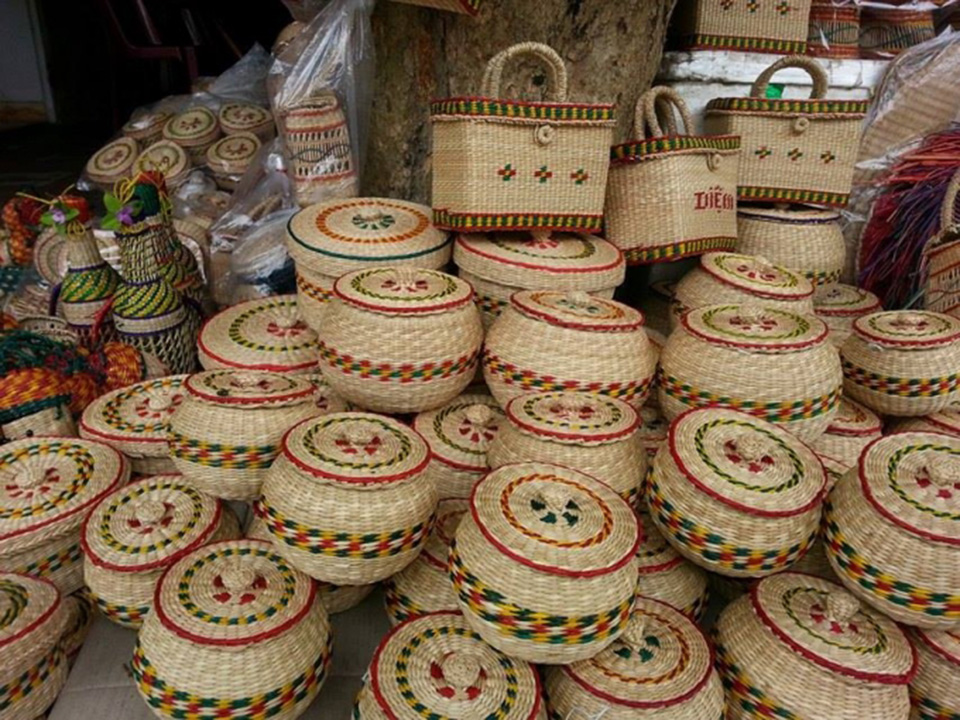
Kim Son's OCOP 3-4 star sedge products – outstanding with natural colors and high durability. (Source: Collected)
Golden Hour: The best light is early morning and late afternoon. Soft light creates long shadows and enhances the yellow color of sedge, avoid shooting in the harsh midday sun as the sedge color will lose its vibrancy and photos will be overexposed.
Suggested angles:
Sedge drying yard: shoot at eye level with the drying racks to show the length – the repetitive rhythm of the racks; use a wide-angle lens to capture the entire drying area.
Sedge field/marsh: shoot from a low angle to make the sedge extend into the distance, creating an impressive foreground.
Weaving workshop: take close-ups of the artisan's hands weaving, focusing on the texture of the fibers, with the camera's focus on the needle/fiber to emphasize the "craftsmanship detail".
5. Suggested itinerary for a 2N1Đ trip to explore Kim Son sedge village and visit Ninh Binh's highlights
Day 1: Explore Kim Son sedge village – experience handicraft – overnight in Ninh Binh
In the morning, visitors depart from Hanoi and arrive at Kim Son sedge village in about 1.5–2 hours. Upon arrival, begin your journey by strolling around the sedge fields, drying yards, and production households to understand the entire process of growing – harvesting – drying – dyeing – spinning sedge.
At the weaving workshop, visitors can try weaving sedge with artisans, making small products like coasters, mini baskets, or keychains. This is an interesting activity, very suitable for groups of friends, families, or foreign tourists who want to learn about local culture.
For lunch, you can enjoy Kim Son specialties such as seafood from the alluvial plains, crab noodle soup, or mountain goat from local restaurants. In the late afternoon, return to Ninh Binh city center or stay at a homestay near Phat Diem – Kim Son to experience the peaceful life of the coastal region.
In the evening, visitors can stroll around the city, enjoy cuisine in the central area, and prepare for the sightseeing itinerary the next day.
Day 2: Explore Ninh Binh's attractions – Combine with Sun World Ha Nam
In the morning, visitors travel to one of two famous destinations:
Trang An: take a boat tour to explore caves, limestone mountains, and Trinh Temple; average time is 2.5–3 hours.
Mua Cave: climb nearly 500 stone steps to admire the panoramic view of Tam Coc from above; the best time is early morning or late afternoon.
In the afternoon, visitors have lunch in Trang An – Tam Coc, then continue sightseeing according to their preferences:
Thung Nham Bird Garden: experience ecological nature, observe thousands of birds returning to their nests in the late afternoon.
Bái Đính Pagoda: visit the vast spiritual complex with magnificent architecture, suitable for tourists who prefer a serene atmosphere at the beginning of the year.

Sun World Ha Nam – A spectacular water puppetry themed water park. (Source: Collection)
Sun World Ha Nam: about 40–45 minutes from Ninh Binh city center. This is an ideal place to end your trip with modern entertainment spaces, landscape areas simulating Northern Vietnamese art, and activities suitable for both children and adults.
Exploring Kim Son sedge village is not only a journey to learn about a craft over 200 years old, but also an opportunity for visitors to step into the simple life of Ninh Binh's coastal region. From the sedge fields stretching with the seasonal winds, the drying yards golden under the sun, to the diligent hands of the artisans, all create a rustic yet culturally rich Kim Son.


