



1. General Introduction to the Ky Phuc Festival of Cam Gia Communal House
1.1. Cam Gia Communal House and its Characteristic Cultural Space
Cam Gia Communal House is located in Ninh Khanh ward, Ninh Binh province, a place deeply imbued with the history and culture of the Hoa Lu region. In front of the house is a clear blue crescent-shaped lake that remains so year-round, creating a peaceful and poetic landscape.
The architecture of the communal house follows a traditional style, with an imposing tam quan gate, tiled roofs, wooden pillars, and a rafter system exquisitely crafted in an ancient style, all creating a sacred, ancient, yet familiar space. In front of the courtyard are two rows of guardian beasts: stone elephants and stone horses, distinctive features that lead the local people to also call Cam Gia Communal House the "Stone Elephant - Stone Horse Communal House".
The space of Cam Gia Communal House is not only a place of worship but also the cultural heart of the community, where generations place their faith and gratitude towards ancestors and predecessors.
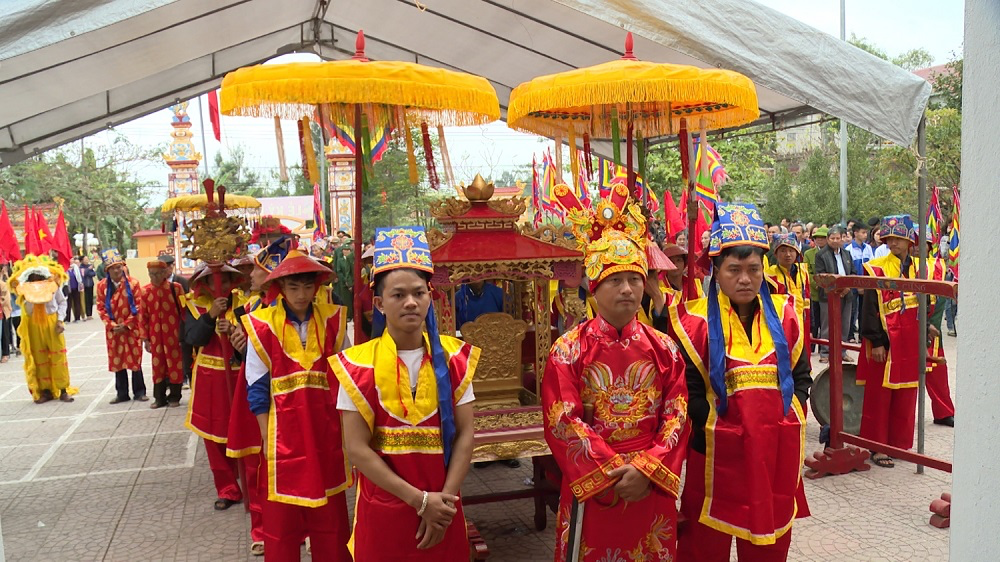
The Ky Phuc Festival at Cam Gia communal house is filled with the sounds of festival drums, processions, and a warm community atmosphere in the heart of Ninh Binh. (Source: Collected)
1.2. History and meaning of the Ky Phuc festival
The Ky Phuc Festival is held annually at Cam Gia communal house on the 12th day of the 10th lunar month. The purpose of the festival is to commemorate the merits of the deities worshipped at the communal house, including La Gia, Le Trung Nghia, Cau Mang Dai Vuong, and other Thanh Hoang and village guardian spirits.
The festival consists of rituals and festivities: the ritual part includes ceremonies such as the yiet offering ceremony, the peace prayer ceremony, the incense offering ceremony, and the concluding ceremony; the sacrificial rites are performed by the village elders, followed by the rites of male/female officials from each street and hamlet - praying for national peace, favorable weather, healthy villagers, and happy families.
The festive part takes place immediately after with many folk and community activities such as dragon dances, lion dances, tug-of-war, human chess, and cultural performances, creating a vibrant and warm atmosphere of the traditional festival.
A special feature of the festival is the "xoi dam" (pounded sticky rice) competition on the evening of the 11th lunar month. The hamlets in the village gather to prepare and pound sticky rice. The pounded sticky rice is used as an offering at the communal house on the main festival day after the sacrificial rites. The sticky rice and roasted pigs are then shared with all households in the village with the belief in "sacred blessings," praying for a new year of luck and peace.
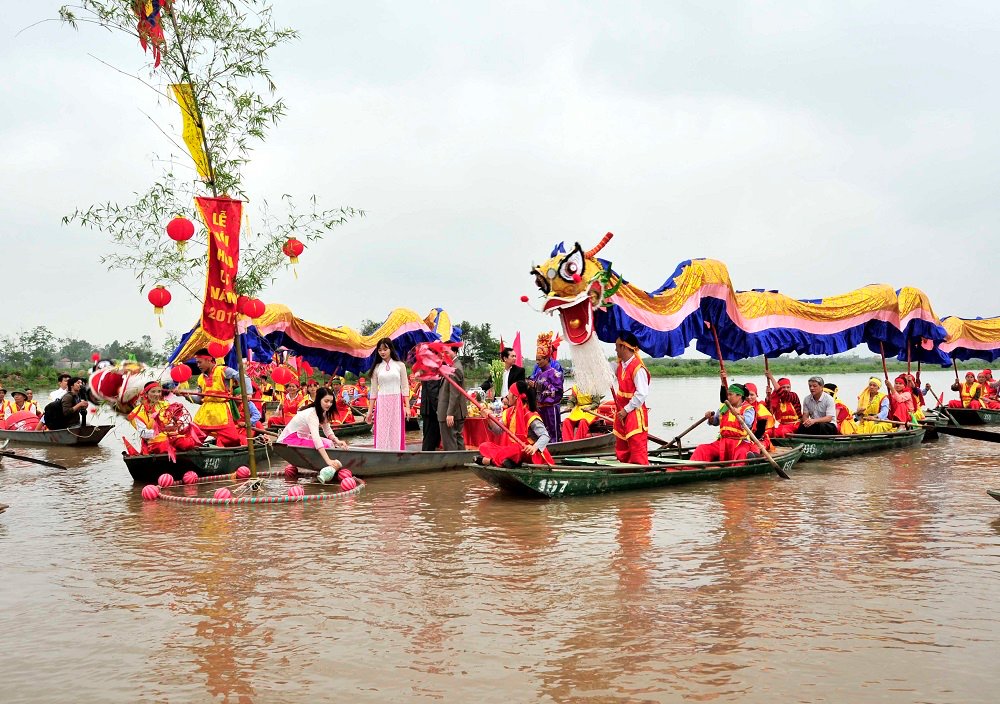
The Ky Phuc Festival is an opportunity for the community to gather, connect families, and neighborhoods. (Source: Collected)
The Ky Phuc Festival therefore carries profound meaning: not only an occasion to remember ancestors and thank deities, but also an opportunity for the community to gather, connect families and neighborhoods, preserve traditions, and pass down culture to future generations.
1.3. Reasons why the Ky Phuc Festival at Cam Gia Communal House attracts tourists
The festival atmosphere deeply embodies the characteristics of Northern Vietnamese village festivals: from ancient rituals at the communal house, palanquin processions, and ceremonies, to lively folk games such as dragon dances, lion dances, and tug-of-war, all creating a traditional cultural experience, very different from modern tourism.
The rituals have been preserved intact for hundreds of years: the communal house retains its ancient architecture, royal decrees, stone mythical creatures, and ancient tablets, all helping visitors clearly feel the history and sacredness of the place.
The village festival is lively and community-oriented: visitors have the opportunity to interact with local people, participate in folk games, watch traditional performances, and try sticky rice dishes. It's an experience not just of watching, but of immersion and feeling.
Culture – history – spirituality – community combined: for many tourists, especially those who love Vietnamese culture, the Ky Phuc Festival has a strong appeal because it is both sacred, vibrant, and profound.
With these outstanding points, the Ky Phuc Festival at Cam Gia Communal House is not only a local cultural event but also an attractive spiritual cultural tourism destination for domestic and international tourists during the festival season.
2. Discover the special activities during the festival
2.1. Traditional rituals
The lễ (ceremonial part) includes traditional rites: During the Ky Phuc Festival at Cam Gia Communal House, the lễ includes rites such as the cáo yết (announcement ceremony), cầu an (prayer for peace), dâng hương (incense offering), and tất (closing ceremony). Every year on the 12th day of the 10th lunar month (the main day), the community of hamlets and neighborhoods meticulously prepares offerings to present to the deities worshipped at the communal house: including Lã Gia, Quận công Lê Trung Nghĩa, Câu Mang Đại Vương, and other Thành Hoàng (city guardian deities) and spirits. Those performing the rituals are mainly reputable elders of the village, trusted to conduct the ceremonies to preserve traditional rites.
Traditional offering trays are rich in cultural essence: The offering trays usually include sticky rice, pig heads, betel leaves and areca nuts, wine, and fruits, reflecting the local people's beliefs and customs.
The procession of palanquins, flags, and dance troupes creates a solemn atmosphere: On the night before the main ceremony, the hamlets prepare palanquins and flags, along with a procession team carrying the palanquins around the communal house – an ancient ritual symbolizing community solidarity and expressing reverence for ancestors and deities. Following the ceremonial part are lion and dragon dance performances, imbued with the atmosphere of Northern Vietnamese festivals.
The ceremonial part of the Ky Phuc Festival at Cam Gia Communal House deeply reflects the spiritual and religious traditions of the people of Hoa Lư – Ninh Bình, while also preserving ancient rituals in a nearly thousand-year-old village.
2.2. Folk games and community activities
After the ceremonial part concludes, the hội (festive part) begins vibrantly with many cultural and folk activities: lion dances, dragon dances, cultural performances, tug-of-war, human chess, attracting a large number of local people and tourists.
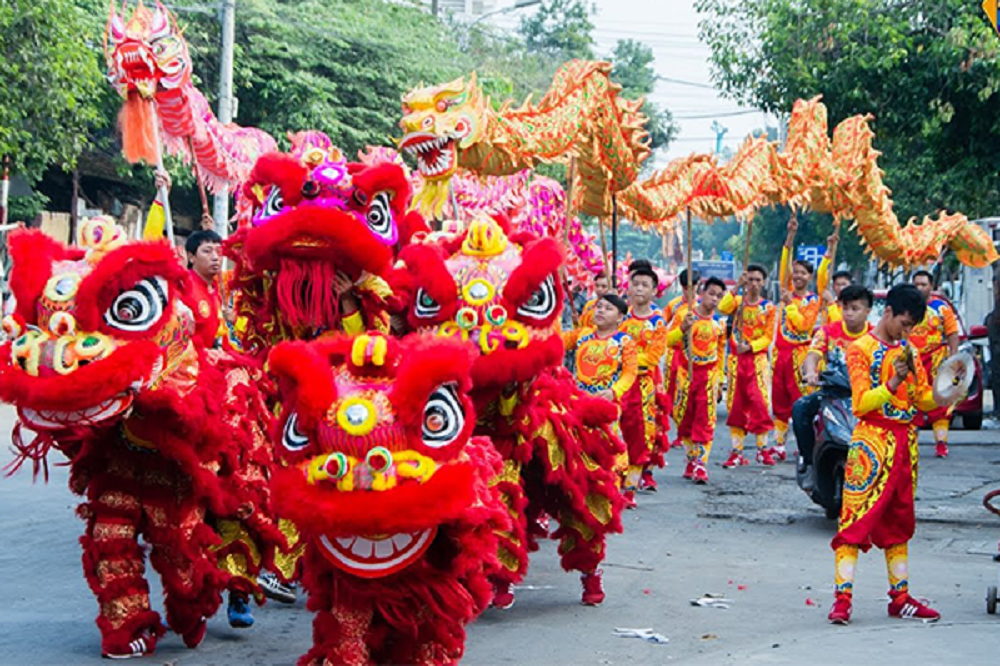
Dragon dance – lion dance performances attract a large number of people and tourists. (Source: Collected)
A very special aspect of the festival is the sticky rice pounding custom. The night before the main ceremony (the 11th day of the 10th lunar month), hamlets gather at the cultural house (formerly the village hut) to cook and pound sticky rice. After the sticky rice is smooth, it is divided into two offerings: one offering is presented at the cultural house, and the other is presented at the communal house the next morning for the ceremony.
After the worship ceremony, the sticky rice and offerings such as pig heads are divided equally among all households in the village as "sacred blessings" with the meaning of praying for peace and good fortune for the new year. Throughout the festival, the communal house yard becomes a crowded place, where villagers, descendants returning from afar, and visitors from near and far gather. Some people come to participate in the procession, watch the lion dance, watch human chess, join the tug-of-war, or simply blend into the crowd, observing and enjoying the characteristic Northern Vietnamese festival atmosphere.
Thanks to these activities, the festival not only carries spiritual significance but also serves as a place to preserve the community, connect people, between local residents and their children who have moved away, between adults and children, and between tradition and the present.
3. Tourist Experiences to Try
3.1. Visiting the Cam Gia Communal House Architecture
Cam Gia Communal House is one of the beautiful and typical traditional architectural works of the Ninh Khanh – Ninh Binh region. When visiting before or during the festival season, tourists can spend time exploring:
The rafters, purlins, main pillars, and crossbeams are all carved in a folk style, depicting images of the four sacred animals, flowers, leaves, and swirling clouds.
In the main hall, ancient horizontal lacquered boards and parallel sentences are preserved, reflecting the spiritual cultural life of the ancient Hoa Lu residents.
The front shrine is where the community altar and important worship items are placed. The old wooden architecture and ancient tiled roof create a quiet and sacred atmosphere.
The inner sanctuary houses the royal decrees, memorial tablets, and worship items of the deities worshipped at the communal house, such as La Gia, Quan Cong Le Trung Nghia, Cau Mang Dai Vuong… This is the most important area, carrying rich historical value.
3.2. Immersing in Traditional Rituals
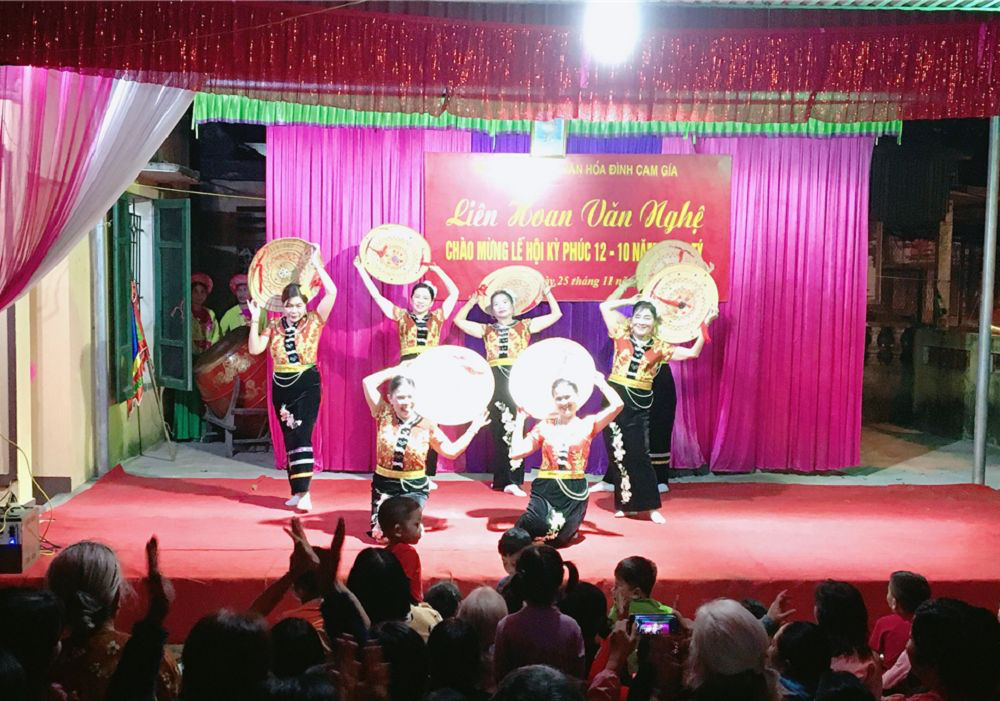
Festival of arts and culture with attractive activities, rich in Northern Vietnamese culture. (Source: Collected)
On the main festival day, visitors can participate in or observe many highly traditional rituals:
The rituals of offering, praying for peace, incense offering, and completion ceremony are solemnly performed by the village elders, reflecting the villagers' respect for deities and ancestors.
The palanquin procession and drum – gong performance create a sacred, harmonious, and communal atmosphere.
The Xoi Dam ceremony, a unique ritual only found at Ky Phuc communal house of Cam Gia, is also an experience that visitors should not miss.
Notes for visitors:
Maintain order, avoid crowding during the ceremony.
Do not film or photograph too closely to the elders during the ceremony without permission.
Dress politely to show respect for the spiritual space.
Immersing yourself in the festival atmosphere helps visitors clearly feel the spirit of solidarity and community bonding that has been preserved for generations.
3.3 Enjoying cuisine around the festival area
Visitors attending the Ky Phuc communal house festival of Cam Gia can combine it with enjoying many famous Ninh Binh specialties:
Ninh Binh burnt rice: crispy, served with goat sauce or fish sauce with spring onions.
Ninh Binh mountain goat: firm, fragrant meat, nổi bật with dishes like thinly sliced raw with lime, steamed, grilled, or goat hot pot.
Ninh Binh eel vermicelli: stir-fried eel with turmeric, clear and subtly sweet broth, perfect for breakfast or lunch.
Around the Ninh Khanh ward and Ninh Binh provincial center, there are many eateries and restaurants serving visitors after the festival. Restaurants located along Tran Hung Dao street, Hoang Hoa Tham street, or near the Hoa Lu Ancient Capital area are all convenient for travel.
4. Experience and notes when attending the festival
4.1 When to visit and main activity schedule
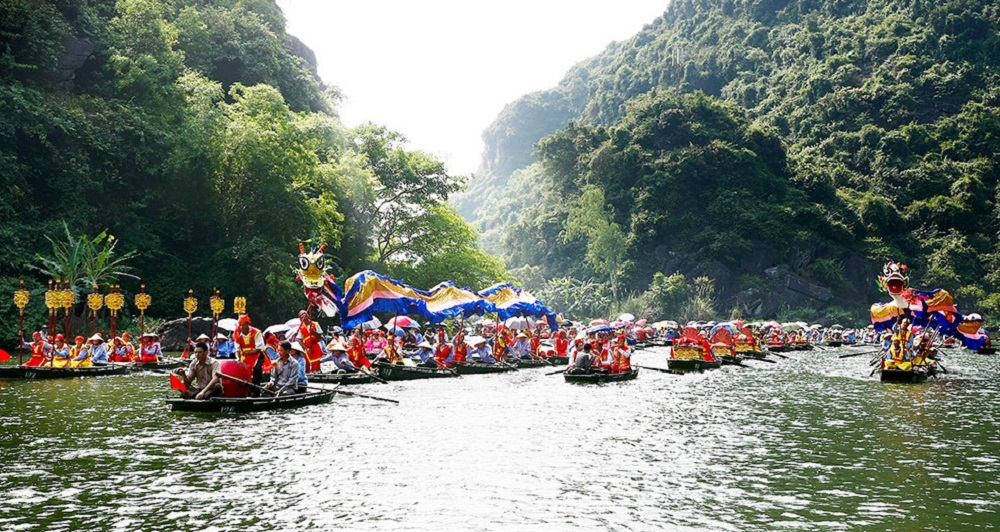
Visitors maintain order and respect the ritual area – important rules when attending village festivals. (Source: Collected)
Cam Gia Communal House Ky Phuc Festival is held on the 12th day of the 10th lunar month, but the festival atmosphere begins the night before. These are two important milestones for visitors to remember:
Evening of the 11th day of the 10th lunar month: The unique sticky rice pounding activity of the hamlets takes place. People gather at the cultural house to cook and pound sticky rice, creating a lively atmosphere before the main festival day. Visitors can witness the preparation of offerings and join the local community life.
Morning of the 12th day of the 10th lunar month: This is the time for the most important ceremony with rituals of announcement, incense offering, peace prayer, and concluding rites. After the ceremony comes the festival with dragon dances, lion dances, tug-of-war, human chess, and other performance activities. If you want to fully experience the festival spirit, this is a time slot not to be missed.
4.2 Notes on Attire and Behavior
It is advisable to wear polite attire in modest colors to suit the communal house space. Avoid overly short skirts or flashy outfits when participating in the rituals.
Respect the ritual space, do not push or make noise when the elders are performing the rites. Do not touch ritual objects, horizontal lacquered boards, royal decrees, or sacrificial items.
Ask for permission before taking photos of artisans, procession groups, or ritual areas.
Maintain general hygiene and do not litter in the communal house yard or surrounding areas.
Civilized behavior will help visitors integrate better with the local community and preserve the traditional beauty of the festival.
5. Suggested Itinerary for Exploring Festivals and Famous Ninh Binh Attractions
After attending the Cam Gia Communal House Ky Phuc Festival, visitors can combine it with exploring outstanding tourist spots in the area to complete their cultural – scenic – experiential journey. Some suggested locations include:
Trang An – A famous World Heritage tourist route in Ninh Binh, where visitors take boat trips to admire the system of caves, Trinh Temple, Tran Temple, and majestic limestone mountains.
Mua Cave – A famous check-in spot with a stone path leading to the top of Mua Mountain, offering a spectacular panoramic view of Tam Coc.
Thung Nham Bird Garden – A large ecological area with many rare bird species, suitable for nature lovers and photographers.
Phat Diem Stone Cathedral – A unique Catholic architectural complex in Kim Son, harmoniously combining Asian and European styles, an ideal stop for those who love historical architecture.
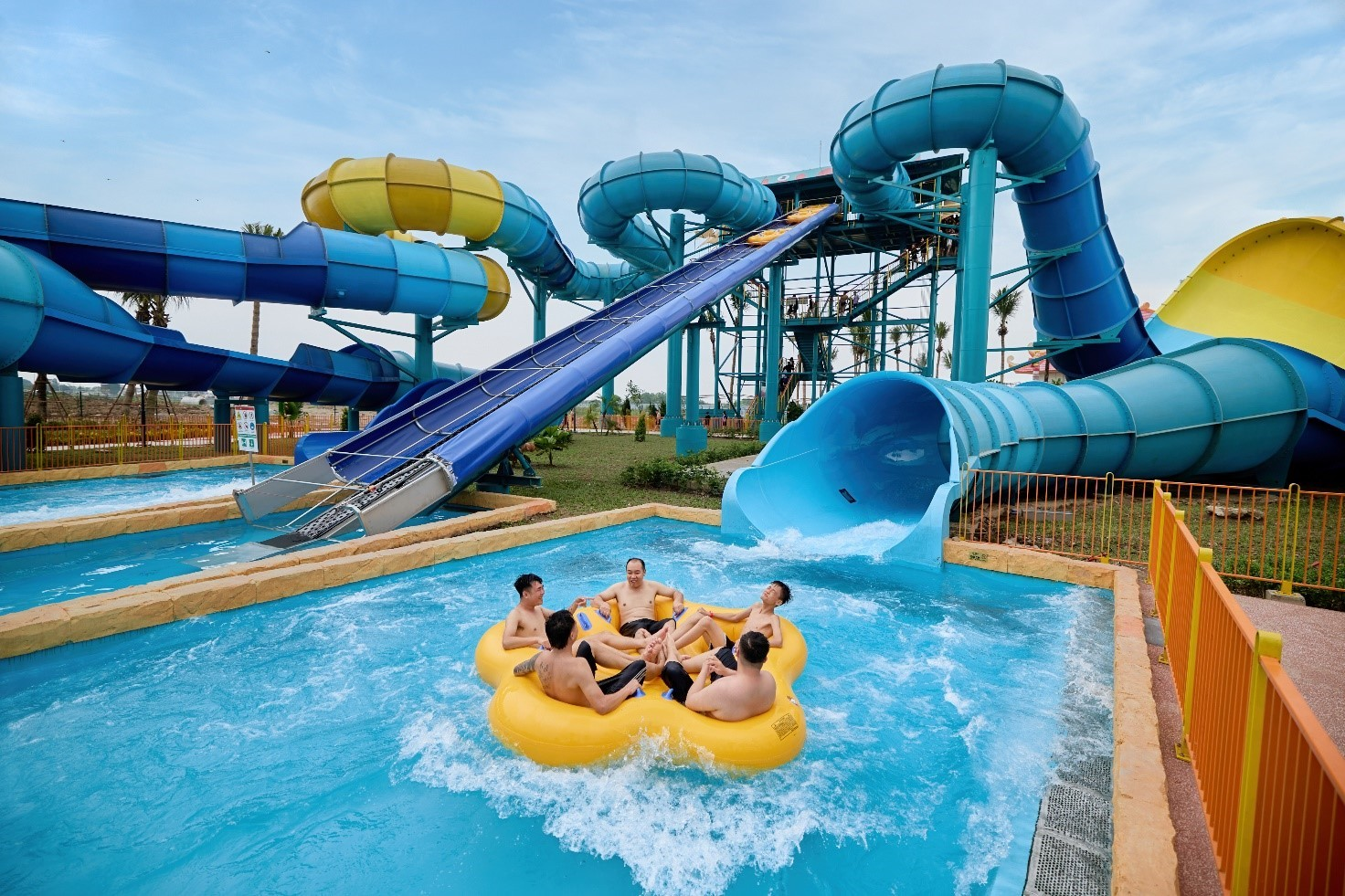
Vibrant entertainment complex Sun World Ha Nam. (Source: Compilation)
Besides the traditional attractions of Ninh Binh, visitors can also combine their trip with Sun World Ha Nam. This is a modern entertainment complex inspired by the art of Northern Vietnamese water puppetry. Here, there are many attractive activities for all ages, such as a water park, wave pool, dynamic games, and themed photo zones.
Ky Phuc Cam Gia Communal House Festival is a culturally rich destination for the people of Ninh Binh, where visitors can experience spiritual life and the traditional village festival atmosphere. This is a worthwhile experience for anyone who wants to feel a deeper and more intimate Ninh Binh.


