




1. General Introduction to Dong Vai Gioi Cave
Dong Vai Gioi Cave is located within the Thung Nham complex, Ninh Binh province, and is one of the prominent ecological tourist areas of the ancient capital region. The cave is situated on a high mountainside, at an altitude of approximately 88 meters above the ground.
With an area of about 5,000 m², Dong Vai Gioi Cave is considered the largest cave in the cave system at Thung Nham. To reach the cave entrance, visitors must climb nearly 439–440 stone steps along the mountainside, a journey that is both challenging and offers a wonderful experience.
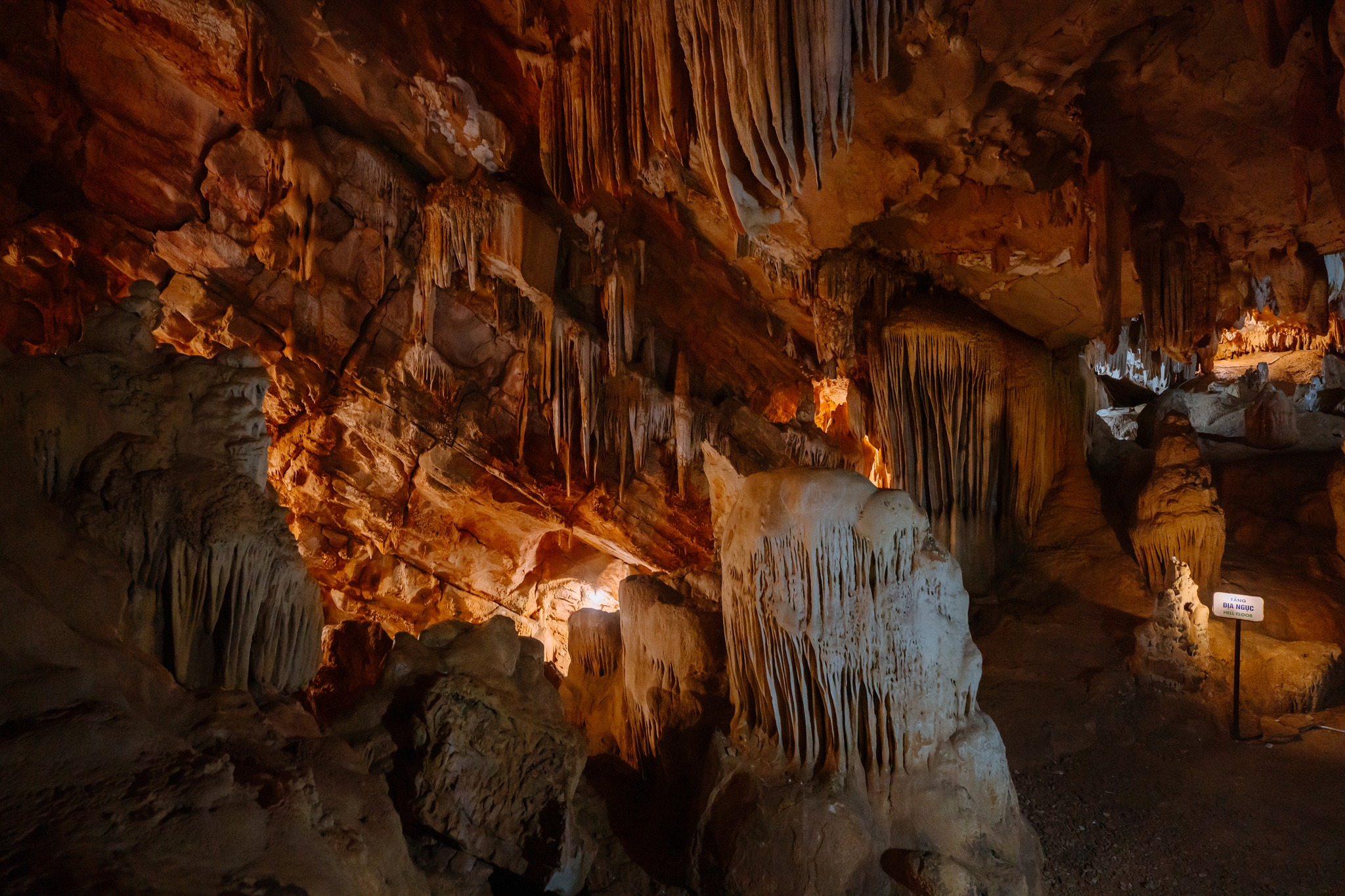
Dong Vai Gioi Cave - the mysterious gem in the heart of Thung Nham. (Source: Collected)
Inside the cave is a natural cave system with three distinct levels, symbolizing three realms: “earthly realm – hell – paradise”. Not only prominent geologically, Dong Vai Gioi Cave is also associated with folk beliefs and ancient legends. Accordingly, ancient people used to set up altars here to worship heaven, praying for favorable weather, abundant harvests, and national peace and prosperity.
Thanks to the harmonious combination of majestic nature, unique geological formations, and rich cultural and spiritual layers, Dong Vai Gioi Cave possesses great tourism value. It is a place to experience exploring magnificent caves, admiring stalactites with diverse natural shapes shimmering under the lights, bringing a feeling of both mystery and splendor. This place evokes a spiritual journey, offering a cultural and traditional experience through the legend of the earthly realm – the underworld – the celestial realm; making the trip not just a visit but also a journey of “harmony between earth – heaven – humanity”.
When combined with visiting the entire Thung Nham ecological area with its forest, bird garden, and natural landscapes, Dong Vai Gioi Cave contributes to enriching the diverse experiences for tourists, from exploring caves and nature to learning about local culture.
2. How to get to Dong Vai Gioi Cave
2.1. Directions from Hanoi to Dong Vai Gioi Cave
To reach Dong Vai Gioi Cave from Hanoi, tourists need to travel to Ninh Binh city center first, and then continue their journey to the Thung Nham ecological tourist area – where Dong Vai Gioi Cave is located. The travel time from Hanoi to Ninh Binh usually ranges from 1.5–2 hours, depending on traffic conditions and the type of vehicle.
Traveling by private car is a popular choice for many tourists due to its flexibility and convenience. From Hanoi city center, tourists should follow the Phap Van – Cau Gie – Ninh Binh expressway. This is a wide, easy-to-navigate route, suitable for families and groups of friends. The main costs include expressway tolls and fuel depending on the vehicle.
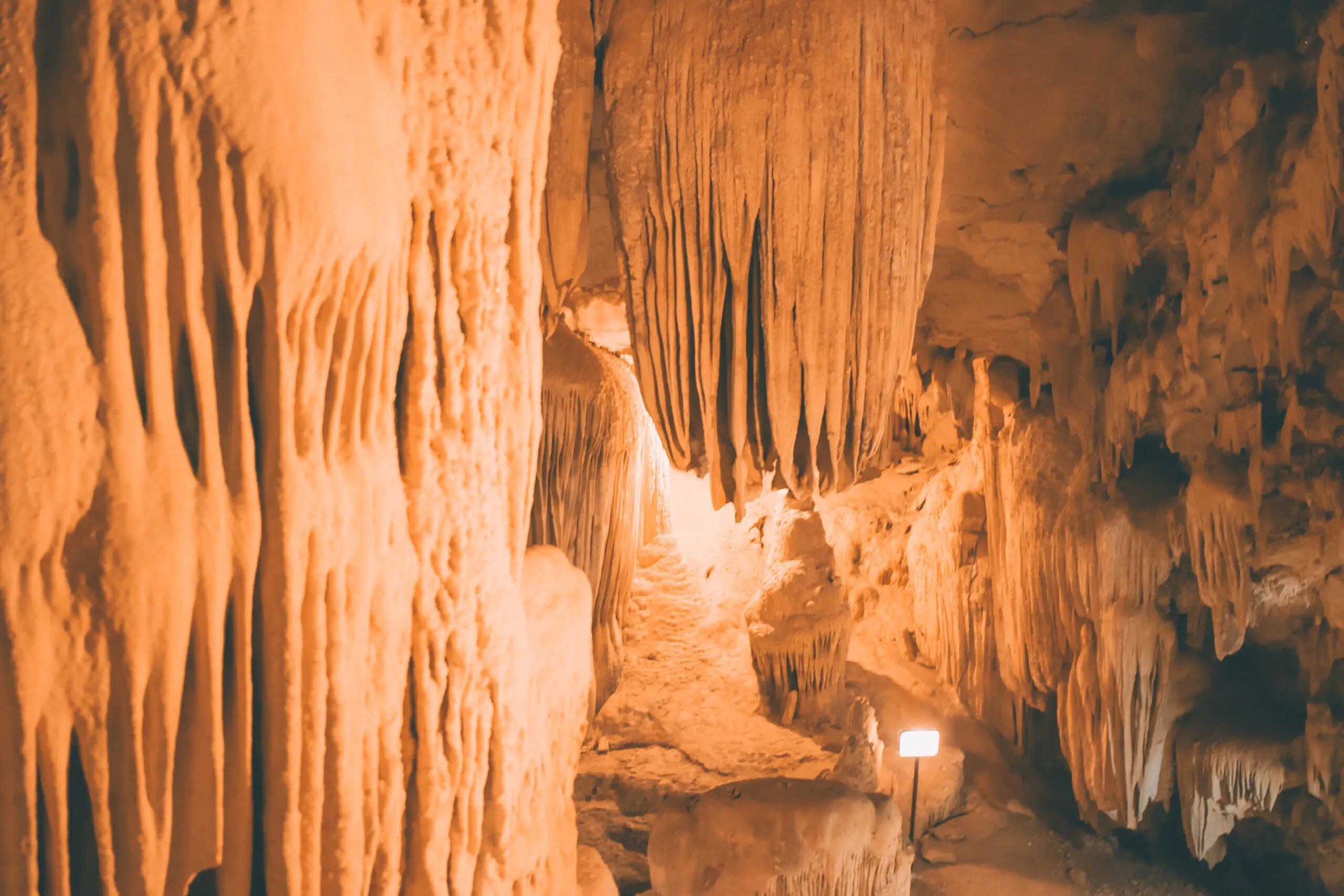
Pristine and mystical beauty creates the unique charm of Vai Gioi Cave. (Source: Collected)
Buses are also a popular choice with many continuous trips throughout the day from Giap Bat or Nuoc Ngam stations. Ticket prices vary by company and seat type, but generally suit travelers looking to save costs. Buses usually drop passengers off in Ninh Binh city center, convenient for continuing the journey to Thung Nham.
If you want a more comfortable journey and less dependence on road transport, you can take a train from Hanoi Station to Ninh Binh Station. Hard seat, soft seat, or sleeper carriages cater to different needs, with flexible pricing. Upon arrival at the station, it is easy to catch a taxi or rent a car to continue to Vai Gioi Cave.
2.2. How to travel from Southern and Central provinces
For travelers from the South and Central regions, the journey to Vai Gioi Cave requires combining different modes of transport. Airplanes are the fastest option. As Ninh Binh does not have an airport, travelers will land at Noi Bai International Airport (Hanoi) or Tho Xuan Airport (Thanh Hoa), then continue by taxi, limousine, or bus to Ninh Binh.
Additionally, the North-South railway line stops at Ninh Binh Station, offering a stable option less affected by weather. Travelers from Da Nang, Hue, Quang Ngai, Quy Nhon, or Ho Chi Minh City can take an overnight train to save time. Some North-South bus routes also stop in Hanoi or Thanh Hoa, from where travelers can take a shorter connecting trip to Ninh Binh. The choice of suitable transportation depends on each passenger's time and budget.
2.3. Moving from Ninh Binh city center to Thung Nham tourist area
It takes about 20-30 minutes to travel from Ninh Binh provincial center to Thung Nham tourist area. The popular route starts from Trang An road or 30/6 road, then heads towards Tam Coc – Bich Dong. From the Tam Coc area, visitors just need to follow the signs to enter Thung Nham. The road leading to the tourist area is relatively flat asphalt, suitable for both cars and motorbikes.
Intra-provincial travel is also very flexible. Visitors can take a taxi or ride-hailing service for speed and convenience. If you want to explore multiple points in a day independently, renting a motorbike is a popular choice. For those who prefer the peaceful atmosphere of Ninh Binh's countryside, renting a bicycle in the Tam Coc area is an interesting option, but it is advisable to go early in the morning or late in the afternoon to avoid the harsh sun.
The journey from Tam Coc to Thung Nham is quite beautiful, with rice fields, limestone mountains, and gently winding roads along the mountainside on both sides. This is also a route many tourists favor as they can stop to admire the scenery or take photos before heading to Vai Gioi Cave.
2.4. Guide to climbing Vai Gioi Cave
Vai Gioi Cave is located at an altitude of about 88 meters above the ground, so visitors need to climb on foot to reach the cave entrance. The path up consists of stone steps winding around the mountainside, passing through the shade of natural forest trees, creating a cool and close-to-nature feeling. Although it is not an overly difficult path, visitors should still wear sports shoes with good grip and prepare drinking water to ensure stamina throughout the journey.
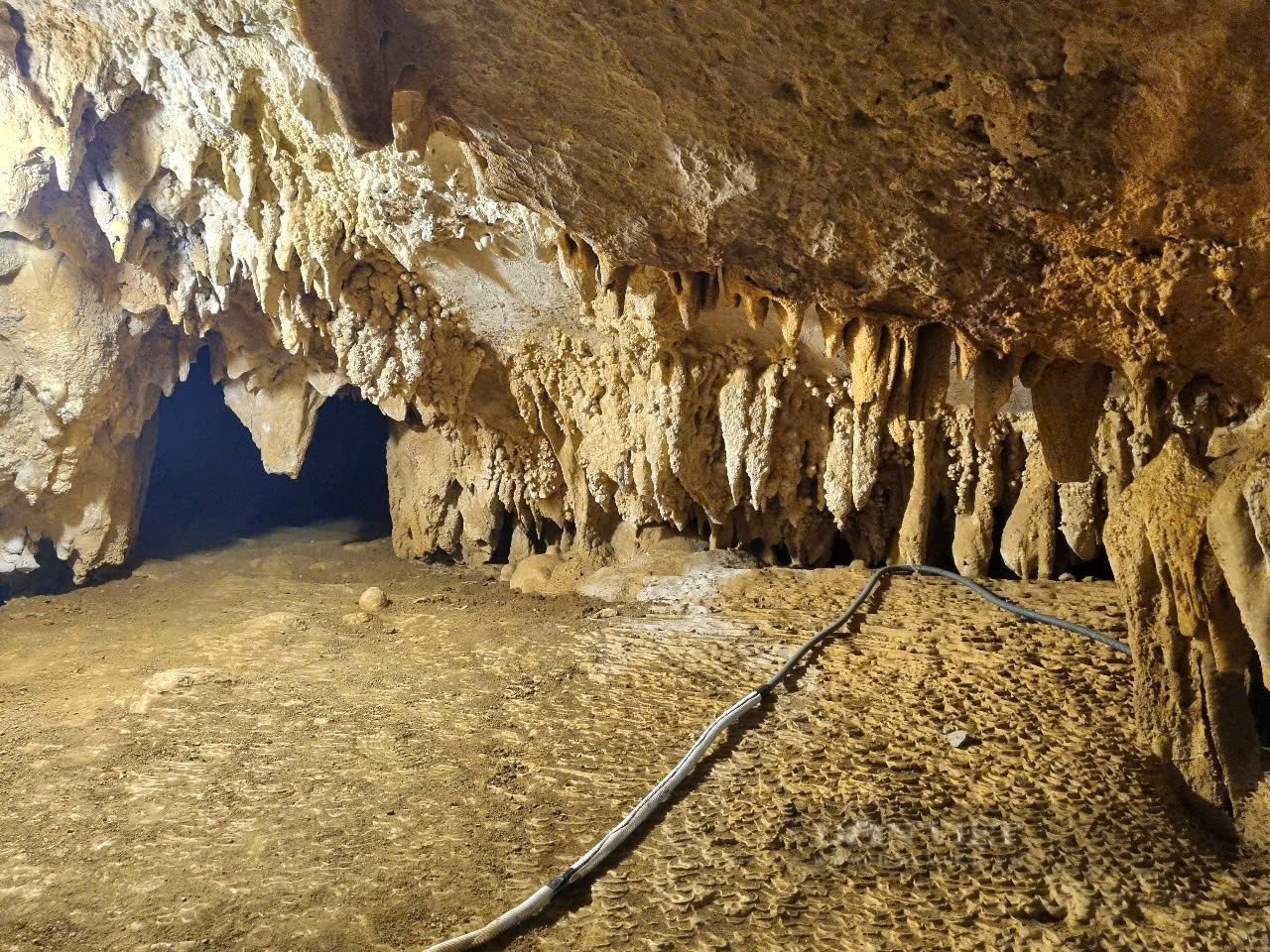
Dong Vai Gioi cave preserves the natural values and folk legends of the Hoa Lu region. (Source: Collected)
Light warm-up before climbing will help limit muscle strain, especially for those unaccustomed to exercise. Those with bone and joint problems, high blood pressure, or cardiovascular issues should consider their personal health before starting. Morning is the ideal time to climb because the weather is pleasant and there is less sun. The dry season is also more suitable than the rainy season, when the stone steps are not slippery.
The scenery along the way is a major highlight of the journey. From the higher sections, visitors can look down at Thung Nham valley with its lake, bird garden, and layered limestone mountains. The scenery becomes more open as you ascend, bringing a sense of lightness and peace before entering the majestic space of Dong Vai Gioi .
3. Explore the unique three-tiered architecture of Dong Vai Gioi Cave
3.1. The Mortal Realm (Tran Gian)
The "Tran Gian" level, meaning the first level visitors access upon entering the cave, offers a familiar and close feeling. The stalactites here are often smooth, flat rock formations, with relatively stable lighting as you first enter the cave entrance, making them easy to observe.
This space is likened to "daily life," symbolizing a simple, ordinary, earthly existence before visitors proceed to deeper levels with more layers of meaning.
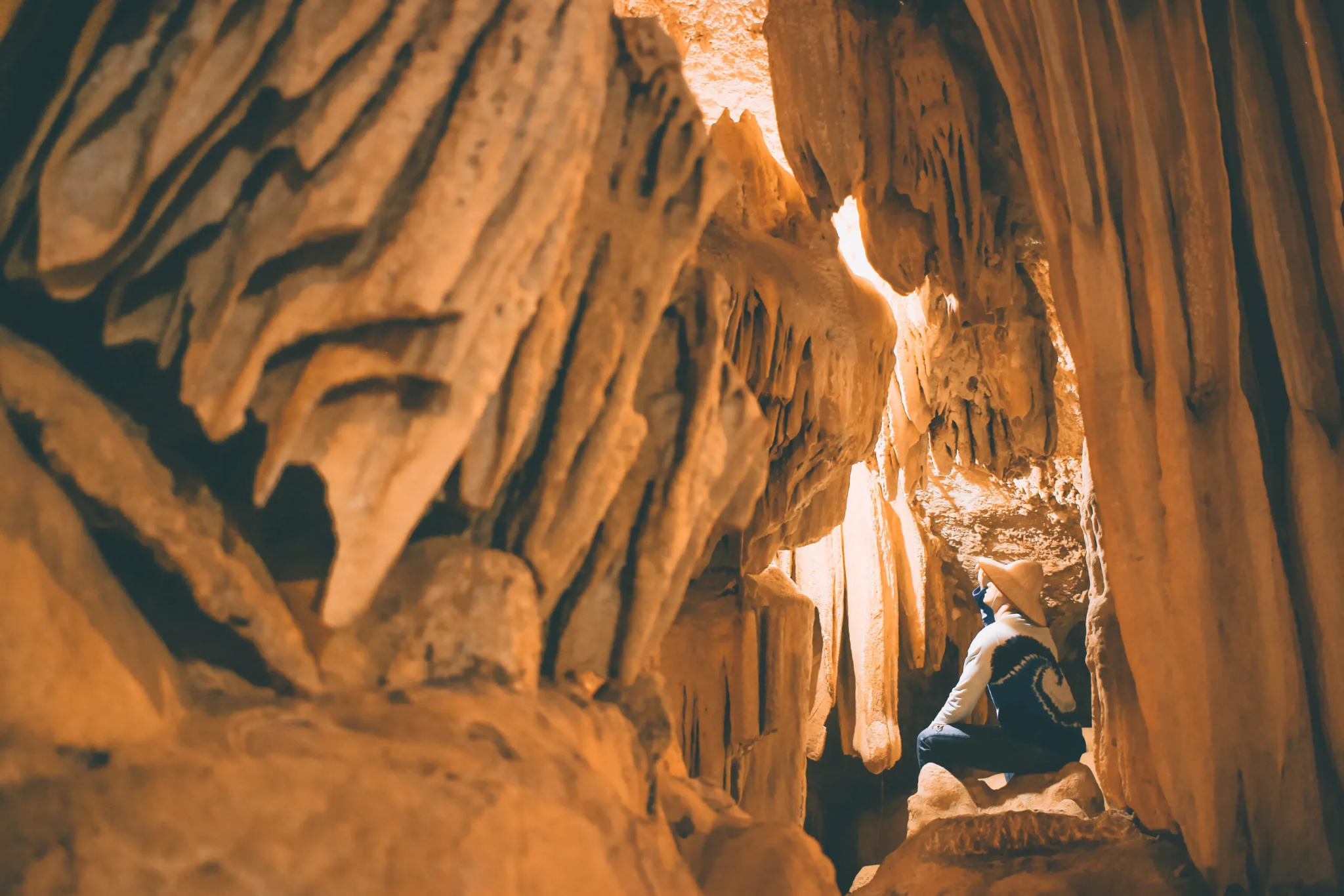
The deep and sacred space creates a special feeling for visitors when coming to Vai Gioi Cave. (Source: Collected)
Because of its light and relatively friendly structure, the Tran Gian (Earthly Realm) level is also often chosen by tourists as a "check-in" spot or a place to rest before continuing their journey. This is the transitional part between light and darkness, between peace and mystery, creating an interesting contrast in the entire exploration experience of Vai Gioi Cave.
3.2. The Hell Level
The "Hell" level of Vai Gioi Cave offers an impressive and somewhat eerie experience, quite different from the imagination of a quiet cave. As you go deeper after the "Earthly Realm" level, visitors will see strange stalactite formations, with many complex shapes, sometimes looking like animal teeth or fish bones, creating a gloomy, cold, and mysterious atmosphere.
A natural "hell gate" is imagined through two large stalactite formations like two fierce dogs guarding, marking the entrance to the lower level. Stalactite formations named "Nai Ha Bridge", "King of Hell's Throne", "Scythe of Death", "Demon's Claws"... make the space seem to materialize the image of the underworld according to folk beliefs.
The experience of visiting this level is a journey that stimulates imagination and challenges senses. The gloomy atmosphere, dim light, and strange rock formations help visitors clearly feel the contrast between "the mundane" and "the underworld", evoking reflections on life and death, cause and effect according to traditional concepts.
3.3. The Paradise Level
After visiting the Hell level, visitors can climb a narrow iron staircase of about 88 steps to reach the top level: "Paradise". The space here is distinctly different: white stalactites, natural light or soft lighting, creating a pure, almost sacred atmosphere. Some rock formations resemble "Jade Pagoda", "Buddha's Stone Table", "Fairyland", making this place likened to a "fairyland paradise".
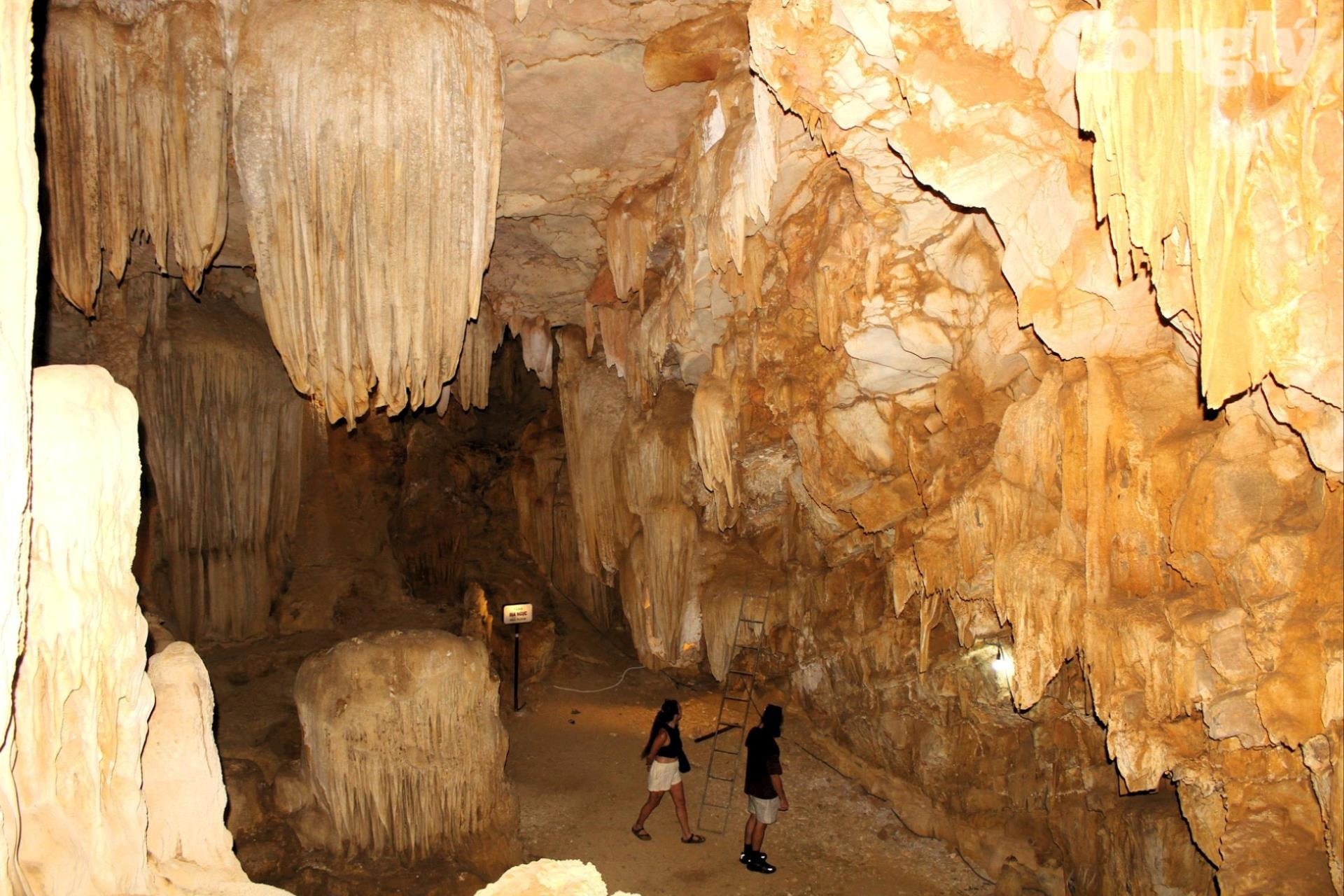
The serene beauty built up over thousands of years in Dong Vai Gioi Cave. (Source: Collected)
Especially, from the "heaven's gate" on the Paradise level, visitors can see the entire panorama of Thung Nham valley below, with rice fields, mountains, bird gardens, and diverse ecosystems, bringing a feeling of openness, peace, and spaciousness.
With such scenery, the Paradise level is not only a place for sightseeing but also brings a feeling of "reaching the peak", both amazed by nature's masterpiece and a little spiritually moved, as if entering a space between heaven and earth, between stillness and sacredness.
3.4. Legends and spiritual imprints at Dong Vai Gioi Cave
According to legend and folk belief, Dong Vai Gioi Cave was once where the people of the ancient capital Hoa Lu performed rituals to "pray to heaven", wishing for favorable harvests, national peace, and favorable weather.
It can be understood that the name of the cave, "Vai Gioi" (Praying to Heaven), originates from the act of "praying to heaven" to express sincerity and seek blessings from above, signifying the belief and aspiration for peace of the ancient residents.
The three levels of the cave – Trần Gian (Mortal World), Địa Ngục (Hell), and Thiên Đường (Paradise) – are not just geological or architectural divisions, but carry symbolic meaning: the Mortal World level represents earthly life, the Hell level evokes the cycle of reincarnation – birth – death – karma, and the Paradise level opens up to the sacred realm, hope for peace and tranquility.
Therefore, when visiting Dong Vai Gioi Cave, many tourists not only seek beautiful scenery but also return to spirituality, finding a place for contemplation, to calm their minds, and to deeply feel the connection between nature, humans, and ancient spirituality.
4. Outstanding experiences and activities at Dong Vai Gioi Cave
4.1. Sightseeing, stalactite photography, and virtual check-ins
Dong Vai Gioi Cave attracts tourists not only with its unique three-level structure but also with its shimmering, mystical system of stalactites and stalagmites – very "in tune" with those who love photography and check-ins. As soon as you ascend the stone steps leading to the cave entrance, you can encounter sparkling stalactites under artificial light, creating an extremely impressive "nature-art" backdrop. Many corners within the cave can be utilized to create "fairyland" photos: from the spacious entrance, small caverns with dim lighting, to the white stalactite formations on the upper levels, all evoke a sense of solemnity, mystery, yet are no less poetic. Many tourists even recount that, if lucky and visiting in the early morning or late afternoon, the light shining through the cave entrance and reflecting on the stalactites can create a "cloud effect", making the space seem to float between heaven and earth, turning into a unique "cave cloud hunting" photo opportunity.
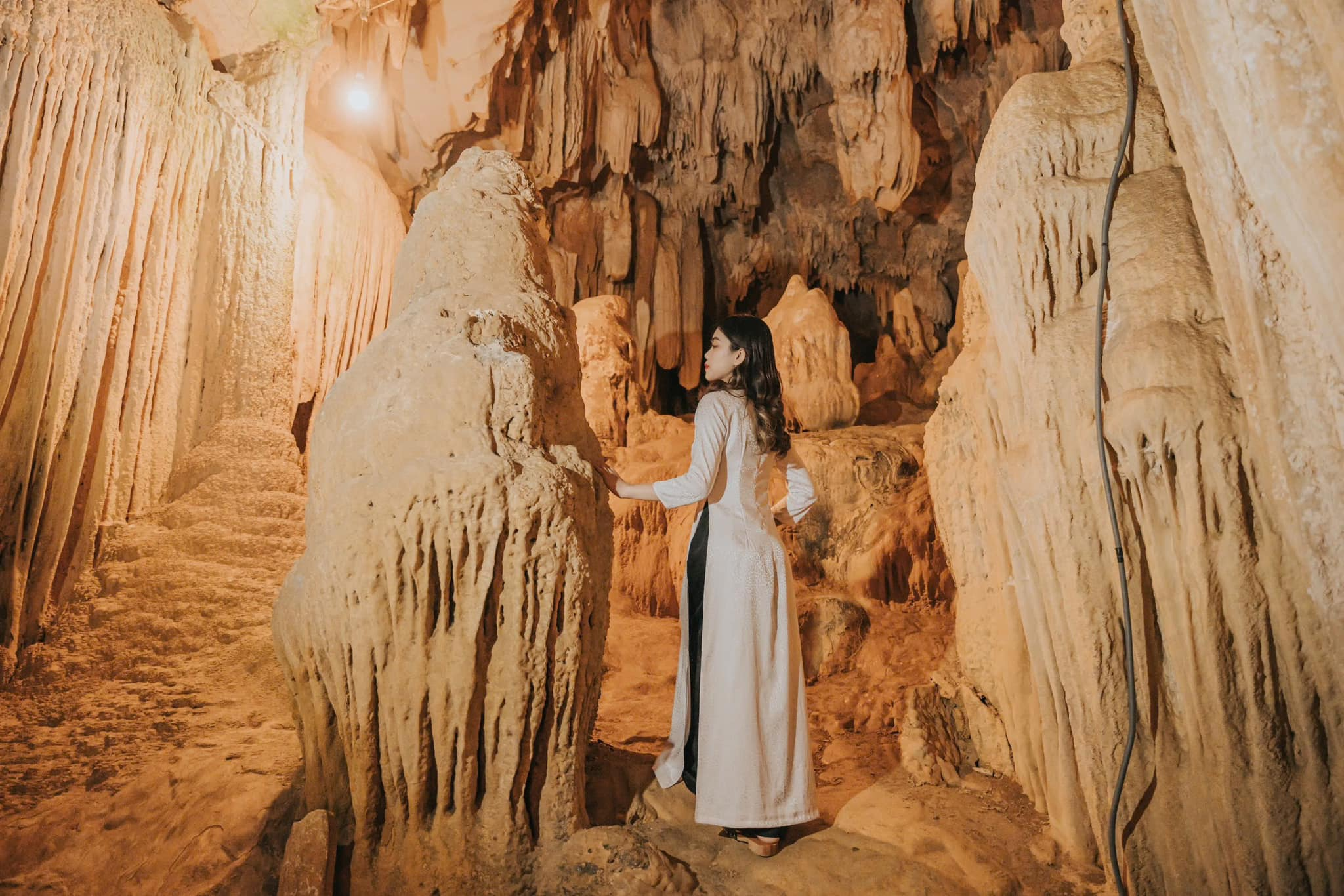
The cave space is dazzling thanks to the stalactite system with many unique shapes. (Source: Collected)
Therefore, to take beautiful photos at Vai Gioi Cave, you should bring a camera/phone with a good low-light shooting mode, choose angles close to the stalactites or looking out the cave entrance when light shines in, and visit during times with soft natural light to make the most of the magical scenery that nature bestows.
4.2. Trekking activity combined with exploring Thung Nham nature
Exploring Vai Gioi Cave is truly a light trekking experience as you will climb over 400 stone steps around the mountainside to enter the cave, with the characteristic forest and limestone mountain scenery of the Thung Nham area on both sides of the path.
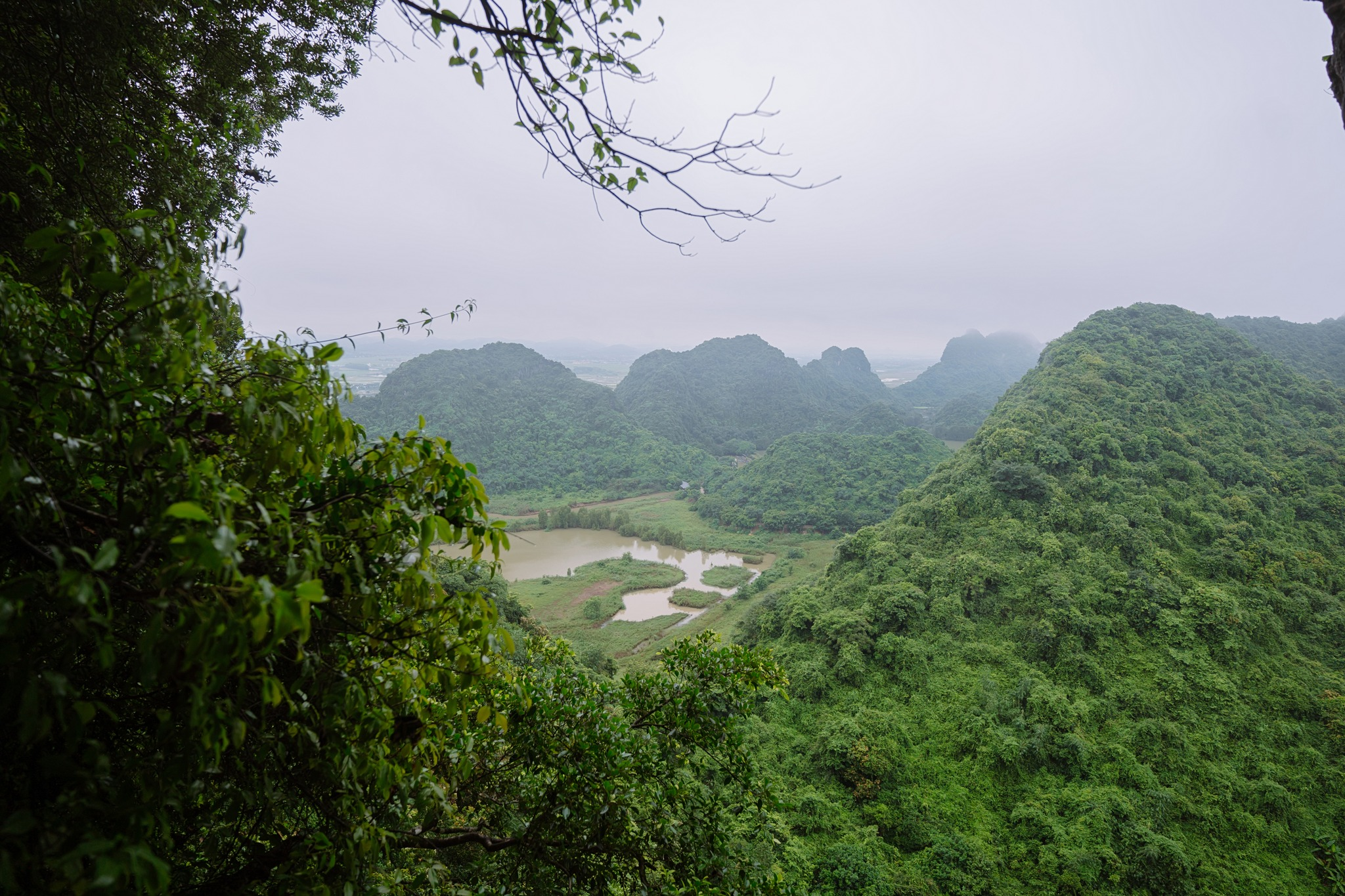
Natural scenery creates a memorable exploration experience at Vai Troi Cave. (Source: Collected)
Accompanying this is a relaxing nature experience: shady trees, fresh air, the sound of birds and a nearby stream if encountered during bird garden operating hours, all creating a trekking trip that is not too harsh but very memorable. If you combine it with other areas in Thung Nham such as the bird garden, lake, and forest, the trip will turn into a journey of immersing yourself in nature, mountains, birds, and wildlife, incredibly vibrant.
4.3. Explore Thung Nham's ecosystem and nearby destinations further
Thung Nham is not only home to Vai Troi Cave but also many other natural and ecological attractions and activities that visitors should combine in a single trip for a complete experience.
Here is the Thung Nham Bird Garden - home to tens of thousands of birds, sometimes up to about 50,000 individuals, including rare species. Visitors can take a boat trip through the flooded areas, mangrove forests, and canals. Sunset or early morning is usually the most beautiful time, when birds gather, creating a "bird sky" scene and a wild, natural atmosphere.
Additionally, there are other caves within the Hang But and Tien Ca Cave complex, each with its unique stalactite formations, legends, and cave exploration experiences. Combining the bird garden, caves, and Vai Troi Cave allows visitors to have a long day of fully experiencing nature - mountains, forests, diverse and rich birdlife, and stalactites.
5. Tips for visiting Vai Troi Cave
Prepare necessary clothing & items: When visiting Vai Troi Cave, preparing the right clothing and items is crucial for safety and comfort. It is advisable to wear loose, neat, and easy-to-move-in clothing for convenient climbing and bending, avoiding baggy or restrictive items. Wear sports shoes or shoes with good grip soles, avoiding slippers or slippery-soled shoes as the rocks and steps can be slippery and dangerous. Bring drinking water, a small flashlight, or use your phone's flashlight, especially if you go deep into the cave where light is scarce; also be careful when touching stalactites and transitioning between light and dark areas.
Ticket prices, opening hours & visiting regulations: As Vai Troi Cave is located within the Thung Nham area, the entrance ticket and opening hours are applied generally for the ecological area. According to information from the tourism management agency: Entrance fee for adults: 150,000 VND/ticket. Children from 1.0 m to under 1.3 m tall: 100,000 VND/ticket. Children under 1.0 m tall: free.
Notes on preserving stalactites, environment & etiquette: Due to the sensitive natural landscape and ecosystem of Vai Troi Cave and Thung Nham, visitors should: Absolutely do not touch or break stalactites. Stalactites are very fragile; a small crack can damage a structure thousands of years old. Do not litter; collect your trash and dispose of it in designated areas. Follow the paved paths; do not climb on areas not intended for visitors to avoid damaging the landscape or causing rockfall accidents. If you intend to perform a "pray to heaven/prayer" ritual, do so in the designated area (if any), do not burn votive paper, and do not discard offerings or paper items in the cave. Please respect the sacred space, nature, and the local community.

Sun World Ha Nam. (Source: Collected)
Besides the journey to explore Vay Troi Cave and the Thung Nham ecological complex, visitors coming to Ninh Binh can also combine visiting Sun World Ha Nam – a newly emerging modern entertainment complex in the area. Inspired by the art of Northern Vietnamese water puppetry, this complex offers a culturally rich entertainment space with many attractive activities, from a vibrant water park, thrilling games to a wave pool suitable for the whole family. This is an ideal choice to relax and get a change of scenery after a journey exploring the nature and culture of Ninh Binh.
Besides the journey to explore Vay Troi Cave and the Thung Nham ecological complex, visitors coming to Ninh Binh can also combine visiting Sun World Ha Nam – a newly emerging modern entertainment complex in the area. Inspired by the art of Northern Vietnamese water puppetry, this complex offers a culturally rich entertainment space with many attractive activities, from a vibrant water park, thrilling games to a wave pool suitable for the whole family. This is an ideal choice to relax and get a change of scenery after a journey exploring the nature and culture of Ninh Binh.


