




1. Introduction to the Temple of King Dinh Ninh Binh
The Temple of King Dinh is located in Hoa Lu ward, Ninh Binh province. This place was the center of power of Dai Co Viet under King Dinh Tien Hoang, marking the beginning of the period of self-rule after thousands of years of Chinese domination. The temple was built to commemorate the merits of unifying the country, suppressing the rebellion of the 12 warlords, and establishing the first centralized feudal state of Vietnam. Despite undergoing several renovations, the structure retains many ancient architectural traces, making it an indispensable part of the cultural and historical landscape of the ancient capital region.
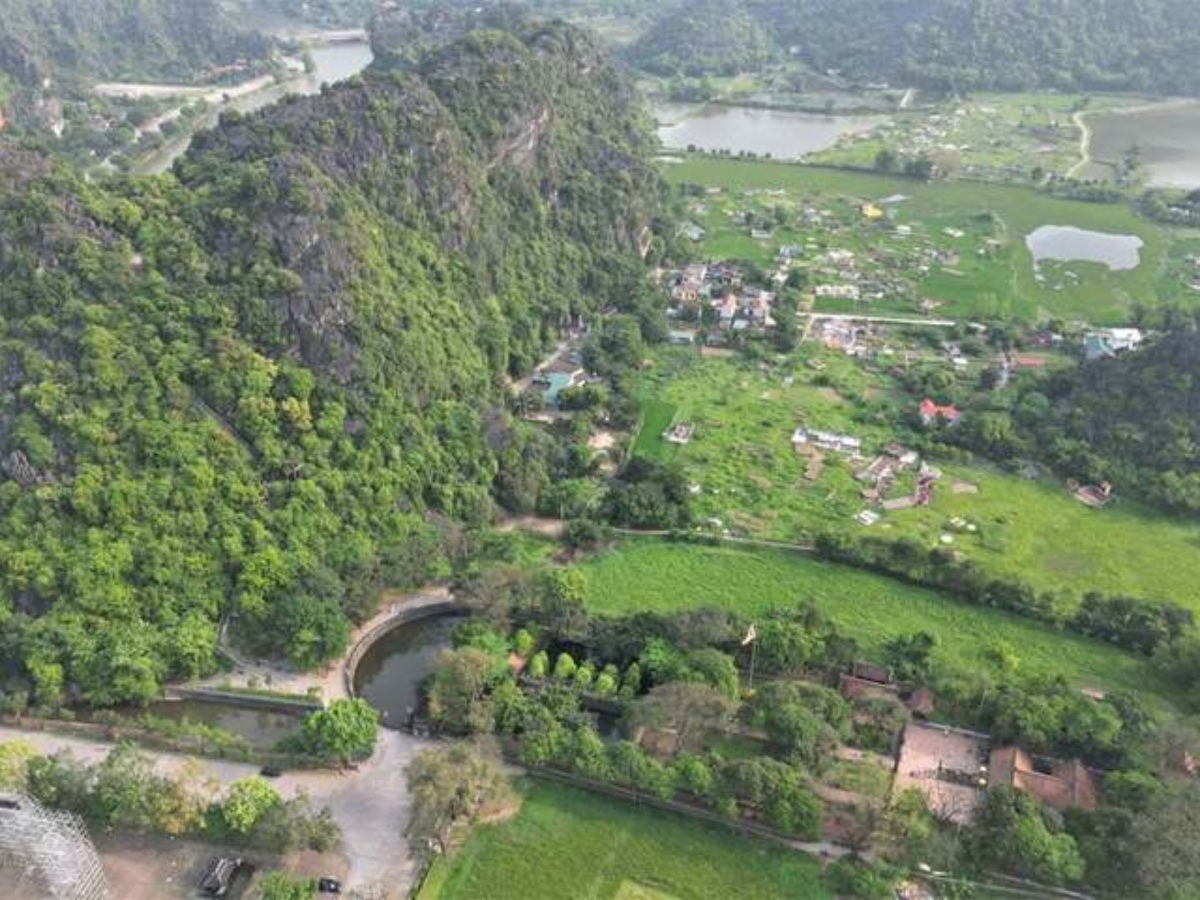
The Temple of King Dinh is located in Tay Hoa Lu ward and was once the center of power of Dai Co Viet. (Source: Collected)
The Temple of King Dinh in Ninh Binh holds profound historical value as it is associated with the initial steps of the independent nation after thousands of years of Chinese rule. Architecturally, the temple features a layout, carvings, and construction style typical of the Dinh – Le dynasties, distinguishing it from many other relics in the area. Furthermore, the temple is a crucial component of the Hoa Lu ancient capital heritage complex, contributing to the outstanding overall value of this site. Consequently, the structure has been designated a special national relic by the State, reflecting its importance not only historically but also culturally and spiritually.
2. How to get to the Temple of King Dinh
2.1. From Hanoi to the Temple of King Dinh
Getting to the Temple of King Dinh in Ninh Binh from Hanoi is quite convenient. Visitors can travel by private car or bus from Giap Bat, Nuoc Ngam, or My Dinh bus stations. Thanks to the Hanoi – Ninh Binh expressway, the travel time is only about 1.5 hours. For those who prefer more flexibility, a motorbike is also an interesting option to enjoy the scenery of Ninh Binh's rice fields stretching along the road.
2.2. From Ho Chi Minh City and other provinces
From Ho Chi Minh City and southern provinces, visitors can fly to Hanoi and then continue to Ninh Binh by train, car, or limousine. Taking the train from Hanoi to Ninh Binh is also a worthwhile experience, as it only takes a little over 2 hours to reach the city center.
2.3. Intra-provincial travel and getting to the temple
Once you arrive in Ninh Binh, getting to the temple is easy. From the city center, you can rent a motorbike, take a taxi, or book a tourist car to reach the Hoa Lu area, which takes about 20–25 minutes. The temple is located near many famous tourist attractions such as Trang An, Tam Coc, and Mua Cave, making it very convenient to combine visits within a single itinerary. The parking area is spacious; from the entrance, a short walk will lead you into the temple, allowing you to stroll and feel the uniquely peaceful atmosphere of the ancient capital.
3. Architecture and Art at the Temple of King Dinh
3.1. Overall layout and main structures
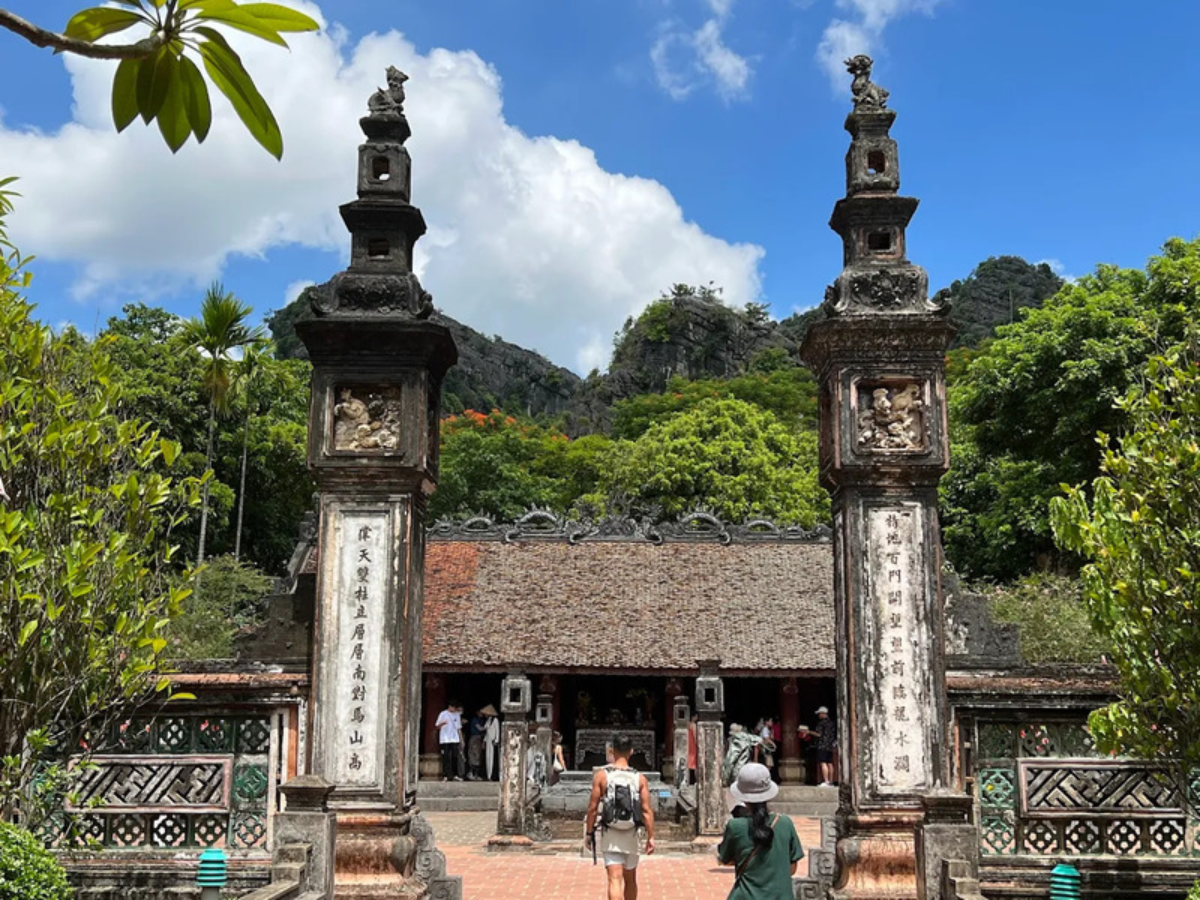
The Temple of King Dinh stands out with the "noi cong ngoai quoc" (internal courtyard, external palace) architecture characteristic of large temples. (Source: Compilation)
The Temple of King Dinh in Ninh Binh is notable for its "noi cong ngoai quoc" (internal courtyard, external palace) architecture – a traditional layout commonly found in large temples. The three main buildings, including Bai Duong (Worship Hall), Thieu Huong (Incense Hall), and Chinh Cung (Main Palace), are arranged along a straight axis, creating a solemn and imposing space.
The Bai Duong is where important ceremonies are held, Thieu Huong serves as a connecting and transitional space before entering the Chinh Cung – the place where the statue and altar of King Dinh Tien Hoang are located. The combination of ironwood, green stone, and ancient tiles creates a rustic yet majestic appearance for the structure.
3.2. Unique aspects in sculpture, patterns, and construction materials
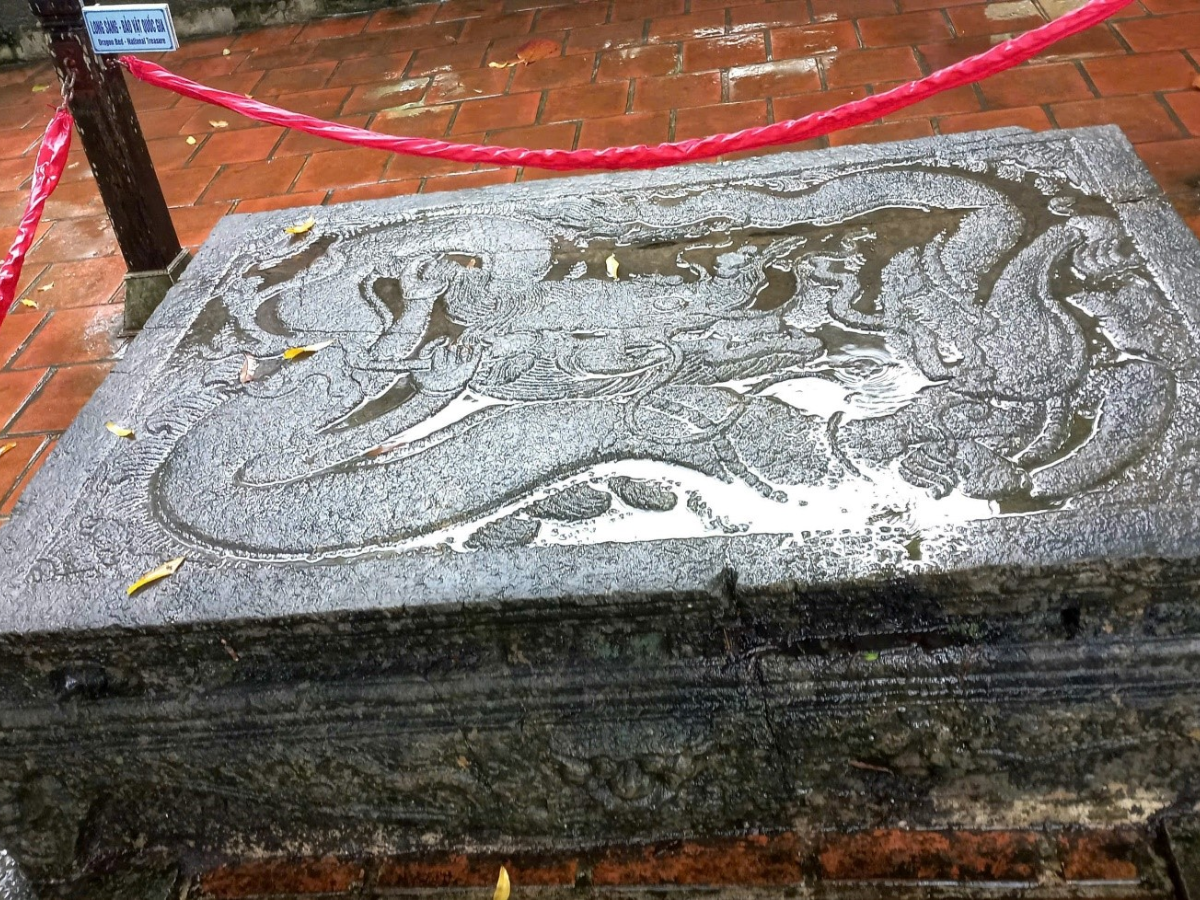
The temple's charm lies in its exquisite carvings on wood and stone. (Source: Collected)
The temple's attraction lies in its exquisite carvings on wood and stone. Familiar themes such as dragons, phoenixes, and the four sacred animals are clearly depicted, reflecting the strong sculptural art characteristic of the Dinh Dynasty. The stone dragon altar – the temple's most prominent national treasure – possesses a robust beauty, embodying the authority of a monarch.
Also present are stone dragon statues with a different form compared to later periods, showcasing the unique imprint of 10th-century sculptural art. The harmony between architecture, materials, and sculpture makes the Temple of King Dinh one of the most distinctive structures in the ancient capital region.
4. Festivals and Cultural Experiences at the Temple of King Dinh
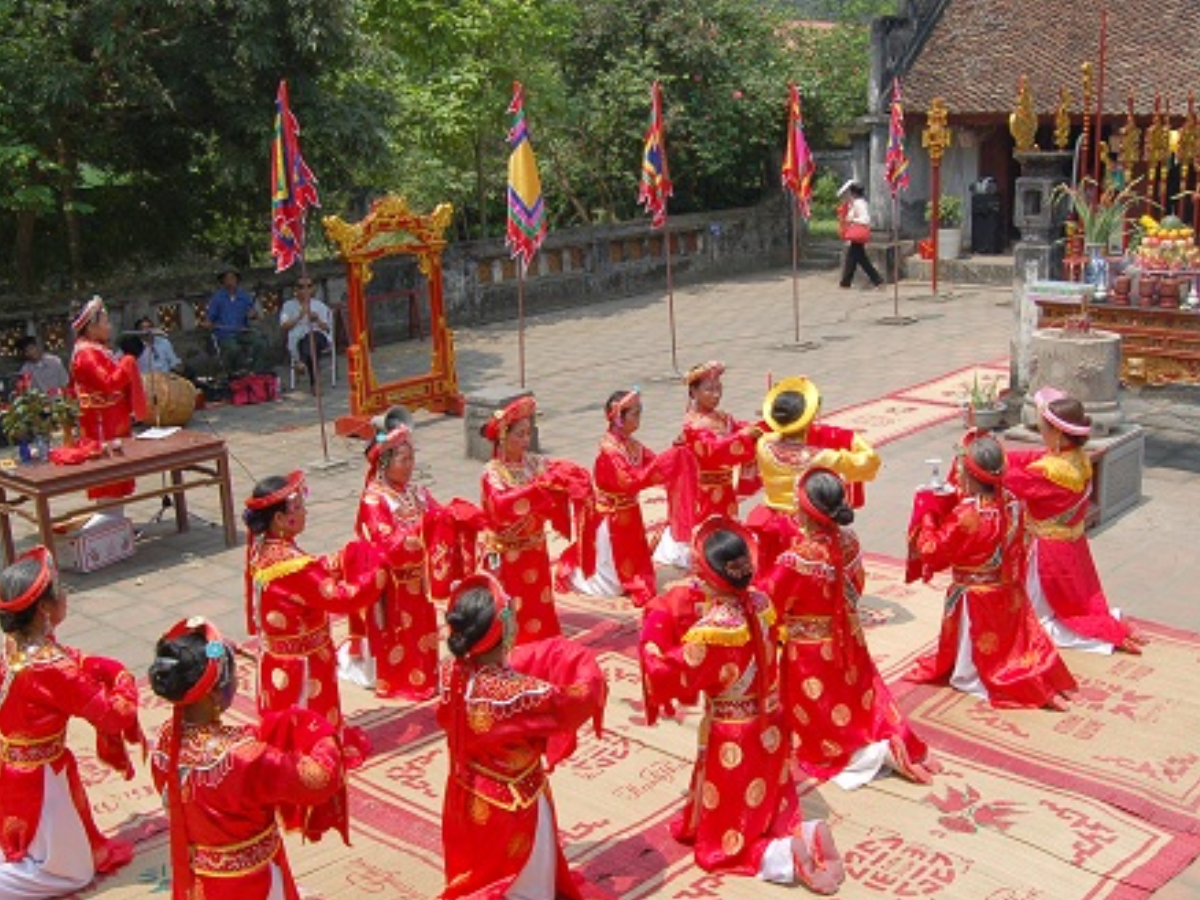
The biggest festival at the temple is the Truong Yen festival, taking place from the 8th to the 10th day of the lunar month. (Source: Collected)
The biggest festival at the temple is the Truong Yen festival, taking place annually from the 8th to the 10th of the 3rd lunar month. In a vibrant yet traditional atmosphere, visitors can participate in activities such as palace car processions, worship ceremonies, martial arts performances, and many unique folk games. This is an occasion for people to commemorate the merits of King Dinh Tien Hoang and preserve traditional cultural rituals.
Besides the festival, visitors can experience the temple's ambiance on regular days, when it exudes a tranquil and serene atmosphere. The temple courtyards, the lake, and the three-arched gate are all beautiful photo spots, suitable for those who love ancient architecture. Combining this with a visit to Trang An or Tam Coc will make the journey more complete with many experiences ranging from culture to nature.
5. Notes and Useful Tips for Visiting
When visiting the Dinh Tien Hoang Temple in Ninh Binh, visitors should choose modest attire to suit the spiritual space. The ideal time to visit is from January to April, when the weather is cool and coincides with the festival season.
Visitors should also maintain order, not touch artifacts, and comply with the temple's regulations to help protect the heritage.
After visiting the temple, you can easily visit the Trang An scenic area, Tam Coc – Bich Dong, Doai Tam Drum Square, or famous limestone caves around the Hoa Lu area to complete your exploration of Ninh Binh.
The Dinh Tien Hoang Temple in Ninh Binh is not only a place that preserves the imprint of a dynasty but also a valuable cultural and historical rendezvous. With its ancient architecture, sacred atmosphere, and harmonious natural landscape, this is definitely a destination that any tourist visiting Ninh Binh should experience at least once.


