




1. General introduction to Van Lam embroidery craft village
1.1. Location and distinctive features of the embroidery craft village
Van Lam embroidery craft village is located in Ninh Hai commune, (now Nam Hoa Lu ward) Ninh Binh province, right next to the complex of famous natural heritage and scenic spots such as Tam Coc - Bich Dong and Trang An.
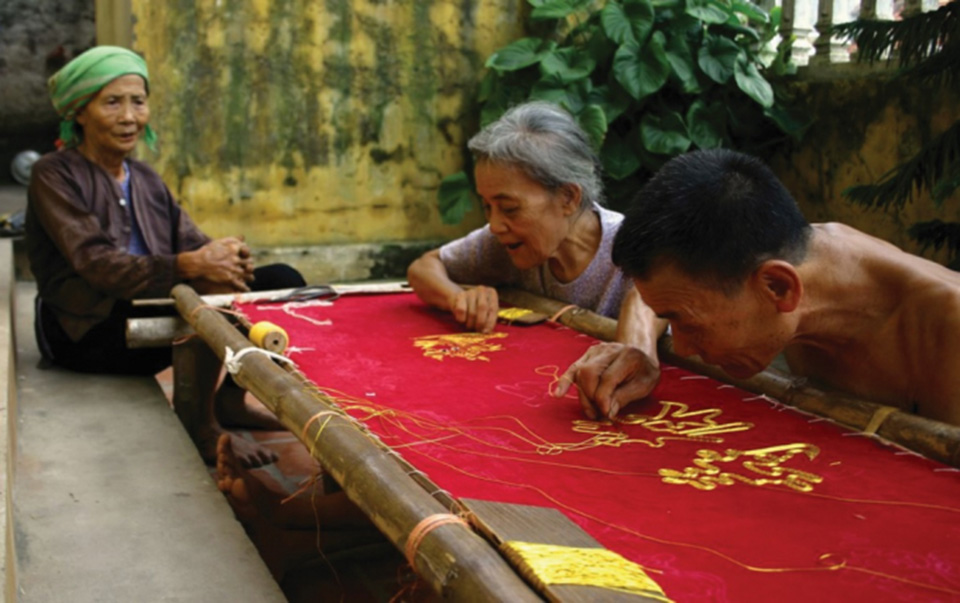
Elderly artisans at Van Lam diligently embroidering every stitch – a familiar image of the century-old craft village. (Source: Collected)
The craft village space is a blend of ancient houses, simple embroidery workshops, and a peaceful, rustic countryside scene. Stretching along the road leading to tourist spots, visitors can easily encounter stalls and small workshops, where artisans are skillfully working on every stitch. The atmosphere here is simple and close, reflecting the true spirit of Vietnam's traditional craft villages.
The easily recognizable characteristic of the Van Lam lace embroidery village is its exquisite craftsmanship: graceful, soft embroidery lines, intricate patterns on fabric — all creating lace, floral lace, and hand-embroidered products that are rich in tradition yet very eye-catching and elegant.
1.2. Cultural value of traditional embroidery
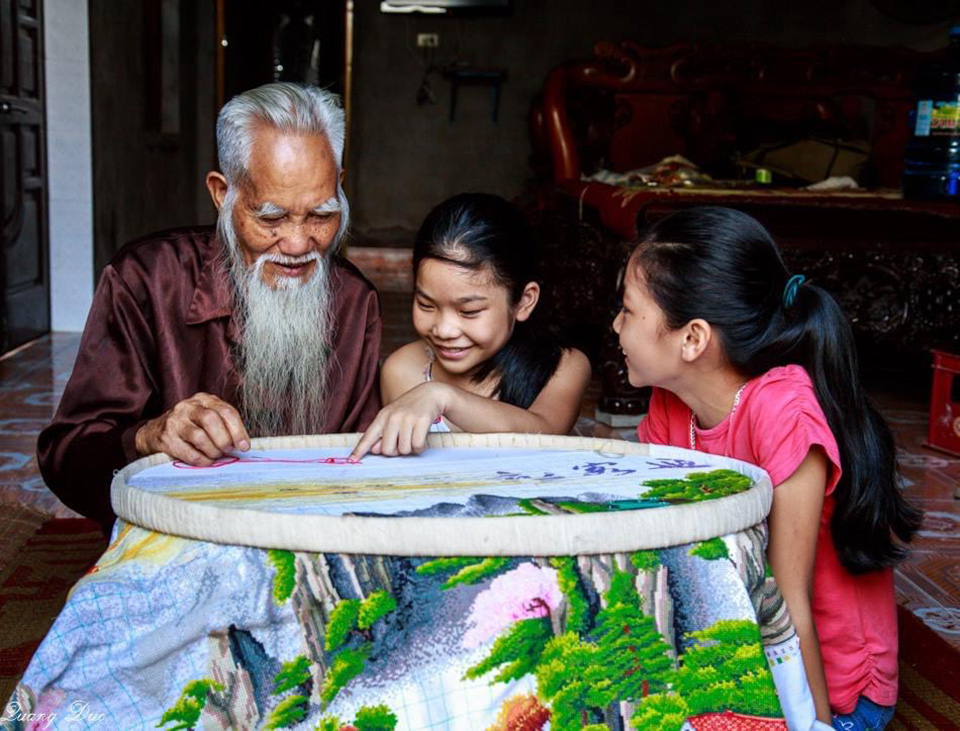
Van Lam embroidery products with soft, exquisite patterns – souvenirs loved by many tourists. (Source: Collected)
Embroidery craft in Van Lam is not merely a handicraft, but a cultural heritage, an expression of creativity, skill, and perseverance through generations. According to the villagers, the embroidery craft dates back to the Tran Dynasty, when court ladies were taught to serve court life and rituals. Despite historical changes, the craft has been preserved and continued.
Over centuries, Van Lam artisans have not only produced goods for domestic needs but also brought the beauty of embroidery to the international stage. Hand-embroidered items such as scarves, clothing, curtains, embroidery paintings, and lace fabrics from Van Lam are exported and favored by customers both domestically and internationally – a clear testament to the cultural and economic value of the craft.
Furthermore, the embroidery craft contributes to preserving local cultural identity, connecting the past and the present: each stitch is a part of memory, of stories about manual labor, about spiritual culture, and the rural life of Vietnam. Van Lam, therefore, is not just a production site but also a place that preserves the Vietnamese soul through every small detail.
1.3. Why Van Lam Attracts Tourists
Van Lam embroidery village attracts tourists with the following factors:
Firstly, the exquisite craftsmanship and unique lace art. Van Lam's hand-embroidered products feature soft lines, delicate patterns, and harmonious colors, making them ideal as souvenirs or luxurious decorative items. Many tourists, including international ones, highly appreciate the meticulousness and high level of craftsmanship of these products.
Secondly, its convenient geographical location, situated close to famous tourist attractions like Tam Coc – Bich Dong and Trang An, facilitates tourists in combining nature exploration, heritage discovery, and village craft experience within a single itinerary.
Thirdly, traditional cultural value: tourists not only purchase products but also witness the traditional hand-embroidery process, gaining a deeper understanding of the craft, the people, and the Vietnamese rural culture. This offers a more educational, distinctive, and profound experience than simple tourism.
Finally, innovation and integration with the modern market: the village has diversified its products, ranging from apparel, souvenirs, and home furnishings to export goods, helping Van Lam sustain its craft, develop its economy, and reach both domestic and international customers.
These factors make Van Lam embroidery village an attractive destination worth experiencing, not only for domestic visitors but also for international tourists who love culture, handicrafts, and community-based tourism.
2. Journey to Discover Van Lam Embroidery Village
2.1. Village Space and Traditional Production Households
Van Lam embroidery village is located along the road leading to Tam Coc – Bich Dong, making it easy for tourists to encounter small houses adorned with traditional hand-embroidered products. The village space retains its rustic charm: brick courtyards, tiled roofs, and a peaceful rural landscape surrounded by limestone mountains, characteristic of the Hoa Lu region.
According to information from the Ninh Binh Department of Tourism and Nhan Dan Newspaper, Van Lam currently has over 200 households engaged in embroidery production, with many families preserving the craft for 7–9 generations. Some prominent establishments frequently mentioned in travel articles and the press include:
Van Lam Embroidery Cooperative: a hub for long-standing artisans, which has supplied products to the European and Japanese markets.
Traditional production households of the Nguyen, Pham, and Le families – families considered the custodians of the embroidery craft for hundreds of years.
Embroidery workshops serving tourism located along the road to Tam Coc – Bich Dong, which both produce and display products for tourist visits.
The village space, therefore, is not just a place where products are made, but also a living museum of the traditional embroidery craft.
2.2. Embroidery Process and Characteristics of Van Lam Products
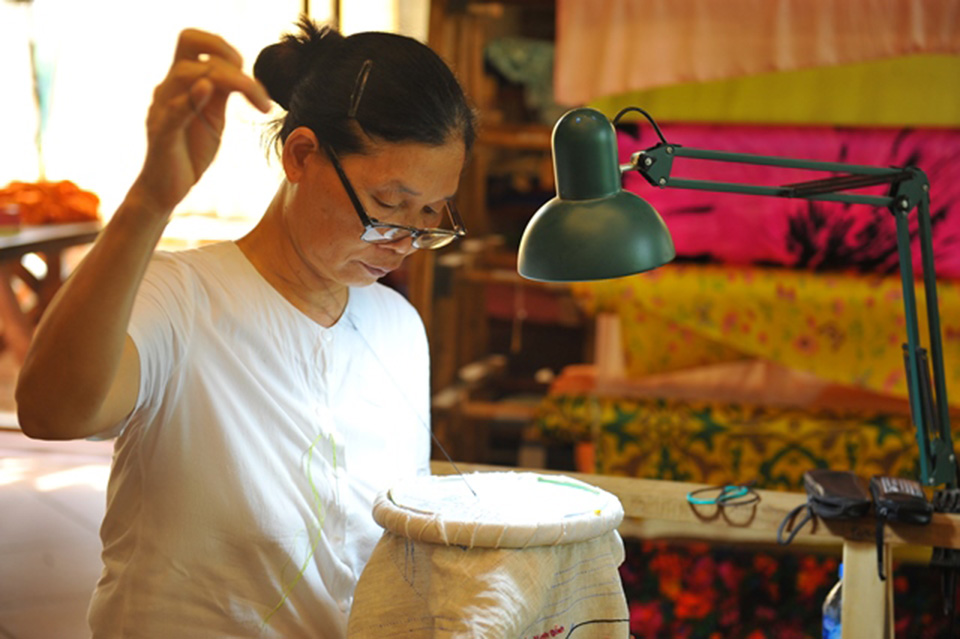
Artisans perform small, even stitches – a characteristic technique of Van Lam embroidery. (Source: Collected)
Van Lam embroidery craft is famous for its meticulous handicraft process, requiring patience and high skill. According to VOV and People's Army Newspaper, a standard embroidered product can take from a few hours to several weeks to complete, depending on complexity.
The basic embroidery process in Van Lam consists of 4 steps:
Step 1: Sketching patterns on fabric
Artisans use specialized pens to sketch the composition and basic lines. Patterns often carry traditional colors: flowers, landscapes, animals, folk motifs.
Step 2: Setting up the embroidery frame
The fabric is stretched on a wooden frame to ensure flatness, allowing for sharp and even stitches.
Step 3: Embroidering and creating lace
Artisans use many techniques: hook stitch, satin stitch, floral lace, net lace, combining sparse and dense threads to create raised or soft effects. This stage showcases Van Lam's characteristic technique with extremely small needles, fine and even stitches.
Step 4: Finishing the product
The product is processed, washed, ironed, flattened, and carefully inspected before being displayed or exported.
Notable products of Van Lam embroidery:
Lace scarves and hand-embroidered shirts – famous for their exquisite, soft patterns.
Embroidered paintings – depicting Hoa Lu landscapes, Tam Coc-Bich Dong scenery, lotus flowers, chrysanthemums.
Lace curtains, tablecloths, decorative fabrics – once commissioned for resorts, homestays, and international clients.
Small decorative accessories such as fabric bags, clutches, embroidered fans.
The distinctive features of Van Lam products are sharp, even stitches; natural, delicate patterns; and gentle colors, maintaining the Eastern aesthetic spirit.
2.3. Experiences for tourists visiting the embroidery village
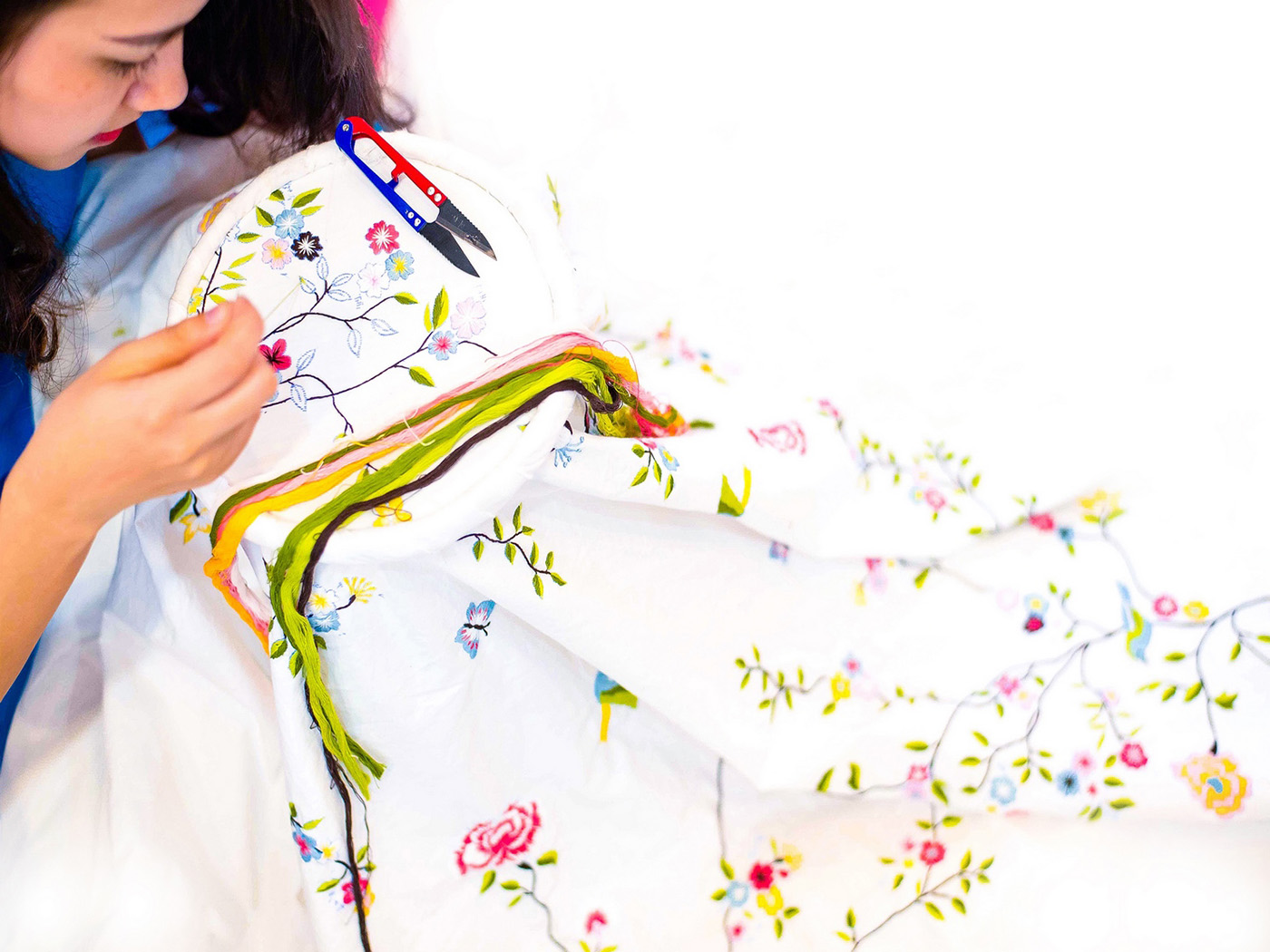
Embroidery paintings, lace scarves, and lace curtains – typical products of the craft village that are popular domestically and internationally. (Source: Collected)
When visiting the Van Lam embroidery village, visitors can not only see products but also participate in many interesting activities:
Embroidery trial experience: Under the guidance of artisans, you can try your hand at a few basic embroidery stitches or create small patterns on fabric scarves. This is a popular activity for international visitors and families with young children.
Meet veteran artisans: Many elderly artisans in Van Lam have been associated with the craft for 40–60 years. They share the history of the craft village, secrets to keeping the craft alive, and interesting stories behind each product.
Watch handicraft performances: In embroidery workshops, visitors can watch artisans embroider lace directly, from sketching, basic stitches to creating complex floral lace. This is a rare "close-up" experience in craft villages.
Take photos in a traditional setting: The scenery of ancient houses, fabric drying yards, large embroidery frames… all serve as beautiful backdrops for cultural experience photos.
Buy authentic handmade products: Visitors can choose embroidered scarves, tablecloths, lace paintings, or souvenirs, all handmade, highly valuable, and imbued with the essence of Van Lam.
3. Experience and notes when visiting Van Lam embroidery village
3.1 Notes on suitable time and itinerary
The best time to visit Van Lam embroidery village is usually during the dry season, from autumn to early spring, when the weather is clear, sunny, and conducive to travel, sightseeing, and photography.
If you want to see artisans at work, you should go from mid-morning to early afternoon, when the light is good enough and artisans are actively working. Early morning or late afternoon are also ideal times if you prefer a quiet atmosphere with fewer visitors.
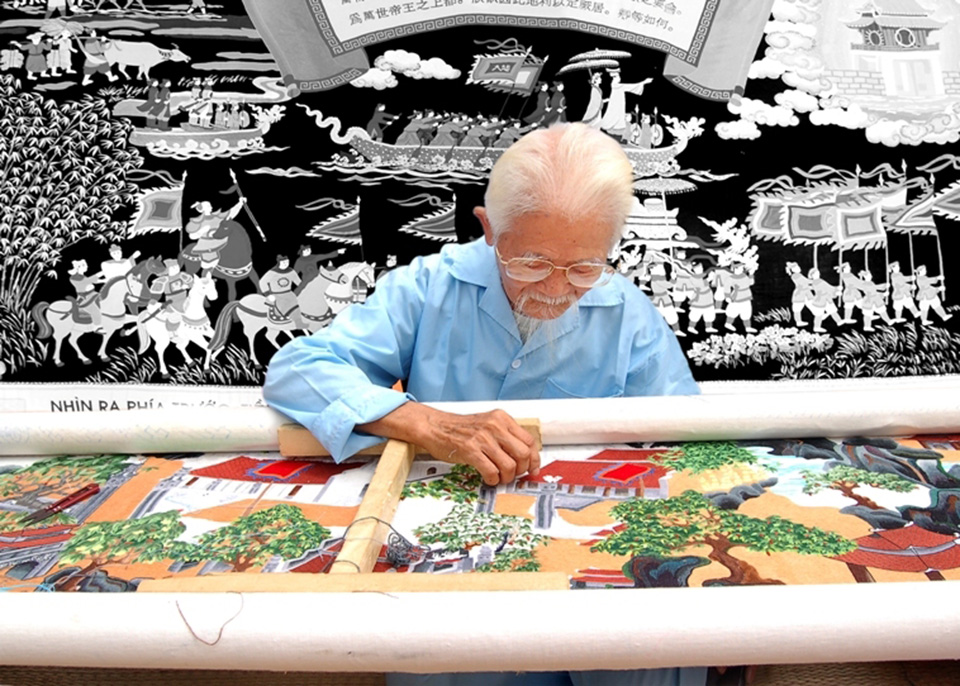
The wooden embroidery frame is stretched with flat fabric to ensure each stitch is even and sharp. (Source: Collected)
Because the craft village is located near famous tourist attractions such as Tam Coc – Bich Dong and Trang An, you should arrange your schedule reasonably to avoid going with large tour groups to help you have a more comfortable experience.
3.2 Civilized behavior when visiting craft workshops
When entering embroidery workshops or artisans' homes, please ask for permission before taking photos, as many families consider their workspace a private living area.
Do not arbitrarily touch the embroidery frames, fabric, or products being made without the artisan's consent, as a hasty movement can damage the exquisite product.
Maintain a polite attitude, speak softly, and avoid disturbing the artisans. The embroidery craft requires silence and high concentration. Respecting the workspace is a way to honor the craft and the artisans.
3.3 Tips for choosing embroidery and lace products
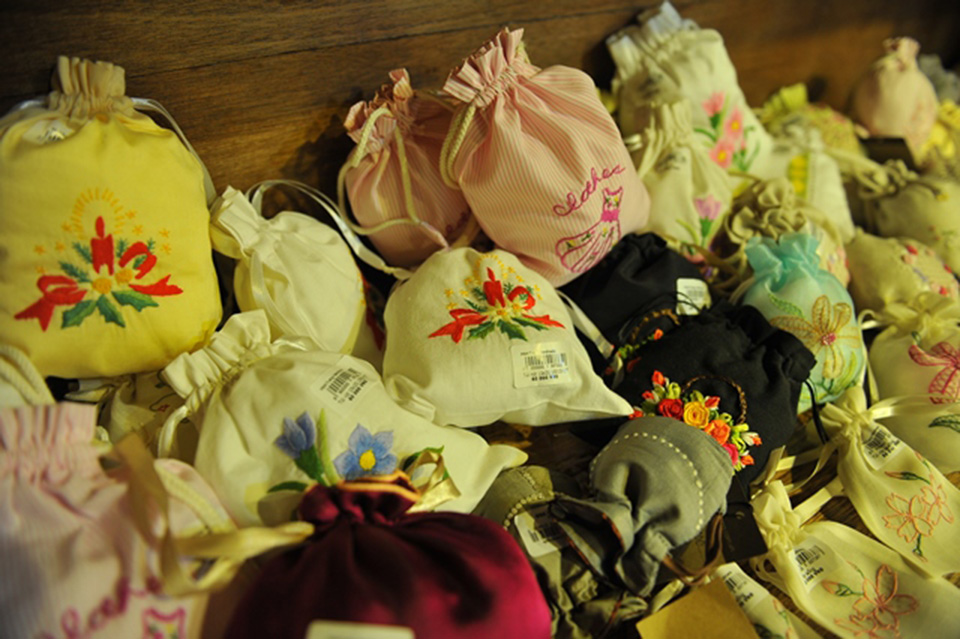
Embroidery stitches are even, sharp, and do not cause the fabric to pucker – signs of quality embroidery products in Van Lam. (Source: Collected)
When you want to shop at the Van Lam embroidery village, to choose good quality and durable products, you should note:
Look closely at the embroidery stitches: the stitches must be even, tight, close to the fabric without pulling the fabric into puckers, this shows that the artisan is highly skilled.
Check the fabric and thread material: good quality products usually use durable fabric, fine, natural, or high-quality threads, helping the product fade less and fray less after a long time.
If possible, ask about the completion time of the product; meticulous works often take more time and effort; they cost more but have lasting value and are more exquisite.
Prioritize purchasing from reputable establishments, those with OCOP labels or recognized certifications, as many products have been awarded the “4-star OCOP” standard due to their high quality and exquisite design.
If buying as a gift, choose compact products such as scarves, tablecloths, small paintings, or lace accessories, which are easy to carry and reduce the risk of damage during transit.
4. Culinary Experiences Near Van Lam Village
4.1. Famous Dishes in Ninh Binh
Ninh Binh burnt rice: Burnt rice is an iconic dish associated with Ninh Binh tourism, nổi bật nhờ lớp cơm giòn rụm, vàng đều và hương vị thơm đậm. This dish is often served with braised goat meat sauce, onion and garlic sauce, or characteristic fish sauce with scallions, creating a harmonious blend of richness, saltiness, and sweetness. Tourists can easily find burnt rice in the Tam Coc – Bich Dong area or Ninh Binh city center, making it convenient to enjoy after visiting the Van Lam embroidery village.
Mountain goat meat: Goat meat from Ninh Binh is naturally grazed on limestone mountains, so the meat is particularly firm, lean, and more aromatic than conventionally farmed goat. Popular dishes among tourists include thinly sliced raw goat with lime, grilled goat, steamed goat, stir-fried goat, pan-seared goat, or goat hot pot. This is a dish served by many restaurants in the Trang An, Hoa Lu, and Tam Coc areas as a “must-try specialty”.
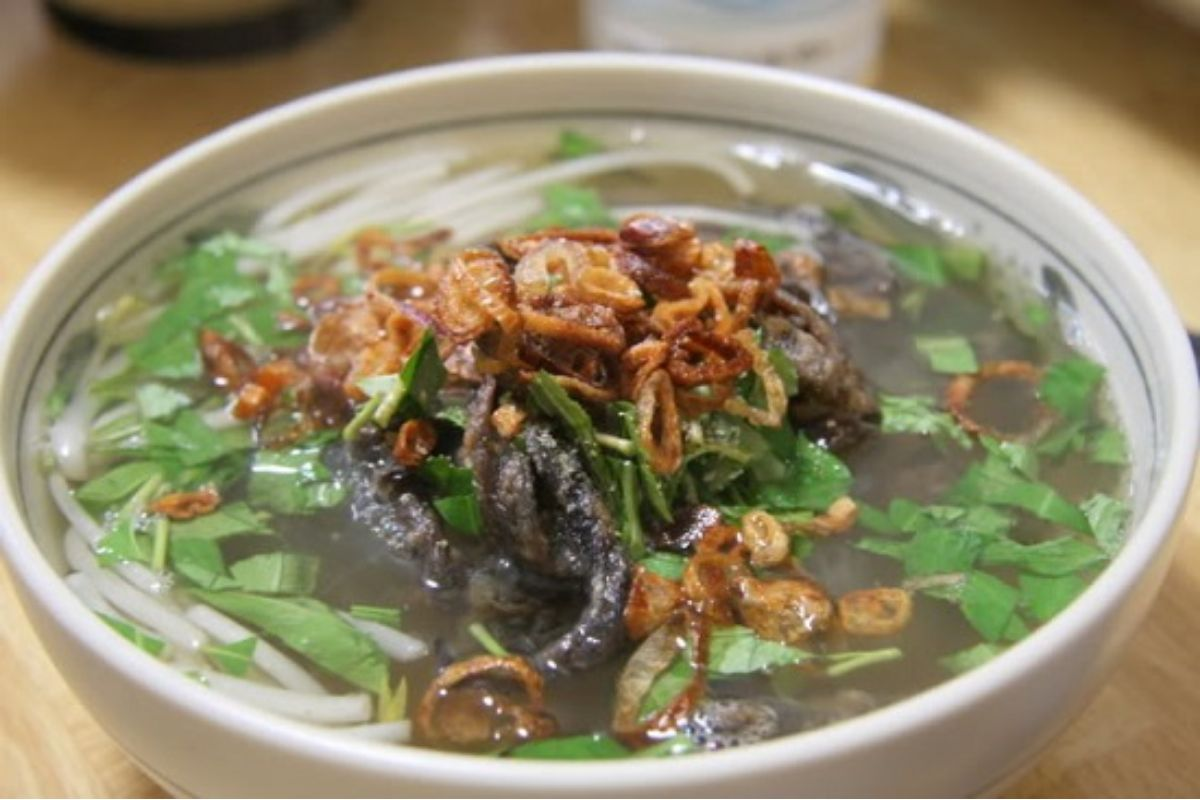
Ninh Binh Eel Vermicelli. (Source: Collected)
Ninh Binh Eel Vermicelli: Eel vermicelli is a rustic dish but famous for its very unique flavor: the eel is small but firm, stir-fried with turmeric, onions, and traditional spices to create an attractive golden color and a distinctive aroma. The broth is clear, sweet from eel bones, served with mixed vermicelli or soup vermicelli, both are suitable. This is an ideal dish for a light breakfast or lunch after visiting a craft village.
To Nhu Pork Meatball Noodle Soup: To Nhu Pork Meatball Noodle Soup is a dish recommended by many local culinary websites for tourists visiting Ninh Binh. The meatballs are soft, sweet from the meat, cooked with a clear broth, often combined with Vietnamese pork sausage, meatballs, and fresh herbs. This is a suitable choice for those who prefer a light yet flavorful dish.
Ninh Binh Mountain Snails: Mountain snails are a rare specialty because they are only available seasonally and live in rock caves and mountain crevices. The snails eat forest leaves, so their meat is thick and fragrant, completely different from river snails. Popular dishes include steamed snails with lemongrass, snails stir-fried with tamarind, and grilled snails, all carrying the distinctive flavor of the Ninh Binh mountains and forests. This dish is especially popular during the rainy season – the time when snails appear most frequently.
4.2. Local Eatery Recommendations
De Chinh Thu 2 Restaurant
Address: Tuan Cao Hamlet, Nam Hoa Lu Ward
Highlights: Spacious, specializing in authentic goat dishes from the Ninh Binh rocky mountains; fast service, suitable for group travelers.
Must-try dishes: Goat salad with lime, steamed goat, grilled goat, goat-sauce crispy rice.
Hieu Tron Restaurant:
Address: Alley 227 Nguyen Van Cu, Hoa Lu Ward
Highlights: Diverse menu with Ninh Binh specialties, seafood, and countryside dishes; beautiful space, suitable for entertaining guests or group outings.
Must-try dishes: Ninh Binh crispy rice, mountain snails, mountain goat, seafood hot pot, grilled seafood, Yen Mac fermented pork roll, snakehead fish sour soup, free-range chicken.
Thang Long Restaurant:
Address: National Highway 38B, Chi Phong Hamlet, Tay Hoa Lu Ward
Highlights: Spacious area; large capacity for tour groups.
Must-try dishes: Mountain goat, crispy rice, free-range chicken, river fish.
To Nhu Pork Meatball Noodle Soup:
Address: No. 37 & 123 Truong Han Sieu, Hoa Lu Ward
Highlights: Soft meatballs, clear and delicately flavored broth; clean restaurant, fast service.
Must-try dishes: Traditional pork meatball noodle soup.
Ba Phan Eel Vermicelli:
Address: 995 Tran Hung Dao, Hoa Lu Ward
Highlights: Small, firm eel, fragrant stir-fried with turmeric; rich broth, maintaining the authentic flavor of Ninh Binh eel vermicelli.
Must-try dishes: Mixed eel vermicelli, soup eel vermicelli.
Phuc Loc Tho Restaurant:
Address: 130 Tue Tinh, Nam Thanh, Ninh Binh City
Highlights: Very diverse menu, from countryside dishes (free-range chicken, mountain goat…) to fresh seafood (oysters, squid, shrimp). Spacious, clean, and easy-to-find location.
Must-try dishes: Free-range chicken, mountain goat, grilled oysters, steamed squid, stir-fried shrimp.
5. Suggested 2D1N Itinerary
Day 1: Discover Ninh Binh
Van Lam Embroidery Village : Tourists begin their journey at Van Lam Embroidery Village , located along the Tam Coc – Bich Dong tourist route. Here, you can experience the traditional craft village atmosphere, watch artisans perform embroidery, try basic stitches yourself, and purchase exquisite souvenirs.
Kim Son Mat Village: Continue to the Kim Son region – famous for its centuries-old traditional rush weaving craft. Tourists can visit rush-making households, see how mats, handbags, and decorative items are woven, and learn about the working life by the sea. Kim Son Mat Village is also an ideal stop to combine the exploration of Ninh Binh's characteristic handicrafts in a single day.
Trang An: Leaving Kim Son, tourists travel to the Trang An Landscape Complex – a UNESCO World Cultural and Natural Heritage site. The journey takes about 2.5–3 hours by boat, taking you through a system of caves, limestone mountains, and the clear blue waters characteristic of Ninh Binh. This is an unmissable experience in a cultural-natural exploration itinerary.
Thung Nham Bird Garden: A favorite spot for nature lovers. You will see thousands of birds roosting and immerse yourself in the fresh natural environment.
Bich Dong Pagoda: A large spiritual complex with many records, suitable for tourists seeking a peaceful space, offering incense, and exploring magnificent Buddhist architecture.
Day 2: Experience Sun World Ha Nam
Morning: Fun at Sun World Ha Nam

Amazing entertainment at Sun World Ha Nam. (Source: Collected)
From Ninh Binh center, visitors travel about 40–45 minutes to reach Sun World Ha Nam – a modern amusement – entertainment complex inspired by the art of Northern Vietnamese water puppetry.
Here, you can explore a festival ground designed in the traditional Northern Vietnamese style, a water park, a wave pool, a dynamic game system for both children and adults, entertainment activities, art performances, and themed check-in areas.
Visitors leave Ha Nam and return to Hanoi in the late afternoon, concluding a 2-day, 1-night trip combining traditional craft villages – natural heritage – and diverse, rich modern amusement and entertainment experiences.
The journey to explore Van Lam embroidery village takes visitors back to traditional values that have been preserved through generations. Here, every stitch carries a story of the skill, perseverance, and dedication of the artisans from the Hoa Lu region. Whether you love handicrafts, are passionate about exploring heritage, or are looking for a relaxing weekend getaway, Van Lam is always a special destination, bringing many unforgettable emotions.


