




1. General introduction to Quan Chao Temple
Quan Chao Temple (official name: Chuc Son Tien Tu) means Temple of the Fairy of Mount Chao, and is one of the special spiritual relics of Tam Diep ward. This place is associated with the legend of Saint Mother Lieu Hanh manifesting, transforming into a fairy descending to earth to offer congee to support the Tay Son army before battle, contributing to the famous Dong Da victory in 1789. After the victory, to commemorate the merits of the person who helped the army, King Quang Trung issued a decree to establish a temple to worship Mother Lieu Hanh right at the spot where the army had stopped that year. In the 7th year of Tu Duc (1854), the Governor of Ninh Binh, Ton That Tinh, had the temple renovated, preserving its traditional architectural style and keeping it to this day, becoming a sacred stop for people and visitors from all directions.
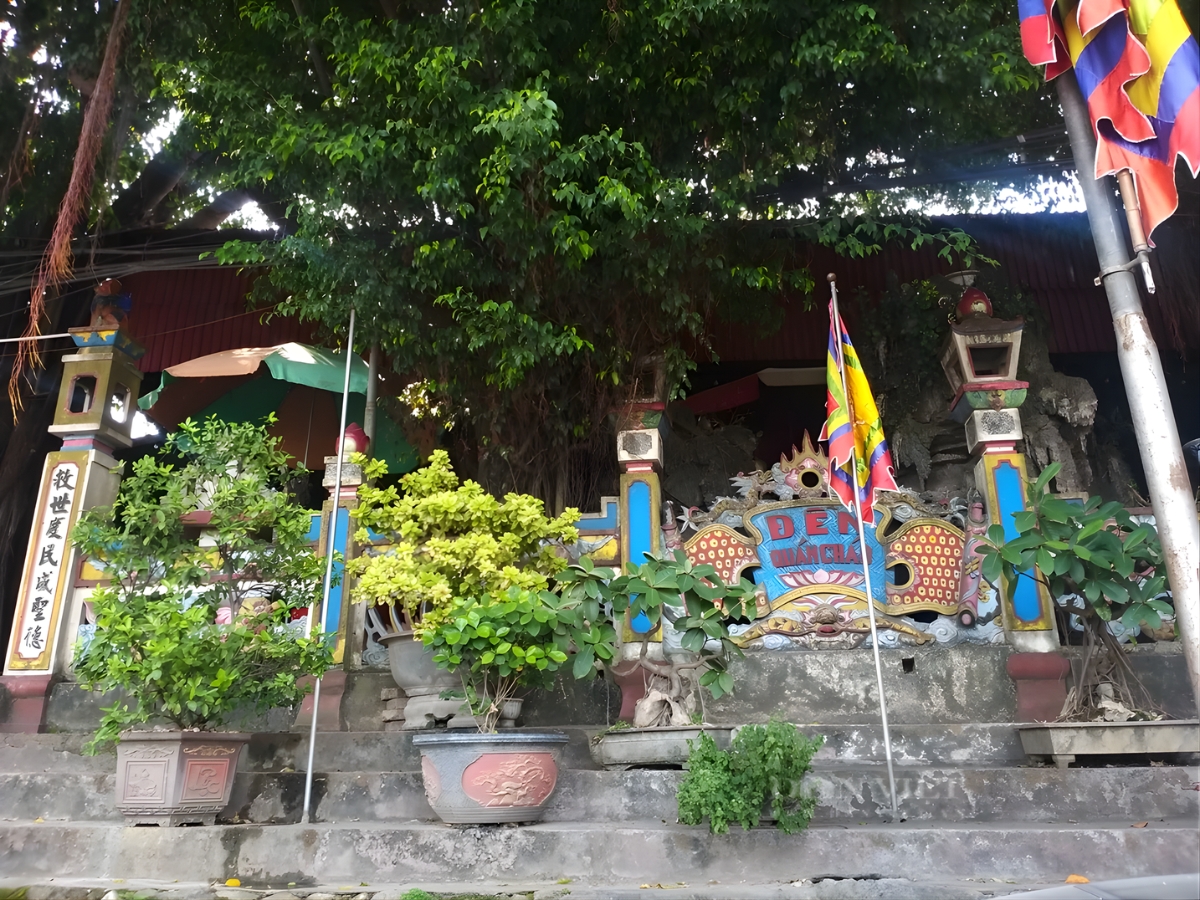
Quan Chao Temple is one of the special spiritual relics of Tam Diep ward. (Source: Collected)
2. Architecture and Space of Quan Chao Temple
Quan Chao Temple is located right next to National Highway 1A, nổi bật (standing out) with its surrounding walls decorated with patterns simulating the Ngu Hanh Son mountains, creating an ancient and harmonious appearance with the surrounding landscape. Stepping into the temple courtyard, visitors will encounter three large ancient trees casting cool shade, bringing a sense of lightness and relaxation from the very first steps. The temple is built in the shape of the character 'Nhi' (Nhị), with the inner sanctuary built in the traditional 'chuoi vo' style. The most prominent feature is the temple roof with the design of two dragons worshipping the moon and four raised chữ (characters) "Chuc Son Tien Tu", which is both solemn and clearly reflects the long-standing tradition of Mother Goddess worship.
The space inside the temple is divided into three worshiping halls, each with its own role and meaning within the system of worship. The Third Palace (Cung Đệ Tam) is where the Cong Dong Tu Phu (Four Palaces Assembly) is worshipped, exuding a sacred atmosphere from its arrangement to the statues. Next is the Second Palace (Cung Đệ Nhị) with the statue of the Local Deity (Chua Ban Den) placed in the center, surrounded by four monolithic bluestone pillars intricately carved with dragons and phoenixes. The altar for Quan Hoang Bay is arranged on the right, and Quan Hoang Muoi on the left, creating a solemn and balanced layout. Finally, there is the Forbidden Sanctuary (Cung Cấm), the most sacred space of the temple, where the statue of Lieu Hanh Princess is placed in a gilded lacquer shrine, carved during the Nguyen Dynasty in a seated meditation posture. To the left is the altar for the Two Chầu Bà (Nhị vị Chầu Bà), completing the overall worship arrangement deeply rooted in traditional Mother Goddess beliefs.
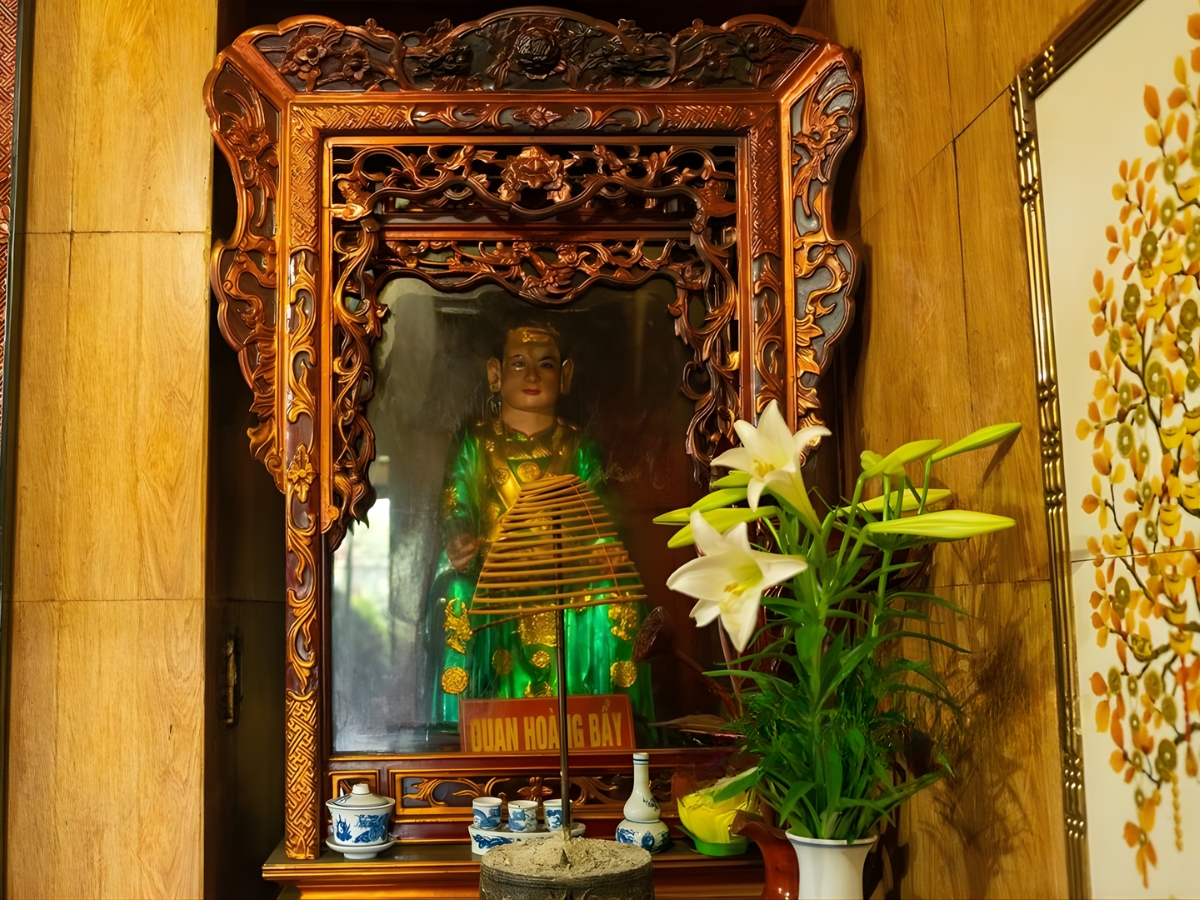
The statue of Quan Hoang Bay with a blue robe and golden floral patterns. (Source: Collected)
3. Traditional Festival at Den Quan Chao
The festival at Den Quan Chao is held annually on the 15th day of the first lunar month, coinciding with the Den Dau festival, and lasts until the end of the 3rd day of the 3rd lunar month, which is the death anniversary of Saint Mother Lieu Hanh. According to ancient custom, these two festivals are always linked, reflecting the harmony in the Mother Goddess worship of the people of Tam Diep. When coming to perform rituals, people and tourists must visit Den Quan Chao first to perform the sacrificial rites, and then carry the palanquin and statue of Saint Mother to Den Dau. This ritual is called "le trinh" (presentation ceremony), demonstrating the correct order passed down through generations. After completing the incense offering, receiving blessings, and praying for peace at both Den Quan Chao and Den Dau, people often continue their journey to participate in the bustling Phu Giay festival.
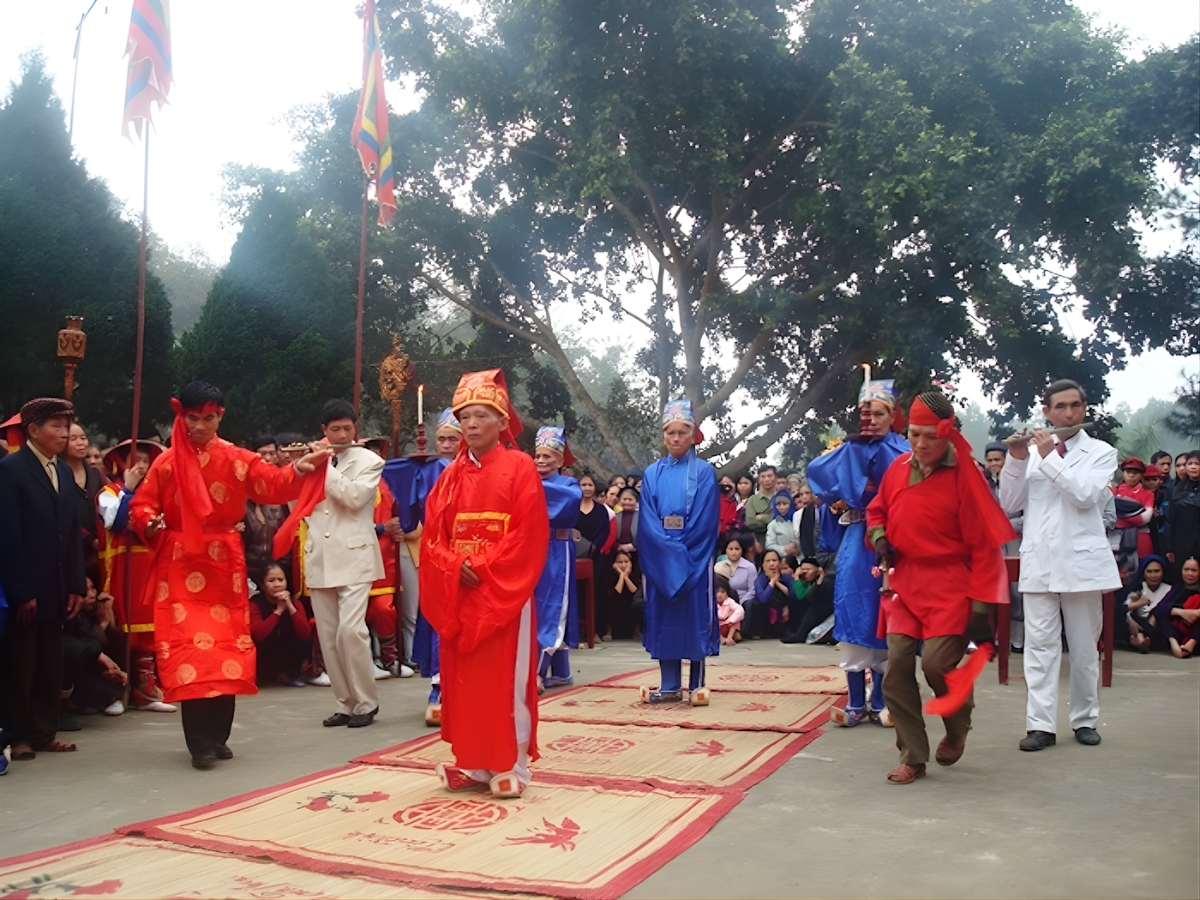
The ceremony was held solemnly and respectfully. (Source: Collected)
Previously, the Quan Chao Temple festival was also highlighted by unique rituals such as parading statues and calligraphy of "Mau Nghi thien ha" (Empress of the World), "Thien ha thai binh" (Peaceful World), or "Ly Nhan vi my" (Ly Nhan is Beautiful), creating a sacred and extremely impressive scene. Although these special rituals are no longer maintained today, the festival still retains its traditional cultural colors through activities such as spirit possession, incense offering, and ritualistic trance. These rituals help people send prayers for blessings, prosperity, longevity, peace, and well-being to the Holy Mother and the deities, while also offering visitors the opportunity to experience a festival atmosphere rich in Vietnamese cultural identity.
4. Suggestions for combining visits to famous Ninh Binh attractions
After offering incense and exploring the sacred space of Quan Chao Temple, visitors can combine a visit to Dau Temple, the most famous place dedicated to Holy Mother Lieu Hanh in Tam Diep. With its imposing architecture, beautiful feng shui location, and historical value associated with the Tam Diep – Bien Son defense line, Dau Temple will offer visitors a profound cultural and spiritual exploration journey. The temple grounds are spacious, ancient, and serene, very suitable for a trip at the beginning of the year or for days when one needs to find peace for the soul.
Additionally, visitors can continue their journey to the Tam Diep pine forest to enjoy the fresh air amidst the lush green pine trees, or visit Dong Thai Lake to participate in outdoor activities, sightseeing, and photography. If you want to experience a more modern entertainment space, Sun World Ha Nam is also an ideal choice with many attractive recreational activities for the whole family. Combining these destinations will make your visit to Quan Chao Temple more complete, interesting, and rich in experiences.

Tourists can comfortably check-in and have fun at Sun World Ha Nam. (Source: Sun World Ha Nam)
Quan Chao Temple is not only a spiritual destination preserving the beautiful legend of Saint Mother Lieu Hanh, but also a place for tourists to feel the purity, antiquity, and unique cultural features of the Tam Diep region. With traditional architecture, unique festivals, and a sacred space, the temple offers visitors moments of reflection and peace amidst busy lives. If you are looking for a meaningful stop to offer incense, pray for peace, or explore the Mother Goddess worship culture, visit Quan Chao Temple to fully experience the spiritual beauty of this ancient relic.


