



1. Non Nuoc Stone Carving Village – A traditional craft destination in Da Nang
Situated near the famous Marble Mountains in southern Da Nang, Non Nuoc Stone Carving Village is a well-known destination for travelers interested in Vietnamese craftsmanship and cultural traditions. The village is recognized for its long-established stone carving industry, where generations of artisans have developed remarkable skills in transforming raw stone into decorative objects, sculptures, and artistic masterpieces. Unlike conventional sightseeing attractions, this traditional craft village offers visitors an opportunity to discover the creative processes behind handmade products while learning about an important aspect of Da Nang's local heritage.
The history of stone carving in Non Nuoc dates back several centuries and is closely connected with the development of communities around the Marble Mountains. According to local historical accounts, the craft is associated with Huynh Ba Quat, who is traditionally recognized as an important figure in establishing the village's stone carving tradition. Over time, local artisans developed specialized techniques, passing their knowledge from one generation to the next. What began as a craft serving everyday needs and cultural practices gradually expanded into a recognized industry producing decorative sculptures, architectural elements, and artistic products for customers in Vietnam and overseas.

Non Nuoc Stone Carving Village preserves a centuries-old tradition of stone sculpture near the Marble Mountains in Da Nang. (Source: Collected)
One of the most distinctive features of Non Nuoc Stone Carving Village is the remarkable diversity of its products. Visitors can encounter intricately carved Buddhist sculptures, mythical animals, decorative reliefs, garden ornaments, and small souvenirs. These artworks demonstrate the creativity and technical abilities of local craftspeople, who combine traditional artistic influences with changing customer preferences. Although the village historically developed around local stone resources, raw materials used by workshops today may come from other regions, reflecting efforts to protect the Marble Mountains and changes in the industry's supply chains.
For international visitors, particularly travelers from Southeast Asian countries such as Thailand, Singapore, Malaysia, Indonesia, and the Philippines, the village provides an interesting introduction to Vietnamese traditional arts. Its location near the Marble Mountains makes it convenient to combine cultural sightseeing with an exploration of local craftsmanship. Whether visitors are interested in sculpture, photography, history, or handmade souvenirs, the village offers an opportunity to appreciate the patience, creativity, and technical expertise behind a traditional Vietnamese craft.
2. Four fascinating experiences at Non Nuoc Stone Carving Village
2.1. Discover the history of traditional stone carving in Non Nuoc
Exploring the history of Non Nuoc Stone Carving Village provides a deeper understanding of how traditional craftsmanship has shaped the cultural identity of Da Nang. The village's origins are closely associated with communities living around the Marble Mountains, where stone carving gradually became an important occupation. Local historical traditions identify Huynh Ba Quat as a significant early figure in the development of the craft, and subsequent generations of artisans continued refining the techniques introduced by their predecessors. In its early stages, stone carving was closely connected with local life, producing household objects, architectural details, and items associated with religious and cultural practices. As artisans became more skilled, the range of products expanded, and stone sculpture developed into an increasingly specialized artistic tradition.
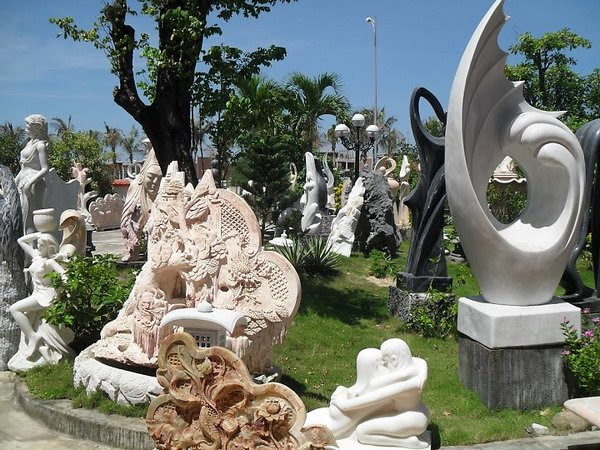
Traditional stone carving has been passed down through generations of artisans in the Non Nuoc area. (Source: Collected)
Over the centuries, the village experienced changes in production methods, materials, and artistic styles. Stone carving gradually developed beyond everyday objects to include elaborate sculptures, decorative architectural components, and works inspired by Vietnamese cultural traditions. Religious imagery became an important part of the craft, reflecting the historical influence of Buddhism and other cultural beliefs in the region. At the same time, artisans began producing objects designed for gardens, homes, and public spaces, demonstrating the versatility of stone as an artistic material. The growing reputation of Non Nuoc craftsmanship also helped attract customers from other parts of Vietnam, allowing local workshops to develop new designs while maintaining connections with traditional techniques.
Today, the village represents both a living cultural tradition and an evolving craft industry. Many workshops continue to rely on experienced artisans for detailed carving and finishing, while modern equipment supports certain stages of production. The industry has also adapted to contemporary markets, creating products that range from small decorative objects to large sculptures commissioned for architectural projects. For travelers, understanding this development adds meaning to the experience of visiting the village. Each finished artwork reflects not only individual creativity but also the accumulated knowledge of generations who have preserved and transformed the craft. By exploring local workshops and learning about their history, visitors can discover how traditional skills remain relevant in modern Vietnamese society.
2.2. Admire intricate stone sculptures and artistic masterpieces
One of the main attractions of Non Nuoc Stone Carving Village is the extraordinary variety of sculptures displayed throughout its workshops and showrooms. Visitors can admire artworks inspired by Buddhist traditions, Vietnamese folklore, and decorative design, each demonstrating different approaches to stone carving. Buddha statues are among the most recognizable products, often featuring carefully balanced proportions, detailed facial expressions, and flowing robes. Other popular designs include mythical creatures, ornamental animals, decorative vases, and relief sculptures featuring floral or cultural motifs. Some pieces are intended for religious or ceremonial settings, while others serve as decorative elements for homes, gardens, hotels, and public spaces. This diversity makes the village an interesting destination even for travelers who are not planning to purchase anything.
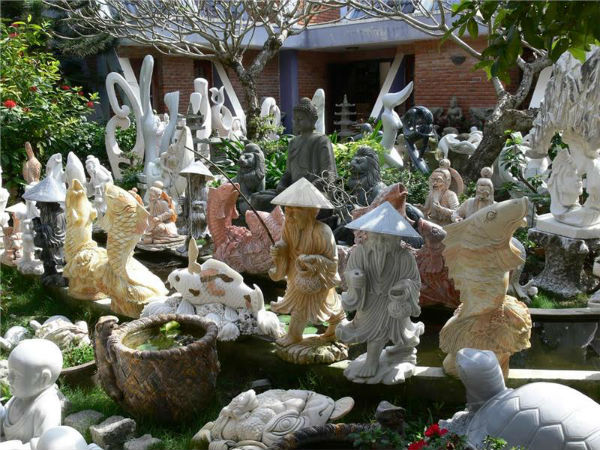
Stone sculptures at Non Nuoc display intricate details inspired by Vietnamese culture, religious traditions, and decorative arts. (Source: Collected)
The artistic appeal of these sculptures lies in the relationship between the material and the artisan's technique. Different types of stone offer distinctive colors, textures, and physical characteristics, influencing the appearance of the finished product. Skilled craftspeople must understand these properties before deciding how to shape the material and create intricate details. A sculpture may require careful attention to facial features, clothing folds, decorative patterns, or the proportions of the overall composition. Smooth surfaces can contrast with deeply carved sections, creating visual depth and highlighting the artisan's technical abilities. Larger works may involve considerable planning and multiple production stages, while smaller objects often require exceptional precision because of their delicate details.
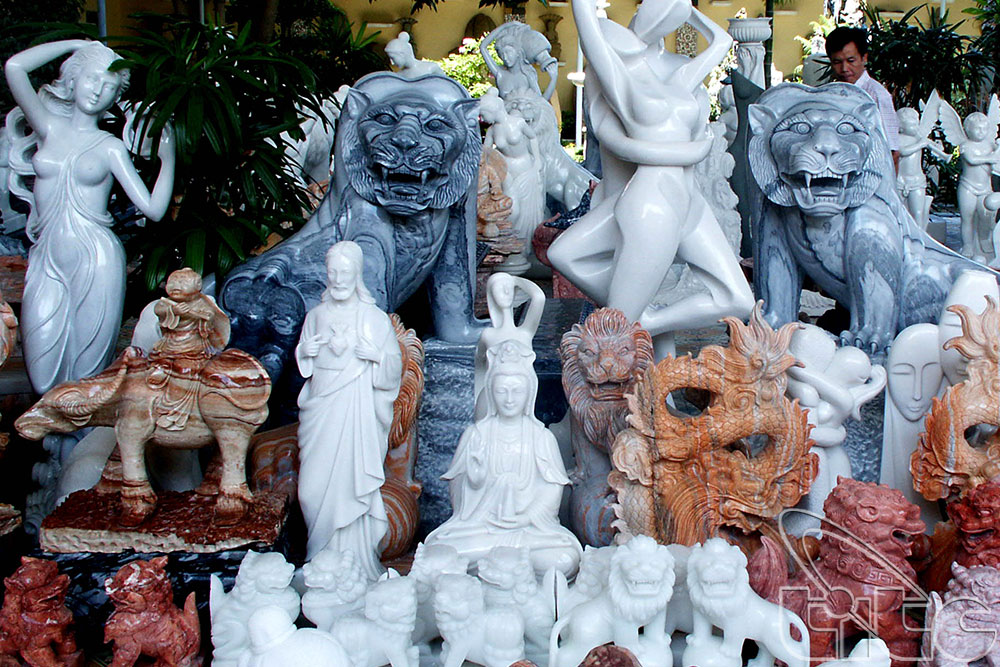
The fine details of stone sculptures reveal the patience and technical skills of local artisans. (Source: Collected)
For international travelers interested in art and architecture, exploring these collections can be particularly rewarding. The sculptures provide insights into Vietnamese aesthetic traditions while also demonstrating influences shared across different Asian cultures. Visitors from Southeast Asia may recognize certain religious figures or decorative symbols, although artistic interpretations can vary between countries and communities. This creates an opportunity to appreciate both cultural similarities and the distinctive characteristics of Vietnamese craftsmanship. Photography enthusiasts can also find interesting subjects in the textures, shapes, and compositions of the displayed artworks. However, visitors should ask permission before photographing items inside private workshops or showrooms, especially when documenting commissioned pieces or ongoing production activities.
2.3. Watch local artisans and learn traditional stone carving techniques
Observing the production process is one of the most engaging experiences available at Non Nuoc Stone Carving Village. Stone carving requires a combination of artistic imagination, technical knowledge, physical skill, and patience, as artisans gradually transform rough materials into finished sculptures. The process generally begins with selecting suitable stone according to the intended design, dimensions, and desired appearance. Craftspeople then develop a preliminary concept or reference model before shaping the main structure. During the initial carving stage, larger sections of unwanted material are removed to establish the sculpture's overall proportions. More detailed work follows, with artisans refining facial expressions, decorative patterns, and smaller features using specialized tools and techniques.
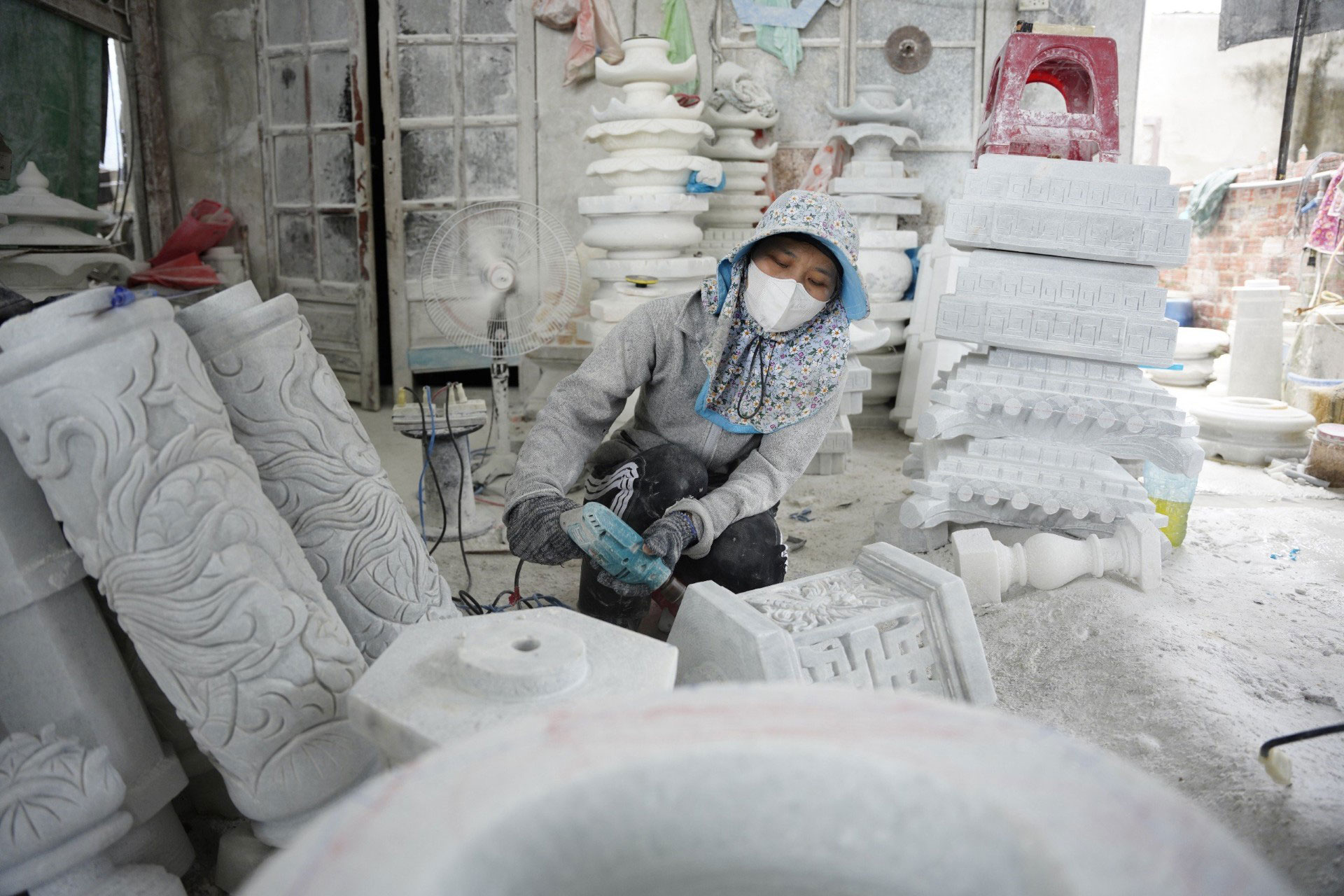
Watching artisans shape stone offers visitors a closer look at the craftsmanship behind traditional sculptures. (Source: Collected)
The finishing process is equally important because it determines the sculpture's final appearance and surface quality. Depending on the product, artisans may smooth rough areas, polish selected surfaces, or preserve certain textures to create artistic contrast. Some sculptures require delicate detailing, while others emphasize the natural characteristics of the stone itself. Modern machinery can assist with cutting, shaping, and other demanding production stages, but skilled human judgment remains essential for complex artistic work. This combination of traditional craftsmanship and contemporary technology reflects how the village has adapted to changing production requirements. Visitors who have the opportunity to observe these activities can better appreciate the time and effort involved in creating even a relatively small decorative object.
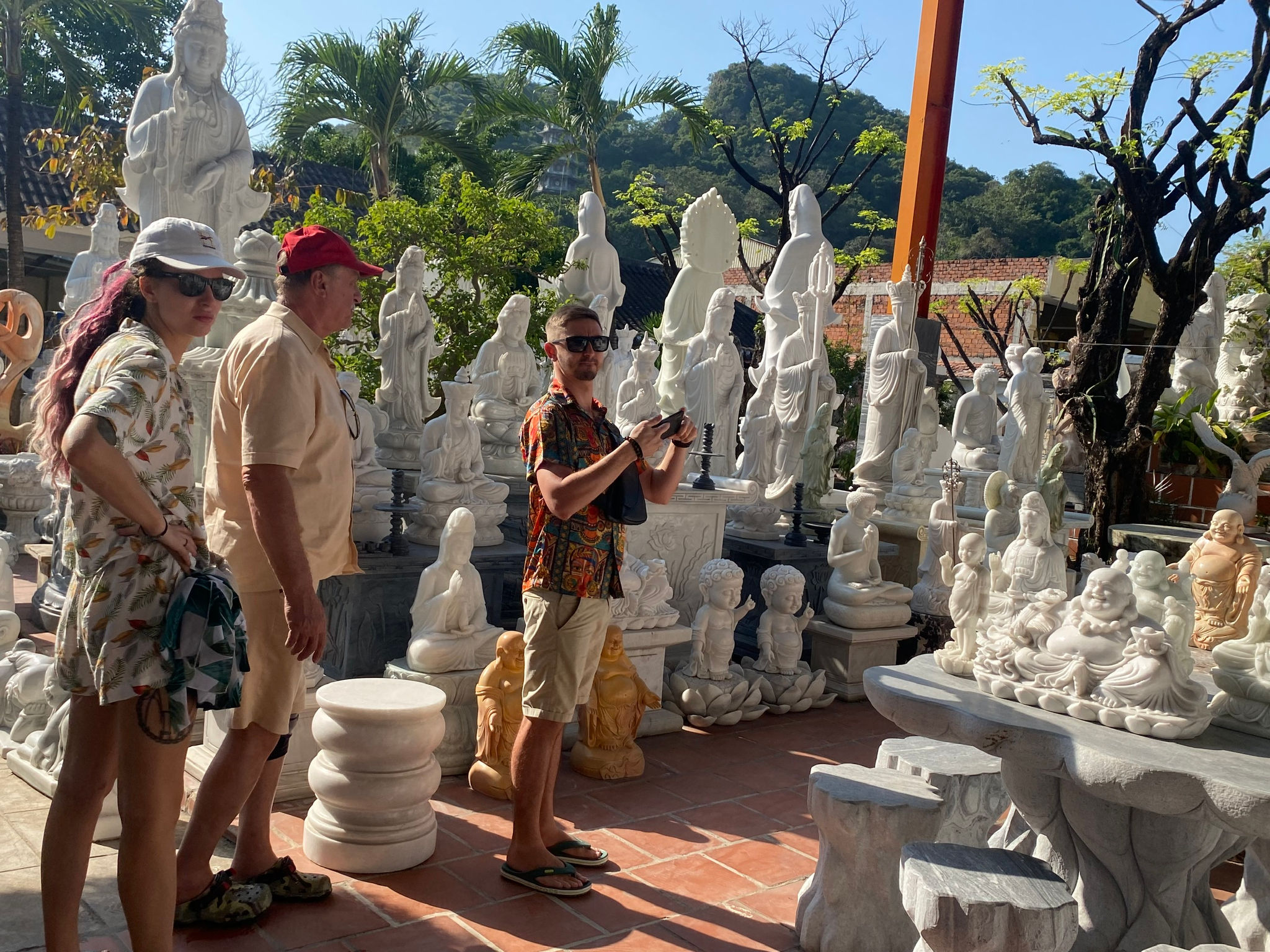
Traditional carving skills and modern equipment are combined in many stone workshops today. (Source: Collected)
Travelers interested in seeing artisans at work should look for workshops that welcome visitors and permit observation of their production activities. Not every establishment provides demonstrations, and access to working areas may depend on safety requirements or the workshop's schedule. Since stone carving can involve sharp tools, heavy materials, dust, and mechanical equipment, visitors should remain within designated areas and follow staff instructions. It is also advisable to ask permission before taking photographs or recording videos, particularly when artisans are working on private commissions. Rather than approaching the experience as a staged performance, travelers can appreciate the village as an active craft community where traditional skills continue to support local livelihoods. Respectful observation allows visitors to learn about the craft while recognizing the working environment and expertise of the people who practice it.
2.4. Choose handmade stone souvenirs to remember your Da Nang trip
For visitors who enjoy collecting meaningful travel souvenirs, Non Nuoc Stone Carving Village offers a distinctive alternative to conventional gift shops. Local workshops and showrooms display a variety of stone products, including miniature sculptures, decorative animals, small figurines, ornamental objects, and items inspired by Vietnamese cultural motifs. These products vary considerably in size, style, and craftsmanship, making it possible to find souvenirs suitable for different preferences and budgets. Travelers interested in traditional art may appreciate a small sculpture featuring a recognizable cultural symbol, while those who prefer contemporary decoration can explore simpler designs with clean shapes and polished surfaces. Choosing an item connected with the village's craft heritage can create a lasting reminder of the experience and the artisans behind it.
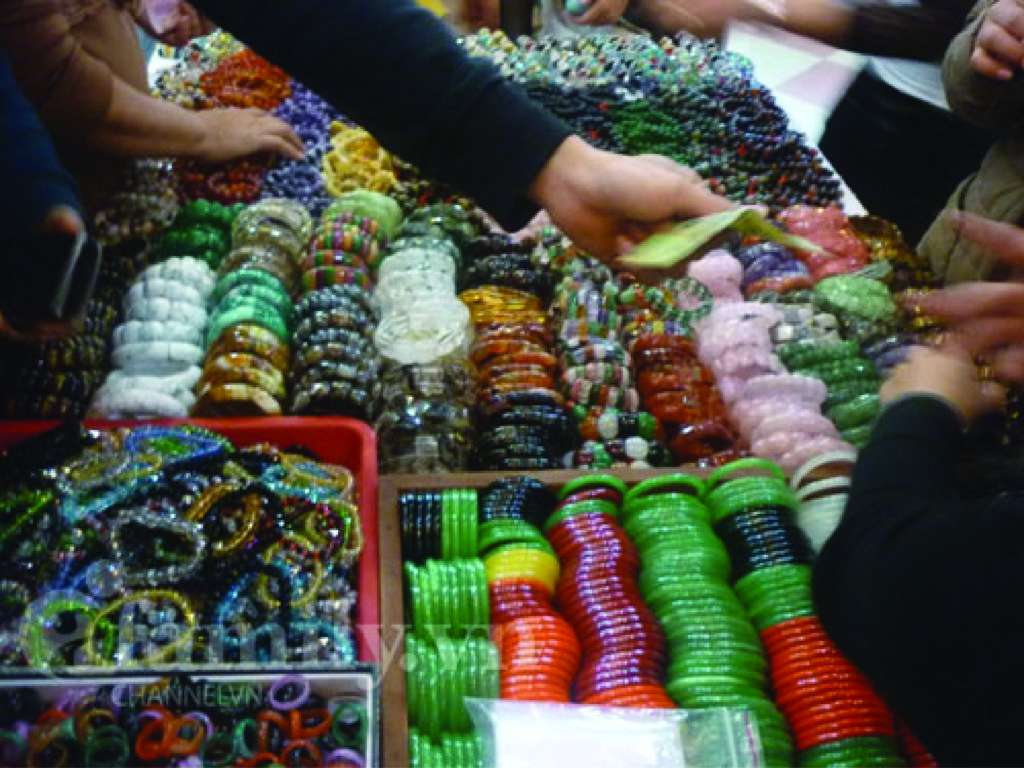
Small stone sculptures and decorative objects make distinctive souvenirs from Da Nang. (Source: Collected)
When selecting a souvenir, visitors should consider the material, workmanship, weight, and practical requirements for transportation. Stone products can be surprisingly heavy, even when relatively small, so travelers should check the weight before purchasing. It is also useful to examine the surface carefully for visible cracks, uneven finishing, or other characteristics that may affect the item's appearance. Since different workshops may use various types of stone, customers can ask sellers about the material and origin of a product. Comparing several establishments can help travelers understand the range of available designs and prices. For international visitors, smaller decorative pieces are generally more convenient because they can be packed securely and transported without requiring specialized shipping arrangements.
3. Essential tips for visiting Non Nuoc Stone Carving Village
3.1. Choose the best time to visit
The best time to explore Non Nuoc Stone Carving Village is in the early morning or late afternoon, when temperatures are generally more comfortable for sightseeing. Visitors can walk through traditional workshops, observe local artisans, and admire intricate stone sculptures at a relaxed pace.
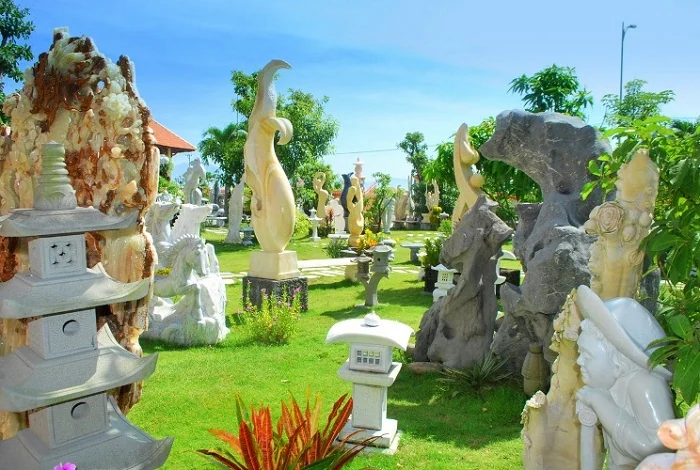
The village's location near the Marble Mountains makes it convenient to combine traditional craft exploration with sightseeing. (Source: Collected)
Da Nang's dry season, typically from January to August, is often suitable for outdoor exploration, although sunny days can be particularly hot. Travelers should wear comfortable shoes, bring drinking water, and prepare sun protection to make their visit more enjoyable.
3.2. Discover traditional stone carving and shop for souvenirs
Non Nuoc Stone Carving Village offers visitors an opportunity to admire handcrafted sculptures, decorative objects, and souvenirs created by skilled local artisans. Exploring the workshops also provides insight into the techniques and artistic traditions preserved through generations.
Travelers interested in purchasing souvenirs can choose from small stone figurines, decorative pieces, and other handcrafted products. Before buying, it is advisable to check the materials, prices, and packaging options, especially for fragile or heavier items.
3.3. Suggested itinerary combining Non Nuoc Stone Carving Village and Ba Na Hills
Combining Non Nuoc Stone Carving Village with Sun World Ba Na Hills offers travelers an exciting journey through Da Nang's traditional craftsmanship, spectacular mountain landscapes, and world-class tourism attractions. A two-day itinerary is ideal for exploring both destinations, allowing visitors to discover the cultural heritage of Non Nuoc Stone Carving Village before enjoying a full day of sightseeing and entertainment at Ba Na Hills.
On the first day, begin your journey at Non Nuoc Stone Carving Village, where skilled artisans create intricate stone sculptures and decorative artworks using traditional techniques. Continue to the nearby Marble Mountains to discover fascinating caves, cultural landmarks, and panoramic viewpoints. In the afternoon, visitors can relax at My Khe Beach or explore central Da Nang before preparing for the next day's mountain adventure.
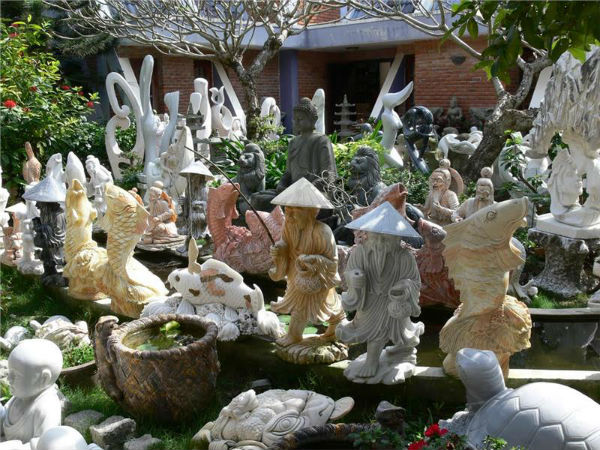
Non Nuoc Stone Carving Village preserves the traditional stone carving craftsmanship of Da Nang. (Source: Collected)
On the second day, dedicate your entire journey to Sun World Ba Na Hills, one of the most iconic destinations in Central Vietnam. Start with a spectacular cable car ride above lush forests and mountain valleys, offering breathtaking views of the surrounding landscape. Upon reaching the resort, visit the world-famous Golden Bridge, where two enormous stone-like hands support a golden walkway suspended amid the mountains. Continue to Le Jardin D'Amour Gardens to explore colorful flower displays, themed landscapes, and picturesque photography spots.

The cable car offers breathtaking views of lush forests and majestic mountain landscapes. (Source: Collected)
After enjoying lunch at one of the resort's restaurants, discover the European-inspired French Village, featuring magnificent architectural structures, charming streets, and lively squares. Visitors can then explore Eclipse Plaza, admire the impressive Helios Waterfall, and capture memorable photographs against its striking architectural backdrop. For those seeking entertainment, Fantasy Park offers a variety of indoor games and recreational experiences suitable for different interests and age groups.

Visitors enjoy unforgettable sightseeing experiences and capture memorable moments at Sun World Ba Na Hills. (Source: Collected)
As the afternoon comes to an end, visitors can enjoy the refreshing mountain atmosphere and take the cable car back down before returning to central Da Nang. From the centuries-old stone carving traditions of Non Nuoc Village to the iconic Golden Bridge and vibrant attractions of Sun World Ba Na Hills, this two-day itinerary showcases the remarkable diversity of Da Nang, combining cultural discovery, natural beauty, architectural landmarks, and unforgettable entertainment experiences.
Non Nuoc Stone Carving Village is more than a traditional craft destination; it is a place where generations of artisans have preserved and developed the art of stone sculpture. From intricate cultural artworks to carefully crafted souvenirs, the village offers international travelers a fascinating introduction to Vietnamese craftsmanship and the creativity of local communities.
Located near the Marble Mountains, the village is easy to include in a cultural sightseeing itinerary through southern Da Nang. Whether you want to observe skilled artisans, discover traditional techniques, or choose a meaningful handmade souvenir, a visit to Non Nuoc provides an opportunity to experience a distinctive part of Da Nang's heritage. Add this remarkable craft village to your travel plans and discover the artistry behind one of Central Vietnam's most enduring traditions.