

1. Why My Son Sanctuary appeals to Indian travellers
1.1. A tranquil setting steeped in history
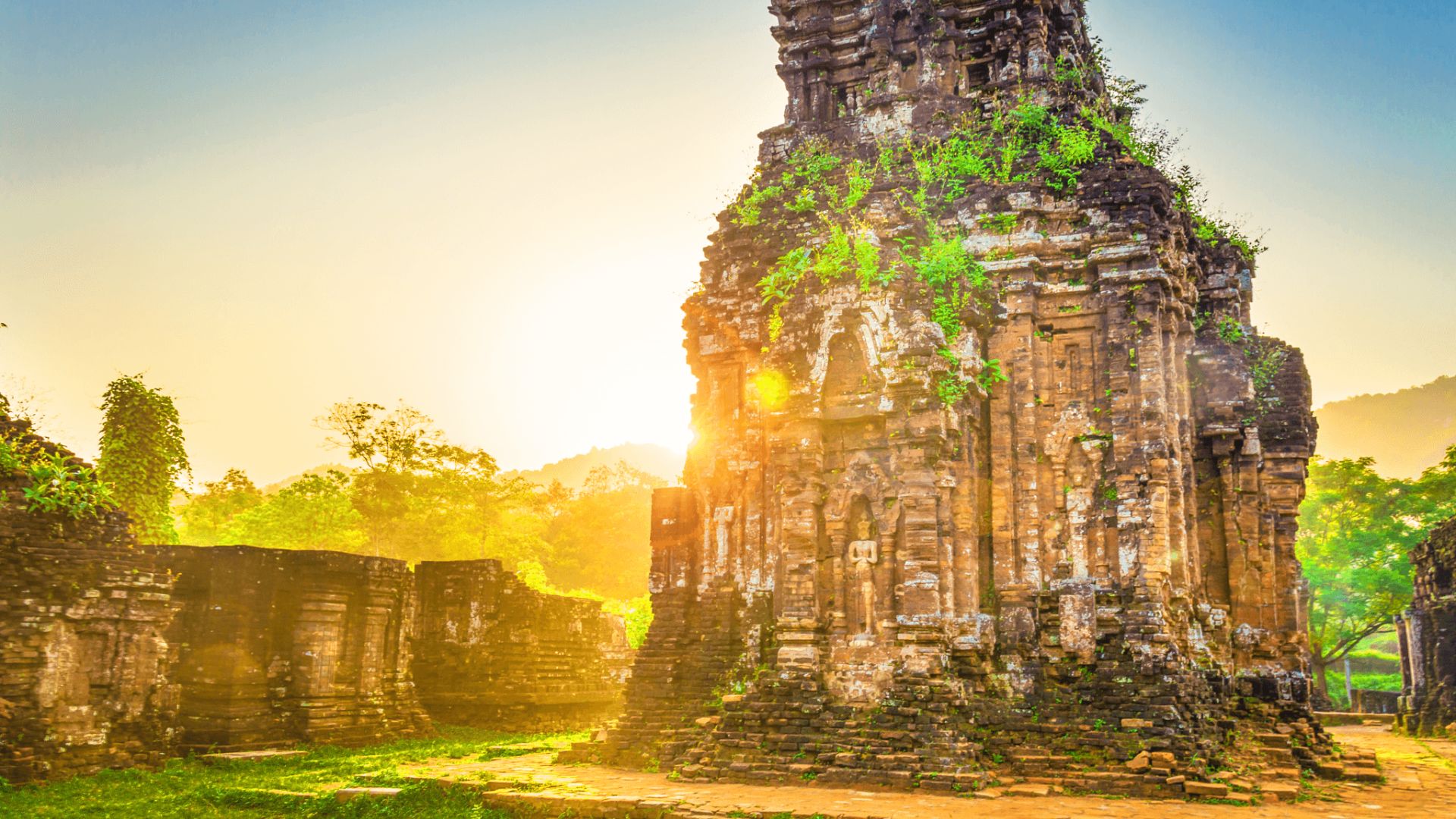
My Son Sanctuary is an important stop on a cultural heritage journey through Central Vietnam and can be conveniently combined with Da Nang and Hoi An on a short trip. Nestled in a quiet, forested valley, the temple complex feels far removed from the bustle of the city, offering visitors a more reflective heritage experience.
Its ancient brick structures and surviving traces of the Champa kingdom make My Son particularly rewarding for travellers interested in history, architecture and local traditions. For Indian visitors, the site also offers an opportunity to explore the distinctive legacy of Hinduism in Cham culture.
1.2. Temple architecture reflecting Indian cultural and religious influences
The architecture of My Son Sanctuary reveals the influence of Hinduism on the spiritual life of the ancient Cham people. Its temples, sculptures and symbolic decorative motifs reflect this connection. Many structures were built from brick, with soaring towers, intricately crafted surfaces and imagery associated with Hindu beliefs.
For Indian travellers, these details provide a meaningful cultural connection, particularly the depictions of Lord Shiva and other religious symbols. Yet My Son also retains a distinctly Cham identity, illustrating how influences from India were adapted and developed within the cultural traditions of Southeast Asia.
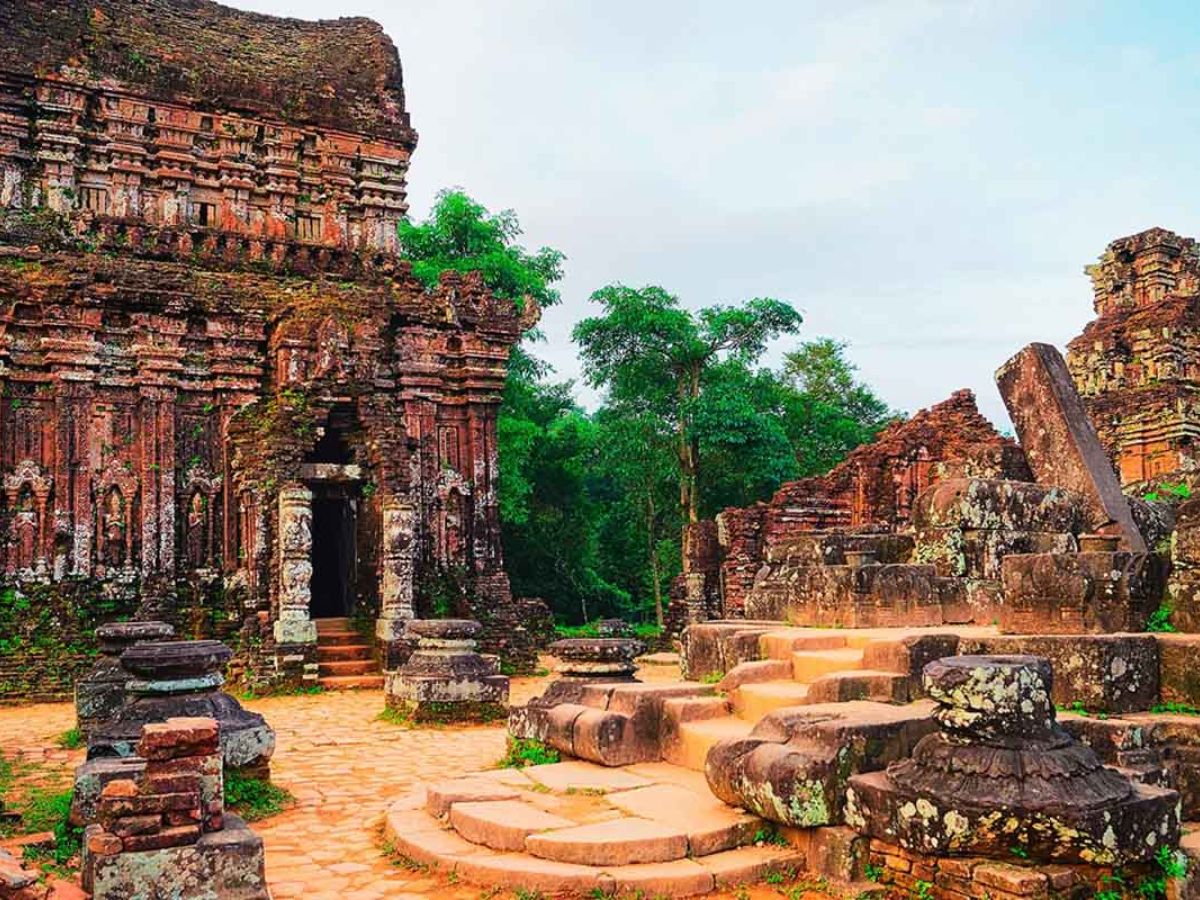
The temple architecture at My Son Sanctuary bears a strong Hindu influence. (Source: Collected)
1.3. A deeper understanding of Cham heritage
A visit to My Son Sanctuary is about more than admiring ancient towers. It is also an opportunity to discover the history and spiritual traditions of the Cham people through surviving buildings, reliefs and archaeological remains. Visitors can explore different temple groups, learn about the stories behind Hindu symbols and see how the heritage site has evolved over the centuries.
Where traditional Cham cultural performances are scheduled during a visit, they can add another dimension to the experience. Indian travellers may also consider pairing My Son with the Museum of Cham Sculpture in Da Nang, connecting the monuments seen on site with artefacts and stories presented in the museum.
2. How to reach My Son Sanctuary and what to know before visiting
2.1. Transport options from Da Nang to My Son Sanctuary
My Son Sanctuary is approximately 69–70 km from central Da Nang. The journey by car generally takes around one to one and a half hours, depending on the route and traffic conditions. For Indian families and larger groups, a private vehicle offers flexibility over departure times, space to travel comfortably and the option of combining My Son with Hoi An in a single day.
A suggested itinerary is to leave Da Nang in the morning, spend around two to three hours exploring the temple complex and continue to Hoi An in the afternoon. Budget-conscious travellers can also look into bus services or shared day tours with pick-up from Da Nang.
2.2. Practical tips for a comfortable and rewarding visit
Most of a visit to My Son Sanctuary takes place outdoors, so the weather can have a considerable impact on the experience, especially for Indian families travelling with children or older relatives. Modest, comfortable clothing, suitable walking shoes, drinking water and a hat or umbrella are advisable on sunny days.
Within the heritage site, visitors should keep a respectful distance from the temple structures, avoid touching carvings and follow conservation guidelines. Check opening hours, ticket prices and the schedule of Cham cultural performances before travelling. For multigenerational families, mornings are often more comfortable for walking and sightseeing.
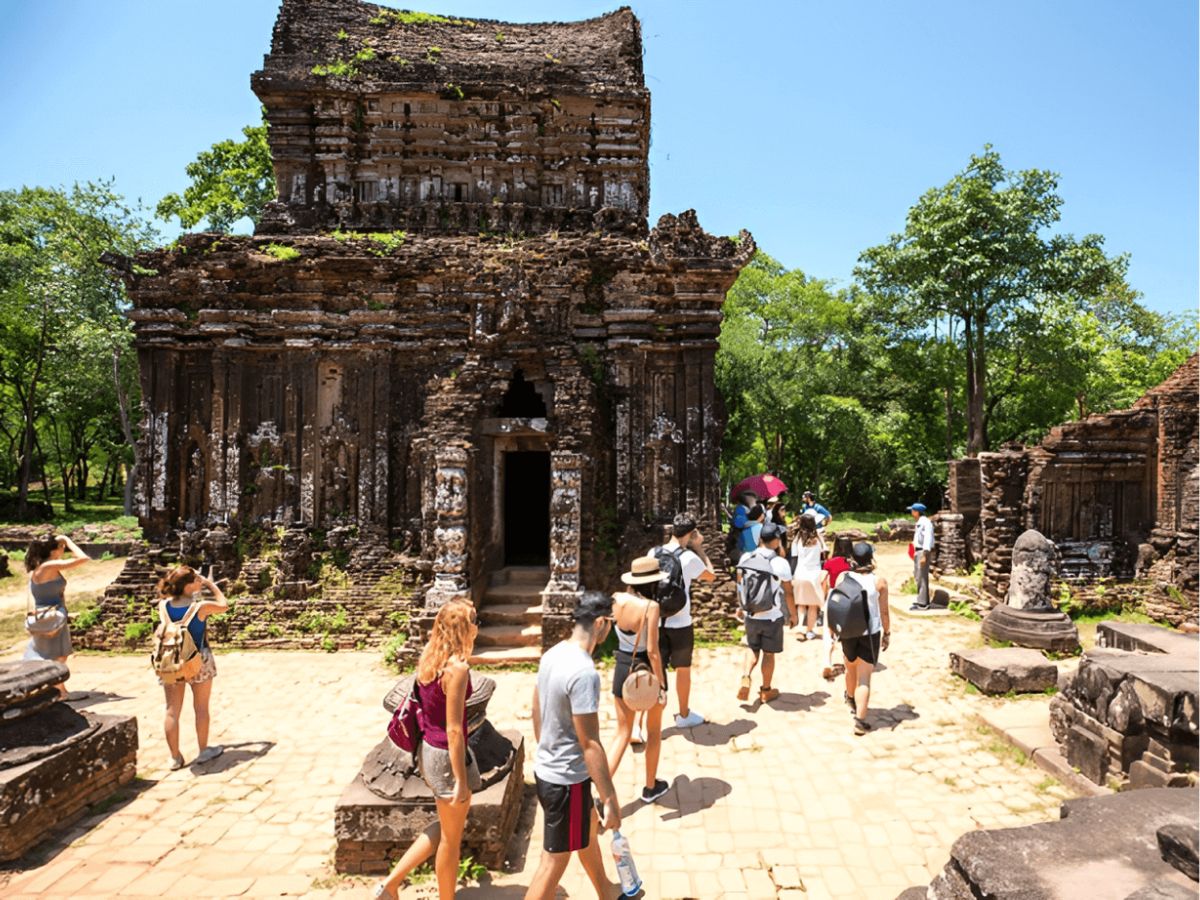
As My Son Sanctuary is largely an outdoor attraction, visitors should dress comfortably and respectfully. (Source: Collected)
3. Other attractions to combine with a visit to My Son
3.1. Museum of Cham Sculpture: Discovering the depth of Cham culture
The Museum of Cham Sculpture is an excellent introduction to the Champa civilisation for Indian visitors, particularly before seeing the temples at My Son. Its collection of statues, reliefs and carved works features figures associated with Hinduism, including Shiva, Vishnu and Brahma, as well as linga, yoni and Nandin.
For Indian travellers, these familiar symbols create an intriguing connection and show how religious ideas from India were interpreted within Cham culture. The detailed exhibits add depth to a heritage-focused itinerary, with each artefact offering a glimpse into the beliefs, artistic achievements and everyday life of the ancient Cham people.
3.2. Marble Mountains and Linh Ung Pagoda: Exploring spiritual heritage
Marble Mountains and Linh Ung Pagoda bring another dimension to a Da Nang itinerary, where dramatic natural scenery meets Vietnamese religious traditions. At Marble Mountains, rocky cliffs, caves and pagodas tucked among the hills offer a visit rich in both cultural interest and visual beauty.
Linh Ung Pagoda on Son Tra Peninsula, meanwhile, offers sweeping views of the sea and city and is known for its towering statue of the Lady Buddha facing the ocean. For Indian travellers, it provides a chance to learn about Buddhism and its place in local life, alongside the Hindu heritage encountered at My Son. The contrast between caves, limestone hills, pagodas and the coastline is a distinctive part of Da Nang’s appeal.
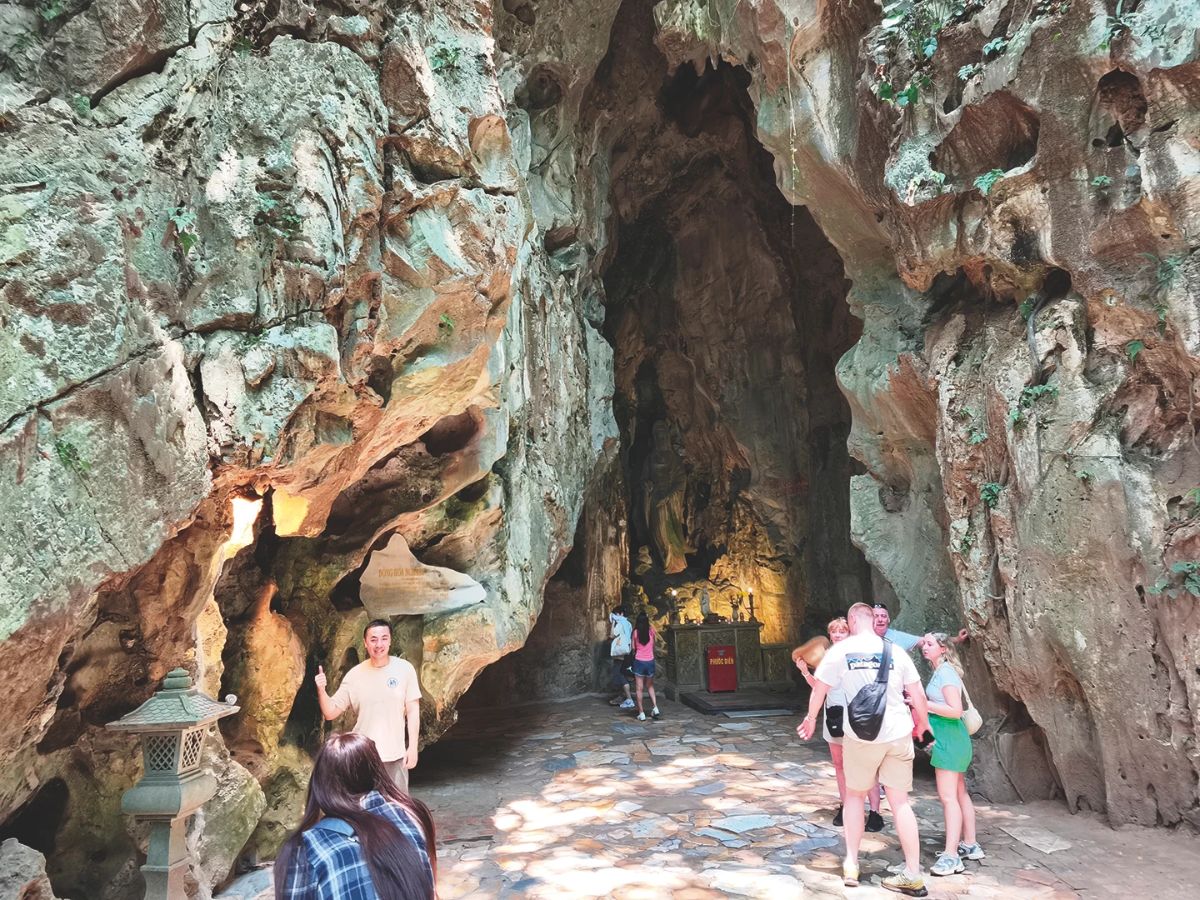
Marble Mountains combines striking natural scenery with cultural and spiritual heritage. (Source: Collected)
3.3. Beaches and resorts: Balancing cultural discovery with relaxation
Da Nang’s coastline offers broad sandy beaches, fresh sea air and a lively yet unhurried seaside atmosphere. My Khe Beach is easily accessible from the city centre and is ideal for a morning stroll, sunrise views, a seaside meal or a few relaxing hours by the waves. Further along the coast, Non Nuoc Beach lies at the foot of Marble Mountains, offering a quieter setting with an expansive shoreline and numerous resorts.
As evening approaches, the beachfront takes on a different character, with lights appearing along the restaurants, hotels and coastal roads. For Indian families and groups of friends, it is a pleasant opportunity to unwind together after a day of sightseeing, whether over dinner, by the sea or during an evening walk around central Da Nang.
3.4. Sun World Ba Na Hills: Adding entertainment and mountain scenery
From central Da Nang, Indian visitors can take the complimentary WOW Bus to Sun World Ba Na Hills and spend a full day exploring its mountain setting. The cable car journey reveals panoramic views of forests, valleys and layers of cloud before reaching the upper slopes of Mount Chua. The Golden Bridge is a highlight for family and group photographs, while the French Village, Lunar Castle and Eclipse Square offer striking architectural settings.
For multigenerational families, Fantasy Park offers indoor entertainment for children alongside sightseeing opportunities for adults. Restaurants on the mountain provide convenient places to rest and enjoy a meal; Indian travellers can enquire about vegetarian or halal options according to their group’s dietary needs and the availability at each venue. Those staying overnight at Mercure Danang French Village Bana Hills can also experience the illuminated French Village and Ba Na’s refreshingly cool evening air.
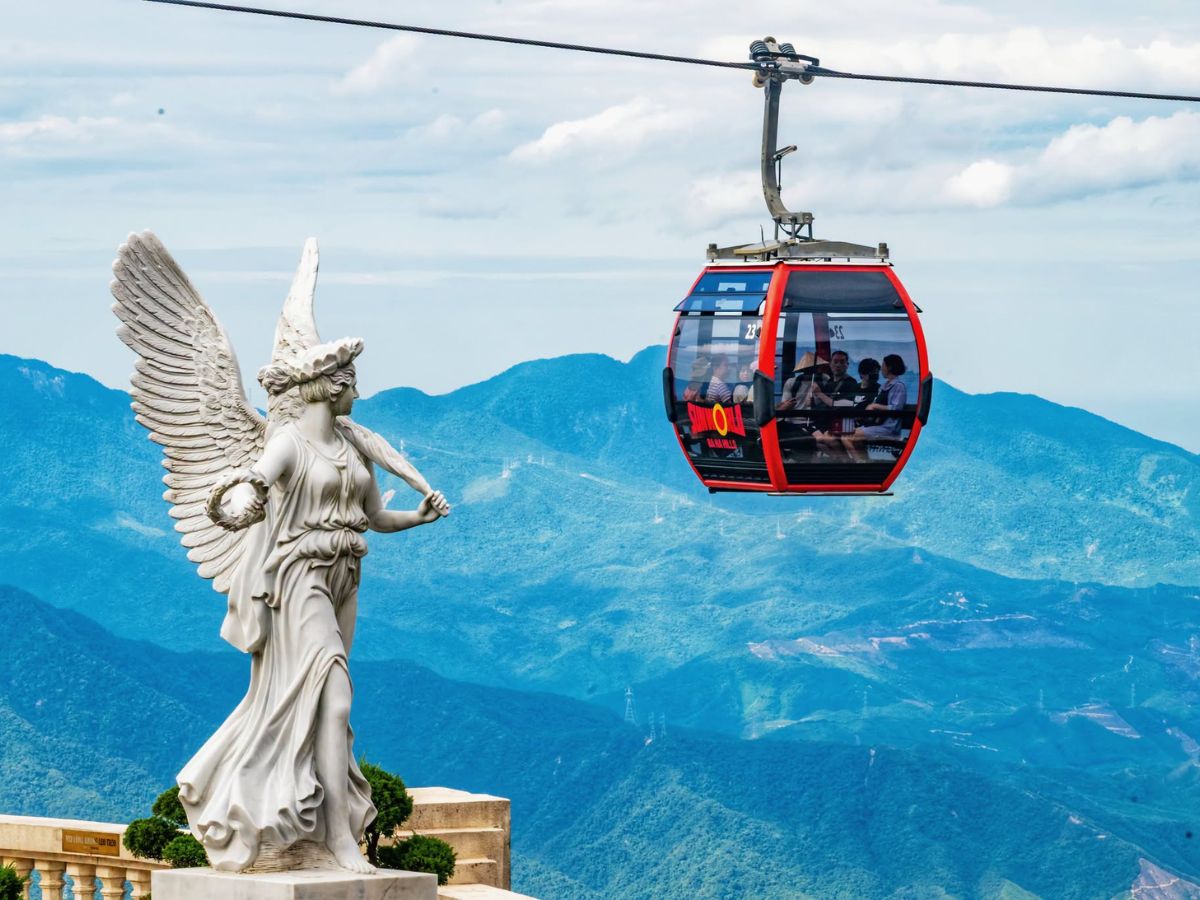
The Ba Na Hills cable car journey offers expansive views of mountains, forests and valleys. (Source: Collected)
3.5. Hoi An and Cham Islands: Experiencing local culture
Hoi An and Cham Islands offer contrasting perspectives on local life in Central Vietnam, from the architecture of the ancient town and riverside traditions to the culture of coastal villages. In Hoi An, historic houses, assembly halls, narrow streets and lantern-lit evenings create a memorable setting for walking, sampling local food and discovering traditional crafts.
On Cham Islands, the focus shifts towards nature, fishing villages, harbours and island communities. For Indian travellers interested in culture, the visit offers a glimpse of everyday Vietnam, including how local people preserve their surroundings and maintain traditions shaped by the sea. Combining the ancient town with the islands creates a varied itinerary without necessarily extending the overall trip.
My Son Sanctuary adds a distinctive chapter to a journey through Central Vietnam, bringing together Cham history, temple architecture and Hindu influences in a setting rich in cultural significance. By combining My Son with Da Nang, Hoi An and other local experiences, Indian travellers can discover the region’s diversity through its landscapes, heritage sites and the stories behind them.