




1. Khinh Dao Communal House – Spiritual heritage destination in the heart of Hai Phong
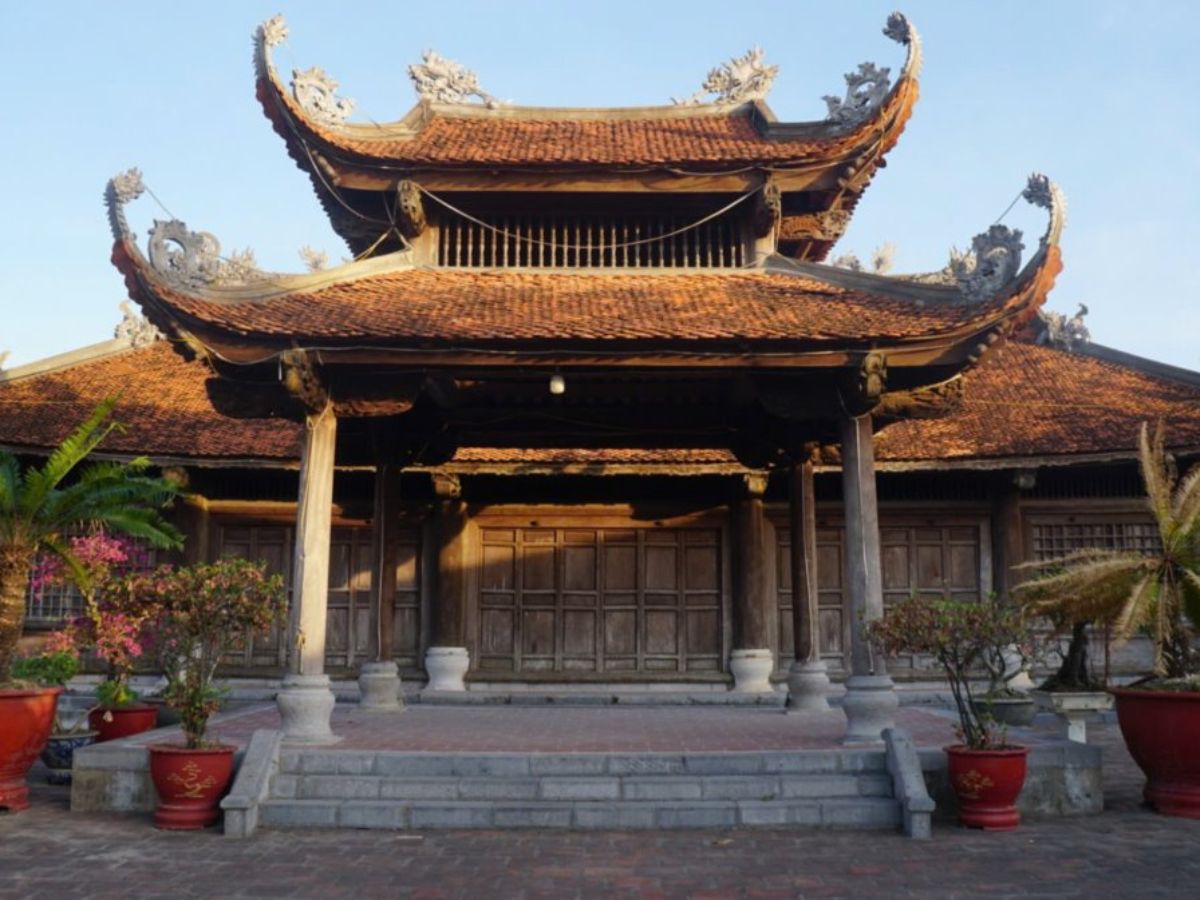
Dinh Khinh Dao is a typical ancient relic associated with the history of Hai Phong.
(Source: Collected)
Dinh Khinh Dao is one of the typical ancient relics in Hai Phong, standing out with its large scale and unique traditional architecture of the Northern Delta region. Located in Khinh Dao village, An Hung commune, An Duong district, the communal house is part of an interconnected relic complex including the communal house, Pham Thuong Quan temple, and Ca Pagoda, creating a unique spiritual space connecting the past and present. Its location near the Nomura Hai Phong industrial park brings an interesting interplay between ancient architecture and modern life.
Getting to Dinh Khinh Dao is quite convenient. From the center of Hai Phong, visitors go in the direction of An Duong – An Hung; if starting from Hanoi, the Hanoi – Hai Phong expressway is a quick option, then turn towards An Hung to reach the communal house.
Upon entering the premises, visitors will be impressed by the spaciousness and harmonious layout: the main communal house covers an area of 328 m², the auxiliary communal house 46 m², along with two large gates, a screen wall, a garden, and balanced fences. This is the largest communal house in An Duong district and among the most beautifully architected village communal houses in Hai Phong.
The architecture of Dinh Khinh Dao features the traditional "Dinh" shape, consisting of 5 front bays and 3 rear bays, with hài-shaped tiled roofs, curved roof edges decorated with twin dragons worshipping the sun and moon, combined with characteristic dragon and phoenix motifs. The auxiliary communal house is built in the royal architectural style, using high-class ironwood, with a multi-tiered, curved roof design, creating a refined highlight for the entire complex.
The history of Dinh Khinh Dao begins from the 17th century with a small scale, and in 1752 was rebuilt and expanded thanks to the efforts of Doctor Pham Dinh Trong, ushering in a glorious period of architectural and religious development. The relic bears architectural imprints from the late Le – early Nguyen periods, evident in its exquisite carving techniques. In 2005, Dinh Khinh Dao was recognized as a national architectural and artistic relic, and from 2007–2011, a restoration project with a budget of over 11 billion VND fully restored the original value and ancient beauty of the communal house.
Not only an architectural work, Dinh Khinh Dao is also a center for spiritual activities, worshipping Doctor – Hai Quancong Pham Dinh Trong along with 6 deities from the Hung King era. Through many generations, the communal house has been the venue for traditional festivals, religious ceremonies, and cultural activities, contributing to preserving heritage and fostering community cohesion.
2. Unique Architectural and Artistic Values of Dinh Khinh Dao
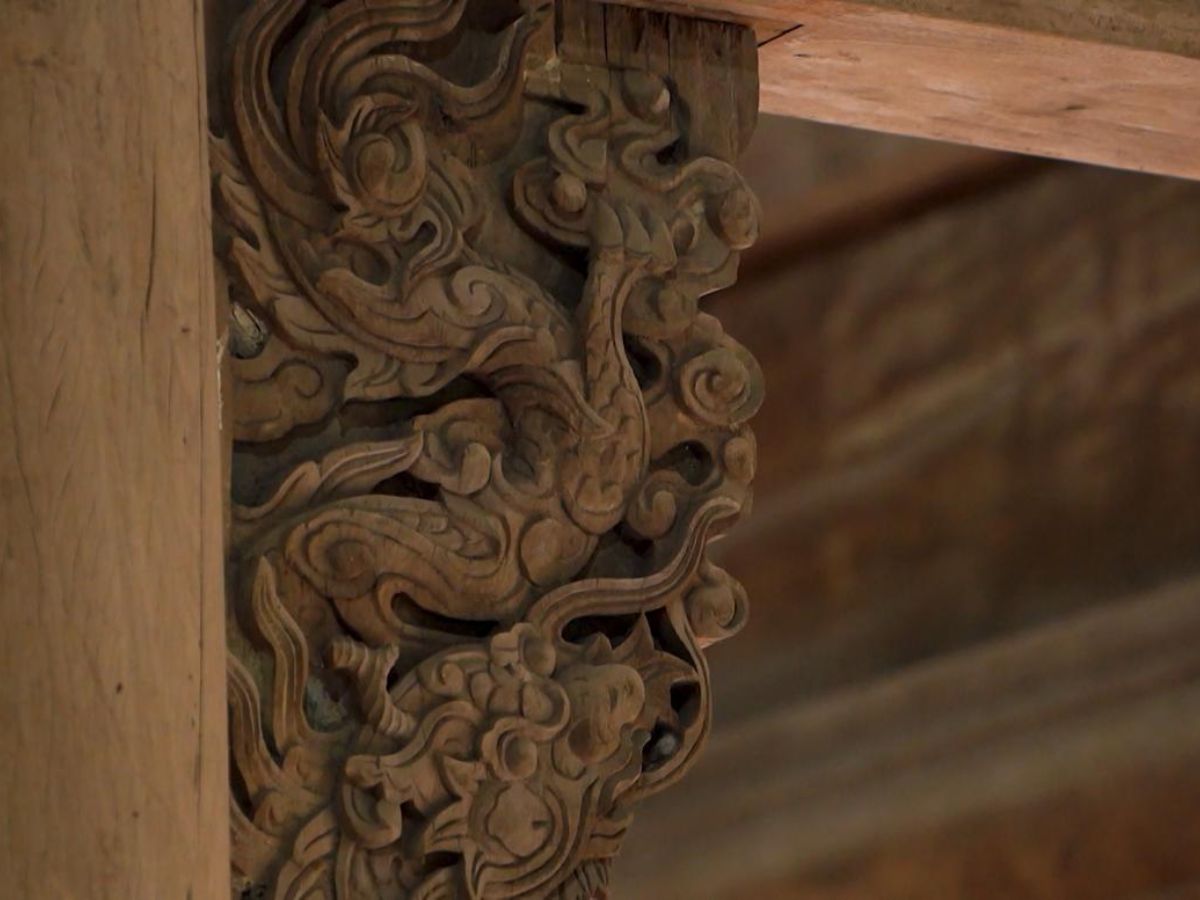
The architecture of Khinh Dao communal house bears the strong imprint of the Northern Delta. (Source: Collected)
Khinh Dao communal house is also highly valued for its unique architectural and artistic values, clearly reflecting the artistic level and construction thinking of our ancestors. Each element within the communal house complex bears the imprint of traditional Northern culture, contributing to a typical architectural heritage of the Hai Phong region.
2.1. Overview of Typical Northern Delta Communal House Architecture
Khinh Dao communal house is a typical symbol of 18th-century Northern Delta communal house architecture, clearly demonstrating the quintessence of folk craftsmanship and art through every detail. The entire structure uses traditional materials such as precious ironwood, brick walls, and horseshoe-shaped tiled roofs, skillfully combining durability and aesthetic value. The main pillars and secondary pillars are placed on high stone bases, intricately carved, both preventing moisture and creating a majestic appearance for the whole.
The layout of the communal house follows the shape of the letter 'Dinh' (丁), consisting of 5 dai bai (main hall) bays and 3 hau cung (inner sanctuary) bays, creating a harmonious balance. The dai bai roof is sloped with curved eaves, covered with dragon-scale tiles, the ridge is decorated with two dragons flanking the moon, and the roof corners are adorned with gracefully winding dragons and phoenixes. The side walls of the hau cung roof are also decorated with curved eaves, dragons flanking phoenixes, forming the characteristic 'Nhi' (二) shape.
The two imposing gates of the communal house, although subtly influenced by Western style in proportion, still retain traditional Eastern motifs. On the bronze pillars on both sides are unique couplets with 'dinh' characters, shaped like incense burners, which are rarely found in communal houses. In front of the gate is a wide courtyard, followed by the main hall, a garden, and a screen wall, creating a sacred yet airy space.
The Phuong Dinh (square pavilion) is built square, its foundation is 25 cm higher than the courtyard, with four pillars placed on stone bases shaped like flower pots. The structure has a double-eaved roof structure, curved eaves covered with pointed tiles, the interior space is airy, and is often used as a preparation area for ceremonies.
The Dai Bai consists of 5 spacious bays, with a load-bearing frame comprising four sets of trusses and four rows of pillars. The main pillars have a diameter of about 60 cm, secondary pillars 53 cm, and auxiliary pillars 30 cm, demonstrating the large scale of Khinh Dao communal house in the Hai Phong area. The system of framed doors and balusters allows natural light to spread, keeping the interior space always airy and cool.
The Hau Cung consists of 3 small bays, where the altars and memorial tablets of the village tutelary deities are placed, with a load-bearing frame comprising four sets of trusses and two rows of pillars; double-sloping roofs, chieng brackets, and overlapping upper purlins reflecting construction techniques from the late Le – early Nguyen period. The wood carvings on the eaves, rafters, beams, and beam ends are rich with floral motifs, clouds, dragons, phoenixes, and the Four Sacred Beasts (Tu Linh). The 7 large eaves of the communal house are elaborately carved, many details retain the 'chong ruong mang ca map' (overlapping purlin with shark-mouth tenon) technique, a hallmark of Northern Delta communal house architecture.
2.2. Precious Artifacts and Rare Treasures at Khinh Dao Communal House
Khinh Dao communal house possesses a large gilded 'dai tu' (horizontal lacquered board) hanging in the central bay, donated during the reign of King Bao Dai. The dai tu is intricately carved and brilliant, praising the merits of ancestors and is considered a rare treasure among Northern Delta communal houses. Most of the Han script content today is difficult to read completely, increasing its research and cultural value.
In front of the communal house is a large stone screen, engraved with a Han poem in Seal script, showcasing exquisite calligraphy and carving art. Inside and outside the communal house gate, the bronze pillars are adorned with embossed couplets with 'dinh' characters – shaped like incense burners – creating a unique and unrepeatable mark.
In the dai bai and hau cung areas, the system of lacquered horizontal boards and couplets gilded with gold is still preserved, praising the village tutelary deities and community ethics. The Hau Cung is where the memorial tablets and statues of Doctor – Hai Quoc Cong Pham Dinh Trong along with 6 deities from the Hung Vuong era are placed, making it an important spiritual center.
The people of Khinh Dao always protect and preserve the relic, considering it a common spiritual asset. During the restoration process, all elements retain their original structure, only necessary parts are added, ensuring originality and cultural value. Despite being near an industrial zone, the communal house still maintains a quiet and solemn atmosphere, serving as an important spiritual and cultural destination for locals and visitors.
3. Spiritual Significance and Traditional Festivals at Khinh Dao Communal House
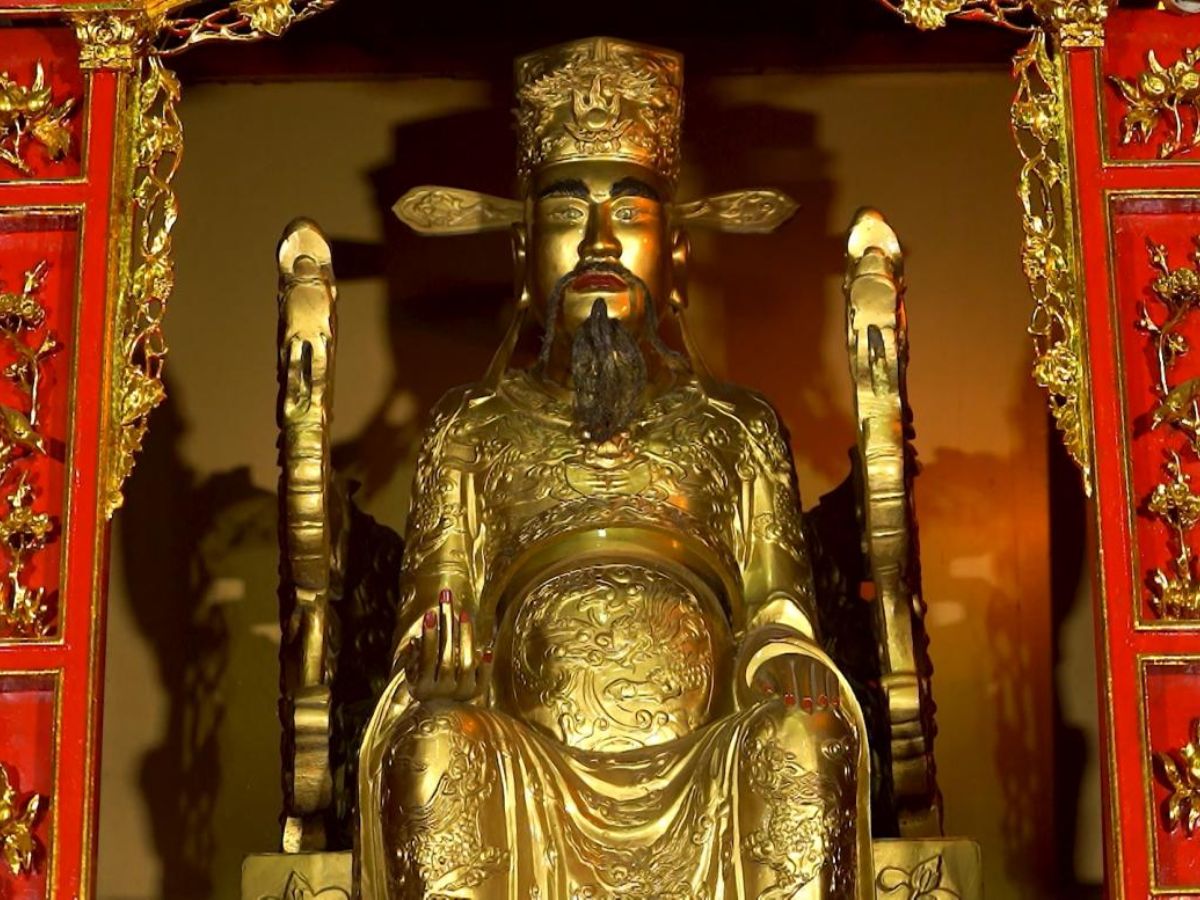
Khinh Dao Communal House preserves the long-standing traditional cultural values of the locality. (Source: Collected)
Besides historical and architectural values, Khinh Dao Communal House also plays a special role in the spiritual life of the local people through many generations. The worship rituals and traditional festivals here not only express gratitude to ancestors but also contribute to preserving the cultural identity of ancient Northern Vietnamese villages amidst modern life.
3.1. Who is worshipped at Khinh Dao Communal House?
When entering the inner sanctuary of Khinh Dao Communal House, visitors will clearly see the reverence for the deities worshipped by the villagers for generations. The temple worships Scholar – Hai Quanc Cong Pham Dinh Trong (also known as Pham Thuong Quan) along with 6 deities from the Hung Vuong era, who contributed to helping the people defend the country and were revered as tutelary deities since the mid-18th century.
Pham Dinh Trong is a special historical figure, who once held the title of Hai Quanc Cong, contributed to building the communal house, literary hall, and cultural hall, contributing to the formation of the cultural and spiritual institutions of Khinh Dao village. Therefore, he was revered as a tutelary deity and co-worshipped with the deities from the Hung Vuong era.
Khinh Dao Communal House is not only a place to worship tutelary deities but also a spiritual anchor for the community. This is where the people remember the founders of the village, maintaining a peaceful life, and is also a venue for organizing rituals for the children of the homeland and those far from home to offer incense and express gratitude for the merits of their ancestors.
3.2. Khinh Dao Communal House Festival
The festivals of Khinh Dao Communal House always take place in a solemn and sacred atmosphere, while also reflecting the unique cultural identity of ancient Northern Vietnamese villages. The festival is usually organized according to the traditional calendar, linked to the death anniversary, birthday, or decree date of the tutelary deities. Visitors who wish to attend can contact An Hung commune or the monument management board to update the specific festival schedule.
During the festival, traditional rituals such as parading the royal decree, sacrificial rites, offering incense, and reading prayers are fully maintained, combined with a vibrant festival part including folk arts and traditional games such as tug-of-war, cockfighting, wrestling, creating a joyful space that fosters community cohesion.
This is also an occasion for those far from home to return, to remember the tutelary deities together, while also helping visitors experience the traditional culture of the ancient village of An Duong, Hai Phong. The festival also has an educational meaning for the younger generation about the history and merits of the ancestors and respecting the heritage values of their homeland.
4. Notes for visiting Khinh Dao Communal House
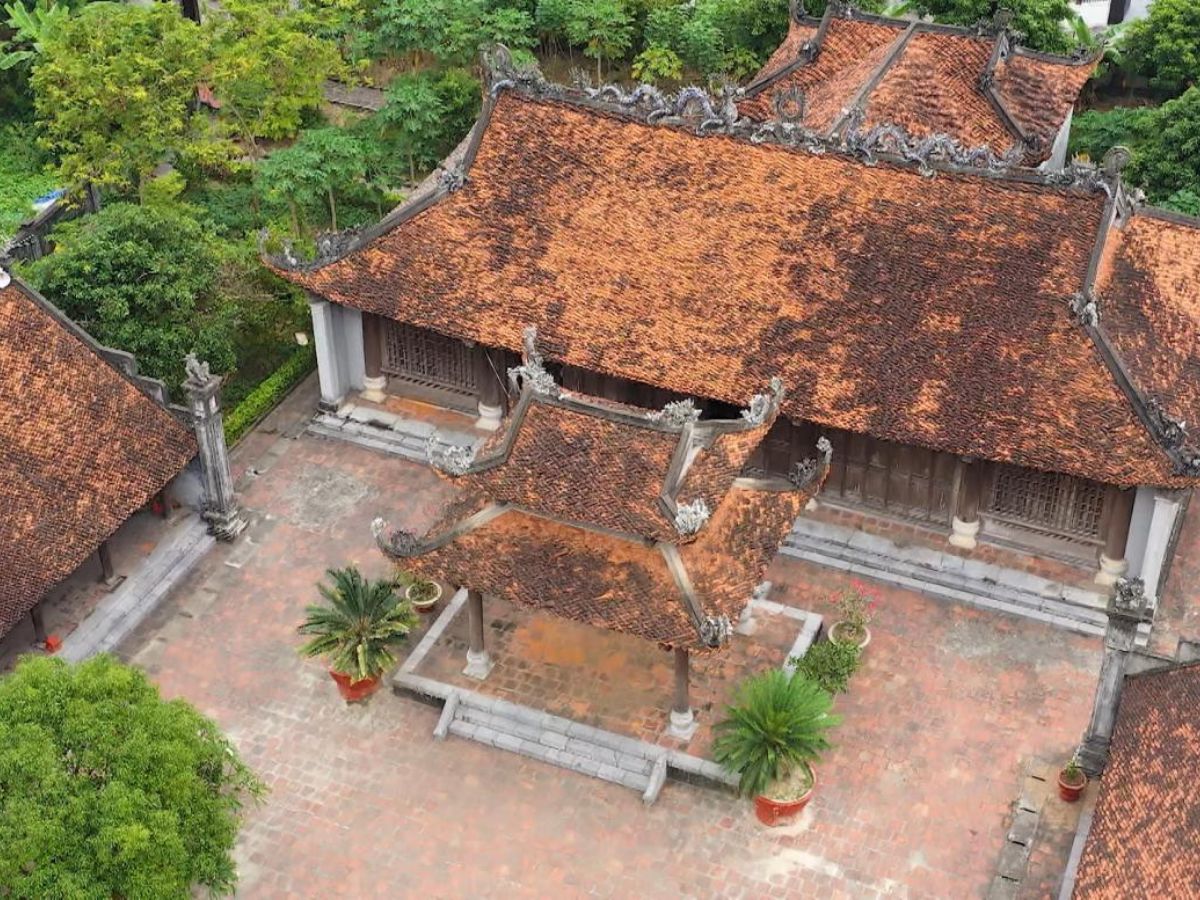
The structure impresses with its vast scale and solemn atmosphere. (Source: Collected)
To make the visit to Dinh Khinh Dao Hai Phong complete, visitors should grasp some useful experiences.
The ideal time to explore is in the cool morning or afternoon, convenient for travel, sightseeing, and photography. Although the dinh is located near the Nomura industrial park, the space around the dinh remains peaceful and green, offering a relaxing experience amidst modern life. If visitors come during a festival, they must comply with the organizers' regulations to ensure safety and order.
Regarding attire, choose modest, polite clothing, avoiding overly short, revealing, or brightly colored outfits when entering the inner sanctum and main hall. During the visit, visitors should maintain order, speak softly, refrain from smoking, and avoid littering within the dinh's premises, showing respect for the spiritual space.
If you wish to offer incense, prepare vegetarian offerings, fruits, and light incense at designated spots. Avoid sticking incense into idols or touching ancient artifacts such as inscribed boards, decorative panels, or statues, to protect the historical value of the relic. When taking photos, limit the use of flash indoors and avoid interfering with areas where Buddhists or locals are offering prayers, showing respect and preserving the solemn atmosphere of Dinh Khinh Dao .
5. Suggestions for tourism in Hai Phong and visiting Dinh Khinh Dao
The itinerary for visiting Dinh Khinh Dao Hai Phong will be more complete when visitors combine it with exploring nearby historical sites. Right in Khinh Dao village, you can visit Pham Thuong Quan Temple, which worships Scholar – Maritime Official Pham Dinh Trong, along with Chua Ca (Main Pagoda), creating a unique chain of dinh – temple – pagoda amidst the peaceful ancient village landscape.
Dinh Khinh Dao is one of the typical dinh structures of Hai Phong, part of the system of over 100 national historical and cultural relics in the city. Visitors can plan to visit other historical sites and attractions in the central Hai Phong area, or explore other famous dinh and pagodas depending on their interests and time.
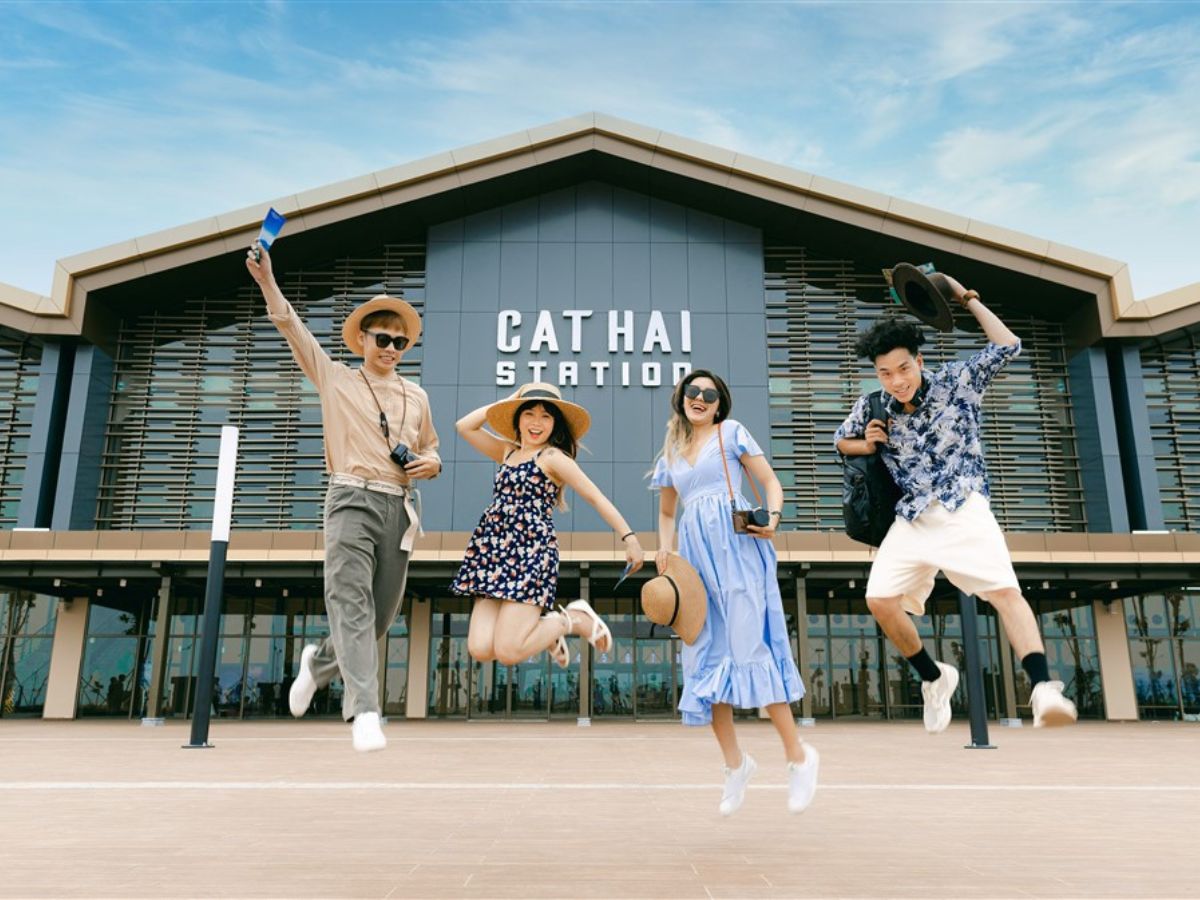
Sun World Cable Car is the ideal way to admire the panoramic view of the area.
(Source: Collected)
If time permits, the itinerary can be extended with the route Hai Phong – Kinh Dao Communal House – ancient villages in the suburbs, then continue the journey to Cat Ba Island by Sun World cable car, which is both convenient for travel and allows you to fully enjoy the poetic scenery of Lan Ha Bay and the unique coastal attractions of Hai Phong.
Kinh Dao Communal House is one of Hai Phong's prominent ancient relics, preserving many traditional cultural, historical, and spiritual values. With its ancient architecture and unique folk festivals, it offers visitors an attractive journey to explore the spiritual life of the local people.


