




1. Introduction to Cat Ba National Park
1.1. Location, formation history, and special role
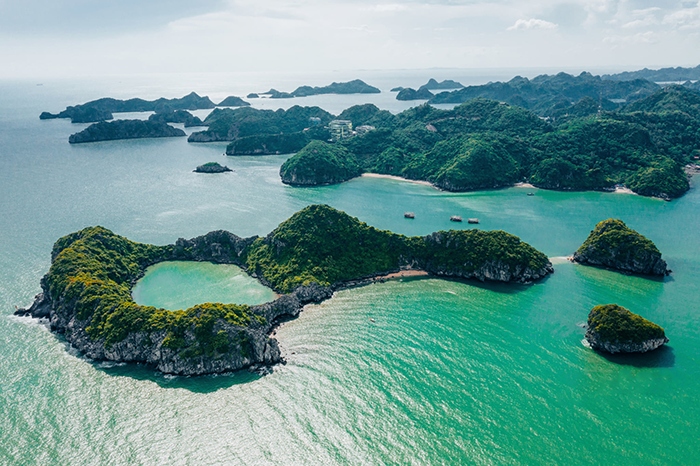
Unique forest and marine ecosystem of Cat Ba National Park. (Source: Collected)
Cat Ba National Park is located south of Ha Long Bay, on Cat Ba Island in Cat Hai Special Administrative Region, Hai Phong City. It is one of the important conservation areas of Northern Vietnam, notable for its unique limestone karst topography, dense tropical forests, and rich island marine ecosystems. Established in 1986, the national park plays a crucial role in preserving the biological values of the region, especially the rare Cat Ba Langur.
In 2004, UNESCO recognized Cat Ba as a World Biosphere Reserve, affirming its importance to the global ecosystem. With a combination of pristine nature and fresh climate, Cat Ba National Park has become an attractive destination for visitors who love exploration and outdoor activities such as trekking, wildlife observation, and nature discovery.
1.2. Scale of Area and Functional Subdivisions
Cat Ba National Park covers an area of approximately 263 km², including over 173 km² of land and about 90 km² of marine area. The entire region is divided into several subdivisions with clear functions, such as strictly protected zones, ecological restoration zones, and service-administrative zones. Each subdivision has its own mission, from conserving rare flora and fauna to serving scientific research and developing sustainable ecotourism.
The park is open to visitors from 7 AM to 5 PM daily.
Entrance ticket prices for adults are 160,000 VND and 80,000 VND for children.
Some prominent attractions within the park area, such as Ngu Lam Peak, Kim Giao Forest, and Trung Trang Cave, have separate entrance fees of 120,000 VND for adults and 60,000 VND for children.
2. Ecosystem of Cat Ba National Park
2.1. Typical Ecosystems and Endemic Species
Cat Ba National Park is considered one of the areas with the most outstanding biodiversity in Vietnam, where many characteristic ecosystems converge. The limestone mountain forest ecosystem covers most of the land area with dense green forests and unique karst topography.
Besides, Cat Ba also possesses mangrove ecosystems, coastal melaleuca forests, tidal flats, seasonal wetlands, and marine ecosystems with colorful coral reefs.
Cat Ba National Park is home to over 2,300 species of flora and fauna. Among these are over 282 forest animal species, over 538 marine benthic animal species, nearly 196 marine fish species, over 771 terrestrial plant species, 23 mangrove plant species, 75 seaweed species, and over 177 coral species. These figures clearly demonstrate the richness and diversity of the ecosystem in Cat Ba.
Cat Ba is famous for many rare endemic species listed in the Vietnam Red Book. The most prominent is the White-headed Langur, also known as the Cat Ba Langur, the only endemic primate species found exclusively in this area.
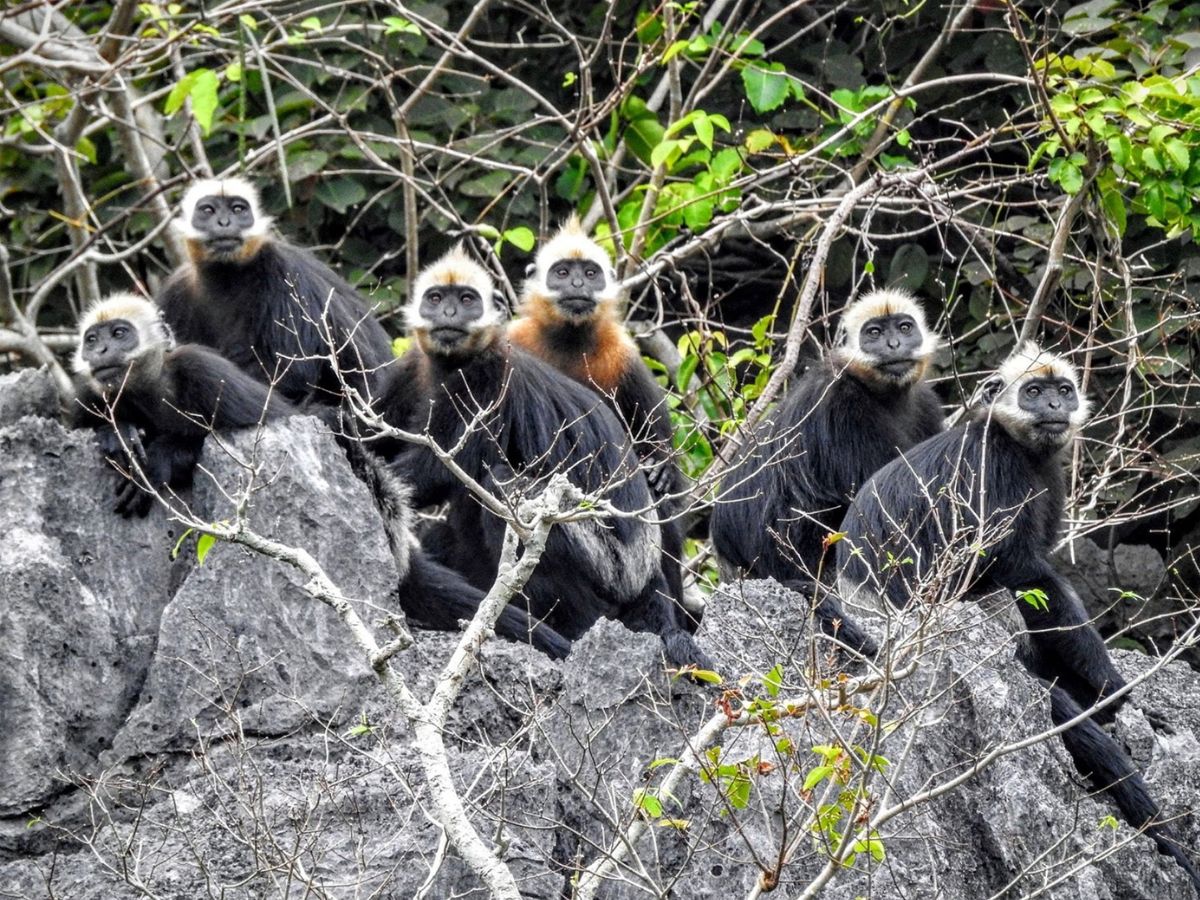
Rare Langur individuals on Cat Ba Island. (Source: Collected)
The flora here also has many endemic species such as Smilax glabra, Fokienia hodginsii, Lathyrus pratensis, and Spondias mombin. Particularly, the Trung Trang area is famous for its Fokienia hodginsii forests distributed in large clusters, creating the characteristic beauty of the core area of Cat Ba National Park.
2.2. Outstanding geological and geomorphological values
Cat Ba National Park possesses a characteristic limestone terrain extending from the Ha Long Bay area, creating a unique landscape that few places have. The overlapping limestone mountains with an average height of about 150 m, including Cao Vong peak at about 322 m, give Cat Ba a strong yet poetic beauty.
Between the mountain ranges are small, green valleys, natural caves formed over millions of years, and white sandy beaches embracing clear blue waters, creating a harmonious natural picture between forest and sea. When visiting Cat Ba, tourists will have the opportunity to admire impressive sheer cliffs, explore vast caves, or boat on the enchanting jade-green sea.
3. How to get to Cat Ba National Park
3.1. Traveling to Hai Phong
To begin the journey to explore Cat Ba National Park, tourists need to travel to Hai Phong city, which has a convenient transportation system connecting to Cat Ba Island. From Hanoi and surrounding provinces, tourists can choose to drive their own car via the Hanoi – Hai Phong expressway to save time and have a flexible schedule.
In addition, high-quality bus and limousine services departing daily from Hanoi and neighboring cities are also suitable options for those who want to relax comfortably throughout the journey. Here are some reputable bus companies for the Cat Ba route:
Cat Ba Express: +84 84 824 4999
Daiichi Travel: +84 96 100 4709
Hoang Long Limousine: +84 97 324 4078 or hotline 1900 1085
The train from Hanoi station to Hai Phong station is also a safe and interesting option, allowing tourists to enjoy the scenery on the way before continuing their journey to the island.
3.2. Traveling to Cat Ba Island

The cable car route helps you move quickly and conveniently to Cat Ba Island. (Source: Collected)
From Hai Phong, tourists can choose the Sun World Cat Ba cable car or travel by ferry to the island. The Sun World Cat Ba cable car system offers a modern and convenient experience, with a travel time of only about 15 minutes, while allowing visitors to admire the panoramic view of the sea and islands from above.
For tourists bringing their personal vehicles or wishing to enjoy the feeling of floating at sea, the ferry is a suitable choice. The ferry travel time is about 30 minutes, allowing tourists to relax and enjoy the scenery before setting foot on Cat Ba Island and continuing their journey to explore Cat Ba National Park.
4. Unmissable experiences at Cat Ba National Park
4.1. Trekking and conquering famous routes
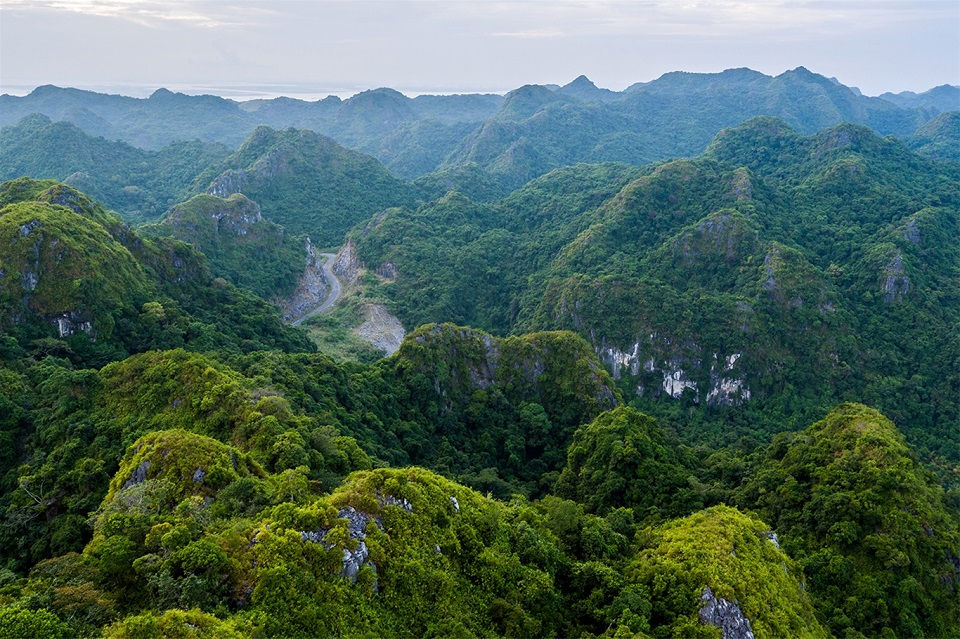
Majestic natural scenery of Cat Ba National Park. (Source: Collected)
Cat Ba National Park is a paradise for those who love trekking and exploring nature. One of the routes chosen by many tourists is the journey to conquer Cao Vong peak, which is about 322 m high and offers a panoramic view of the green forest blending with the clear sea in the distance.
Besides, the journey from Trung Trang valley into the core forest area is also a worthwhile experience, as visitors pass through many beautiful check-in spots and fully appreciate the pristine nature of the primeval Cat Ba forest.
4.2. Explore unique fauna, valleys, and caves
Cat Ba National Park boasts a diverse cave system, formed by the long-term weathering of limestone. Trung Trang Cave is one of the prominent attractions, with a length of 300 m and a system of stalactites creating a magical space.
Hoa Cuong Cave impresses with its high vaulted structure and naturally cool air, making it very suitable for those who love exploration. The Suoi Ngu Lam area offers a more peaceful beauty with clear water flowing through the valley, creating a relaxing feeling amidst nature.
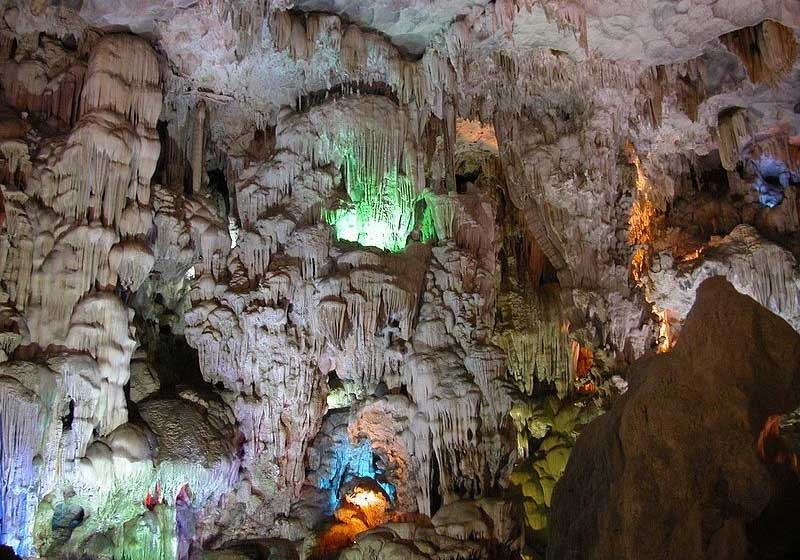
Unique limestone stalactites of Hoa Cuong, Cat Ba. (Source: Collected)
4.3. Ecological experience, research, and flora and fauna observation activities
Visitors to Cat Ba can participate in ecological experience activities such as going into the forest with rangers, learning about conservation efforts, and observing flora and fauna in their natural environment. One of the most beloved activities is tracking the white-headed langur, the world's only endemic primate species with just over 60 individuals remaining in Cat Ba.
With its rich biodiversity, Cat Ba National Park is truly an ideal place for nature lovers who want to learn and delve deeper into the characteristic marine forest ecosystem of Northern Vietnam.
5. Tips for a trip to Cat Ba National Park
5.1. Best time to visit, what to wear, and what to bring
The ideal time to visit Cat Ba National Park is spring from March to May and autumn from September to November. These are two periods with mild, cool weather and low rainfall, very suitable for trekking, cave exploration, or walking amidst the green forest canopy.
Before starting your journey, visitors should prepare comfortable clothing, prioritizing sweat-wicking and easy-to-move-in materials. A pair of trekking shoes with good grip is essential, especially if you plan to conquer routes like Vong Mountain peak or trek through Kim Giao forest.
Additionally, sunscreen, a wide-brimmed hat, personal drinking water, a light jacket, and some quick snacks will make the trip more enjoyable. For photography enthusiasts, a compact camera or a fully charged phone will help capture beautiful moments throughout the exploration of Cat Ba National Park.
5.2. Environmental protection and safety notes
Cat Ba National Park is an important conservation area, so every visitor needs to be conscious of preserving the environment throughout their trip. Visitors should stick to designated trails, avoid straying from the group or venturing deep into restricted areas to ensure safety and avoid disturbing the forest ecosystem.
Minimizing the use of single-use plastics, not littering in streams or along paths, and not picking plants in the forest are important actions that contribute to protecting the nature here.
With its rich ecosystem, rare wild beauty, and countless interesting experiences, Cat Ba National Park is sure to captivate any visitor. If you are planning a complete trip amidst lush green nature, don't forget to visit Cat Ba National Park to fully experience the unique beauty of this pearl island's nature.


