




1. Where is An Lu Temple? Discover its location and geographical significance
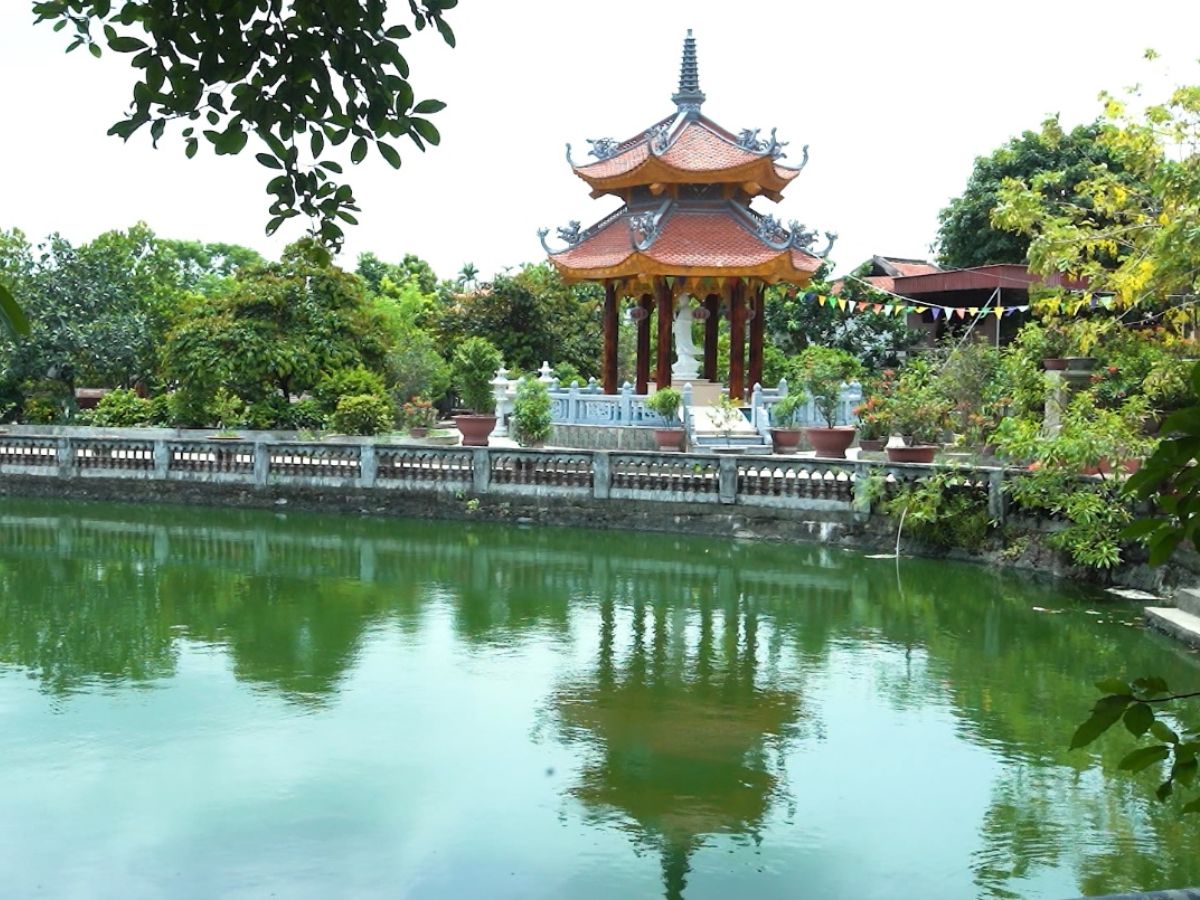
An Lu Temple is a prominent spiritual destination, associated with the peaceful countryside space by the Cam River. (Source: Collected)
An Lu Temple is located in An Lu commune, Thuy Nguyen district, Hai Phong city, situated on alluvial land along the Cam River. Since 1990, the temple has been recognized as a city-level historical-cultural relic, becoming an important spiritual destination and an attractive tourist spot. The space around the temple harmoniously blends the peaceful countryside with the bustling Cam River, creating a landscape that is both serene and lively.
The Cam River has long been a major transportation route, as well as a place for cultural and economic exchange in the Thuy Nguyen – Hai Phong region. On these fertile alluvial plains, residents began cultivating, establishing villages, and developing their livelihoods right after the Bach Dang victory in 1288, when the Tran dynasty encouraged the expansion of the coastal areas east of the Northern Delta.
This region is notable for two traditional crafts: rice cultivation on fertile alluvial banks and fishing, net casting, relying on the abundant resources from the Cam River. In this context, An Lu Temple became the center of religious activities, worshipping the village tutelary deity, and a place to pray for peace, favorable harvests, and prosperity for the community. The name “An Lu” itself symbolizes the people's aspiration for peace and prosperity by the river.
2. History of An Lu Temple – The Legend of Physician Tue Tinh
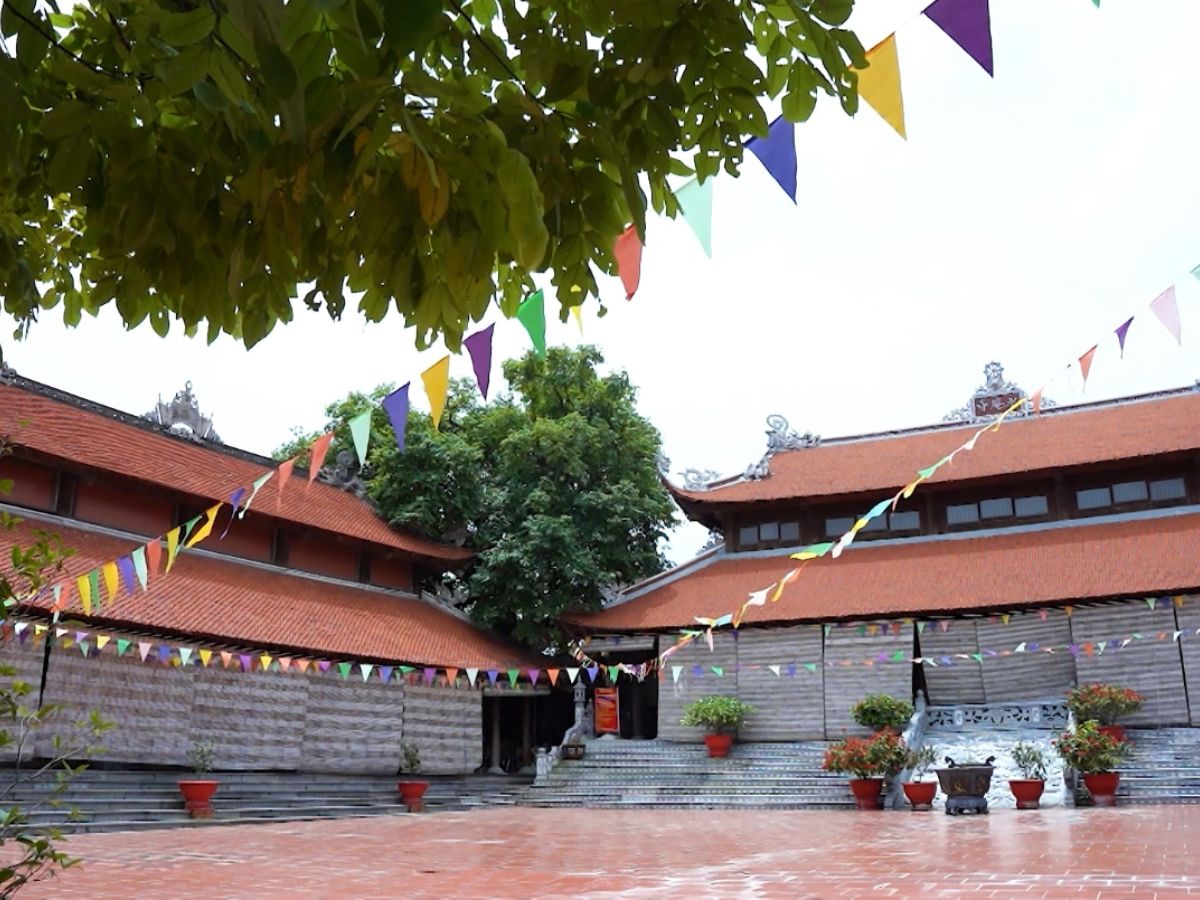
The space of An Lu Temple harmonizes the tranquility of the countryside with the rhythm of the Cam River. (Source: Collected)
The history of An Lu Temple is closely linked with legends and the deep reverence of the people for physician Tue Tinh – a great symbol of Vietnamese traditional medicine. Through the flow of time, the temple not only preserves the imprint of healing and saving people but also reflects the spiritual beliefs and unique cultural identity of the people in the coastal region of Hai Phong.
2.1. The legend of physician Tue Tinh and the process of establishing the temple
An Lu Temple is where physician and monk Tue Tinh is worshipped, one of two famous figures honored as the “Saint of Southern Medicine” in the history of Vietnamese traditional medicine. Although Tue Tinh was originally from Cam Giang, Hai Duong, the residents of An Lu considered him the village guardian spirit thanks to a special legend.
According to the folk story, after the Bach Dang victory in 1288, Pham Van Giai, along with four people from Nghia Lu village (Hai Duong), reclaimed the land that is now An Lu with the local community. Seven years later, a major epidemic broke out, causing many people to fall ill, and some had to return to their old villages.
The villagers remembered that Tue Tinh had left behind a medicine to save people in their old village, so they applied this remedy: they roasted the herbs until golden, then buried them in the ground, and brewed a concentrated decoction for the sick to drink. Thanks to this, the epidemic gradually subsided, and life returned to peace. To commemorate his merit in saving the people, the villagers of An Lu built a temple to worship Tue Tinh as the village guardian spirit, and named the village “An Lu” with the meaning of wishing for a peaceful and prosperous life.
2.2. Reconstructions and significant historical milestones
Over many centuries, the structures dedicated to Tue Tinh in An Lu were severely damaged by storms, floods, and wars – a common characteristic of ancient coastal relics in the North of Vietnam.
A significant milestone was in early 1948, when the divine tablet of Tue Tinh was moved to be jointly worshipped at An Bach Temple, which honors Hung Dao Dai Vuong Tran Quoc Tuan and his son, becoming the main center of worship in the region. This also affirmed the people's connection to the relic and their reverence for physician Tue Tinh.
In 1990, An Lu Temple was recognized as a historical and cultural relic of Hai Phong city, demonstrating the temple's important role in community life and the preservation of folk cultural values. This event not only contributed to the maintenance of the temple but also raised awareness of preserving the local traditional cultural identity.
3. Architecture of An Lu Temple and precious artifacts preserved
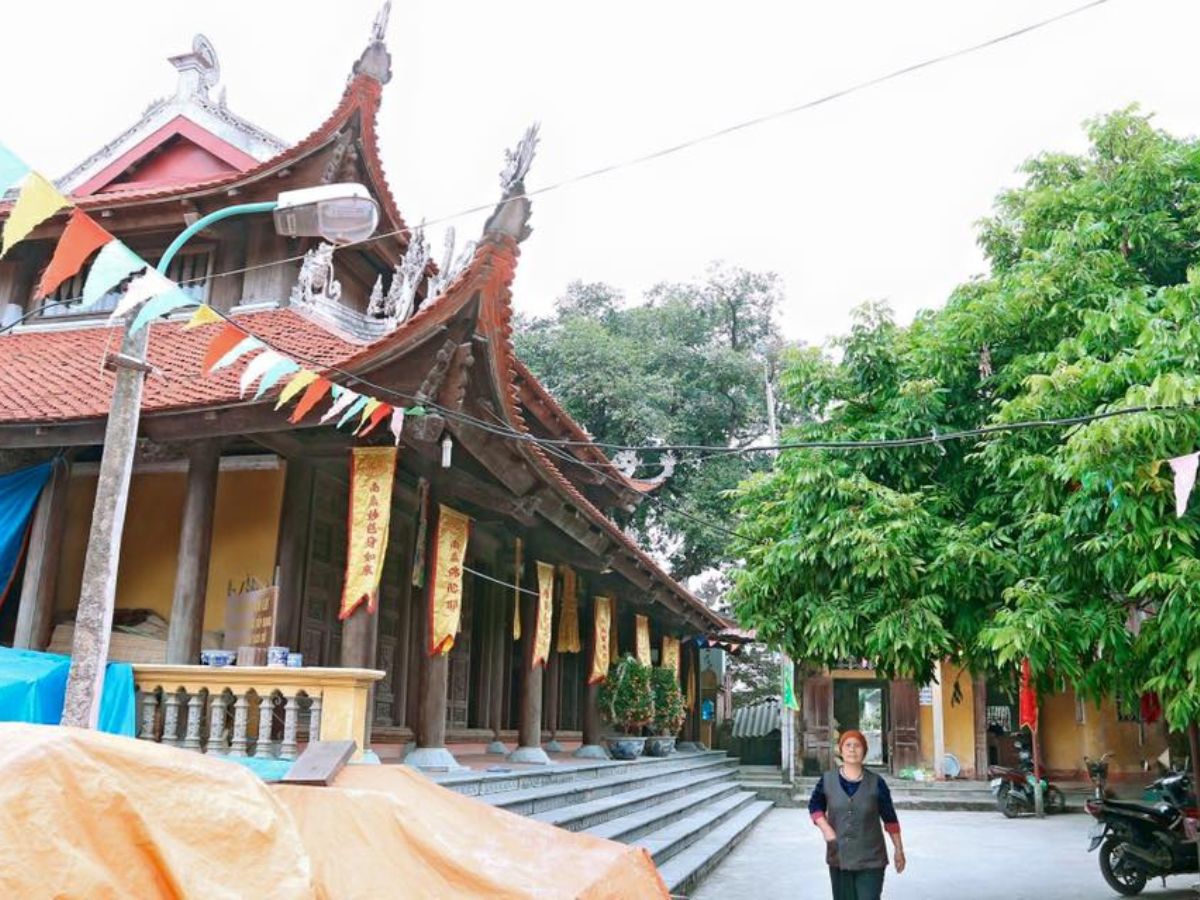
An Lu Temple attracts tourists with its tranquil yet vibrant landscape along the Cam River. (Source: Collected)
Not only possessing spiritual value, An Lu Temple also makes a strong impression with its harmonious traditional architecture and a system of precious ancient artifacts preserved through many generations. Each construction item, each royal decree, and worship object here contributes to vividly recreating the history, beliefs, and artistic level of the Red River Delta residents.
3.1. Traditional architectural space typical of the Red River Delta
Upon entering An Lu Temple, visitors will immediately feel the traditional temple-communal house architectural style characteristic of the Red River Delta. The temple is designed with a closed, balanced layout, featuring main components such as the nghi môn (gate), temple yard, tiền tế (front hall), trung từ (middle sanctuary), and hậu cung (rear sanctuary), creating a solemn and sacred space that clearly reflects local spiritual life.
The structures in the temple use red tile roofs, brick walls, and traditional ironwood frames, intricately carved on the rafters, beams, and eaves. Motifs of four sacred animals, clouds, flowers, leaves, and fire are meticulously crafted, harmoniously combined with the red of the tiles and the brown of the wood, creating a beauty that is both ancient and elegant.
The temple grounds are spacious, surrounded by lush green trees, located on the banks of the Cam River, offering a quiet space suitable for sightseeing, historical research, and spiritual practices. From here, visitors can admire the gently flowing river, feeling the connection between the relic and the lives of the riverside residents.
3.2. Special collection of royal decrees and ancient artifacts
A special highlight of An Lu Temple is its treasure trove of ancient artifacts and royal decrees preserved intact over centuries. The temple currently houses 7 royal decrees from the Nguyen Dynasty, including 4 decrees dedicated to the renowned physician Tue Tinh, with reign titles: Tu Duc (1853), Dong Khanh (1887), Duy Tan (1909), and Khai Dinh (1924), reflecting the community's long-standing veneration of the physician.
Besides royal decrees, the temple also preserves many valuable wooden artifacts and worship items, notably the palanquin set for worshipping Tue Tinh and other revered figures, intricately crafted to showcase the skillful techniques of ancient artisans. The statue of the renowned physician Tue Tinh is created in a round sculpture style, nearly life-sized, wearing the attire of a civil official from the late 19th century, exuding a contemplative and benevolent aura, truly reflecting the physician's image in the hearts of the people.
The remaining system of horizontal lacquered boards, parallel sentences, and worship items gilded with gold leaf in the temple not only demonstrates traditional artistic skill but also serves as proof of the community's reverence for their ancestors. These artifacts are valuable resources, contributing to the study of village history, the deification of the physician Tue Tinh, and the art of sculpture and gold leaf application during the Nguyen Dynasty.
4. Spiritual and Cultural Experience at An Lu Temple
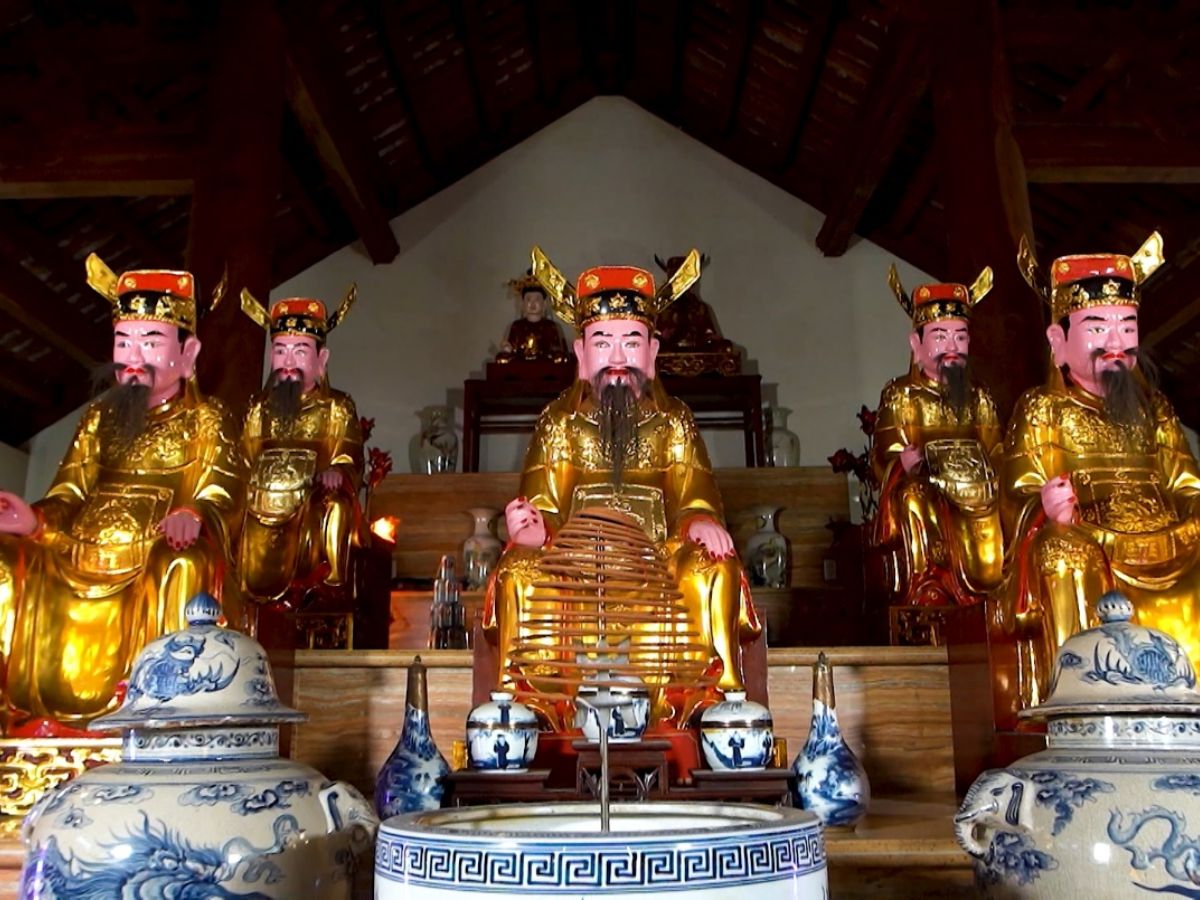
An Lu Temple combines spiritual and sightseeing values in a characteristic riverside setting. (Source: Collected)
Not only a historical relic, An Lu Temple is also a space where folk beliefs and community cultural activities of the people of Thuy Nguyen region intersect. Each spiritual activity, each festival season here contributes to preserving the identity of Bac Bo, bringing visitors profound and meaningful experiences.
4.1. Unique Spiritual Activities
An Lu Temple is a sacred spiritual center, closely associated with the community life of An Lu commune and the Thuy Nguyen area, contributing to the preservation and promotion of Bac Bo's cultural traditions. Beyond its historical value, it is also a spiritual space for people and visitors to offer incense, make offerings, and pray for health, peace, favorable harvests, and harmonious weather.
The rituals commemorating the physician Tue Tinh – known as the Saint of Southern Medicine, embodying medical ethics and compassion – are always solemnly organized. During festivals, full moon days, or the beginning of the month, activities such as incense offering, sacrificial rites, and reading of eulogies are meticulously carried out, demonstrating the spirit of "drinking water, remembering the source," honoring the merits of ancestors.
The people of An Lu still maintain many traditional customs, including New Year's offerings, peace-praying ceremonies, and thanksgiving rituals. These ceremonies are often combined with folk cultural activities during village festivals, creating a holistic cultural space that is both solemn and rich in the distinctive folk colors of the Northern delta region.
4.2. An Lu Temple Festival
The An Lu Temple Festival takes place annually, starting from the 11th day of the 11th lunar month, lasting for 3 to 5 days depending on the conditions of each year. This is an occasion for the community to remember and honor Hung Dao Dai Vuong Tran Quoc Tuan, An Sinh Vuong Tran Lieu – father of Tran Hung Dao, and the physician Tue Tinh.
Traditional rituals such as offerings and incense burning at the temple, communal houses, and other places of worship within the village are strictly performed according to Bac Bo rituals, ensuring solemnity and preserving national cultural identity.
The festival also captivates with many unique folk cultural activities. The swing game always attracts participation from all generations, while the hat dum (male-female duet singing) – a traditional call-and-response folk song of Thuy Nguyen – is still performed and preserved. Additionally, games like cockfighting, Chinese chess, tug-of-war, and many other folk games create a lively and joyful atmosphere, while also connecting the community and preserving and spreading the cultural values of An Lu village.
5. An Lu Temple on the Hai Phong Travel Itinerary
For visitors who love history, culture, and beliefs, An Lu Temple offers many unique values. The temple is not only a typical spiritual relic but is also associated with the image of the physician Tue Tinh – an important symbol of Vietnamese traditional medicine. Furthermore, this site clearly reflects the process of land reclamation after the Bach Dang victory, the formation of villages, temple construction, epidemic response, and community building by the ancient people.
In terms of architecture, An Lu Temple stands out with its traditional Northern delta style, combined with a system of 7 ancient royal decrees, statues of Tue Tinh, palanquins, horizontal lacquered boards, and couplets – all valuable resources for research and sightseeing. The temple space is also linked to characteristic cultural and festival activities, starting from the 11th day of the 11th lunar month, with folk games such as hat dum, swing, cockfighting, and Chinese chess, helping visitors experience the traditional life of the riverside villages in Thuy Nguyen.
An Lu Temple is suitable for many types of visitors: students seeking to learn about local history and village beliefs, culture enthusiasts wanting to explore the formation of villages and the system of temples honoring celebrities, as well as pilgrims seeking a quiet and peaceful space for worship and prayer for peace.
On the journey to explore Thuy Nguyen, visitors can combine visits to nearby relics such as Nam Trieu Temple and An Bach Temple – places that worship famous generals of the Tran dynasty and organize their own festivals. Additionally, experiencing the scenery of the Cam River, riverside villages, and the rural life of the port land offers a sense of closeness and relaxation. Don't forget to savor Thuy Nguyen – Hai Phong's specialty cuisine such as fresh seafood, crab noodle soup (banh da cua), fish noodle soup (bun ca), crab spring rolls (nem cua be), and unique river fish dishes.
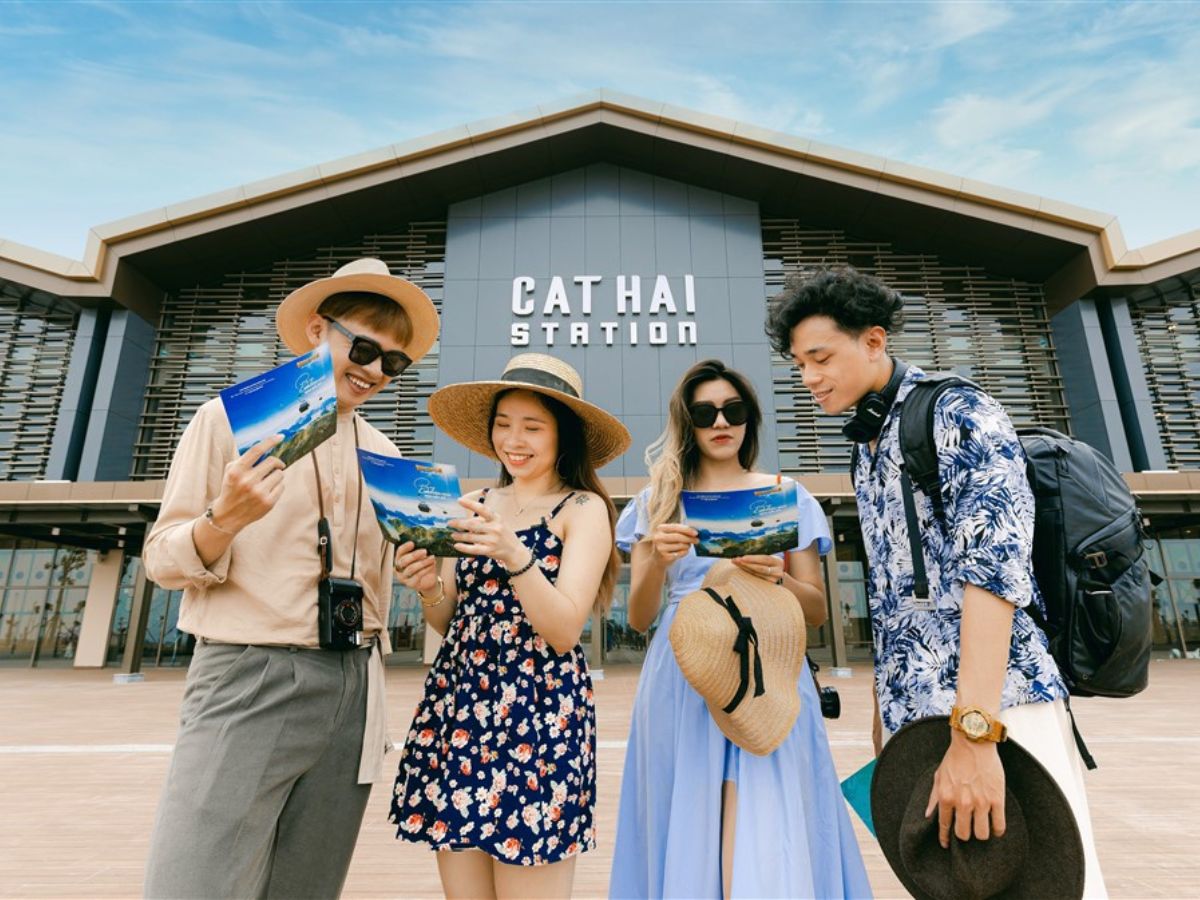
Sun World opens a special sightseeing journey with impressive views.
(Source: Collected)
If there is more time, tourists can extend their journey to Cat Ba Island, Lan Ha Bay, Cat Ba National Park. Currently, the Sun World Cat Hai – Phu Long cable car is a quick and convenient transportation option, allowing you to admire the beautiful scenery while saving time compared to traditional ferries, making the trip more complete and multi-experienced.
6. Experience visiting An Lu Temple
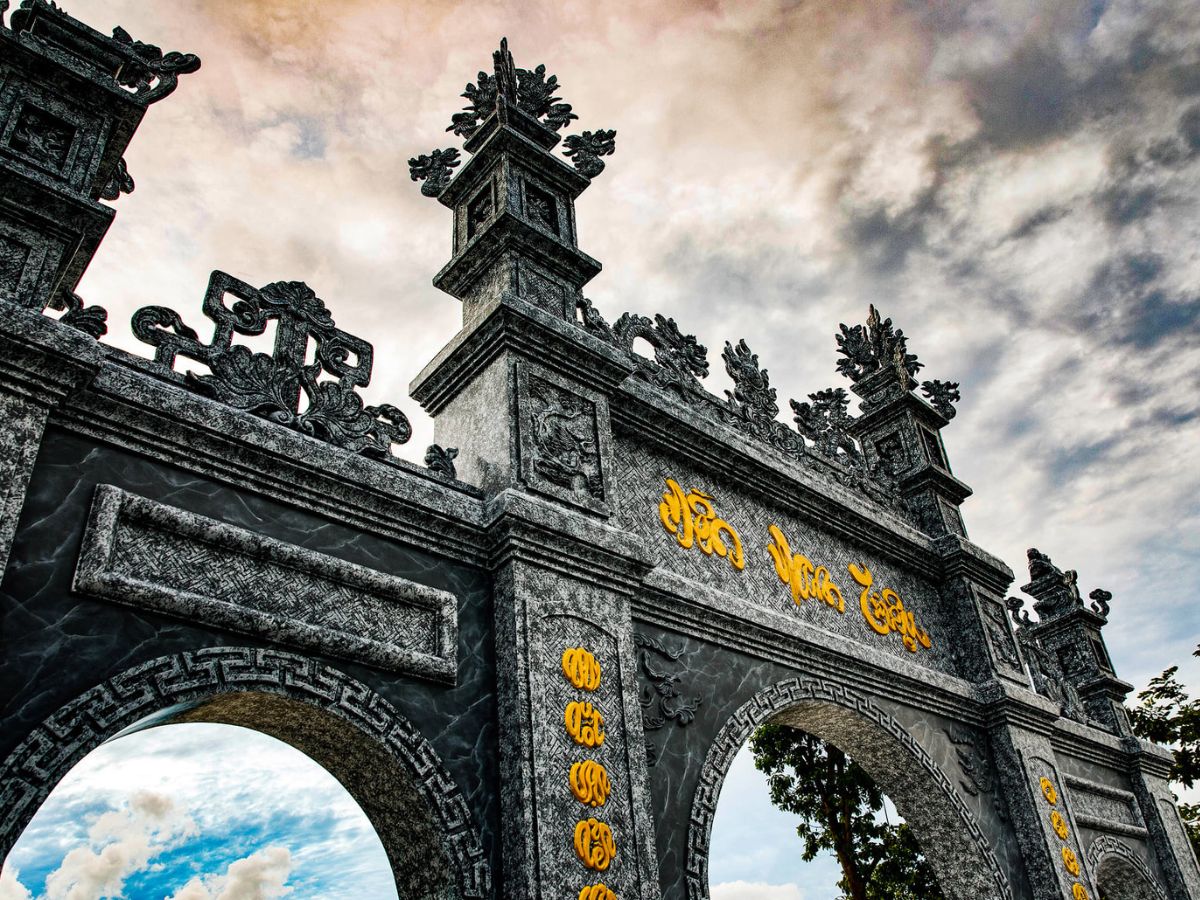
The landscape around An Lu Temple creates a harmonious interplay between nature and riverside life. (Source: Collected)
To fully appreciate the historical, architectural, and spiritual values of An Lu Temple, visitors should prepare thoroughly before visiting. A few small tips below will help make the trip solemn, convenient, and leave many beautiful impressions in the journey of discovering local cultural heritage.
To make the visit to An Lu Temple complete and meaningful, visitors should prepare polite and modest attire, avoiding overly short or revealing clothing, and choose comfortable footwear such as sandals or sneakers, as you may need to walk on stairs or across the temple grounds.
When entering the temple, maintain order, speak softly, and limit laughter to respect the sacred space. Absolutely do not touch the altars, thrones, honorific tablets, royal decrees, or other worship items. Offerings and incense should be placed in designated areas; do not place offerings or scatter money on the altar arbitrarily. Avoid bringing food and drinks, and do not smoke in the main hall. Additionally, refrain from filming or photographing during main ceremonies unless permitted.
The ideal time to visit is during the festival on the 11th day of the 11th lunar month, when visitors can enjoy a lively atmosphere with procession rituals, ceremonies, and folk games such as hat dum (singing duels), swing, cockfighting, and Chinese chess, offering a unique cultural experience. On regular days, the temple offers a quiet, ancient atmosphere, suitable for photographing the architecture, riverside scenery, and surrounding greenery.
Impressive photo opportunities include: the overall view of the temple gate, the courtyard, the tiled roofs, the carved wooden details, honorific tablets, and couplets. The statue of the renowned physician Tue Tinh is also an important highlight, but maintain a respectful distance and avoid direct flash to protect the artifact. During festivals, images of hat dum and folk games against the backdrop of riverside villages will be unforgettable memories for any visitor.
An Lu Temple is one of Hai Phong's typical historical and spiritual sites, attracting a large number of visitors for sightseeing and worship each year. With its ancient space, characteristic architecture, and preserved cultural values, it has become an ideal destination for those who wish to explore the historical depth and spiritual life of the people in the port land.


