




1. Overview of Sa Pa Tourism
Sa Pa is one of the most outstanding destinations of Vietnamese tourism, located at an altitude of over 1,500 m above sea level, in Lao Cai province. It impresses with its cool climate year-round, majestic mountainous landscape, and terraced fields stretching along the mountainside, creating a characteristic natural picture of the Northwest region.
The average temperature here ranges from 15 to 20 degrees Celsius, although it can vary slightly by season, with the highest temperature in summer around 20 to 25°C and the lowest temperature in winter dropping to 10°C or lower. Therefore, the weather in Sa Pa is very suitable for resort and nature exploration trips.
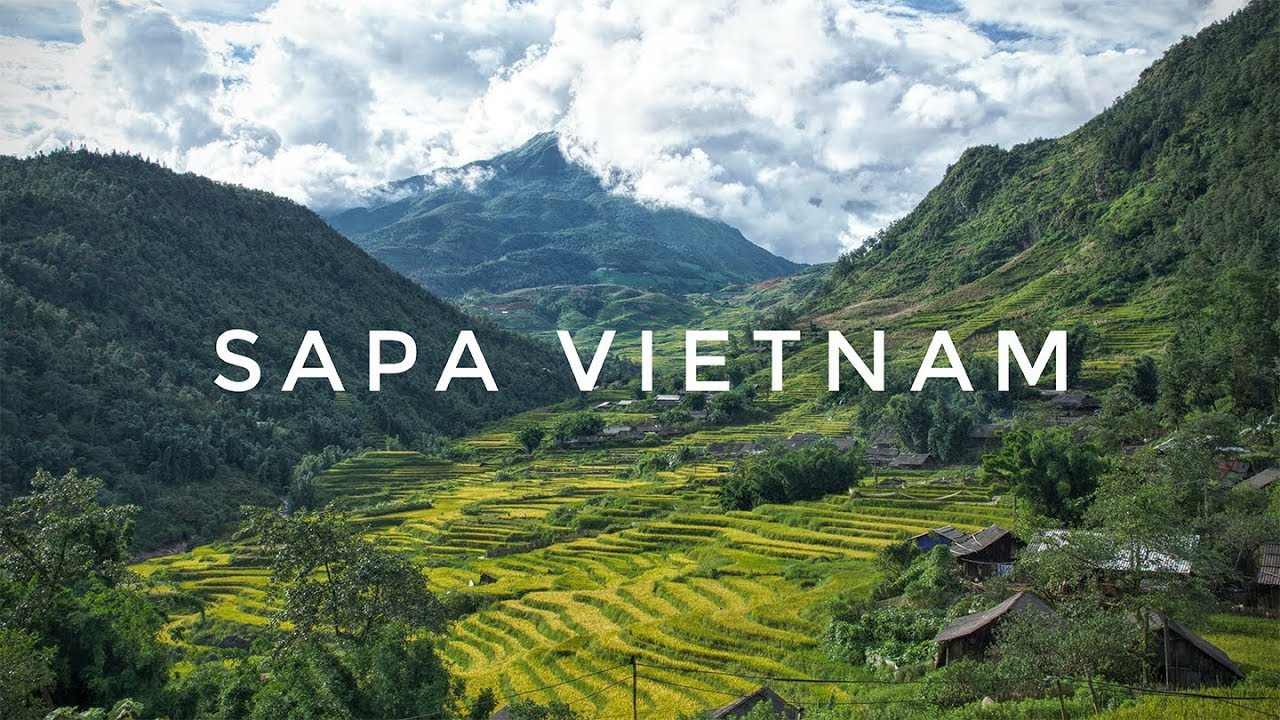
Sa Pa – a destination that converges majestic nature, indigenous culture, and diverse tourism experiences. (Source: Collected)
Beyond its natural attractions, Sa Pa tourism also stands out for its deep indigenous culture. Ethnic communities such as the H'Mong, Red Dao, Giay… still preserve their way of life, traditional costumes, and customs, offering visitors close and authentic experiences through activities like village trekking, homestays, or exploring highland cuisine.
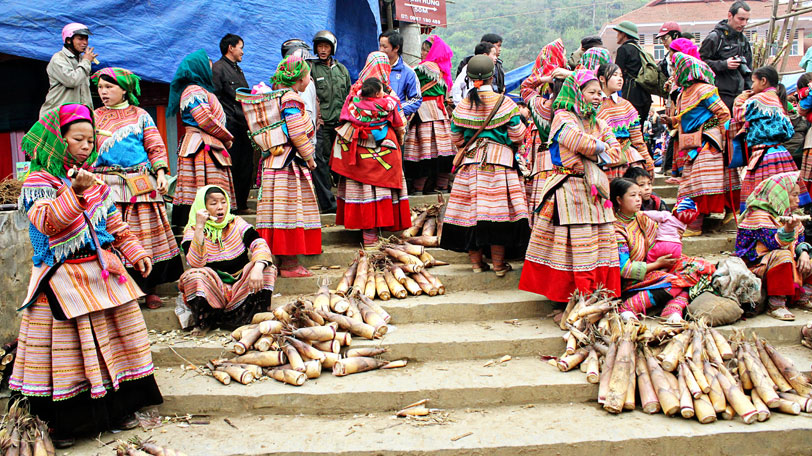
Amidst the mountains and forests of Sa Pa, the rustic charm of the H'Mong people creates depth for the exploration journey. (Source: Collected)
Sa Pa's scenery changes distinctly with the seasons. Spring is vibrant with flowers, summer with lush green terraced fields, autumn with golden ripe rice, and winter covered in cold mist, sometimes with snow and ice. Along with the strong development of transportation infrastructure, accommodation services, and local experiences, Sa Pa is increasingly becoming an ideal destination for self-guided Sa Pa tours 2026 .
2. Preparation before going to Sa Pa
A complete self-guided trip to Sa Pa always begins with meticulous preparation from the very first steps. With a clear plan, you not only have control over time and cost but also maintain a relaxed mindset, truly enjoying the journey, instead of being caught up in unexpected issues.
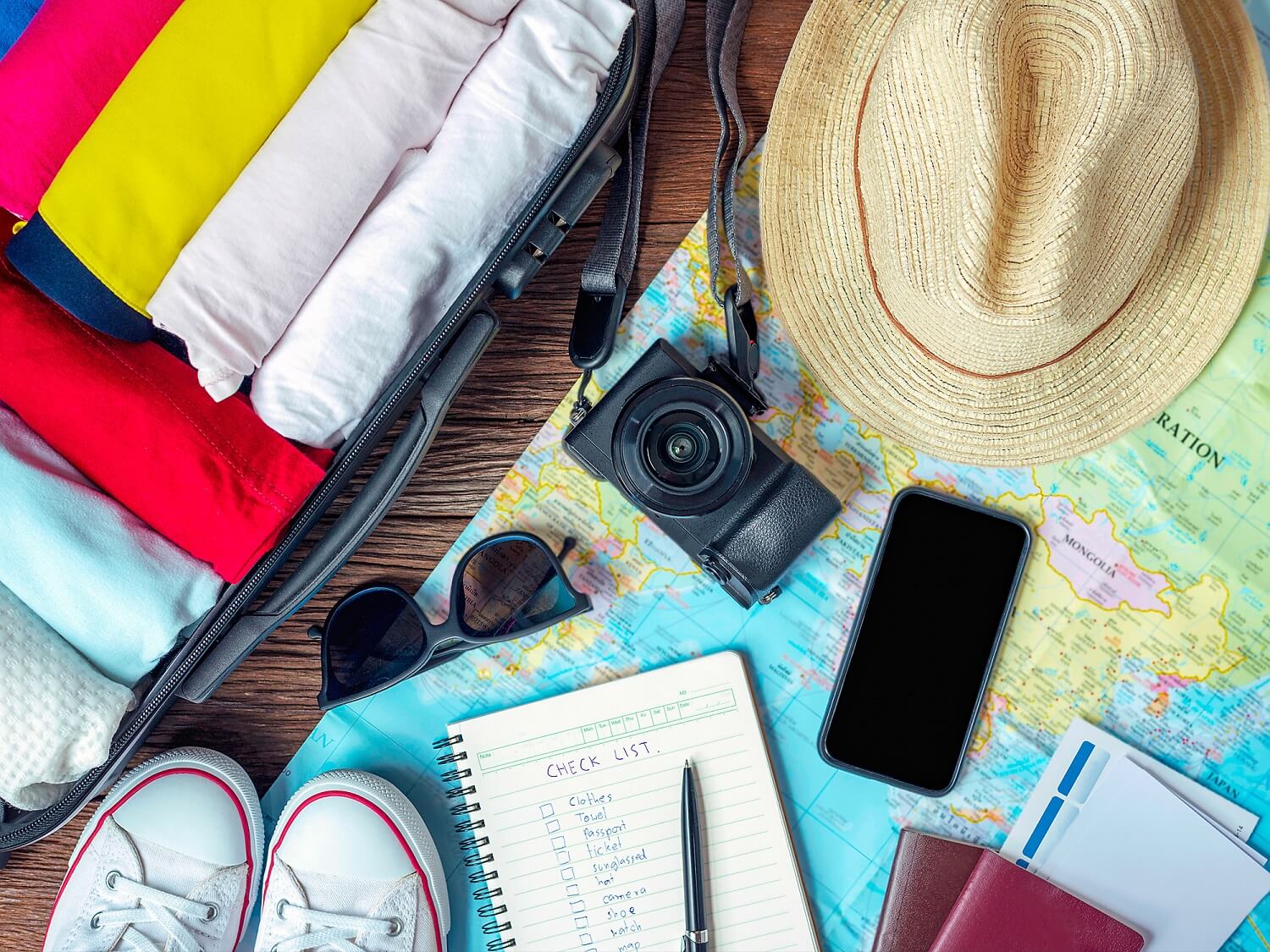
Warm clothes, suitable shoes, and personal items are essential for a self-guided trip to Sa Pa. (Source: Collected)
2.1. Planning the Itinerary
Before your trip, you should determine the specific number of days of stay, departure time, and desired places to visit. Sa Pa has a vast terrain, with attractions scattered from the town center to distant villages and mountain passes, so arranging a reasonable itinerary will help you save travel time and conserve energy for the experience. For a 2-3 day trip, it is advisable to prioritize the highlights and leave some flexibility in the schedule for rest and to feel the slow-paced life characteristic of the mountain town.
2.2. Estimating Costs
The cost of a self-guided trip to Sa Pa typically includes transportation, accommodation, food, entrance fees, and minor incidental expenses. On average, the expenditure ranges from 2.5 to 5 million VND per person for a 2-3 day trip, depending on your chosen transportation, type of accommodation, and travel style. Estimating the budget from the start helps you easily manage your expenses and proactively choose suitable experiences without exceeding your plan.
2.3. Items to Bring
Sa Pa's weather changes quite rapidly throughout the day, so a light jacket is always indispensable, even in summer. Sports shoes or anti-slip trekking shoes will help you move safely when walking around town or exploring villages. Additionally, an umbrella or light raincoat, basic medications, personal items, and a power bank should also be prepared to ensure the self-guided trip goes smoothly and is not interrupted by minor details.
3. Transportation Guide
3.1. Traveling to Sa Pa
The journey to Sa Pa is now much easier and more comfortable. Depending on your starting point and available time, you can flexibly choose a suitable mode of transport to preserve your energy for the experiences ahead.
From Hanoi
With a distance of over 300 km, Hanoi is the most common transit point for self-guided Sa Pa tours. Limousine buses are currently the preferred choice for many tourists due to their comfort, spacious seating, privacy, and travel time of only about 5-6 hours. Buses usually pick up and drop off directly in the town center, saving you significant travel time at the end of your journey.

Moving to Sa Pa by sleeper bus, suitable for overnight journeys. (Source: Collected)
Additionally, sleeper buses are a suitable option for overnight trips, allowing you to rest on the bus and arrive in Sa Pa early in the morning. For those who enjoy a slow-paced journey and want a different experience, an overnight train from Hanoi to Lao Cai combined with a shuttle bus to Sa Pa offers a smooth, leisurely trip. Sitting on the train, watching the mountains and forests gradually appear in the early mist is also a very memorable experience.
From Ho Chi Minh City
Due to the long distance, the most convenient option for tourists from Ho Chi Minh City is to fly to Hanoi or Lao Cai, and then continue by road to Sa Pa. Daily flights are quite diverse, allowing you to flexibly arrange your schedule. Combining flights with limousine buses or shuttle buses helps save energy, especially suitable for short trips or family travel.
From other provinces
For tourists departing from northern provinces or nearby areas, the Lao Cai – Sa Pa bus route is a convenient and economical choice. If there is no direct route, you can combine multiple means of transport to reach Lao Cai and then continue to Sa Pa. Bus ticket prices usually range from 300,000 to 500,000 VND per trip, depending on the type of bus and travel time. Whichever way you choose, the winding journey through the mountain roads is also an emotionally charged opening moment for your independent Sa Pa trip.
3.2. Getting around Sa Pa
In Sa Pa, you can rent a motorbike for about 120,000–150,000 VND/day to explore villages and beautiful routes at your own pace. Taxis, ride-hailing motorbikes, or private car rentals are suitable for families. Additionally, electric vehicles operating within the town center are a gentle option for short distances.
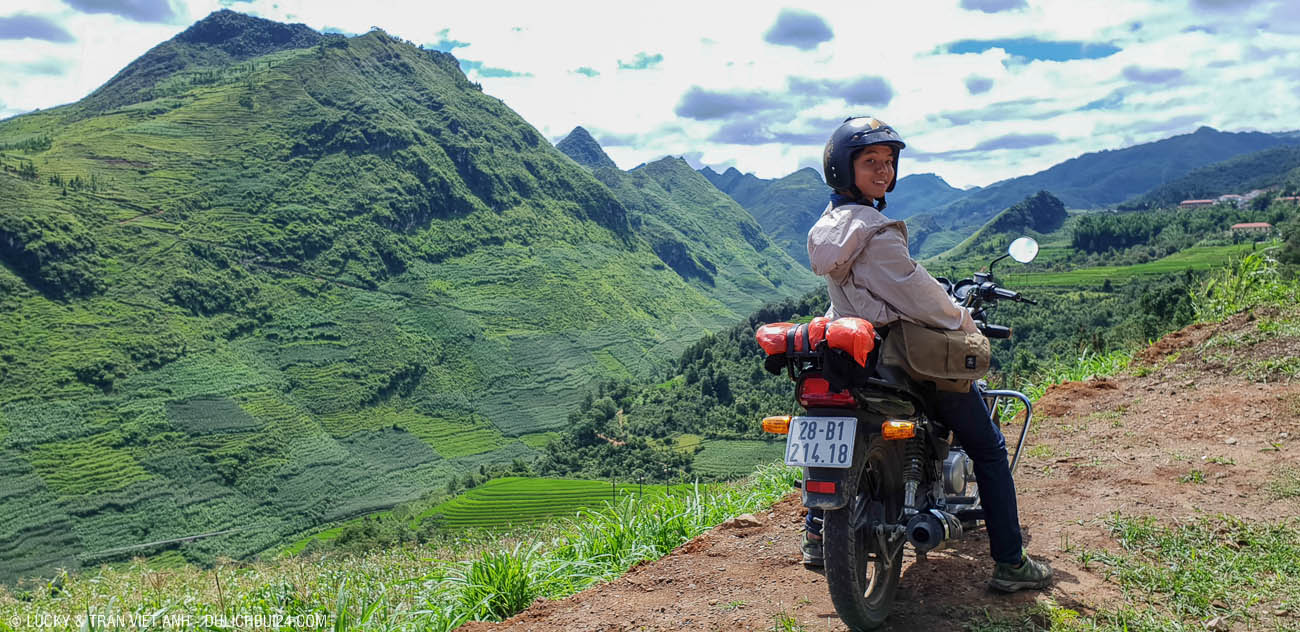
Motorbikes are a suitable choice for those who want to move flexibly in Sa Pa. (Source: Collected)
4. Detailed self-guided Sa Pa travel itinerary suggestions 2026
One of the biggest advantages of self-guided Sa Pa tourism is that you can flexibly arrange your time at your own pace. Depending on your time and the purpose of your trip, you can choose a short itinerary to “change the air” on the weekend or extend it for a few more days to experience Sa Pa more fully.
4.1. 2-day 1-night itinerary
A 2-day 1-night itinerary is suitable for short trips, making the most of the weekend while still being enough to experience the most characteristic features of Sa Pa.
Day 1: Depart for Sa Pa – Cat Cat Village – Town Center
After arriving in Sa Pa and checking into your accommodation, you can spend the afternoon visiting Cat Cat village – one of the villages closest to the center. The winding small paths, simple wooden houses, and the slow pace of life of the H'Mong people bring a very pleasant feeling to the first day.
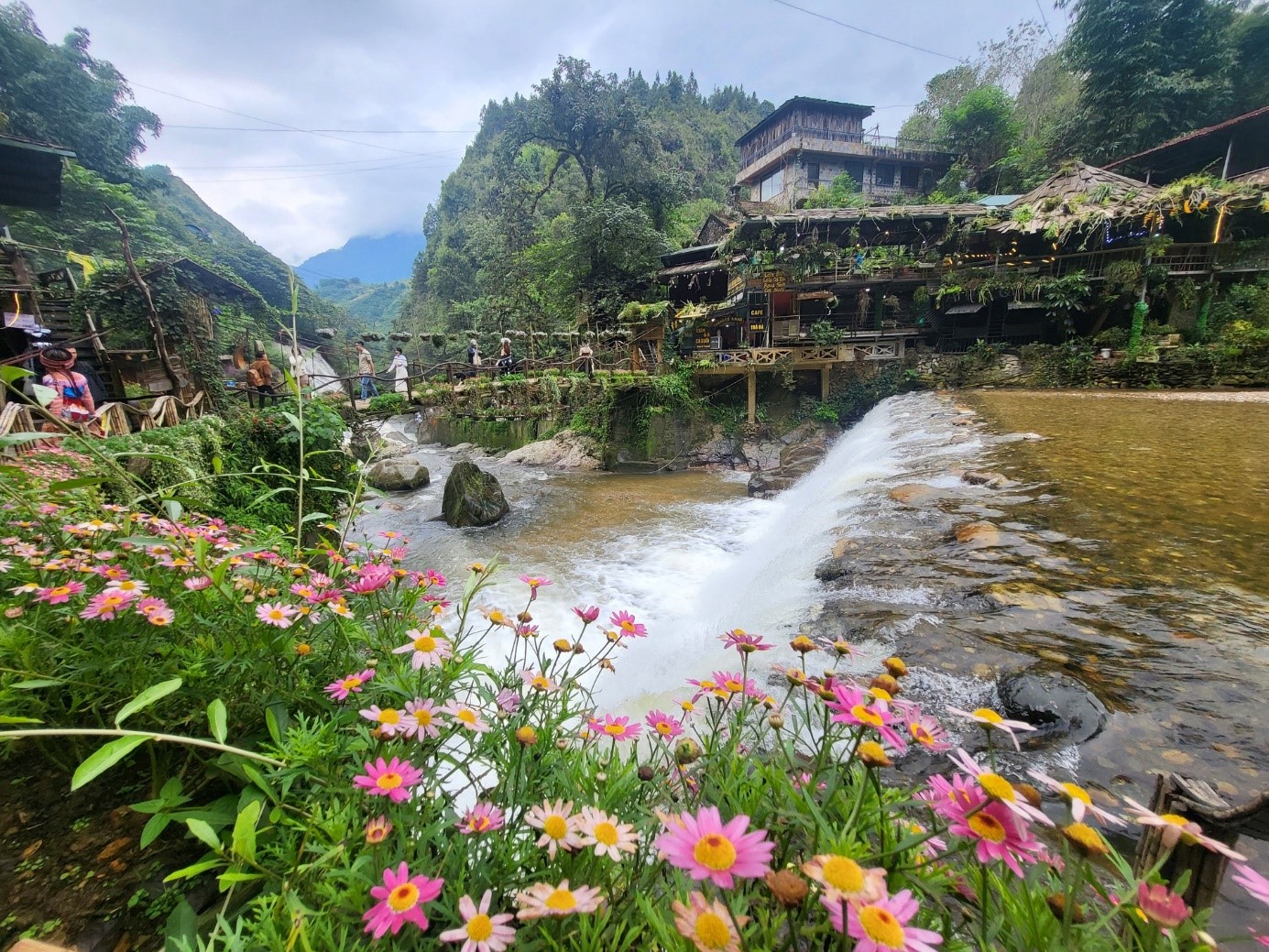
The roofs, streams, and terraced fields make Cat Cat Village picturesque. (Source: Collection)
In the evening, returning to the town center, strolling around the square, checking in at the ancient stone church, and enjoying hot grilled dishes in the chilly weather is a gentle way to conclude the first day.
Day 2: Sun World Fansipan Legend – Shopping – Return
Early in the morning, you should spend time conquering Fansipan by the modern cable car system.
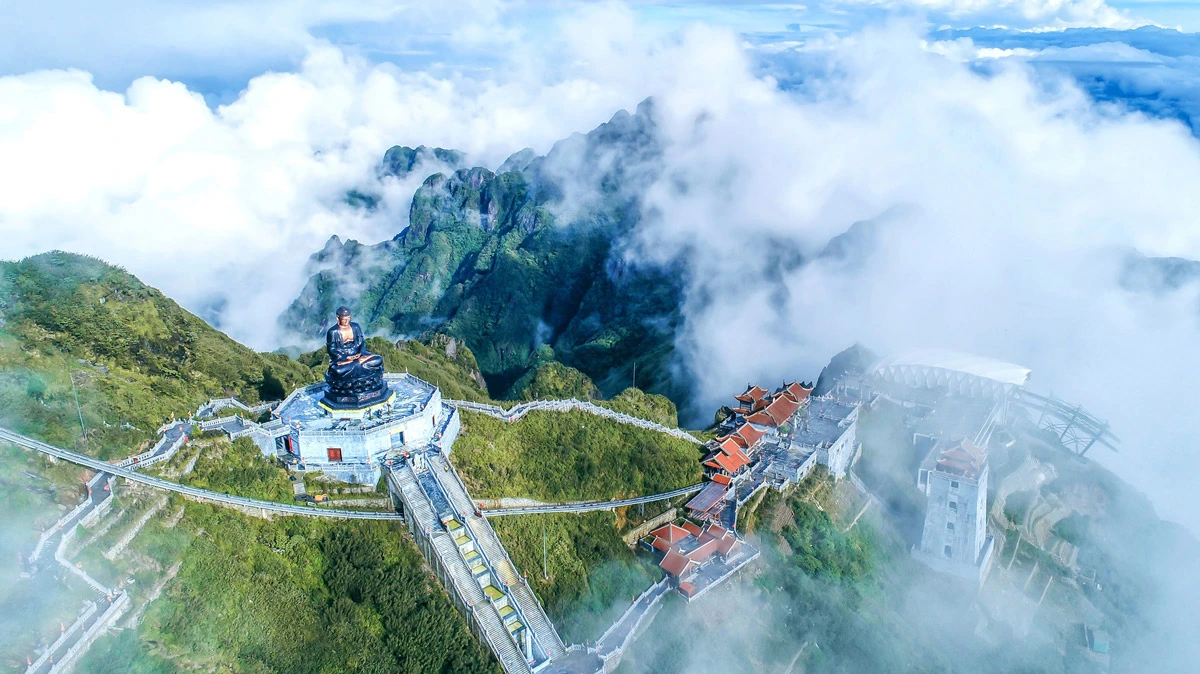
From above, the panoramic view of the Northwestern mountains and forests appears spacious and fresh. (Source: Collected)
After sightseeing, returning to town, you can buy local specialties such as tea, mushrooms, cardamom, or handicrafts as souvenirs before ending your trip.
4.2. 3-day 2-night Itinerary
With 3 days and 2 nights, a self-guided Sapa travel itinerary becomes more leisurely, enough to combine exploring nature, cultural experiences, and relaxation.
Day 1: Hanoi – Sapa – Cat Cat Village – Sapa Night Market
After arriving in Sapa and settling into your accommodation, you can start your journey with a visit to Cat Cat village.
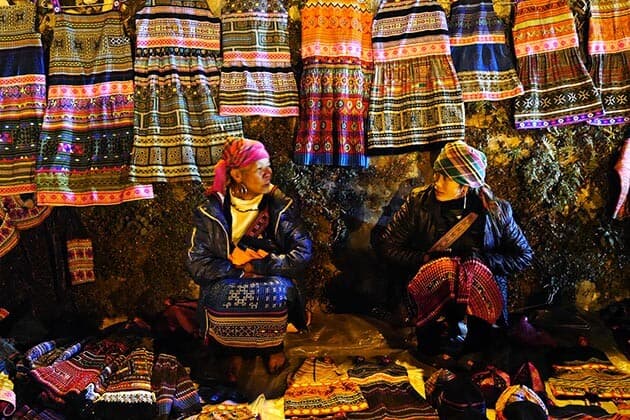
A corner of Sa Pa night market. (Source: Collected)
In the evening, Sa Pa night market is an ideal place to feel the bustling atmosphere, enjoy local cuisine, and immerse yourself in the nightlife of the mountain town.
Day 2: Sun World Fansipan Legend – O Quy Ho Pass
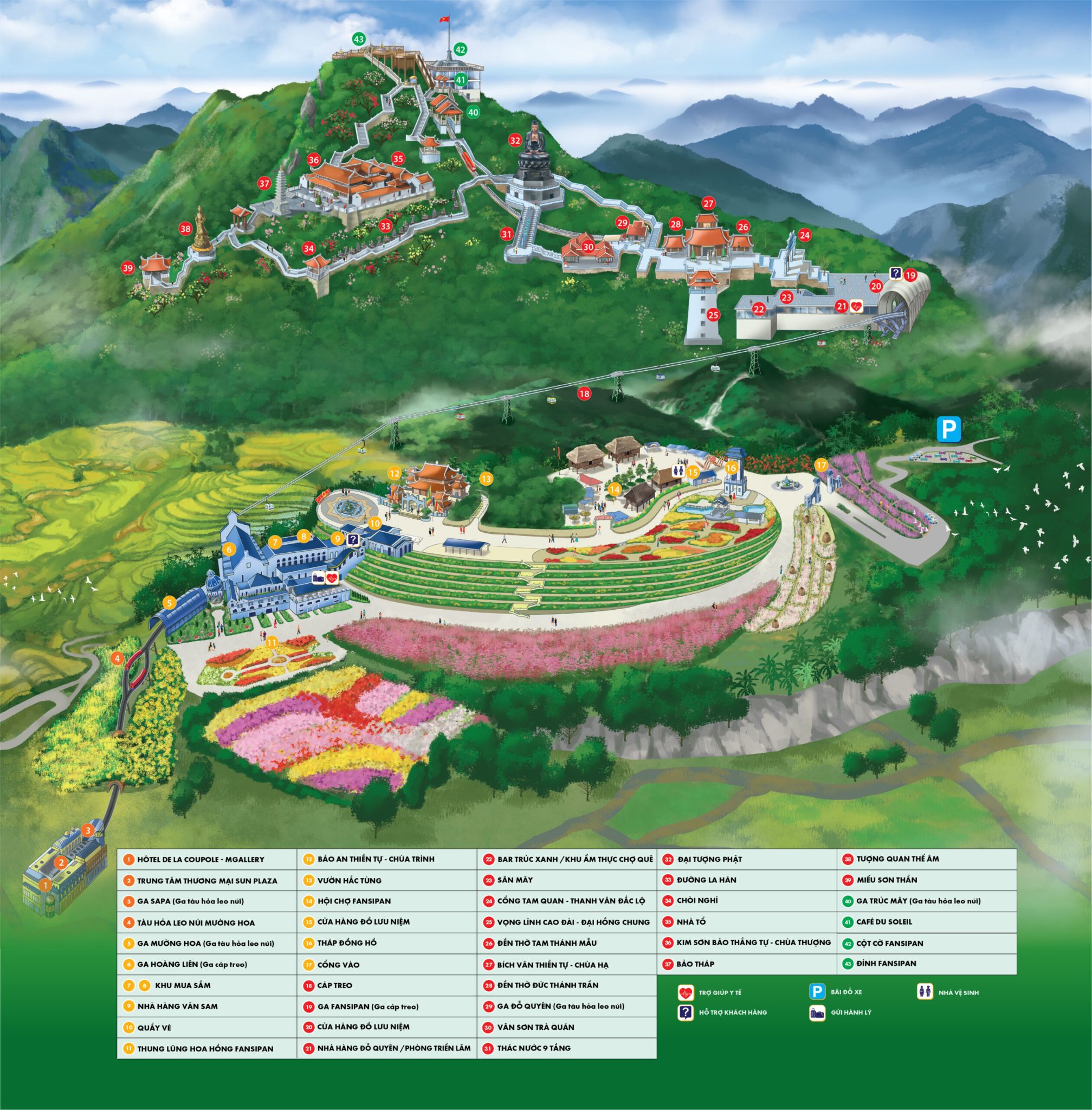
Sun World Fansipan Legend, an iconic tourist complex associated with the journey to conquer the roof of Indochina. (Source: Collected)
The second day is the ideal time to conquer Fansipan – the roof of Indochina. After a morning of sightseeing, in the afternoon you can move to O Quy Ho Pass, one of the most beautiful mountain passes in Vietnam. Standing amidst the majestic mountain and forest scenery, watching the sunset descend into the deep valley, a feeling of relaxation and freedom spreads naturally.
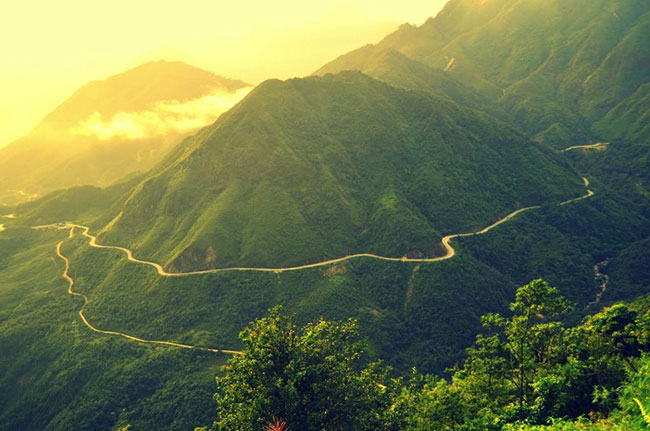
Sunset descends at Ô Quy Hồ Pass (Deo O Quy Ho). (Source: Collected)
Day 3: Hàm Rồng Mountain (Nui Ham Rong) – Sa Pa Market (Cho Sa Pa) – Return
On your last morning, you can climb Hàm Rồng Mountain (Nui Ham Rong) to admire the panoramic view of Sa Pa town from above. Afterwards, visit Sa Pa Market (Cho Sa Pa) to buy more local specialties before heading back, concluding the trip in a relaxed mood with many lingering memories.
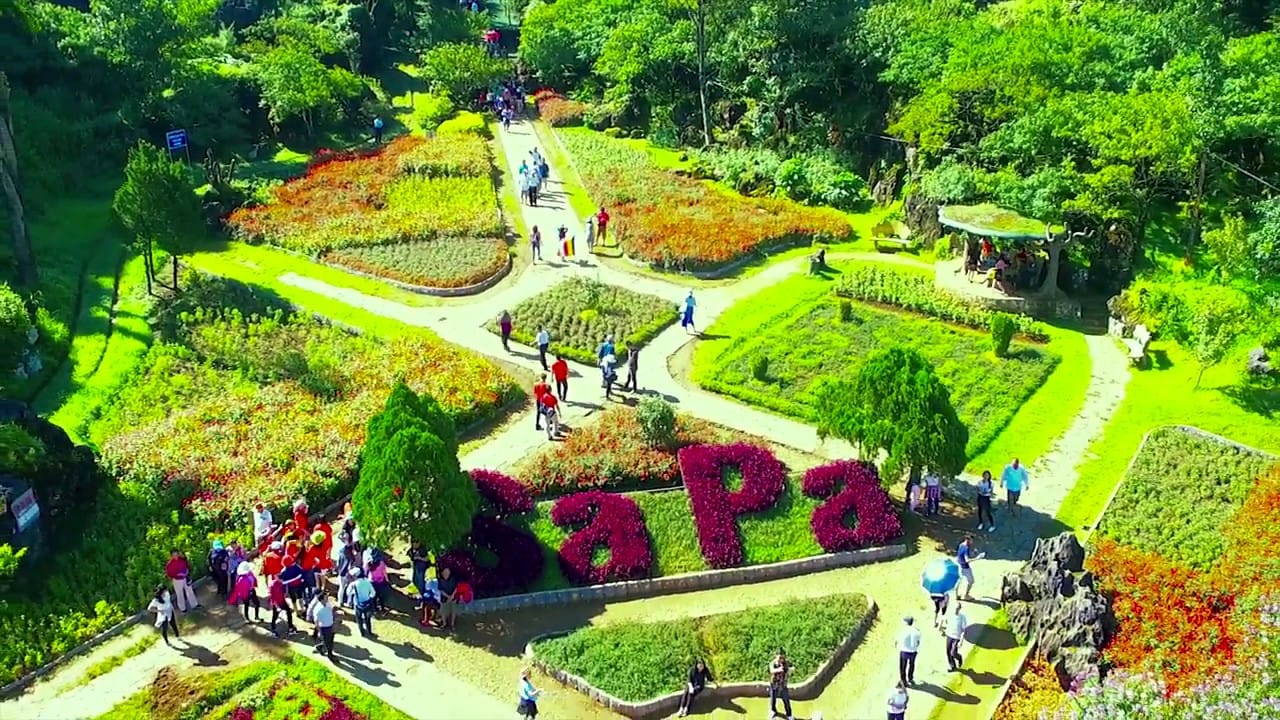
Dragon's Jaw Mountain (Nui Ham Rong) is a viewpoint for panoramic views of Sa Pa town from above. (Source: Collected)
4.3. Flexible itinerary by season
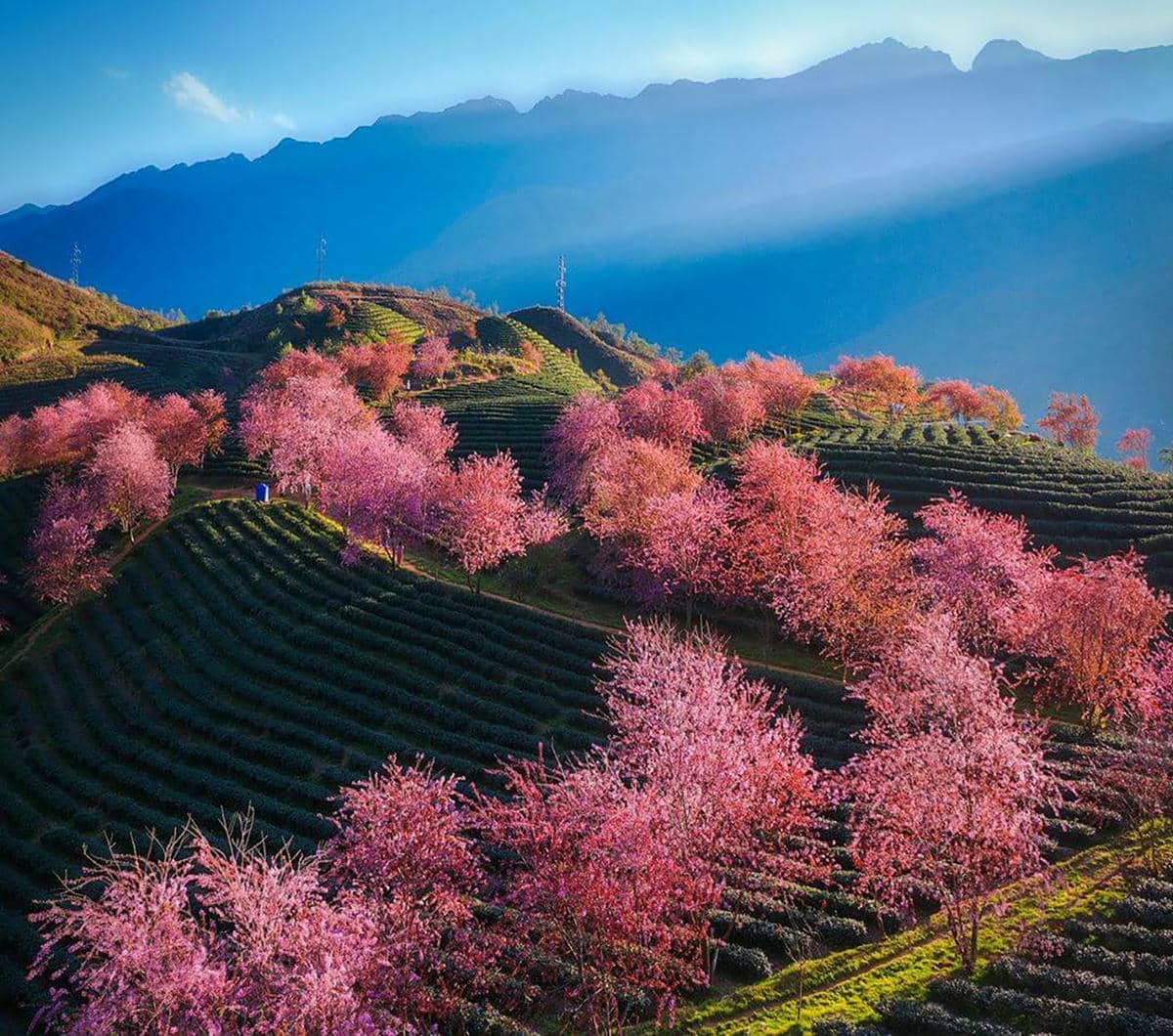
The flower season arrives, the Oolong tea hills of Sapa adorn themselves with gentle and pure beauty. (Source: Collected)
If you visit Sapa during the flower season or the ripe rice season, you should adjust your itinerary to spend more time in villages like Ta Van, Lao Chai, or Hau Thao. The small paths winding around the terraced fields, the vibrant seasonal flowers, or the golden ripe rice fields are moments truly worth lingering for, taking photos, and feeling the original beauty of Sapa at different times of the year.
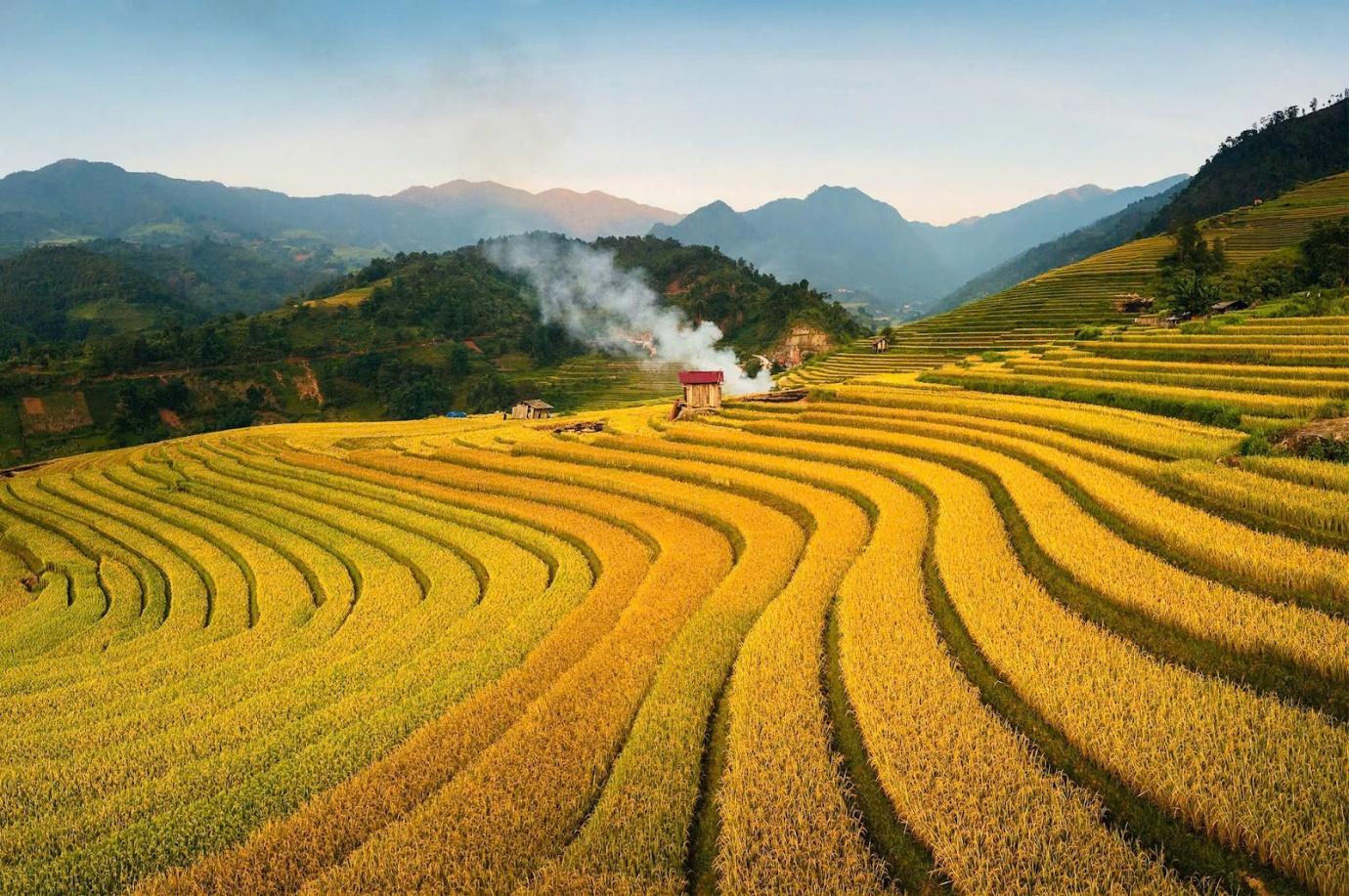
The ripe rice season in Sa Pa dyes the terraced fields golden amidst the mountains and forests of the Northwest. (Source: Collected)
5. Sa Pa Specialty Dishes Not to Be Missed
Sa Pa cuisine is not elaborate in its preparation, but it evokes nostalgia with its fresh ingredients, cold climate, and rustic flavors of the highlands. Amidst the characteristic chilly weather, hot and rich dishes become even more appealing, enough to become an important part of the journey to explore Sa Pa.
5.1. Sa Pa Sturgeon and Salmon
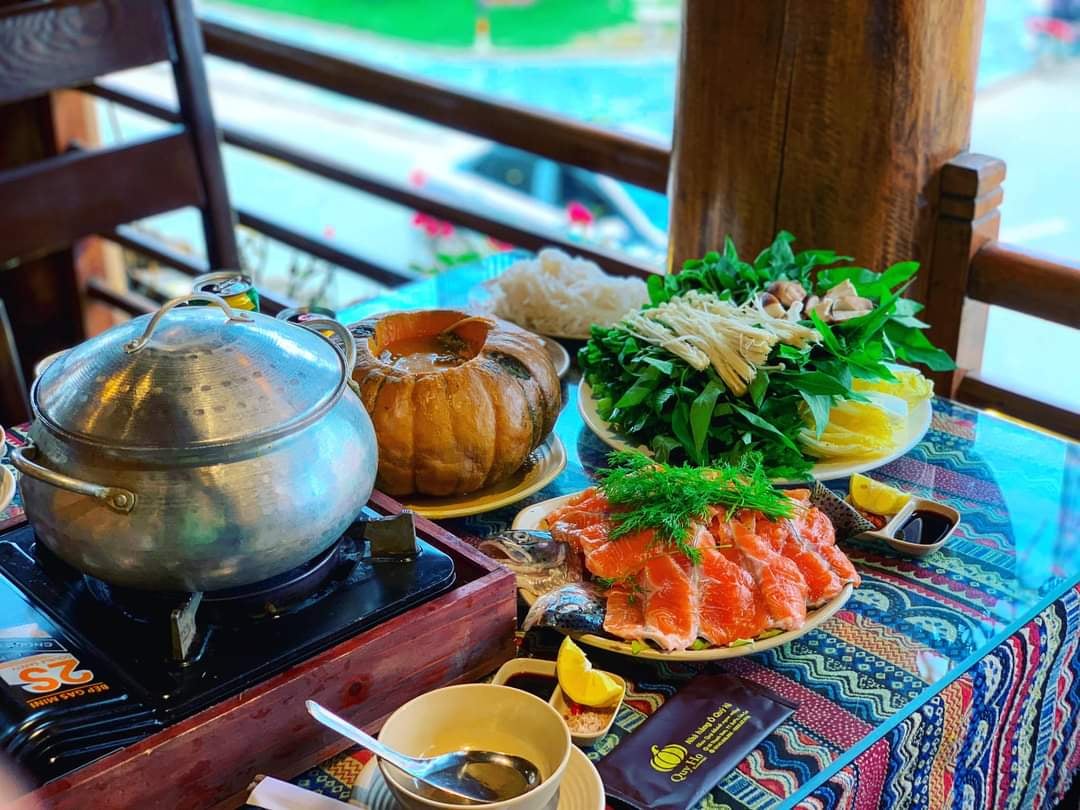
Sa Pa fish hot pot is simple in presentation, refined in flavor. (Source: Collected)
Sturgeon and salmon from Sa Pa are two famous dishes, often raised in natural cold water sources, resulting in firm, less fishy meat. Sturgeon can be prepared as hot pot or grilled, while salmon is often used for sashimi, hot pot, or salad, offering a light, fatty taste that is easy to eat and very suitable for cold weather.
5.2. Piglet carried on the arm
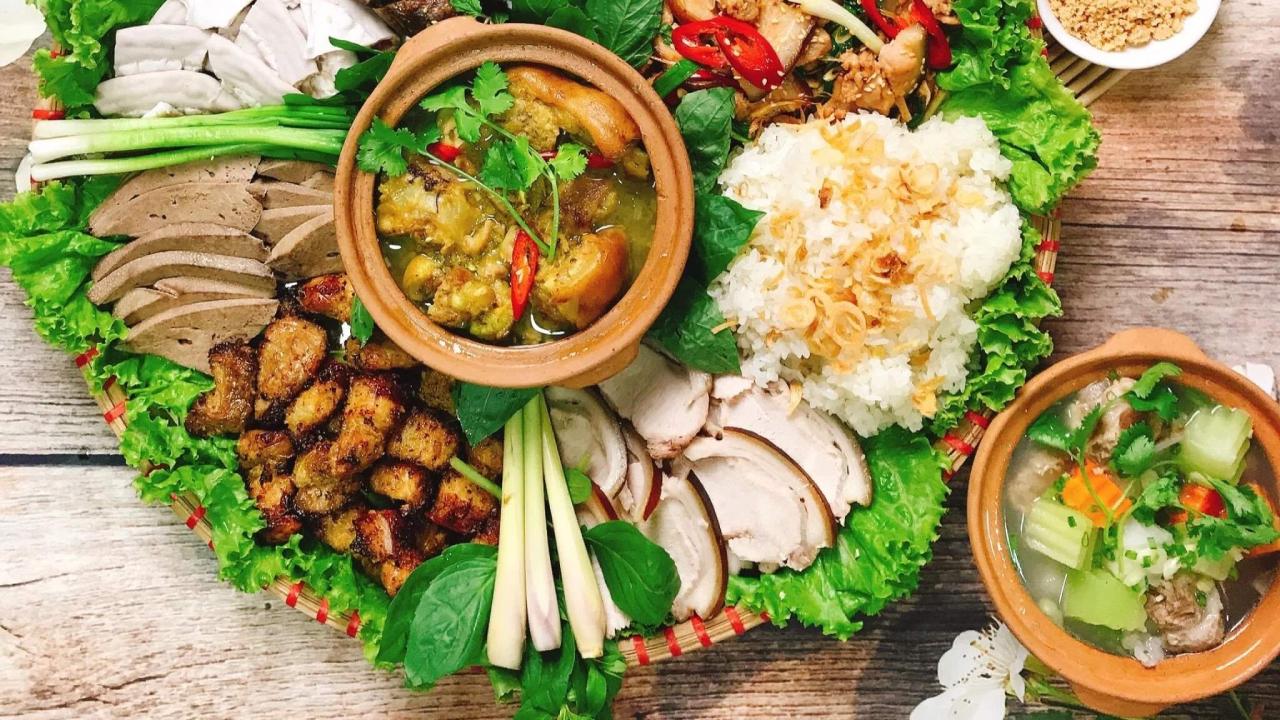
Firm, fragrant, and sweet mountain pork, embodying the spirit of the mountains and forests. (Source: Collected)
The 'cap nach' piglet is a specialty of the highland people, usually raised free-range, resulting in firm meat, crispy skin, and less fat. The pork is roasted, grilled, or steamed, served with 'cham cheo' salt, creating a rich flavor that is truly "authentic" to Sa Pa.
5.3. Thang Co
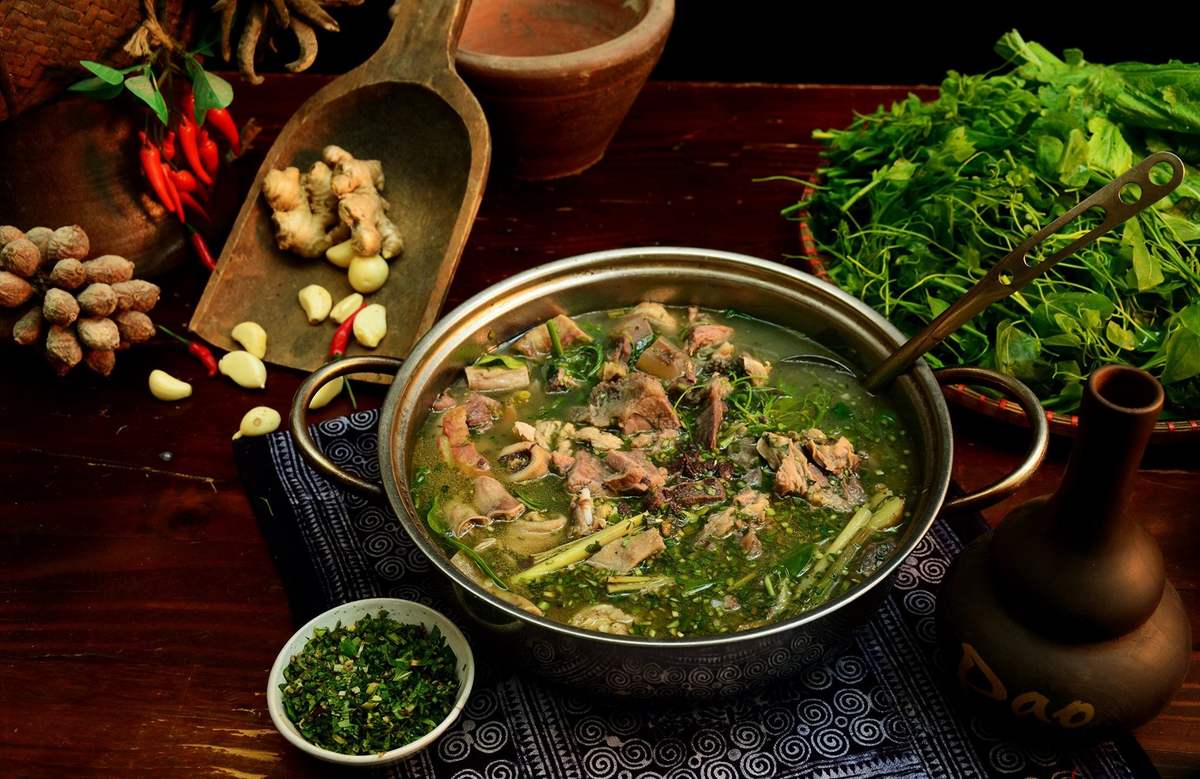
Thang co Sa Pa - rustic in form, profound in aftertaste. (Source: Collected)
When talking about Sa Pa cuisine, one cannot miss thang co – a traditional dish of the H'Mong people. Although it has a rather distinctive flavor and is not easy for everyone to eat, thang co is still a worthwhile experience to better understand the local culinary culture, especially when enjoyed in the atmosphere of a market fair or night market.
5.4. Com lam Sa Pa
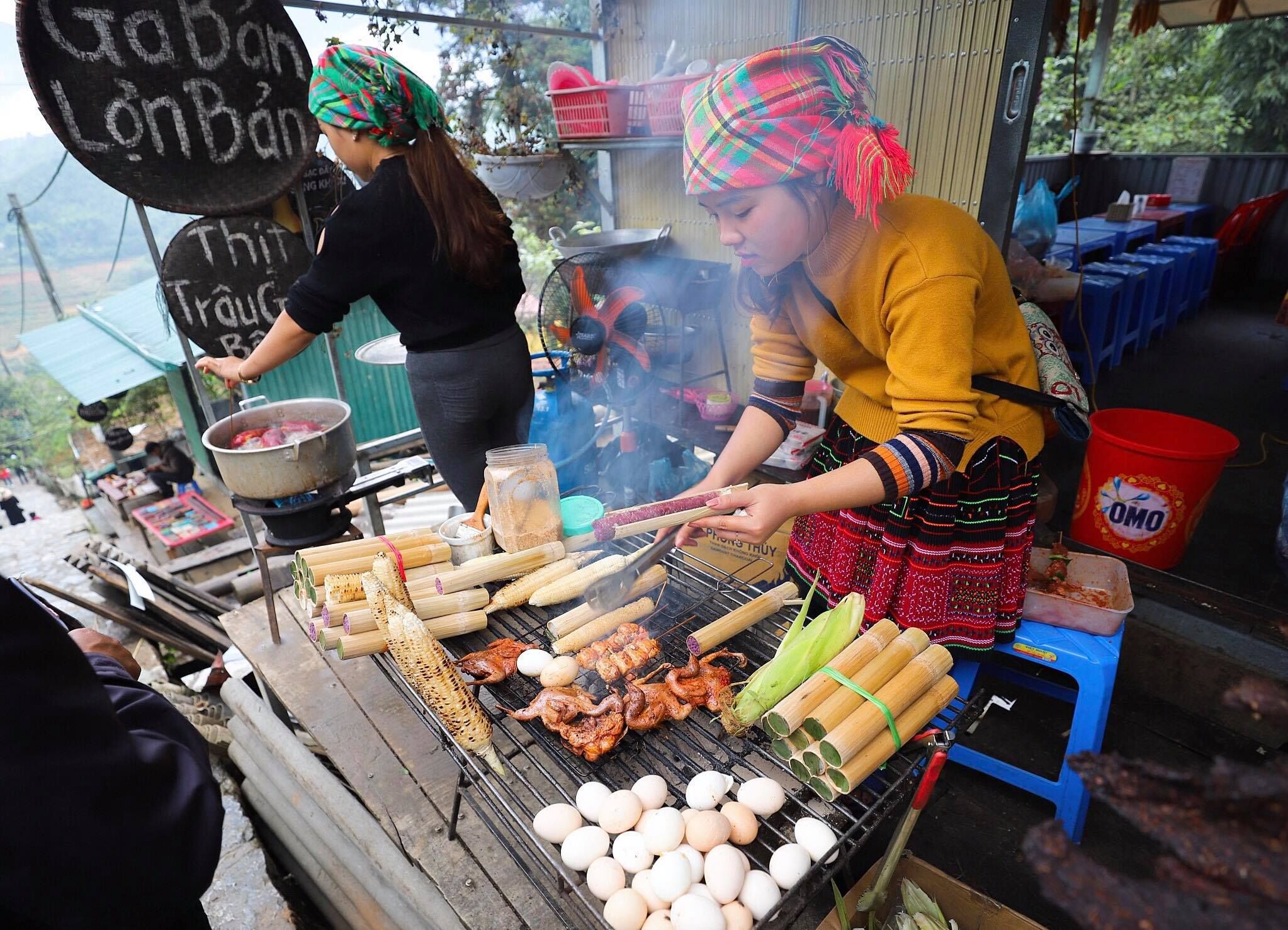
Com lam (rice cooked in bamboo), eaten with grilled meat or sesame salt, brings a rustic, familiar feeling but is very addictive.
Besides, highland egg noodles with golden, chewy strands and a sweet, clear broth are also a suitable choice for a light breakfast.
5.5. Street grilled dishes
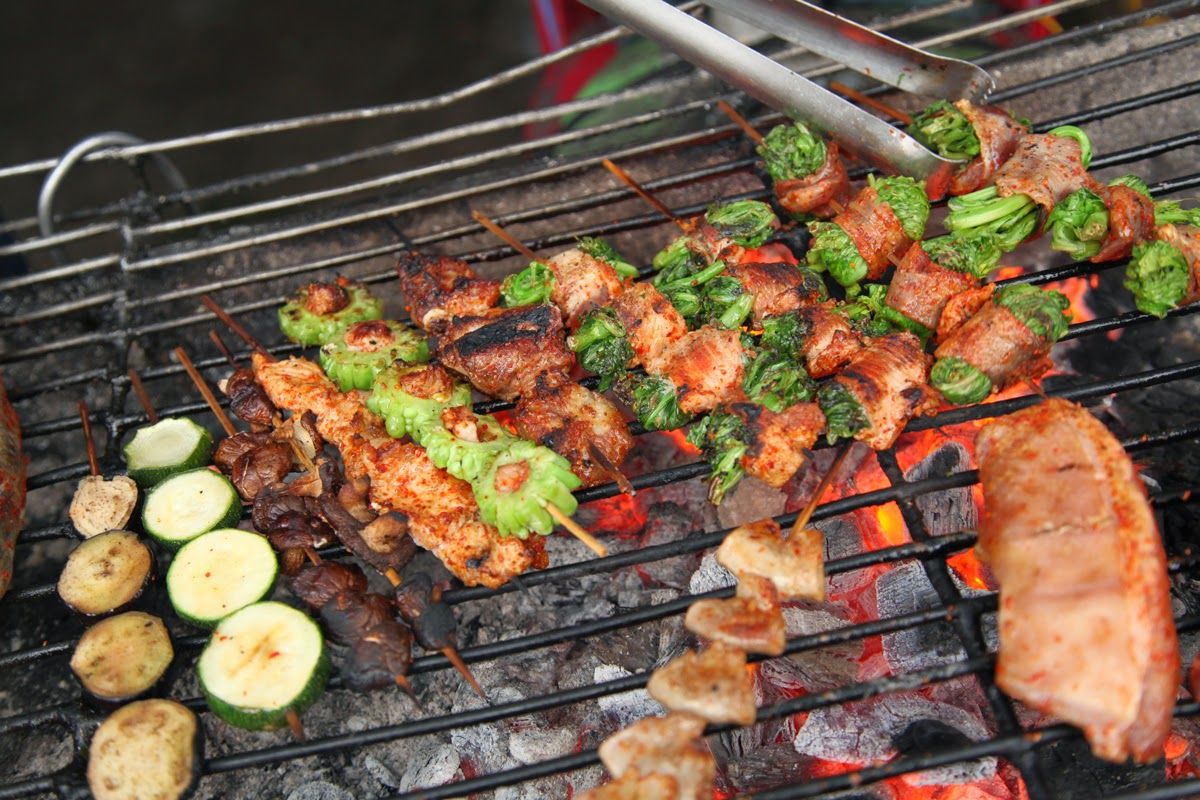
Rich grilled flavor, encapsulating the atmosphere of Sapa at night. (Source: Collected)
As night falls, the street grilled dishes at Sapa night market become the “soul” of the mountain town's cuisine. From grilled skewers, eggs, corn, potatoes to stream fish, all emit a captivating aroma in the pleasant cold, making a stroll through Sapa night market an unforgettable experience.
6. Accommodation when traveling to Sapa independently
One of the most pleasant aspects of traveling to Sapa independently is that you don't have to worry too much about accommodation. Sapa offers a wide range of lodging options, from charming and cozy homestays to high-end hotels and resorts, suitable for various budgets and travel styles.
6.1. Hôtel de la Coupole – MGallery in the center, convenient for travel
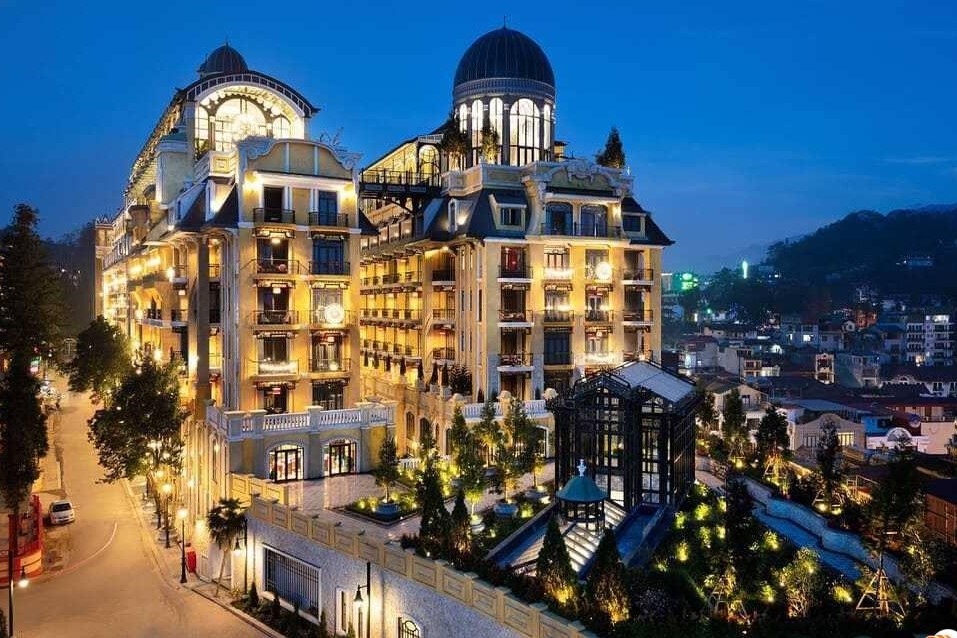
Hôtel de la Coupole – MGallery Sa Pa center, convenient to travel, complete experience. (Source: Collected)
If you travel to Sa Pa independently but still want to rest comfortably, Hôtel de la Coupole – MGallery is a choice worth considering. The hotel is located right in the town center, very convenient for walking, going to the night market, or taking a car to tourist attractions. Luxurious space, good service, suitable for couples or trips wanting to “treat” themselves to a well-organized holiday.
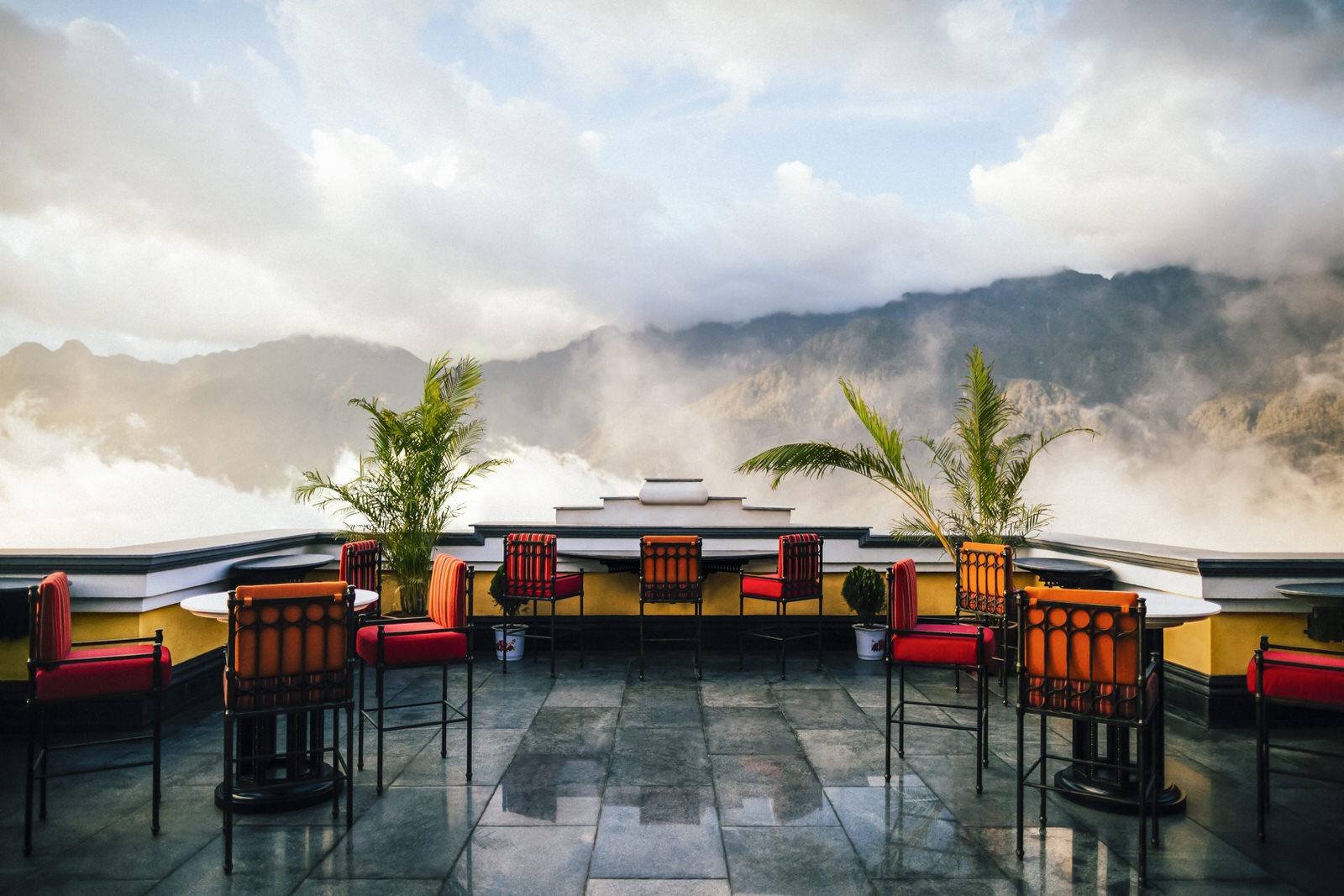
A chill corner in Hôtel de la Coupole – MGallery. (Source: Collected)
6.2. Sapa Jade Hill - quiet, ideal for a getaway
For those who prefer spaciousness and want to escape the crowds, Sapa Jade Hill offers a true sense of relaxation. This area is located a bit far from the center, but in return, it boasts expansive mountain and forest views and fresh air.
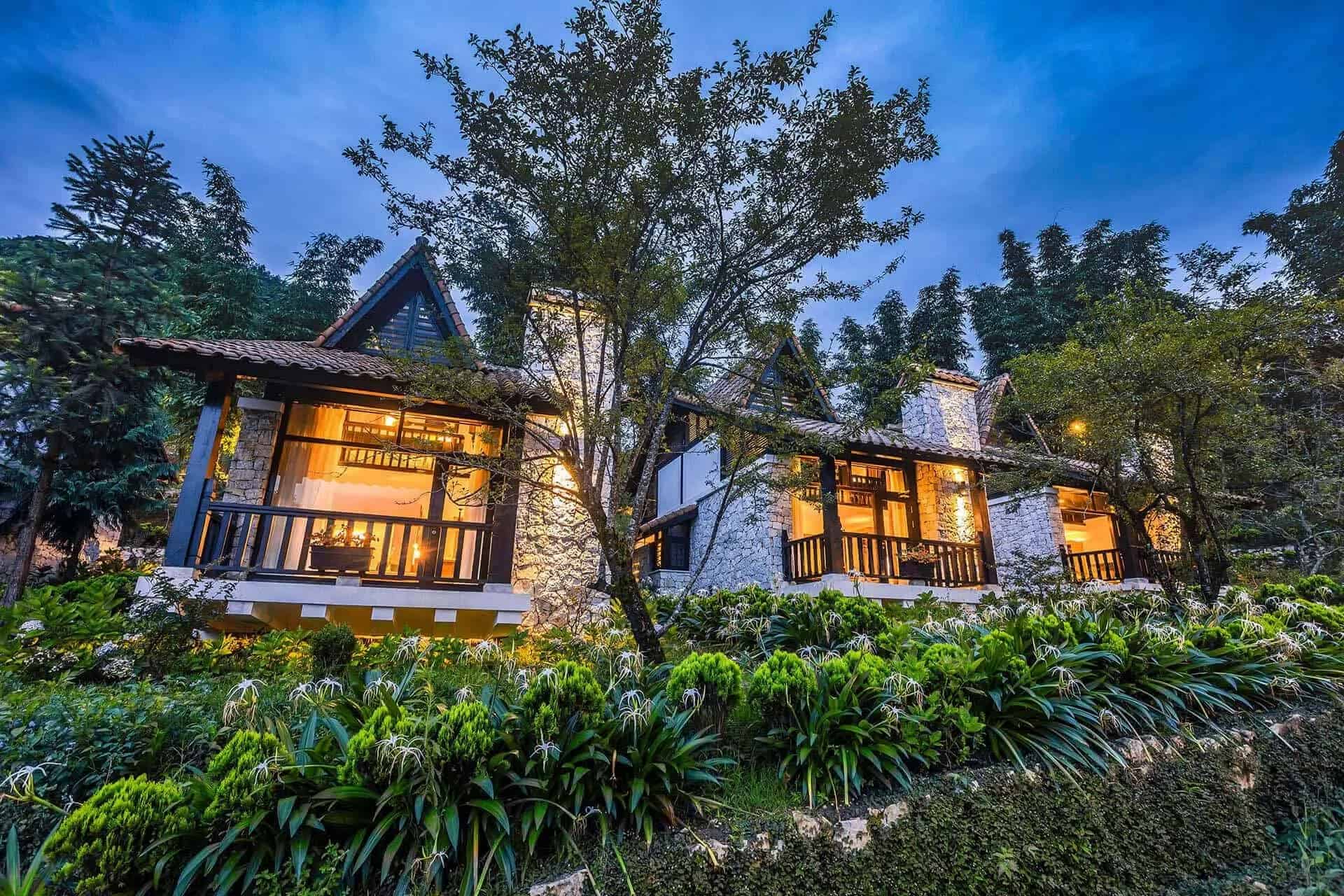
If traveling to Sapa independently as a group or family, this is a quite pleasant option. (Source: Collected)
6.3. Topas Ecolodge - slow living amidst nature
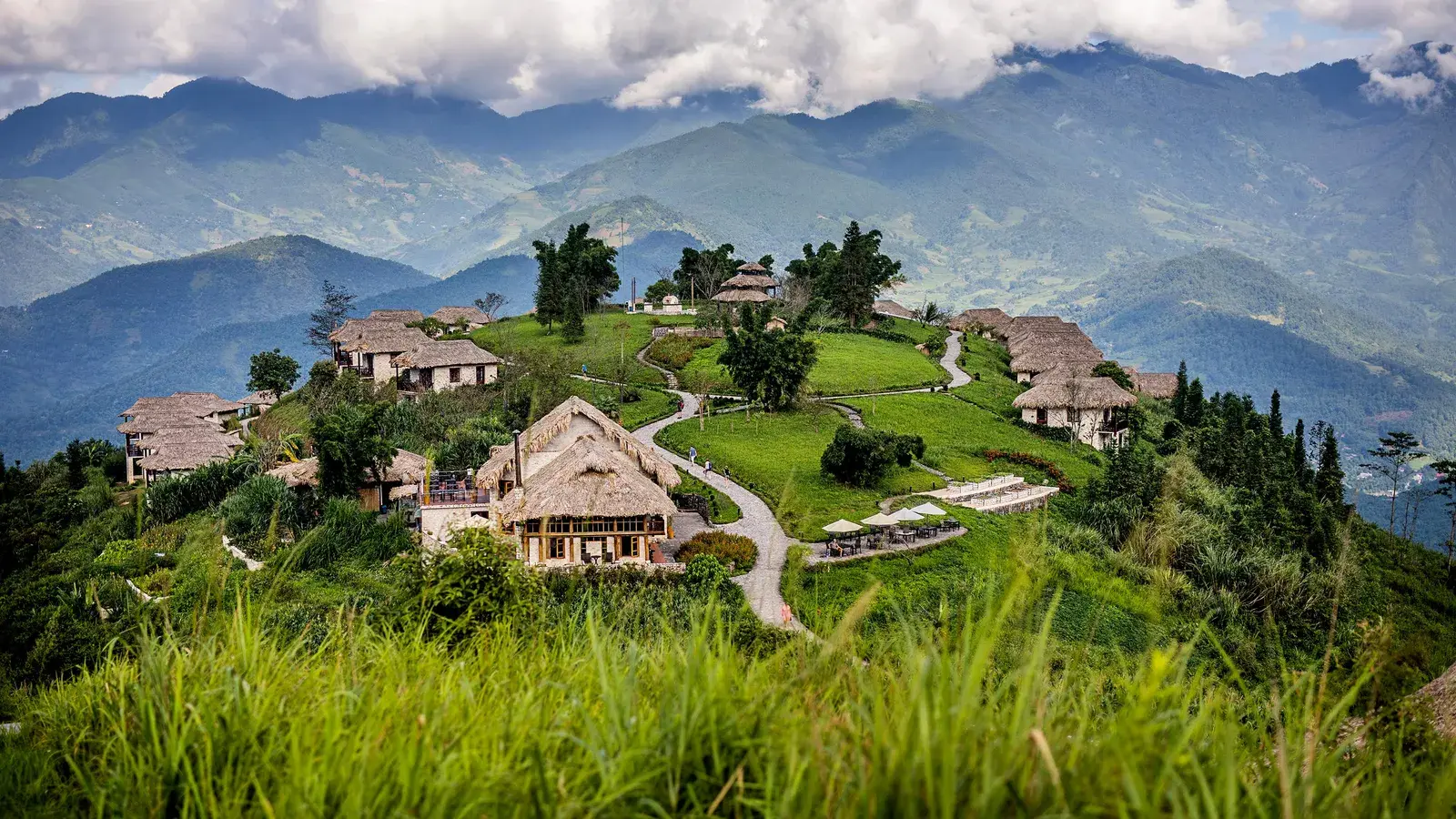
A quiet pause, separated from the city's noise. (Source: Collected)
Topas Ecolodge is very suitable for independent Sa Pa trips in the style of “slow travel – deep rest”. The resort is located in the valley, completely separated from the town, suitable for those who want to temporarily leave the noisy pace of life, spend time sightseeing, walking, and enjoying nature.
6.4. Eco Palms House - homestay near the village
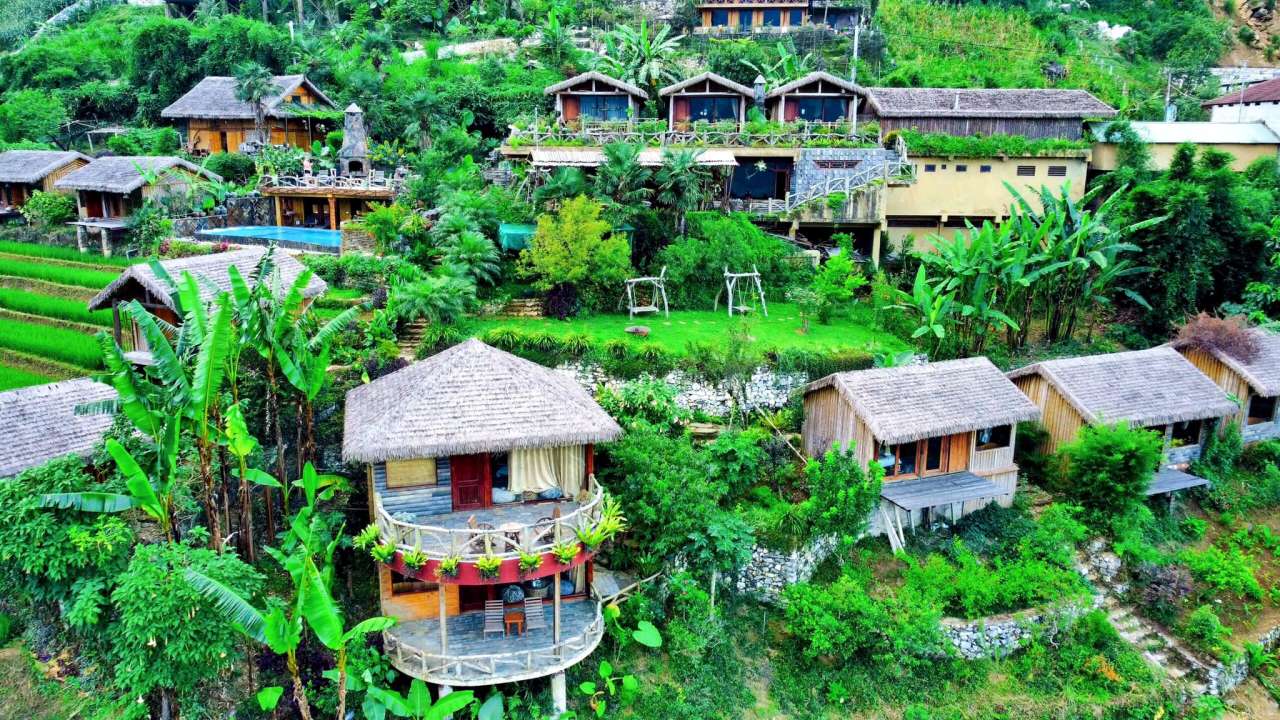
A rustic, gentle, and very unique corner of Sa Pa. (Source: Collected)
If you want to experience Sa Pa more intimately, Eco Palms House is a choice worth trying. The homestay is located near the village, convenient for light trekking, admiring the terraced fields, and feeling the highland life. The space is cozy, suitable for couples or independent travelers to Sa Pa who love local experiences.
6.5. Phoori's House - a small, friendly homestay
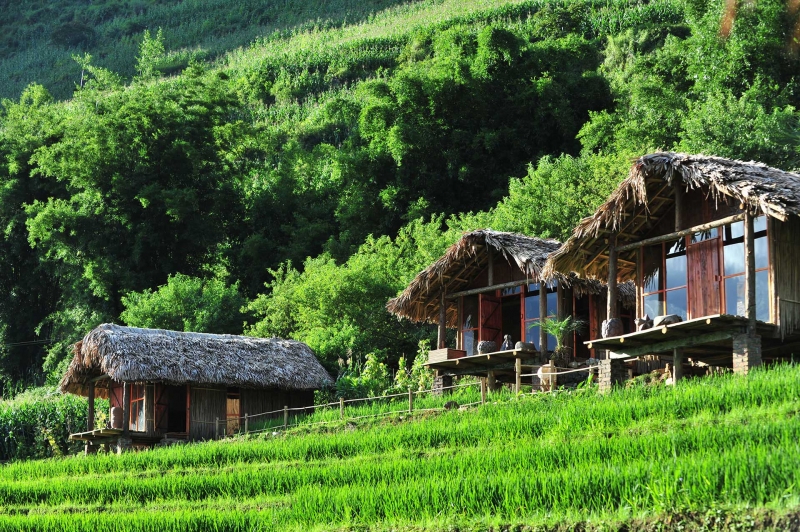
At Phơri’s House, gentle and warm. (Source: Collected)
Phơri’s House is suitable for those who travel to Sa Pa independently and want to find simple, comfortable accommodation. The homestay is not too big, not fussy, but offers a friendly, close feeling – very suitable for gentle trips, not focused on resort-style relaxation.
7. Useful tips for independent travel to Sa Pa
When trekking or climbing in Sa Pa, you should prepare suitable shoes, a warm jacket, and follow safety instructions, avoiding slippery or deserted areas. You should wake up early to hunt for clouds or choose the sunset hour to capture impressive natural moments.

Cloud hunting - an unmissable experience when visiting Sa Pa. (Source: Collected)
Sa Pa always has a way of making people want to return, from the morning mist to the slow pace of life amidst the highland villages. With self-guided Sa Pa travel 2026, just a little careful preparation, you can proactively plan your itinerary, control costs, and enjoy the journey in your own way. Wishing you a trip with many beautiful experiences and memorable moments in the mountain town of Sa Pa.


