




1. Sapa Stone Church – A historic landmark in the heart of Sapa
Sapa Stone Church is one of the most recognisable landmarks in the mountain town of Sapa, combining historic architecture with the distinctive atmosphere of Vietnam’s Northwest. Located in the centre of Sapa, the church stands between the town’s main public spaces and the slopes of Ham Rong Mountain, making it an easy landmark to encounter while exploring the town on foot. Its stone façade, bell tower and European-inspired design create a distinctive contrast with the surrounding mountain landscape.
The church is also known as the Holy Rosary Church or Sapa Parish Church. Historical sources differ on the exact construction timeline: the Sapa Tourism Office states that construction began in 1926 and the church was completed in 1935, while Vinpearl's guide gives 1895 as the construction date. For a destination article, the more specific 1926–1935 timeline is consistent with the Sapa Tourism Office's account and can be used when describing the present structure. Architecture is one of the main reasons Sapa Stone Church has become an important visual symbol of the town. The building follows a Roman Gothic-inspired style, characterised by stone construction, arched forms, a prominent bell tower and European architectural influences. The use of stone is particularly striking against Sapa's misty mountain setting, while the church's restrained exterior gives it a sense of permanence that has become closely associated with the townscape.
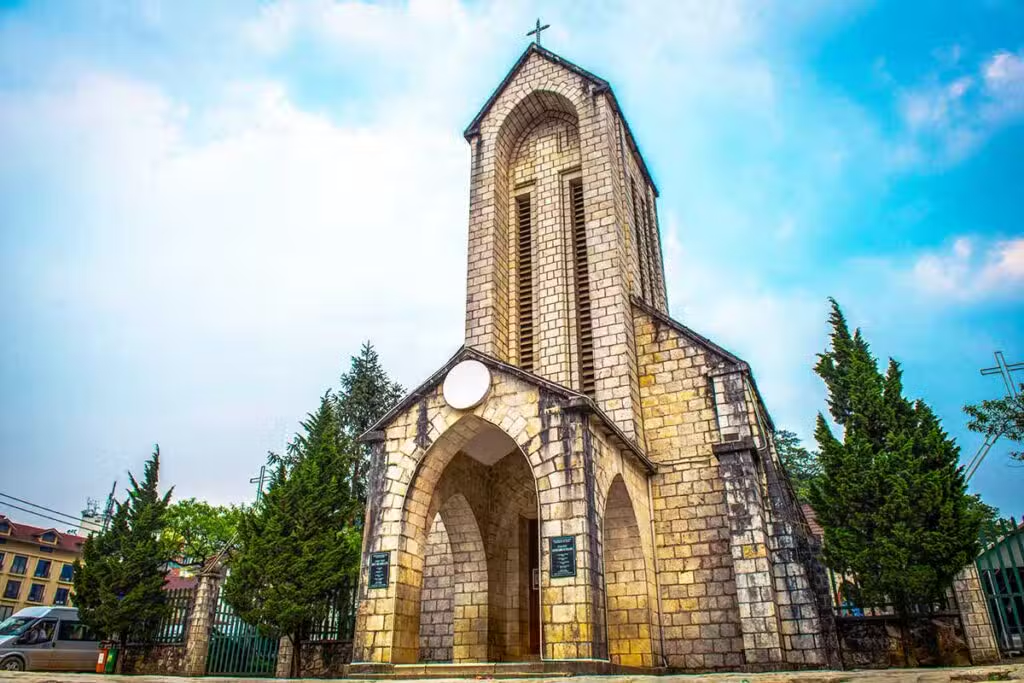
Sapa Stone Church (Source: Collected)
The church's setting is equally important to the visitor experience. With Ham Rong Mountain rising behind it and a spacious public square in front, the building forms a natural meeting point between Sapa's historic architecture and its contemporary town life. The surrounding square is also used for cultural and community activities, meaning visitors can encounter the church not only as an architectural landmark but also as part of the everyday rhythm of Sapa. For international travellers, visiting Sapa Stone Church offers an opportunity to explore a different layer of the destination's heritage. A walk around the church can be combined with Sapa's central streets, local food, traditional cultural activities and the weekend atmosphere around the town square. Its central location also makes it convenient to include alongside other experiences before or after exploring Fansipan and the surrounding mountain villages.
More than a historic building, Sapa Stone Church has become part of the visual and cultural identity of Sapa. Its combination of stone architecture, religious heritage, mountain scenery and central location makes it a natural starting point for travellers who want to understand the history and character of the town before venturing deeper into the Northwest landscape.
2. Discover the distinctive architecture of Sapa Stone Church
2.1 Admire the Roman Gothic architectural style
The most striking feature of Sapa Stone Church is its Roman Gothic-inspired architecture, which creates a distinctive European presence in the mountainous landscape of Northwest Vietnam. The building features pointed forms, arched openings, a prominent bell tower and carefully arranged stone walls, giving the church a sense of height and solidity while maintaining an elegant appearance. The architectural style also reflects the French influence that shaped Sapa's early development as a mountain resort.
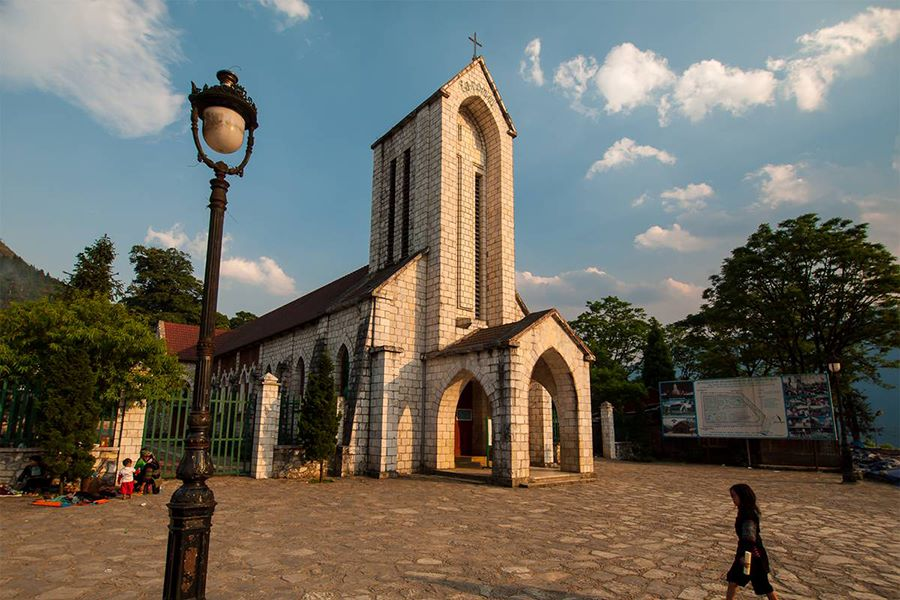
Sapa Stone Church stands out with its distinctively Gothic architecture (Source: Collected)
The church's architecture becomes particularly distinctive when viewed against the surrounding landscape. Its stone exterior contrasts with the green slopes of Ham Rong Mountain and the changing mist that often surrounds Sapa. This combination of European-inspired architecture and mountain scenery has helped make the church one of the town's most recognisable visual landmarks.
For international travellers interested in architecture, the church offers an opportunity to observe how European architectural ideas were adapted to a mountainous setting in Vietnam. Rather than standing apart from its surroundings, the building has become part of Sapa's historic townscape and continues to shape the visual identity of the town centre.
2.2 Explore the stone construction and historic details
Stone is central to the visual character of Sapa Stone Church. The walls and other structural elements were constructed from carefully shaped stone, traditionally joined using a mixture of materials including sand, lime and molasses. This construction method contributes to the church's weathered appearance and gives the building a strong connection with the natural character of the mountain town.
The scale of the structure is also notable. The church complex covers approximately 6,000 square metres, while the main church building consists of seven sections and includes a bell tower around 20 metres high. A historic bell cast in 1932 remains associated with the tower, adding another layer to the building's architectural and historical story.
Walking around the exterior allows visitors to appreciate details that may not be immediately visible from the central square. The stone walls, arches, tower and surrounding structures create different perspectives from various points around the complex. Taking time to observe these details can make a short visit more rewarding, particularly for travellers interested in historic architecture and photography.
2.3 Step inside to discover the European-inspired interior
The architectural experience continues inside Sapa Stone Church, where arched vaults, wooden furnishings and coloured stained-glass windows create a distinctly different atmosphere from the stone exterior. The interior design reflects European religious architecture while retaining a relatively simple visual character that allows natural light to become an important part of the space.
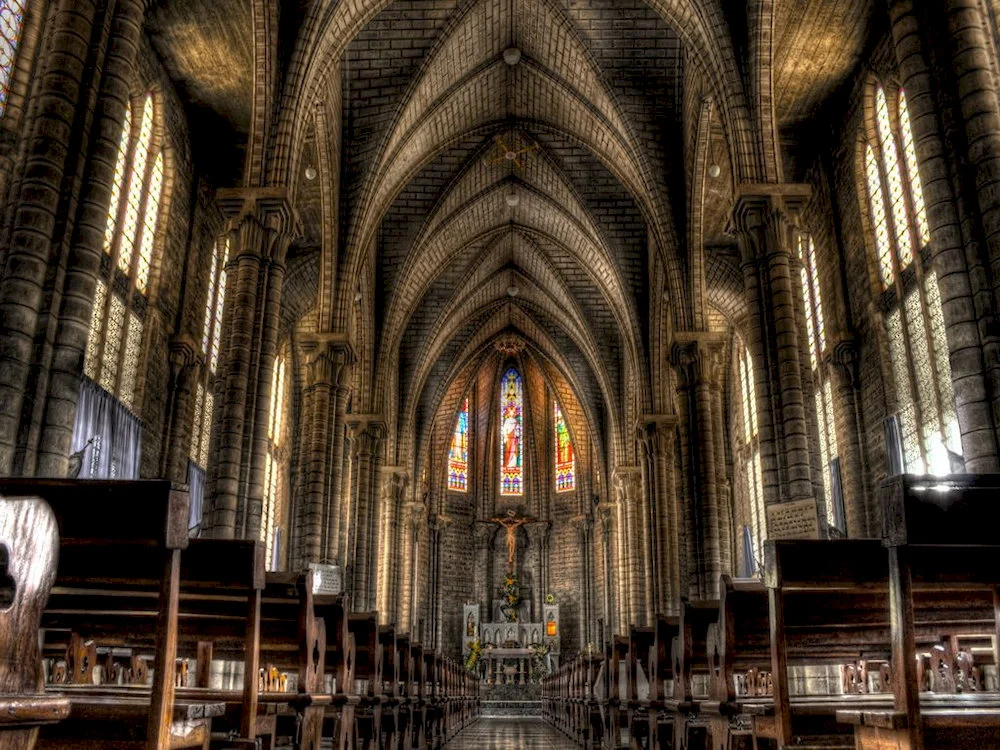
The interior of the Sapa Stone Church (Source: Collected)
The stained-glass windows are among the details worth observing. According to the National Tourism Administration's description, the windows feature coloured glass depicting scenes from the life of Jesus. Combined with the arched forms and darker wooden elements, they create a contrast between the pale interior surfaces and the warmer tones of the furnishings.
For visitors, entering the church offers a different perspective from photographing its exterior. The quiet interior provides an opportunity to appreciate the craftsmanship and proportions of the building while understanding its continuing role as a place of Catholic worship. Travellers should keep noise to a minimum and follow any instructions when entering during religious activities.
2.4 Admire the bell tower and historic bell
The bell tower is one of the defining architectural elements of Sapa Stone Church. Rising above the main structure, it creates a strong vertical accent that can be seen from different parts of central Sapa. Its proportions complement the church's Gothic-inspired forms and contribute to the distinctive silhouette that has become associated with the town.
Inside the tower is a historic bell cast in 1932. Sources from Sapa's tourism authorities describe the bell as approximately 1.5 metres high and weighing around 500 kilograms. Its presence adds a tangible historical element to the church, connecting the current building with decades of religious and community life in Sapa.
The bell tower is particularly striking when viewed from the central square, where its height contrasts with the lower buildings around it. For photographers, the tower can also be framed together with the surrounding mountain scenery, especially when clouds or mist create Sapa's characteristic atmospheric backdrop.
2.5 See how the church blends with Sapa's mountain landscape
One of the most memorable aspects of Sapa Stone Church is the relationship between architecture and landscape. The church stands in the centre of town with Ham Rong Mountain rising behind it and the main square extending in front. This setting gives the building a distinctive visual context that differs from historic churches found in large urban centres.
The surrounding landscape changes noticeably with the weather and season. On clear days, the stone façade stands sharply against the mountain backdrop, while mist can soften the outlines of the building and create a more atmospheric scene. These changing conditions are part of what makes the church particularly photogenic throughout the day.
The connection with the town is equally important. The square in front of the church has long served as a gathering space for local communities and as a venue for cultural activities. As a result, Sapa Stone Church is not simply an isolated historic monument but part of a wider urban and cultural landscape where religious heritage, local traditions and contemporary tourism meet.
3. How to make the most of your Sapa Stone Church visit
3.1 Visit the church and central square together
A visit to Sapa Stone Church is best combined with time around the central square, where the church forms one of the most recognisable landmarks of the town. The square sits directly in front of the church and is also used for community and cultural activities, particularly during weekend evenings. This makes the area more than a photographic viewpoint; it is part of the everyday rhythm of central Sapa.
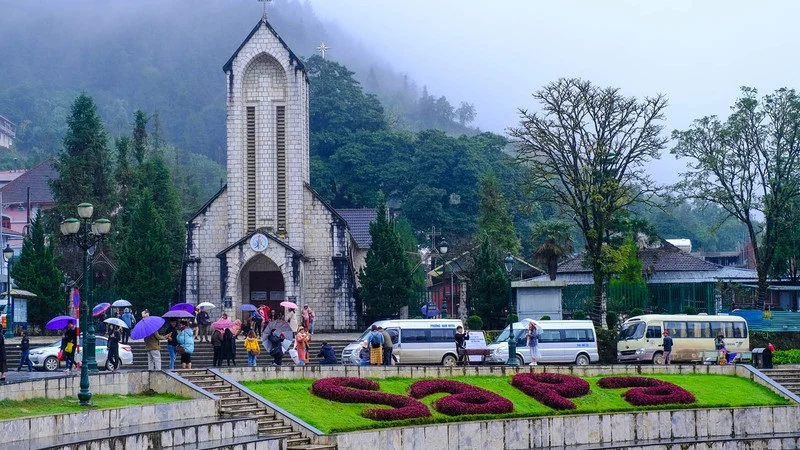
Visitors can combine a visit to the Sapa Stone Church with the central square (Source: Collected)
Travellers can begin by walking around the exterior of the church to appreciate its stone walls, bell tower and architectural details before moving towards the square. From here, the building can be viewed together with the surrounding mountain landscape, creating a classic Sapa scene where historic architecture meets the misty Northwest mountains.
The central location also makes the church easy to incorporate into a walking itinerary. Visitors can continue from the square towards Sun Plaza, Sapa Lake, local streets and nearby food and shopping areas without needing additional transportation.
3.2 Explore the church in different weather and light
The appearance of Sapa Stone Church changes considerably with the weather. On a clear morning, the stone façade and architectural details appear more defined, while mist can soften the outlines of the building and create the atmospheric setting for which Sapa is famous. Winter mornings can be particularly evocative when fog surrounds the town.
For photography enthusiasts, different times of day offer different perspectives. Morning light can highlight the texture of the stone walls, while the evening atmosphere around the illuminated square creates a warmer setting. Rather than looking for only one ideal photo spot, visitors can walk around the building and observe how its appearance changes with the surrounding light and weather.
The mountain climate can also be unpredictable, so travellers should remain flexible. Clouds and mist are not necessarily a disadvantage; they are part of the visual character of Sapa and can give the historic church a more atmospheric appearance.
3.3 Experience the cultural atmosphere around the church
The area surrounding Sapa Stone Church is closely connected with the cultural life of the town. The central square regularly hosts cultural activities and becomes particularly lively during weekend evenings. Traditional performances and community activities can provide visitors with an opportunity to encounter aspects of Northwest culture in the heart of Sapa.
Saturday evening can be especially interesting for travellers who want to connect a visit to the church with Sapa's traditional cultural atmosphere. The area around the square is associated with the Sapa Love Market, while nearby streets offer opportunities to explore local food, handicrafts and evening activities.
Visitors should remember that the church remains an active religious site. When entering the building, travellers should dress appropriately, keep their voices low and avoid interrupting prayers or religious services. This allows visitors to appreciate the heritage of the church while respecting its continuing religious function.
A visit to Sapa Stone Church offers more than a glimpse of a historic building. Its stone architecture, bell tower, religious heritage and mountain setting make it an important part of Sapa's identity. By combining the church with Ham Rong Mountain, Sapa Square, local food and weekend cultural activities, international travellers can experience the historic and contemporary character of the mountain town in one itinerary.


