




1. An introduction to Sapa food
One of the highlights of visiting Sapa is discovering its rich and diverse culinary scene. Thanks to its cool mountain climate, fertile valleys, and vibrant ethnic cultures, Sapa food offers flavours that are distinct from other regions of Vietnam. From hearty local specialties to fresh mountain produce, every meal reflects the natural beauty and cultural heritage of the northwest highlands.
The cuisine of Sapa is deeply influenced by the traditions of ethnic communities such as the Black Hmong, Red Dao, Giay, and Tay. Many recipes have been passed down through generations, using simple cooking methods that preserve the natural taste of locally sourced ingredients. As a result, dining in Sapa is not only about enjoying delicious food but also about experiencing the region's unique way of life.
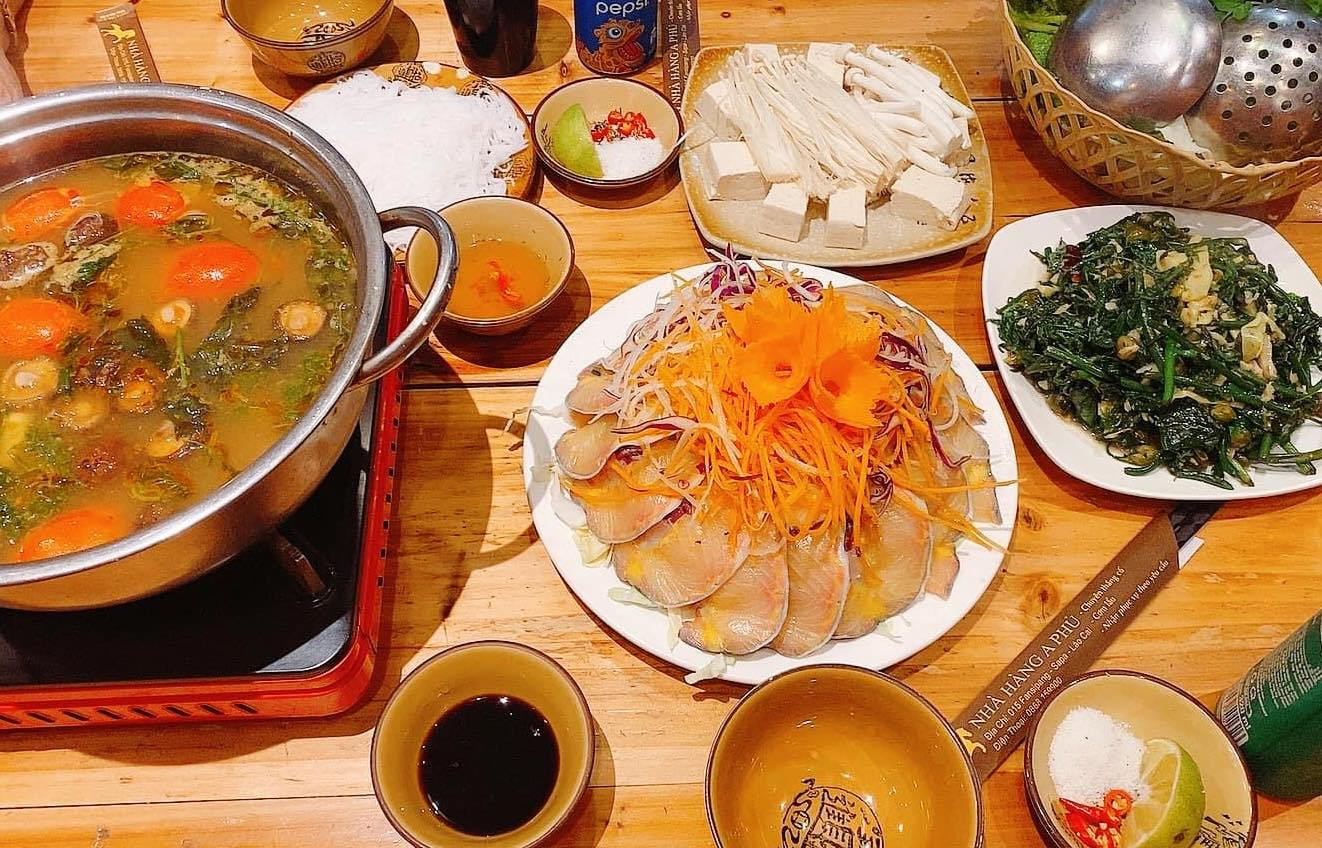
Visitors can experience a diverse range of cuisine when visiting Sapa
Freshness is another defining feature of Sapa food. The cool climate supports the cultivation of vegetables, herbs, mushrooms, and fruits throughout the year, while nearby rivers provide fresh salmon and sturgeon. Combined with fragrant mountain spices and seasonal ingredients, these products create dishes that are both comforting and full of flavour.
Today, visitors can enjoy Sapa food in many different settings, from traditional family-run restaurants and lively local markets to modern cafés and restaurants in Sapa Town and Sun World Fansipan Legend. Whether you are looking for authentic ethnic specialties or popular Vietnamese dishes prepared with local ingredients, Sapa offers something to suit every taste and travel style.
For many travellers, sampling Sapa food becomes one of the most memorable parts of their journey. Beyond satisfying your appetite, it offers an opportunity to connect with the local culture, discover regional traditions, and gain a deeper appreciation of one of Vietnam's most fascinating mountain destinations.
2. Must-try Sapa food
2.1. Salmon hotpot
Among the many dishes that define Sapa food, salmon hotpot is undoubtedly one of the most popular choices for both domestic and international visitors. Thanks to Sapa's cool year-round climate, the region has become one of the few places in Vietnam where high-quality salmon is successfully farmed. The fish has a firm texture, vibrant colour, and naturally sweet flavour, making it the perfect ingredient for a hearty mountain meal.
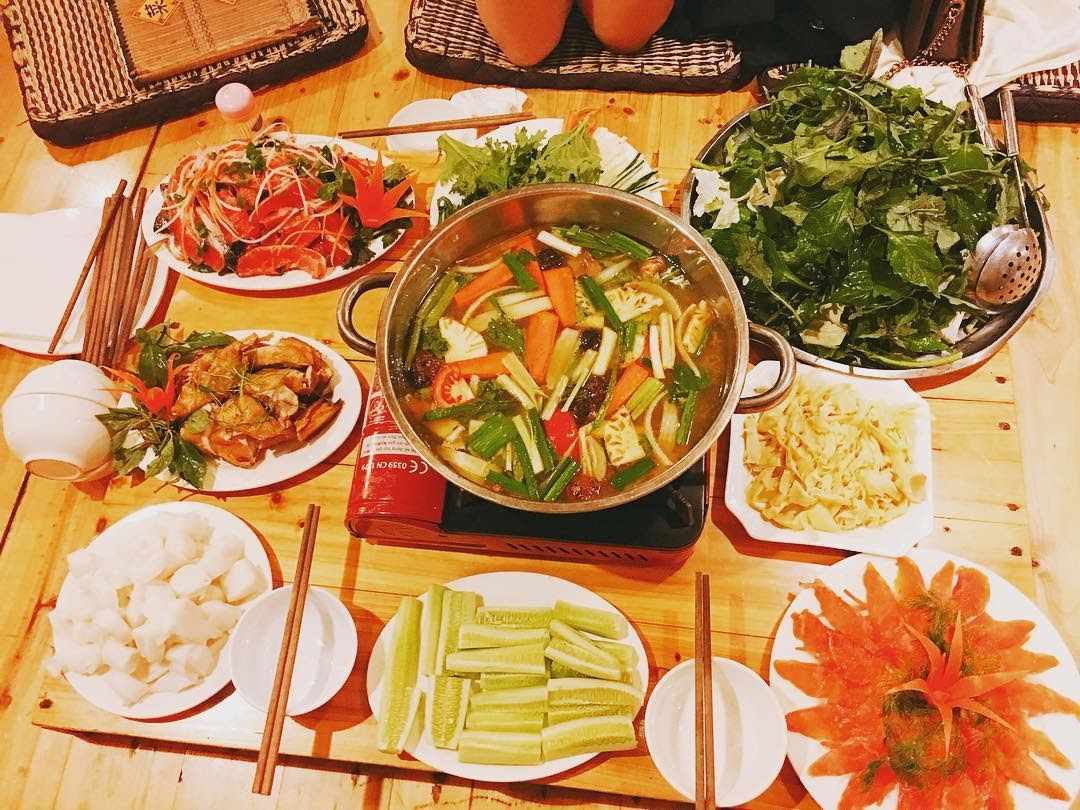
Salmon hot pot is a must-try dish when visiting Sapa
The hotpot is typically prepared with a light, slightly tangy broth accompanied by fresh mountain vegetables, mushrooms, tofu, herbs, and rice noodles. Many restaurants also offer additional salmon dishes such as sashimi, grilled salmon, stir-fried salmon, and crispy salmon skin, allowing visitors to enjoy this local specialty in different ways. Sharing a warm salmon hotpot after a day of exploring Fansipan or trekking through nearby villages has become one of the signature dining experiences in Sapa.
2.2. Sturgeon hotpot
Another iconic highlight of Sapa food is sturgeon hotpot, a comforting dish that perfectly suits the cool mountain climate. Locally farmed sturgeon is prized for its tender, slightly chewy meat and rich collagen content, giving the fish a unique texture that absorbs the flavours of the broth beautifully without becoming dry. The freshness of locally raised sturgeon makes it one of Sapa's most distinctive culinary specialties.
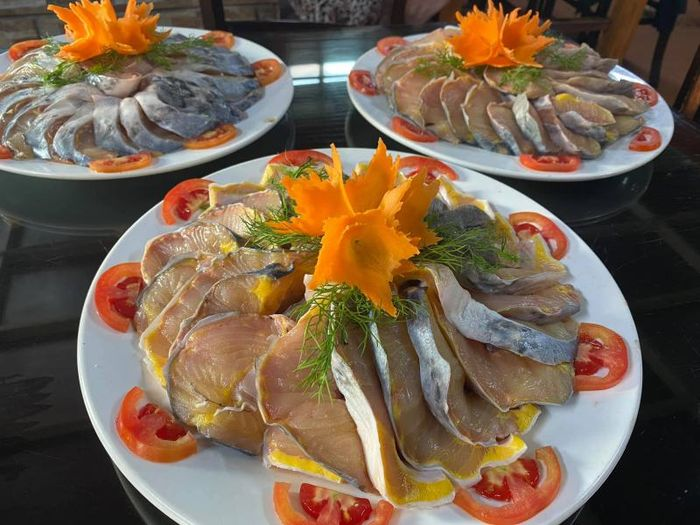
Delicious sturgeon is a famous specialty in Sapa
Served with mushrooms, seasonal vegetables, tofu, herbs, and fresh noodles, the hotpot offers a balanced combination of nutrition and flavour. Many restaurants also prepare grilled, steamed, or fried sturgeon, but the hotpot remains the favourite choice, particularly during winter and cooler evenings. Whether travelling with family or friends, enjoying a bubbling pot of sturgeon surrounded by Sapa's mountain scenery is an experience many visitors remember long after their trip.
2.3. Thang Co
For travellers interested in authentic ethnic cuisine, Thang Co is one of the most traditional examples of Sapa food. Originally created by the Hmong people, this centuries-old dish is deeply rooted in the culture of Vietnam's northwest highlands. Prepared by slowly simmering meat with a carefully selected blend of mountain herbs and spices such as mắc khén, cardamom, cinnamon, and ginger, Thang Co develops a rich, aromatic broth with a distinctive flavour unlike any other Vietnamese dish.
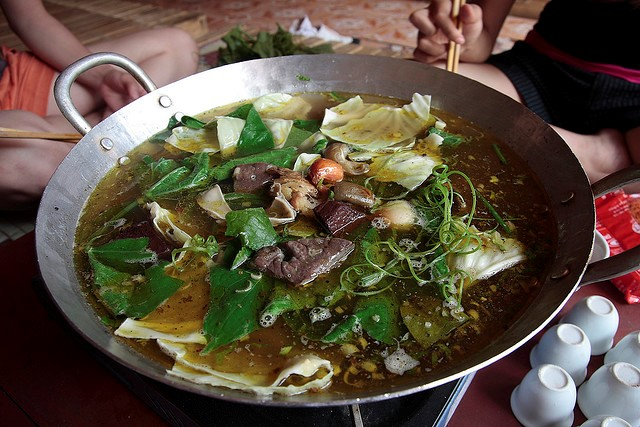
Thang Co is a unique dish that impresses many foreign tourists
Today, visitors can find both traditional and modern versions of Thang Co throughout Sapa. While the authentic recipe remains popular among local communities, many restaurants offer milder variations that are better suited to international visitors. Sampling Thang Co is not simply about trying a local dish—it is also an opportunity to experience the culinary traditions and cultural identity of Sapa's ethnic minorities.
2.4. Black chicken
Black chicken is another must-try Sapa food specialty that reflects the region's mountain heritage. This native breed is easily recognised by its naturally black skin, bones, and meat, and is highly valued for its firm texture, rich flavour, and nutritional benefits. Raised naturally in the mountain environment, black chicken is considered healthier than conventional poultry and is commonly featured in traditional northwest cuisine.
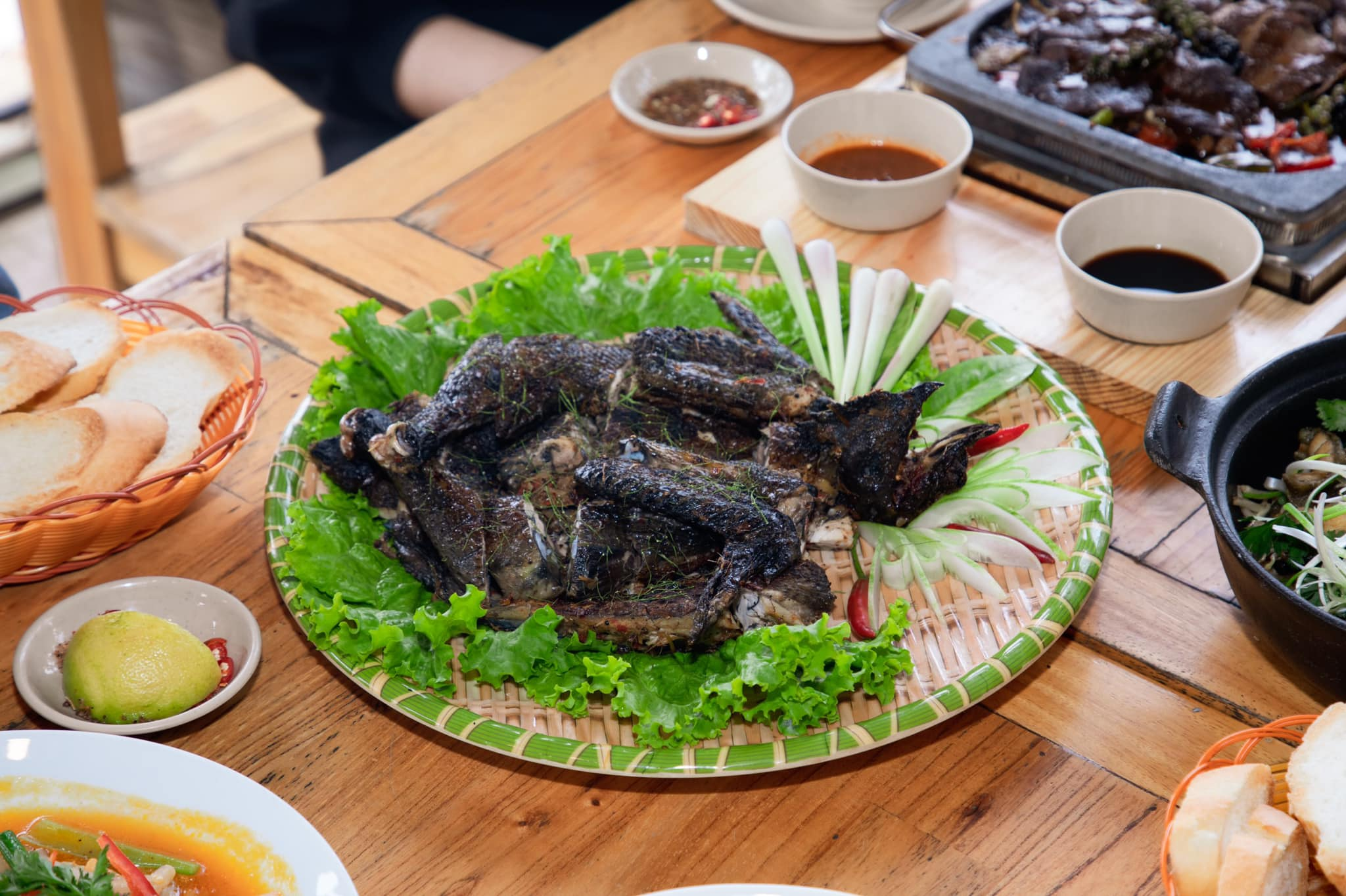
Sapa black chicken has a delicious flavor characteristic of the Northwest mountainous region
Restaurants prepare black chicken in several ways, including charcoal grilling, steaming with medicinal herbs, roasting, or cooking it in nourishing soups. The meat is often served alongside locally grown vegetables and mountain herbs that enhance its natural flavour. Especially during colder months, black chicken is a favourite choice for visitors seeking a warm, hearty, and authentic taste of Sapa.
2.5. Bamboo-tube sticky rice with grilled mountain specialties
No exploration of Sapa food is complete without trying bamboo-tube sticky rice, locally known as com lam. Prepared by placing glutinous rice inside fresh bamboo tubes and roasting them over charcoal, this traditional cooking method gives the rice a distinctive smoky aroma and soft, chewy texture. The bamboo also helps preserve the rice's natural sweetness while adding a subtle fragrance that cannot be achieved through conventional cooking.
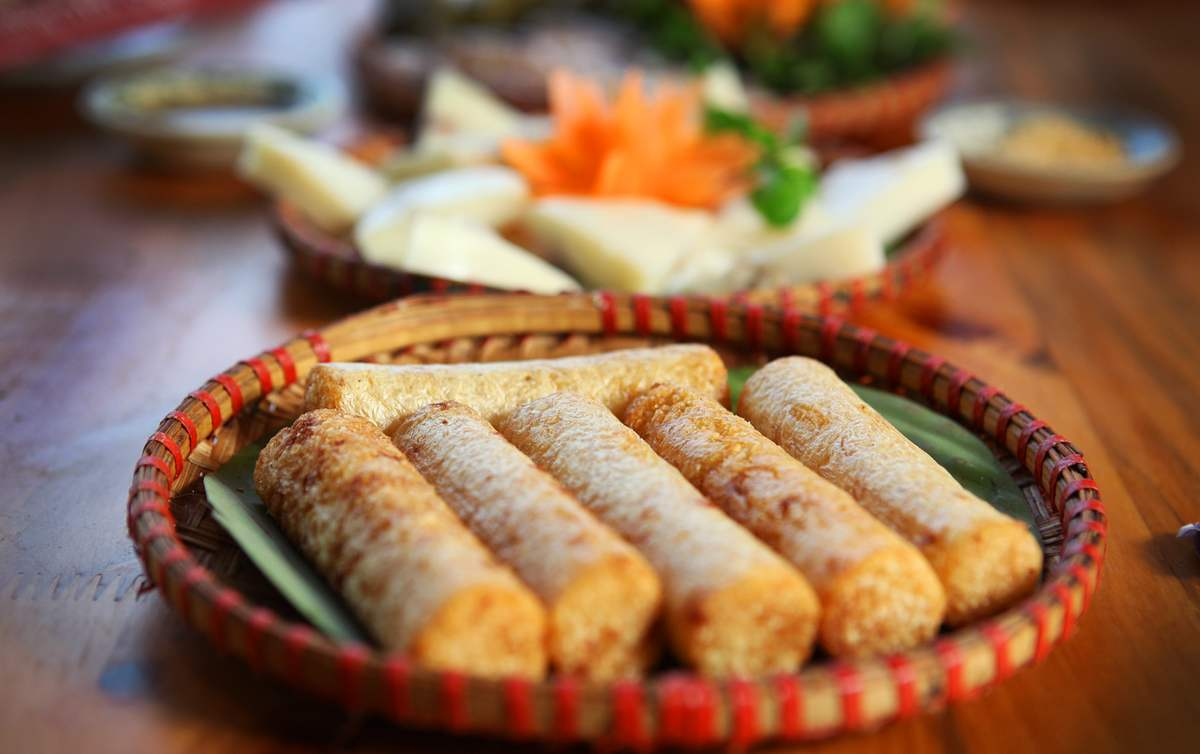
Visitors must try the fragrant and sticky rice cooked in bamboo tubes when visiting Sapa
Com lam is commonly served alongside grilled mountain pork, free-range chicken, buffalo meat, or locally grown vegetables, creating a simple yet satisfying meal inspired by the culinary traditions of Sapa's ethnic communities. These rustic dishes showcase the region's emphasis on fresh ingredients, traditional cooking techniques, and bold mountain flavours, making them favourites among visitors seeking an authentic dining experience.
2.6. Grilled street food at Sapa Night Market
One of the most enjoyable ways to experience Sapa food is by exploring the lively Sapa Night Market after sunset. As temperatures drop, the market comes alive with rows of charcoal grills preparing freshly cooked local snacks. The smoky aroma fills the cool mountain air, creating an inviting atmosphere that attracts both locals and tourists looking for a casual evening meal.
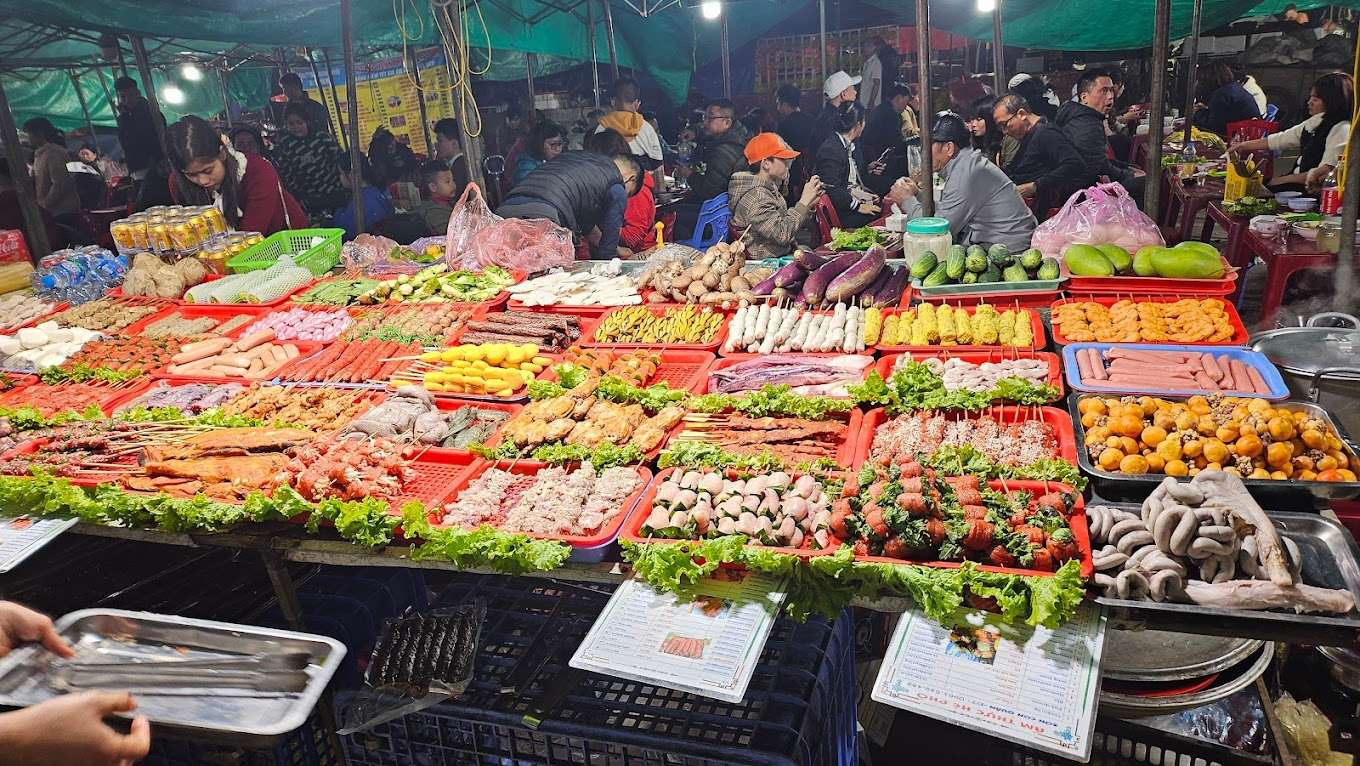
Visitors can experience a variety of grilled dishes when visiting Sapa Night Market
Popular street foods include grilled pork skewers, beef rolls, mountain sausages, roasted sweet potatoes, grilled corn, chestnuts, sticky rice cakes, eggs, and other seasonal specialties. Visitors can stroll through the market while sampling different dishes, chatting with local vendors, and enjoying the vibrant atmosphere of Sapa after dark. Beyond the delicious food, the night market also offers an excellent opportunity to experience the warmth and hospitality of the local community, making it one of the most memorable culinary experiences in Sapa.
3. Tips for enjoying Sapa food
3.1. Try local specialties instead of only familiar Vietnamese dishes
While Sapa offers many popular Vietnamese dishes such as pho, fried rice, and spring rolls, visitors should take the opportunity to explore authentic Sapa food made with local ingredients. Signature dishes such as salmon hotpot, sturgeon hotpot, black chicken, bamboo-tube sticky rice, and Thang Co showcase the unique flavours of the northwest highlands and cannot be experienced in quite the same way elsewhere in Vietnam.
If you're unfamiliar with some traditional dishes, don't hesitate to ask restaurant staff for recommendations or choose restaurants that offer tasting menus featuring several local specialties. This allows you to experience a wider variety of flavours while learning more about the region's culinary traditions.
3.2. Visit local markets for an authentic food experience
Some of the best Sapa food can be found beyond restaurants. Local markets, especially Sapa Market and Sapa Night Market, are excellent places to sample freshly prepared street food and discover regional specialties. Here, visitors can enjoy grilled meats, roasted chestnuts, bamboo-tube sticky rice, local cakes, mountain vegetables, herbal drinks, and seasonal fruits while experiencing the lively atmosphere of the town.
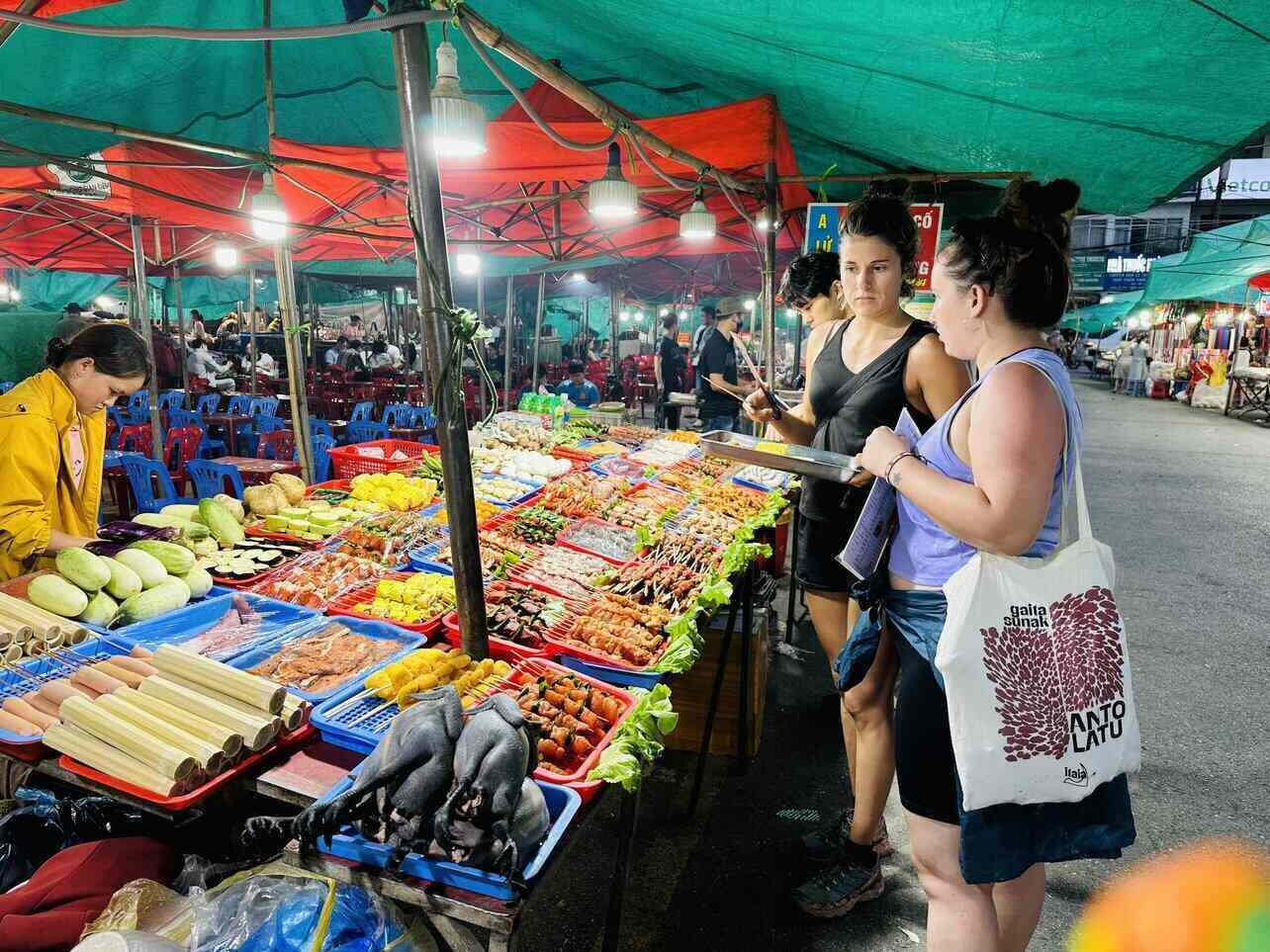
Tourists experience local cuisine at Sapa Night Market
Markets are also great places to observe everyday life and interact with local vendors. In addition to ready-to-eat dishes, visitors can purchase Shan Tuyet tea, dried buffalo meat, mushrooms, mountain spices, and other specialty products to take home as souvenirs.
3.3. Pair your meal with seasonal mountain ingredients
One of the reasons Sapa food is so distinctive is its use of seasonal produce grown in the cool mountain climate. Depending on the time of year, restaurants feature a variety of fresh vegetables, mushrooms, herbs, bamboo shoots, and locally farmed salmon and sturgeon. Choosing dishes prepared with seasonal ingredients ensures the freshest flavours while supporting local farmers and producers.
Autumn and winter are particularly popular seasons for enjoying hotpots and grilled dishes, while spring and summer offer an abundance of fresh vegetables and mountain herbs. Asking for seasonal recommendations is an easy way to discover dishes that are at their best during your visit.
3.4. Explore both restaurants and street food
To fully appreciate Sapa food, combine meals at well-established restaurants with visits to local street food stalls. Restaurants are ideal for signature dishes such as salmon hotpot, sturgeon hotpot, and black chicken, while the night market offers a completely different culinary experience with freshly grilled snacks, local desserts, and traditional treats.
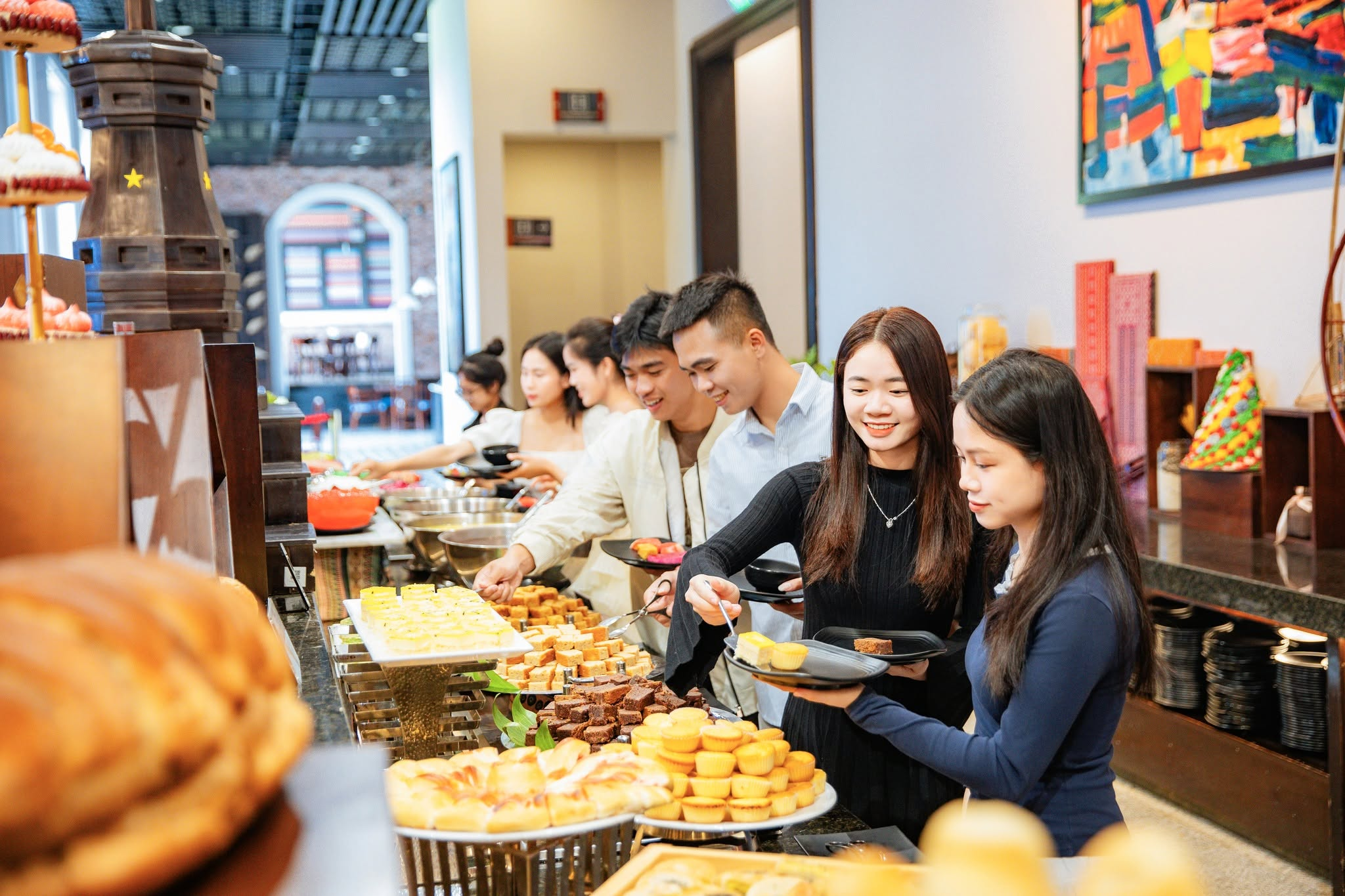
Tourists should combine dining experiences at restaurants and local markets to enjoy a diverse range of food
Trying both styles of dining provides a broader understanding of Sapa's food culture. It also allows visitors to experience everything from family-style mountain meals to casual evening snacks enjoyed by local residents.
3.5. Combine local cuisine with sightseeing
Food is an essential part of any trip to Sapa, so consider planning your meals around the day's attractions. After visiting Fansipan or trekking through villages such as Cat Cat or Ta Van, relax with a hearty hotpot or grilled mountain specialties before continuing your journey. In the evening, stroll through Sapa Night Market to sample local street food while enjoying the town's lively atmosphere.
Combining sightseeing with memorable dining experiences creates a more balanced itinerary and allows visitors to experience not only Sapa's spectacular landscapes but also the rich culinary traditions that make the destination so special.
From comforting salmon and sturgeon hotpots to traditional ethnic specialties and lively night market snacks, Sapa food reflects the rich natural resources and cultural heritage of Vietnam's northwest mountains. Every dish tells a story of local traditions, seasonal ingredients, and authentic mountain flavours. Whether you're visiting Sapa for a short getaway or a longer adventure, sampling its diverse cuisine is an essential part of the journey and a delicious way to connect with the destination.


