


1. Fansipan architecture and the spiritual landscape of the mountains
Fansipan architecture is one of the distinctive features of the mountain experience, where spiritual structures, stone pathways and statues are set against the dramatic landscape of the Hoang Lien Son range. Rather than appearing as an isolated collection of buildings, the architectural complex is integrated into the natural terrain, creating a journey through different elevations and spaces as visitors make their way towards the summit at 3,143 metres.
The architecture around Fansipan draws strongly from traditional Buddhist aesthetics and Vietnamese religious heritage. Temples, shrines, statues and stone structures are arranged along the mountain slopes, while elements such as tiled roofs, wooden details, carved ornamentation and stonework contribute to a sense of harmony with the surrounding landscape. The elevated setting gives these architectural features a distinctive character, particularly when clouds and mountain mist move through the complex.
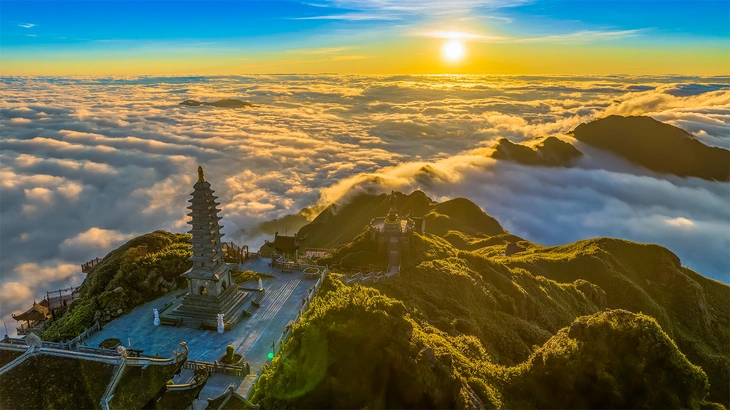
A magical scene atop Fansipan (Source: Collected)
One of the most memorable aspects of Fansipan architecture is the relationship between the built environment and the mountain itself. Stone stairways guide visitors through the spiritual complex, connecting different landmarks while creating changing views of the surrounding peaks and valleys. From certain viewpoints, architectural details stand out against the sky; at other moments, mist partially surrounds the structures, creating an atmosphere closely associated with the highland setting.
The complex also offers international travellers an opportunity to explore the spiritual dimension of Fansipan alongside its natural beauty. Visitors can encounter Buddhist statues, temples and symbolic architectural elements while learning more about Vietnamese religious traditions. The experience is different from simply reaching a mountain summit, as the journey combines landscape, architecture and spirituality within one destination.
For travellers interested in architecture and cultural heritage, exploring Fansipan architecture can therefore add another layer to a visit to Vietnam's highest peak. The combination of traditional forms, Buddhist symbolism, mountain terrain and carefully arranged pathways creates a distinctive cultural landscape that complements the spectacular scenery of Fansipan.
2. Key architectural highlights of Fansipan
2.1. The spiritual complex on the summit
The spiritual complex is one of the most recognisable elements of Fansipan architecture, creating a distinctive cultural landscape high above Sapa. Set across the mountain terrain, the complex brings together temples, Buddhist statues, stone structures and pathways that guide visitors through a sequence of spiritual spaces. The architecture is carefully positioned within the natural setting, allowing buildings and religious landmarks to become part of the mountain landscape rather than standing apart from it.
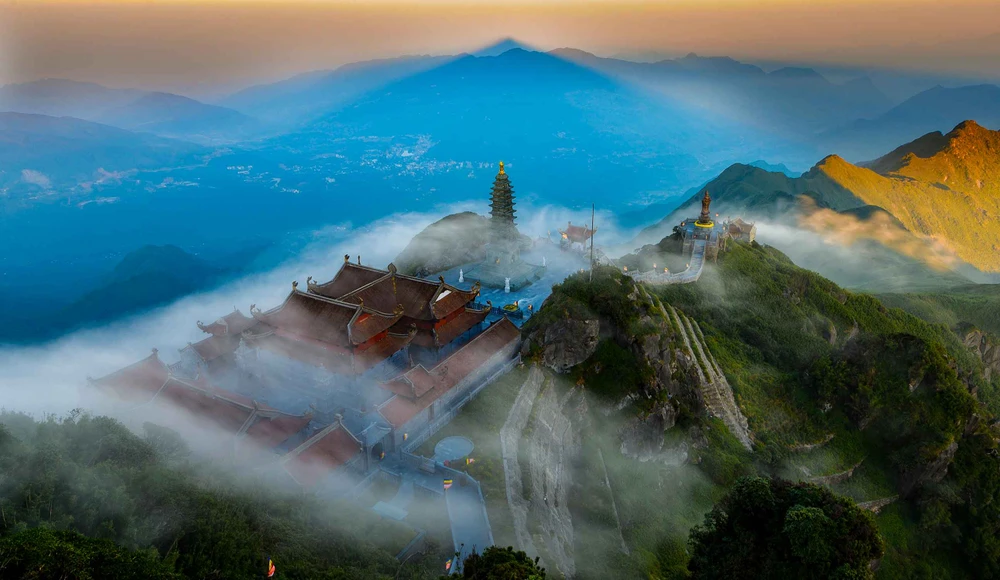
The spiritual complex emerging from the mist on Fansipan (Source: Collected)
Traditional Vietnamese and Buddhist architectural influences can be seen in the forms and details of the structures. Tiled roofs, wooden elements, stonework and decorative features create a visual language associated with Vietnamese religious architecture, while the high-altitude setting gives these familiar forms a unique character. Surrounded by clouds, mountain peaks and open skies, the structures can appear dramatically different depending on the weather and time of day.
The spiritual complex also creates a gradual sense of discovery. Visitors move along stone stairways and pathways, encountering different architectural landmarks as they approach the higher parts of Fansipan. This progression makes the journey itself an important part of the experience, connecting architecture, spirituality and the natural terrain in a single mountain setting.
2.2. Stone stairways and mountain pathways
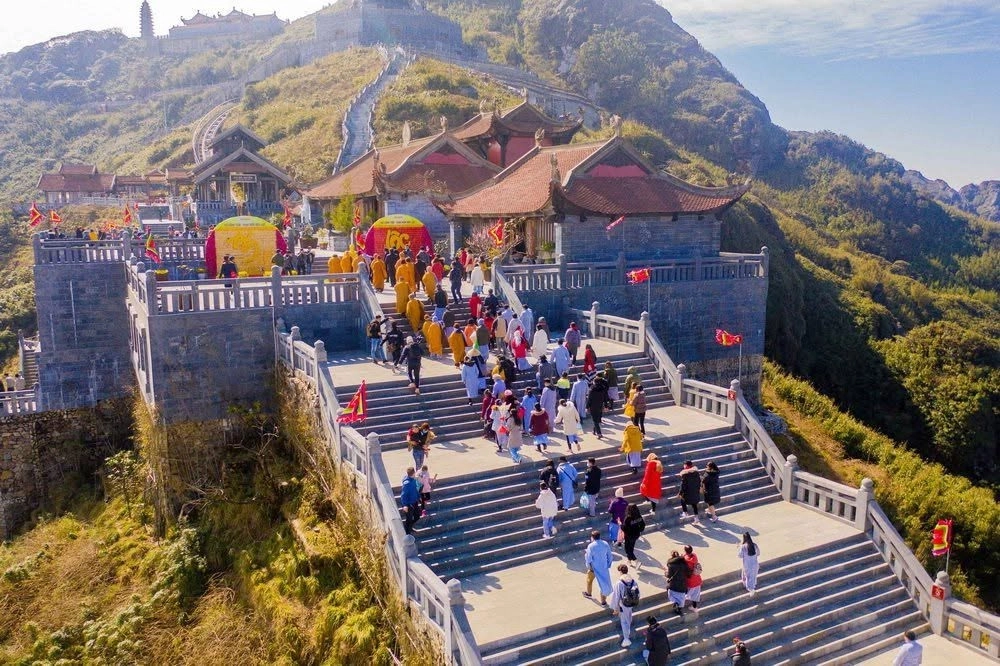
Stone stairways are an important part of the architectural experience at Fansipan. Rather than simply providing access between different levels, these pathways form a visual connection between the various spiritual structures across the mountain. The use of natural-looking stone helps the built environment blend with the rugged terrain, while the ascending routes reinforce the sense of travelling upwards towards a sacred mountain destination.
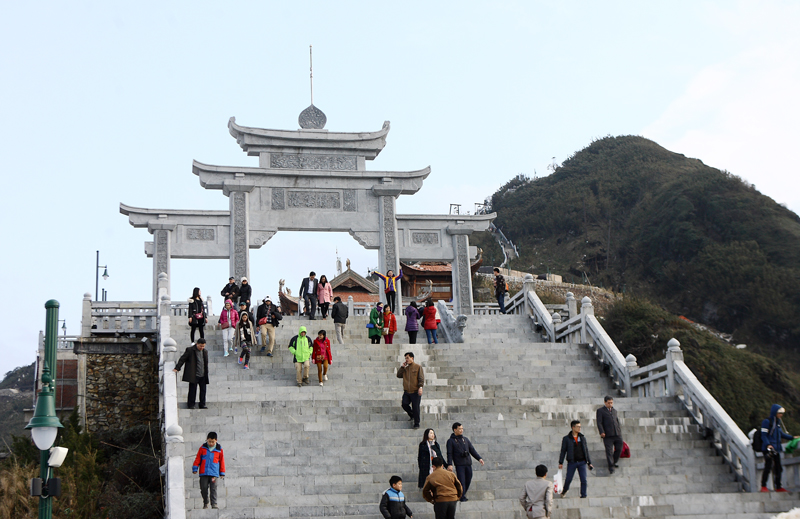
Stone steps connecting the cable car station to the spiritual complex (Source: Collected)
Walking along these stairways gives visitors changing perspectives of the surrounding architecture. A temple roof may appear between trees and stone walls at one point, while a statue or mountain view becomes the focus further along the route. This constantly changing perspective gives Fansipan architecture a strong sense of movement, allowing visitors to experience the complex gradually rather than viewing all of its elements from a single location.
The pathways also contribute to the atmosphere of the spiritual complex. The combination of stone, traditional architectural forms, mountain vegetation and open skies creates a setting that feels closely connected to its surroundings. Visitors interested in architectural photography can find different compositions throughout the route, particularly when mist or clouds create layers between the structures and the surrounding mountains.
2.3. Buddhist statues and symbolic elements
Buddhist statues form another significant component of Fansipan architecture, adding both visual scale and spiritual meaning to the mountain complex. Several large-scale religious sculptures are positioned within the landscape, creating focal points along the visitor journey. Their placement against the mountain backdrop gives the statues a distinctive presence while reinforcing the spiritual character of Fansipan.
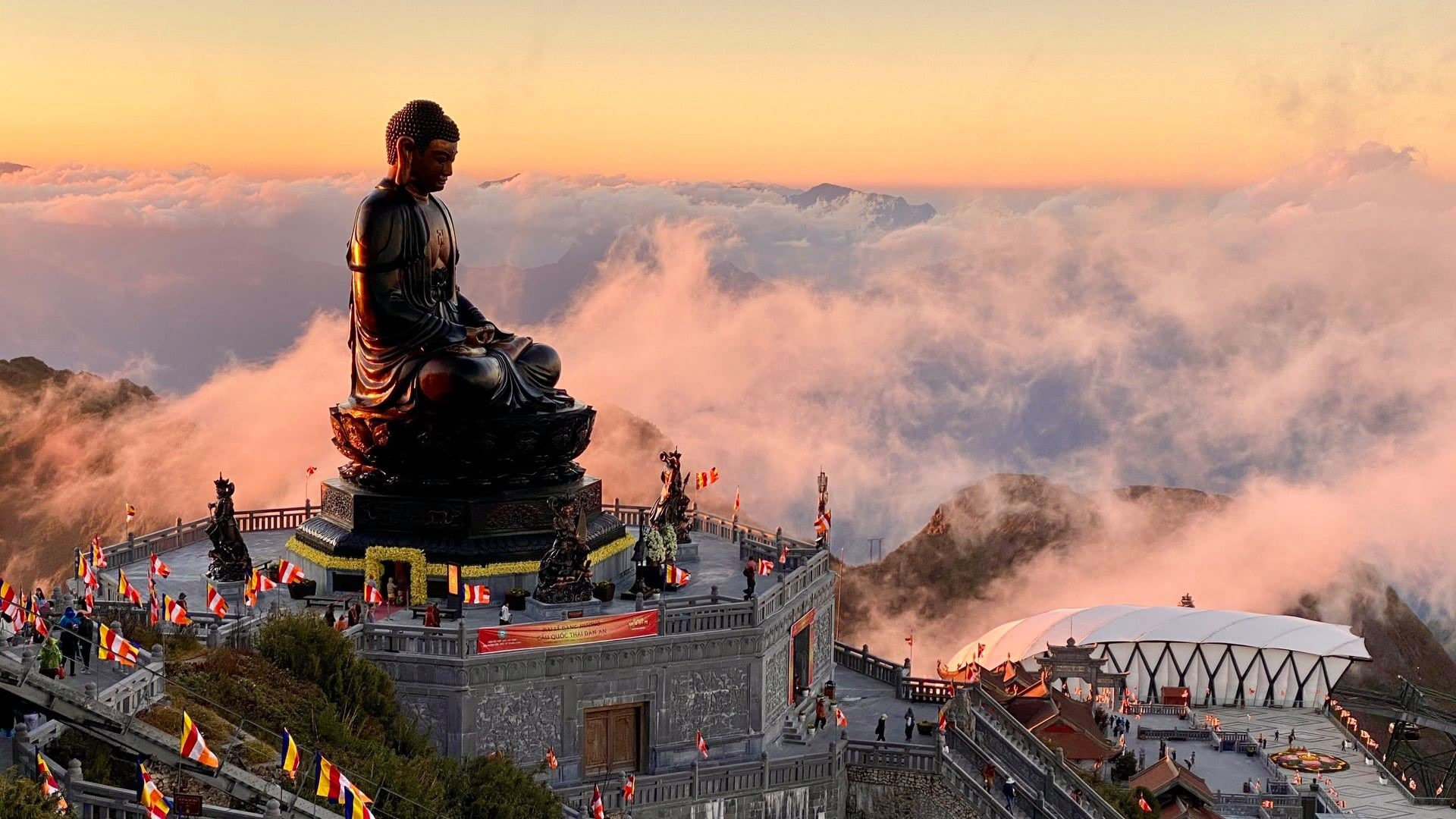
The Great Buddha statue amidst a sea of clouds (Source: Collected)
The statues can be viewed not only as individual works but also as elements within a broader architectural composition. Stone pathways, temples, terraces and surrounding mountain scenery frame these sculptures and create different perspectives as visitors move through the complex. The contrast between carefully crafted religious forms and the vast natural landscape is one of the features that makes the Fansipan experience visually distinctive.
For international travellers, these statues can also provide an opportunity to learn more about Buddhist traditions in Vietnam. Visitors can observe the iconography and spatial arrangement of the complex while appreciating how religious architecture and sculpture have been incorporated into a high-altitude environment. Taking time to understand the cultural context can make the architectural experience more meaningful than simply photographing the landmarks.
2.4. Traditional Vietnamese temple architecture
Traditional Vietnamese temple architecture provides an important visual foundation for the spiritual spaces at Fansipan. Familiar elements such as curved or layered tiled roofs, wooden architectural details, ornamental decoration and stone features are adapted to the mountain environment. These details create a sense of continuity with Vietnam's wider religious and architectural heritage while giving the complex a distinctive highland setting.
The surrounding landscape plays an important role in how these structures are experienced. Instead of being separated from nature by large urban spaces, the temples are positioned among mountain slopes, stone terraces and vegetation. The result is an architectural composition in which buildings, pathways and natural features work together to create a cohesive visual environment.
This relationship between traditional architectural forms and the mountainous setting is particularly noticeable when viewed from different elevations. From a lower pathway, a temple roof may become a focal point against the sky, while from a higher position visitors can see how the structures are arranged across the slope. These changing viewpoints make exploring the complex a more immersive architectural experience.
2.5. Architecture shaped by the mountain landscape
The most distinctive quality of Fansipan architecture lies in its relationship with the surrounding terrain. The complex follows the natural contours and elevation changes of the mountain, creating a sequence of spaces rather than one large, uniform architectural area. Stone pathways, terraces and structures are arranged to work with the steep landscape, allowing visitors to move gradually through the mountain environment.
This approach creates a strong connection between architecture and scenery. Buildings and statues are framed by forests, clouds and distant peaks, while open sections of the pathway provide panoramic views across the Hoang Lien Son range. Weather can transform the appearance of the complex throughout the day, with clear conditions revealing distant landscapes and mist creating a more atmospheric setting around the structures.
For visitors interested in architectural tourism, this integration with nature is an important part of the appeal. Fansipan demonstrates how religious and cultural spaces can be experienced together with a dramatic natural landscape. Exploring the architecture therefore becomes not only a study of buildings and decorative details but also a journey through the mountain itself.
3. How to experience Fansipan architecture
3.1. Take the cable car for a different perspective
The journey to Fansipan begins before visitors reach the architectural complex itself. Taking the cable car provides a unique perspective of the mountain landscape, allowing travellers to see the Hoang Lien Son range, forests and valleys from above. As the cabin approaches the higher elevations, the relationship between the natural terrain and the spiritual complex gradually becomes part of the overall experience.
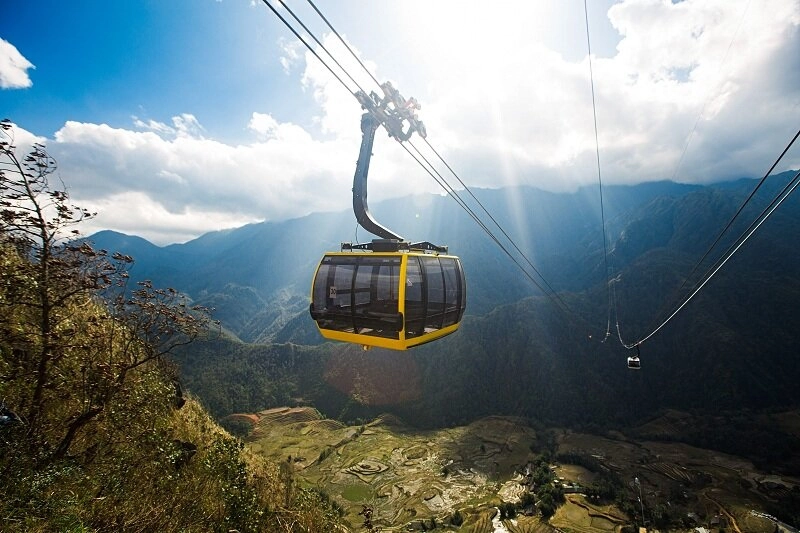
The Fansipan cable car (Source: Collected)
From above, visitors can appreciate how the buildings and pathways are positioned within the mountain environment. The architecture does not dominate the landscape but appears as part of a larger composition of stone, vegetation and mountain slopes. This perspective helps travellers understand why the location and elevation are important characteristics of Fansipan architecture.
The cable car journey also creates a visual transition from the urban setting of Sapa to the high-altitude spiritual landscape. Once visitors reach the upper station, they can continue on foot and experience the architectural details more closely. Combining these two perspectives — viewing the complex from a distance and exploring it on foot — provides a more complete understanding of the destination.
3.2. Walk through the spiritual complex
Walking is an important part of experiencing Fansipan architecture, as many of the architectural landmarks are connected by stone stairways and mountain pathways. Rather than seeing the complex as a single attraction, visitors can follow the routes gradually, discovering temples, statues and other structures along the way. The changing elevation also creates different viewpoints of both the architecture and surrounding landscape.
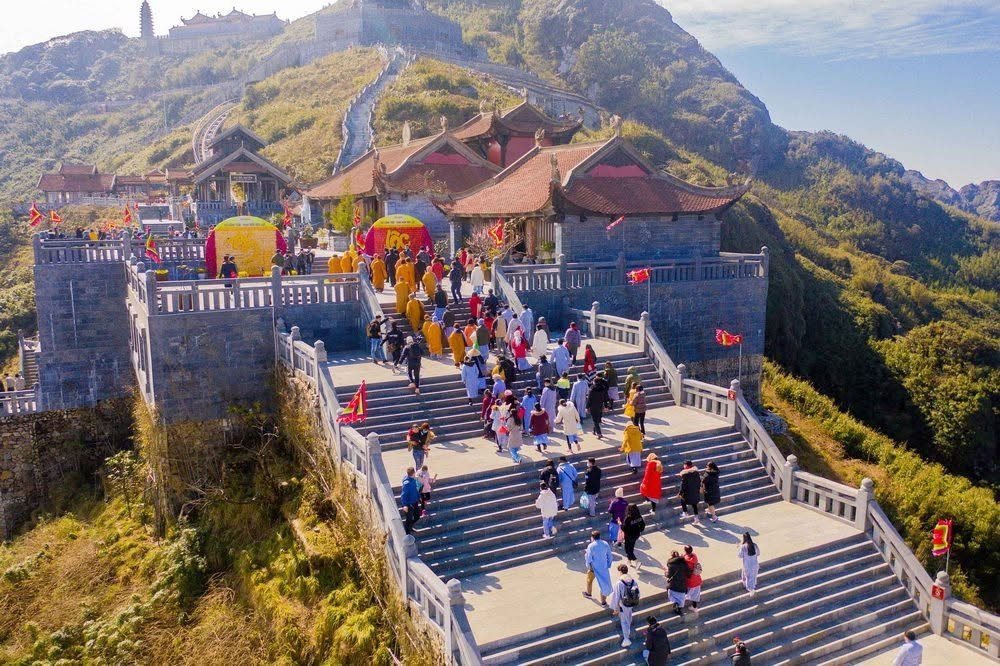
Visitors explore the architecture of Fansipan on foot (Source: Collected)
Travellers should take time to observe the smaller details as they move through the complex. Rooflines, stonework, decorative elements and Buddhist sculptures can reveal aspects of Vietnamese religious architecture that may be missed when simply moving towards the summit. The surrounding mountain scenery also changes with every section of the pathway, creating different visual relationships between the structures and nature.
The walking experience can be particularly atmospheric when clouds or mist move through the mountain. At one moment, a temple may be clearly visible against the sky, while moments later the surrounding landscape may become partially covered in mist. These natural changes give the architecture a dynamic quality and make each visit to Fansipan slightly different.
3.3. Combine architecture with the Fansipan summit experience
Reaching the summit of Fansipan at 3,143 metres adds another dimension to the architectural experience. The summit itself is surrounded by the broader spiritual and cultural landscape, allowing visitors to combine a sense of achievement with an exploration of Vietnamese religious heritage. The iconic summit marker also provides a natural endpoint to the journey through the mountain complex.
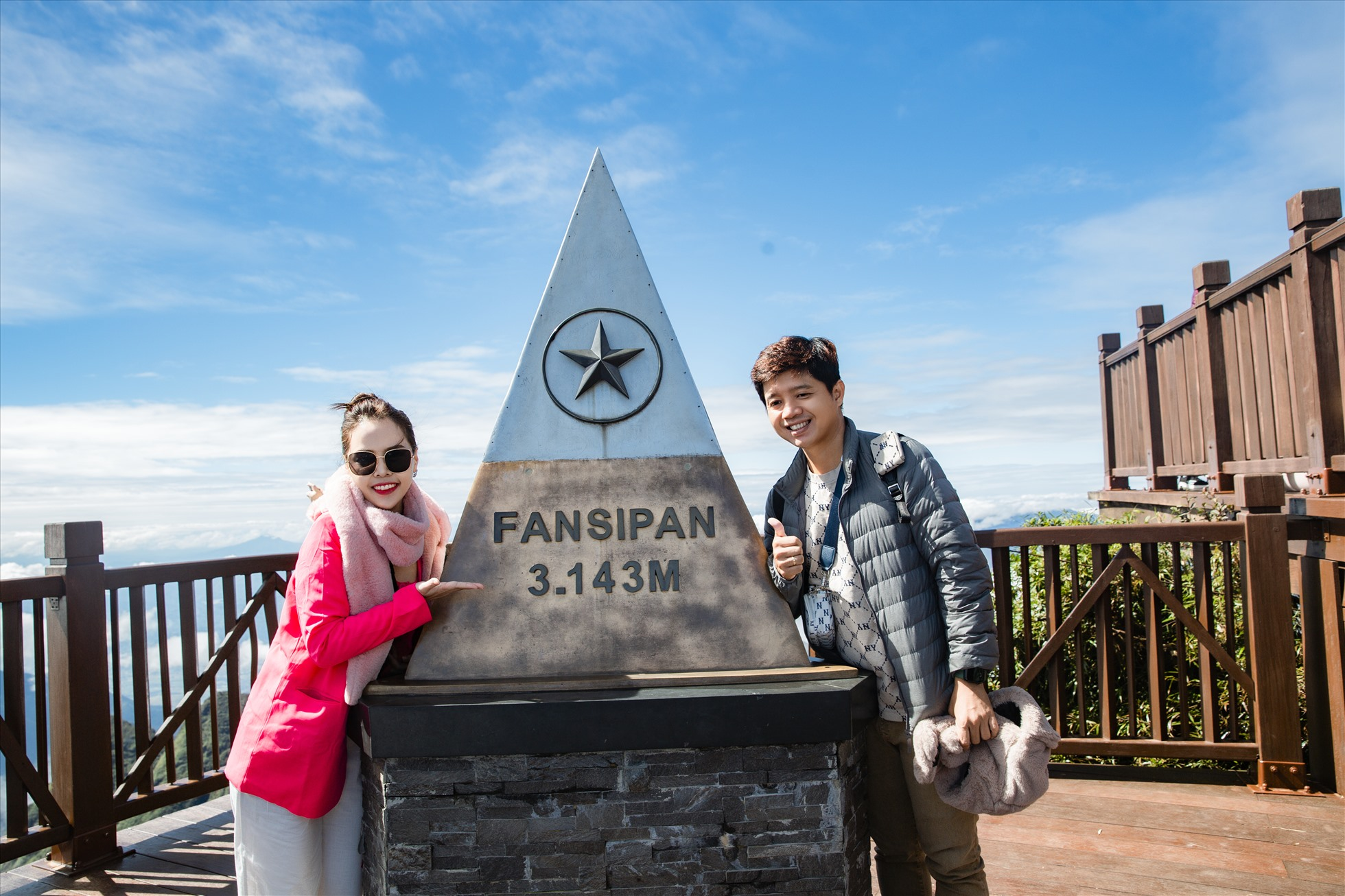
A couple checking in at the summit of Fansipan (Source: Collected)
After reaching the summit, visitors can take time to look back at the surrounding structures and landscape rather than immediately leaving the area. The combination of stone pathways, temples, statues and mountain peaks creates opportunities to appreciate how architecture has been integrated into the high-altitude environment. Photography can also capture the contrast between traditional architectural forms and the expansive natural scenery.
For international travellers, this combination makes Fansipan more than a mountain viewpoint. The summit experience connects nature, architecture and spirituality in one journey. Exploring the complex with an interest in its cultural and architectural details can therefore provide a deeper appreciation of Fansipan architecture and its role in shaping the identity of Vietnam's highest mountain destination.
3.4. Visit at the right time and prepare for mountain conditions
Weather plays an important role in experiencing Fansipan architecture. Conditions at 3,143 metres can differ considerably from those in Sapa town, with lower temperatures, wind, clouds and mist affecting visibility. Clear weather can reveal the surrounding Hoang Lien Son mountains, while mist can create a quieter and more atmospheric setting around the temples and statues.
Travellers should therefore prepare with comfortable footwear and suitable layers, particularly when planning to spend several hours exploring the summit area. Allowing additional time is also useful, as visitors may want to stop at different viewpoints, photograph architectural details or simply enjoy the mountain atmosphere without rushing through the complex.
A flexible approach can make the experience more rewarding. Instead of focusing only on reaching the summit, travellers can appreciate the entire journey — from the cable car and mountain pathways to the spiritual complex and architectural landmarks. This allows Fansipan architecture to be experienced as part of a wider cultural and natural journey through the Hoang Lien Son mountains.
Exploring Fansipan architecture offers more than an appreciation of traditional buildings and Buddhist structures. From the stone pathways and spiritual complex to the statues and temples integrated into the mountain terrain, each element contributes to a distinctive cultural landscape. Combined with the cable car journey, summit experience and spectacular views of the Hoang Lien Son range, Fansipan provides international travellers with an opportunity to discover the connection between Vietnamese architecture, spirituality and nature.