




1. About May Village cultural experience
A May Village cultural experience offers international travellers an accessible way to discover the traditions, architecture and everyday life of Northwest Vietnam in one destination. Located at the foot of Fansipan within the Sun World Fansipan Legend complex, May Village brings together distinctive elements of local culture, from traditional houses and ethnic costumes to handicrafts, performances and regional cuisine.
One of the highlights is the village’s collection of traditional houses representing different ethnic communities from the Northwest. Each house reflects characteristic architectural styles and living spaces, helping visitors understand how local communities have adapted their homes and lifestyles to the mountainous environment. The setting also creates opportunities to observe details that are often difficult to experience during a short trip to remote villages. Culture at May Village extends beyond architecture. Visitors can encounter traditional music, dances, rituals and handicraft-making activities associated with ethnic communities such as the H’Mong, Red Dao, Tay, Giay and Xa Pho. Traditional costumes, colourful textiles and handmade crafts add another layer to the experience, allowing travellers to explore cultural heritage through both observation and interaction.
Visitors experience local life at May Village (Source: Collected)
Food is another important part of the journey. Local specialities inspired by Northwest cuisine, including grilled dishes, smoked buffalo meat, bamboo-tube sticky rice and colourful sticky rice, introduce visitors to the flavours and ingredients associated with mountain communities. For international travellers, trying regional food can be a natural way to connect the cultural experience with everyday local life. May Village can also be incorporated into a wider Fansipan itinerary. After travelling by the Muong Hoa mountain train and cable car towards Fansipan, visitors can explore the mountain’s spiritual landscape before returning to May Village for a closer look at Northwest culture. The combination of mountain scenery, architecture, traditions, cuisine and community-inspired experiences makes the destination suitable for travellers who want more than a scenic visit to Sapa.
For those looking to understand the cultural character of the Northwest while exploring Sapa and Fansipan, May Village provides a convenient starting point. Rather than experiencing individual cultural elements separately, visitors can encounter architecture, traditions, crafts, food and performances within one carefully arranged mountain setting.
2. Best ways to enjoy a May Village cultural experience
2.1 Explore traditional houses representing Northwest ethnic groups
One of the most distinctive parts of a May Village cultural experience is the opportunity to explore traditional houses representing different ethnic communities in Northwest Vietnam. The village features 11 traditional houses associated with nine ethnic groups, creating a compact cultural setting where international travellers can discover the diversity of mountain communities without having to travel between multiple remote villages. Each house is designed to reflect characteristic architectural features and aspects of everyday life.
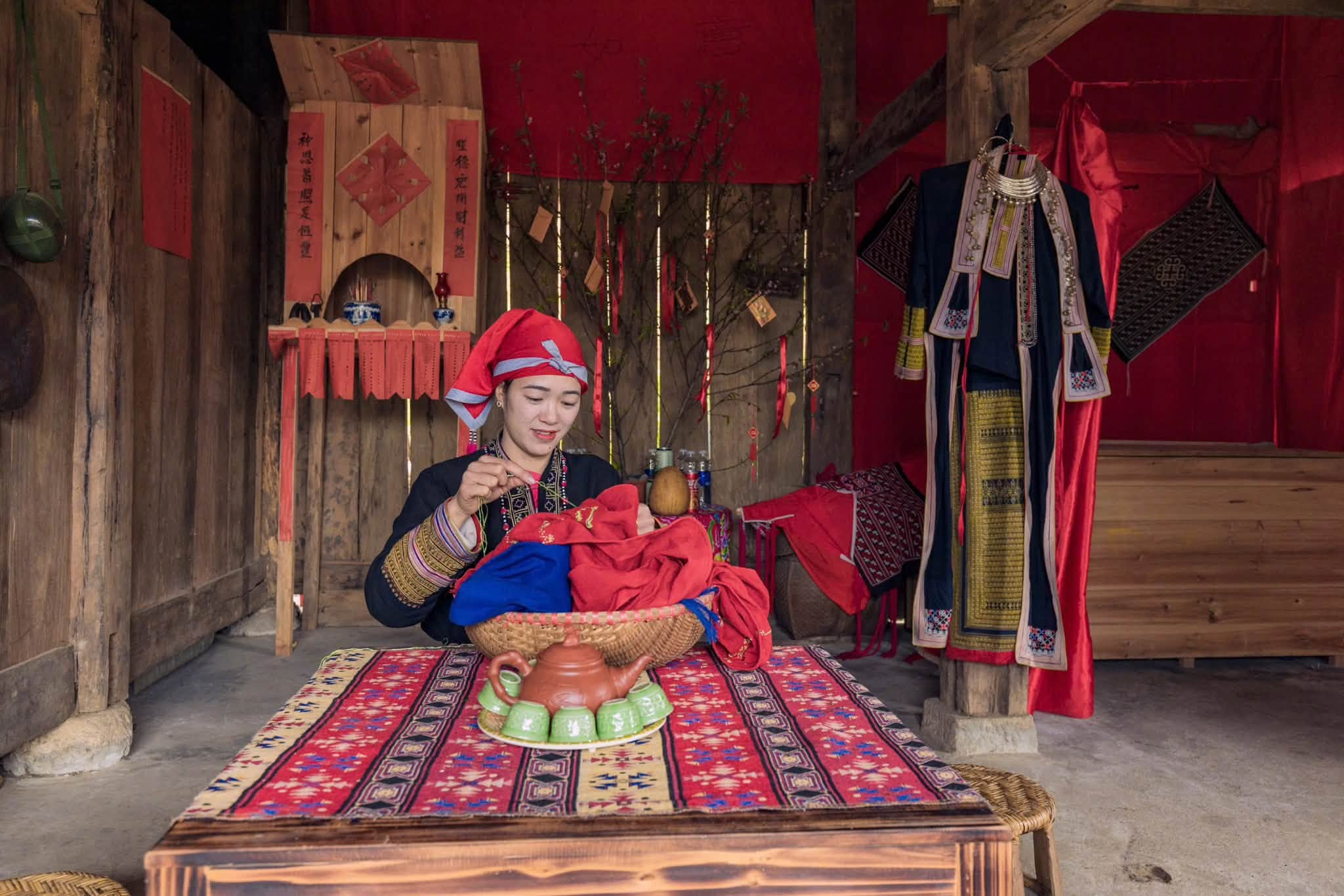
The traditional living space of the Red Dao people is authentically recreated at May Village (Source: Collected)
The houses showcase different approaches to living in the mountainous environment. H’Mong-style houses, for example, are associated with rammed-earth construction, while Tay and Giay communities are traditionally known for raised wooden houses. Inside, the arrangement of living spaces and household objects provides additional context, helping visitors understand how families traditionally organised their homes and daily routines.
Walking between the houses also makes the experience more immersive than simply viewing cultural displays. Visitors can observe architectural details, traditional materials and decorative elements while seeing how each space reflects the identity of its community. For travellers visiting Sapa for the first time, this provides a useful introduction to the cultural diversity of the Northwest before exploring traditional villages and communities beyond the town.
2.2 Watch traditional performances and experience living heritage
Traditional performances are another important element of the May Village cultural experience. Rather than presenting culture only through architecture and static displays, May Village introduces visitors to music, dance and ceremonial traditions associated with different ethnic communities. Performances inspired by H’Mong, Red Dao and Giay cultural traditions allow travellers to experience aspects of local heritage through movement, music and storytelling.
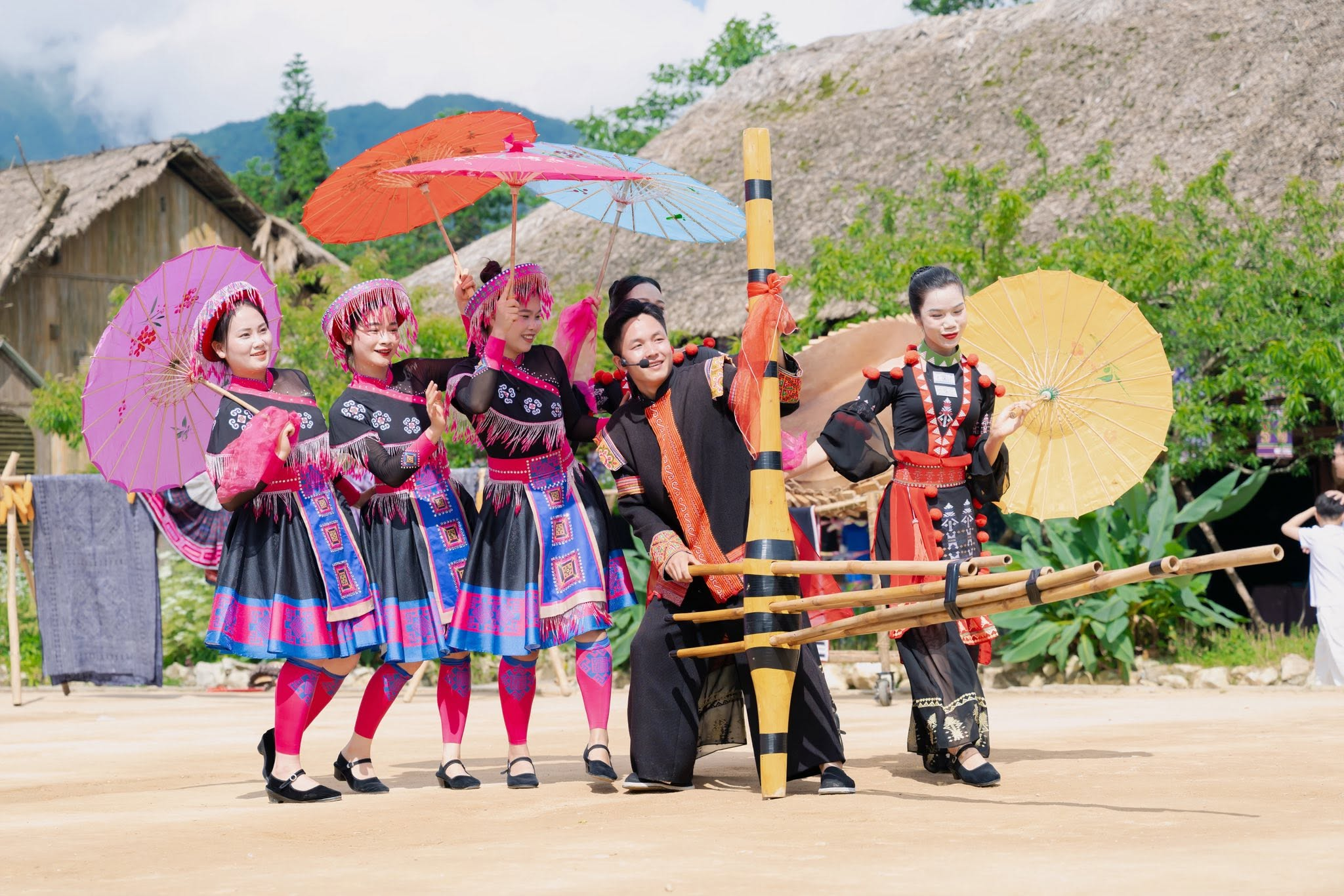
Vibrant cultural performances attract many tourists to come and experience them (Source: Collected)
Among the cultural highlights are the H’Mong khen dance, Red Dao traditional wedding rituals and Giay festival drums. These performances offer an accessible introduction to traditions that may otherwise be difficult for international visitors to encounter during a short stay in Sapa. The combination of traditional costumes, musical instruments and movement also creates opportunities to better understand how cultural practices are passed between generations.
May Village also presents scheduled cultural performances throughout the day, making it easier for visitors to include them in a sightseeing itinerary. Travellers can check the performance schedule when planning their visit and combine a show with the exploration of traditional houses, handicrafts and local cuisine. This creates a more complete cultural journey rather than treating performances as a separate attraction.
2.3 Discover traditional handicrafts and textile-making
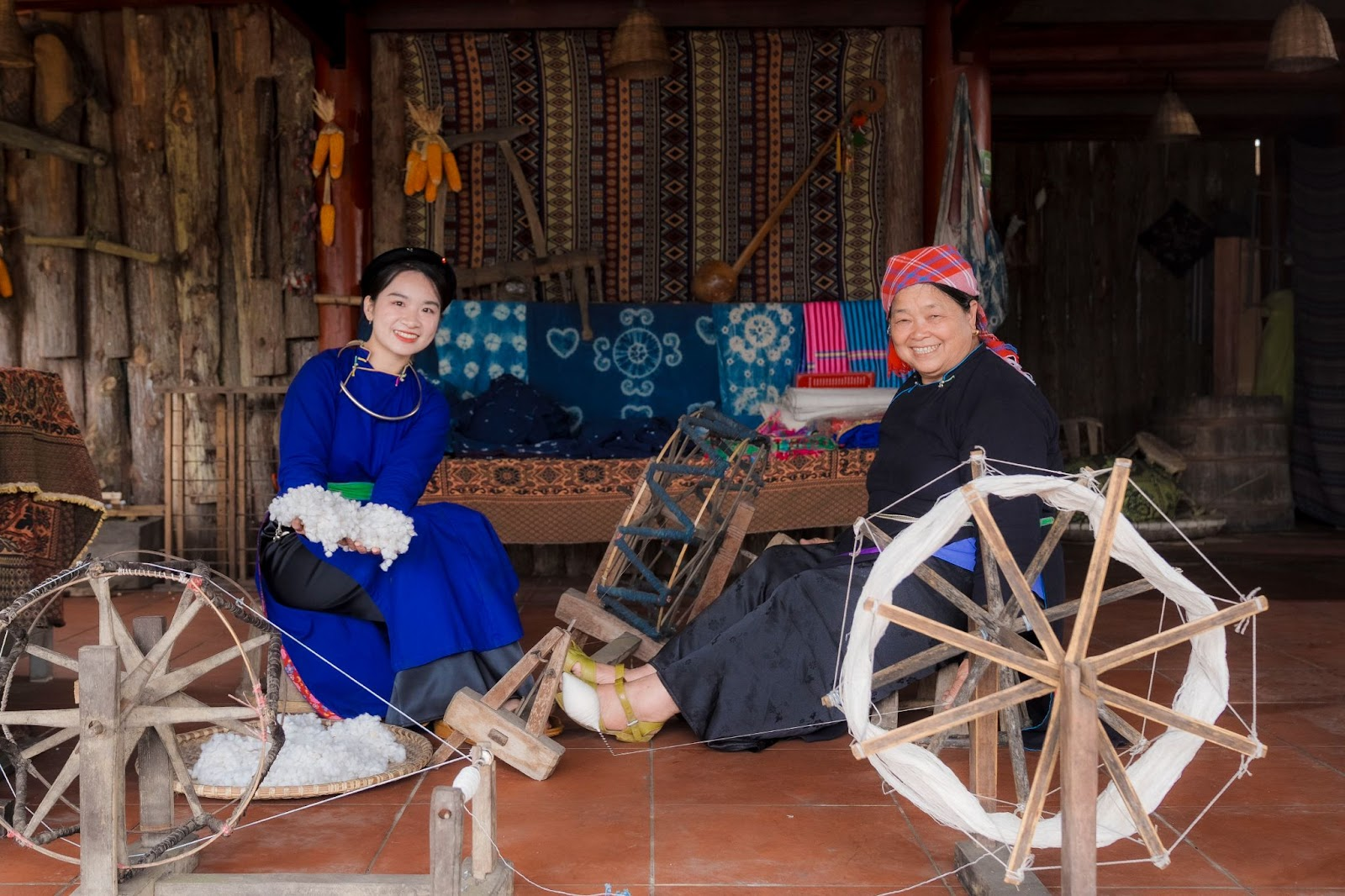
Handicrafts provide another hands-on dimension to a May Village cultural experience. Traditional textile-making, embroidery and natural dyeing are closely connected with the cultural identity of many ethnic communities in Northwest Vietnam. At May Village, visitors can observe traditional crafts and learn more about the techniques behind the colourful fabrics and garments seen throughout the region.
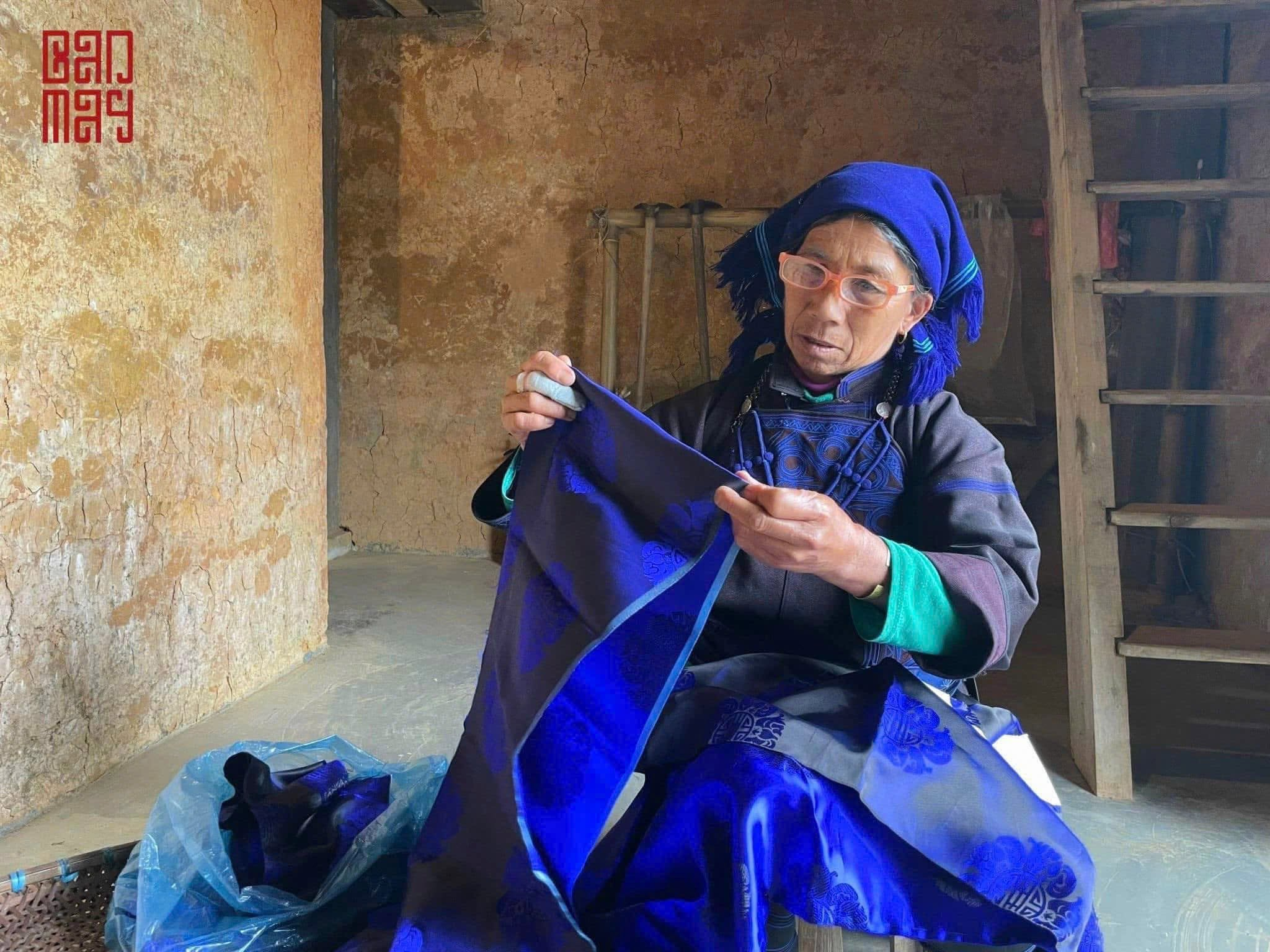
Visitors can experience making traditional handicrafts firsthand at May Village (Source: Collected)
Brocade making, indigo dyeing and bamboo or rattan weaving demonstrate how local communities have traditionally transformed natural materials into practical and decorative objects. The process also reveals the amount of time and craftsmanship involved in producing traditional textiles. For international travellers, seeing these techniques in context can make the patterns and colours of ethnic costumes more meaningful than simply encountering them as souvenirs or visual symbols.
Visitors may also have opportunities to engage more directly with traditional clothing and handicrafts. Trying on ethnic costumes, observing artisans at work or examining handmade products can turn a cultural visit into a more interactive experience. These activities are particularly suitable for travellers interested in photography, crafts and cultural heritage, while also offering a closer look at the skills that continue to shape the visual identity of Northwest communities.
2.4 Taste the flavours of Northwest mountain cuisine
Food is an essential part of understanding everyday culture, and a May Village cultural experience can be complemented by traditional Northwest flavours. The region's cuisine is closely connected with its mountainous environment, using locally available ingredients and cooking methods that have developed within different ethnic communities. At May Village, visitors can sample dishes associated with the culinary character of the Northwest.
Regional specialities include thang co, grilled mountain pork, smoked buffalo meat, bamboo-tube sticky rice and colourful sticky rice. These dishes introduce international travellers to flavours that differ from the better-known Vietnamese cuisine found in major cities. The use of bamboo tubes, smoked meat, mountain herbs and locally sourced ingredients also provides insight into the relationship between food, environment and traditional lifestyles.
Exploring local food can therefore become part of the cultural discovery rather than simply a meal break. Travellers can combine a traditional lunch or dinner with visits to the village houses, performances and handicraft spaces, creating a journey through several aspects of Northwest life in one place. For visitors with limited time in Sapa, this combination makes it easier to experience both the cultural and culinary sides of the region.
2.5 Combine May Village with a Fansipan adventure
May Village can be easily incorporated into a wider Fansipan itinerary, making it particularly convenient for travellers who want to experience both nature and culture in one day. Located near the Fansipan cable car departure area, the village can be visited before or after travelling towards the summit. This allows visitors to combine cultural exploration with the mountain scenery and spiritual architecture of Fansipan.
A typical experience can begin in Sapa town before taking the Muong Hoa mountain train towards the cable car station. After travelling by cable car towards Fansipan and exploring the summit area, visitors can return to the lower mountain area and spend time discovering May Village. The sequence creates a gradual transition from Sapa's townscape to the mountain environment and then into the cultural traditions of Northwest Vietnam.
For international visitors, this combination provides a broader perspective on Sapa. Fansipan represents the dramatic natural and spiritual character of the region, while May Village focuses more closely on its people, traditions and everyday cultural heritage. Experiencing both within the same trip can therefore make a Sapa itinerary feel more varied and connected.
3. How to make the most of your May Village cultural experience
3.1 Take time to explore each cultural space
To make the most of a May Village cultural experience, travellers should allow enough time to explore the village rather than simply passing through for photos. The traditional houses are designed to introduce different aspects of Northwest ethnic culture, so taking time to observe their architecture, interior arrangements and decorative details can provide a deeper understanding of local lifestyles.
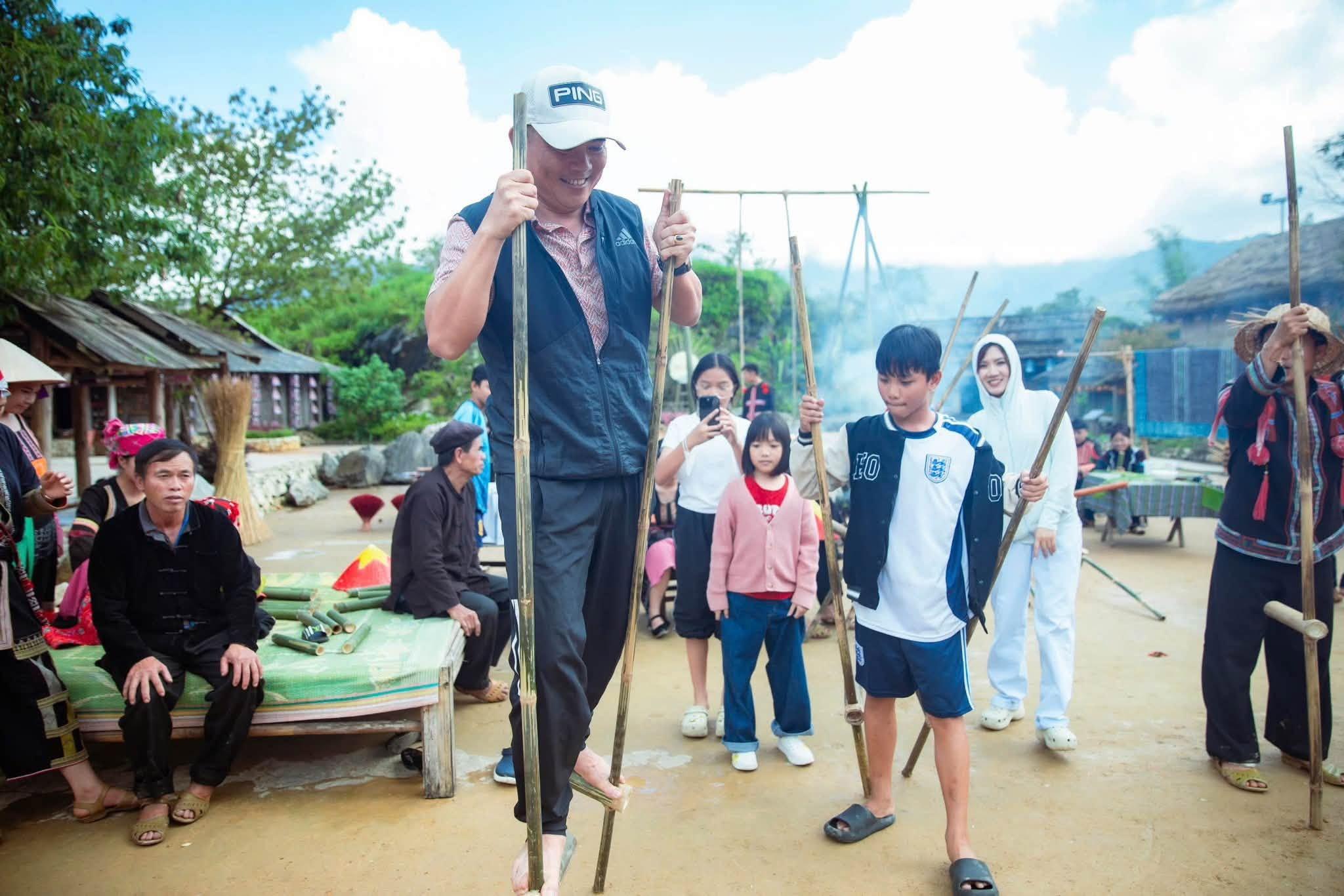
Visitors enjoy the experience at May Village (Source: Collected)
International visitors can also look beyond the most recognisable visual elements. Traditional clothing, household objects, construction materials and handicrafts each tell a different story about the communities represented at May Village. Reading the information available at each space or joining a guided explanation can make these details easier to understand, especially for travellers who are unfamiliar with Vietnam's ethnic diversity.
A slower pace also leaves room for spontaneous discoveries. Visitors may encounter a traditional performance, handicraft activity or seasonal landscape while walking through the village. Instead of trying to cover every area quickly, allowing time to stop, observe and interact can make the cultural experience more memorable.
3.2 Combine cultural activities with local food
Food can add another layer to a visit to May Village. After exploring traditional houses or watching a performance, travellers can take time to discover Northwest-inspired dishes and learn more about ingredients and cooking methods associated with mountain communities. This creates a natural connection between cultural heritage and everyday life.
Visitors interested in local cuisine can look for dishes such as bamboo-tube sticky rice, smoked buffalo meat, grilled mountain pork or colourful sticky rice. Trying several specialities rather than choosing only familiar dishes can make the experience more distinctive, while travellers with dietary restrictions should check ingredients and preparation methods before ordering.
Combining food with cultural activities also makes the itinerary more relaxed. Instead of treating lunch or dinner as a separate stop, travellers can use the meal as an opportunity to continue exploring the flavours and traditions of Northwest Vietnam before moving on to another part of the Fansipan journey.
3.3 Respect local culture when taking photos and interacting
Photography is naturally part of exploring a visually distinctive destination such as May Village, but cultural sensitivity is important when photographing traditional costumes, performances or people. Travellers should ask for permission before taking close-up portraits of residents, artisans or performers, particularly when the photograph focuses on personal activities rather than a public performance.
Visitors should also avoid touching cultural objects or entering private-looking spaces without permission. Traditional houses may be presented as cultural experiences, but respecting designated areas and following local guidance helps preserve the atmosphere of the village and shows consideration for the communities whose heritage is represented there.
A respectful approach can make interactions more genuine. Learning a simple Vietnamese greeting, asking about a handicraft or showing interest in the meaning behind a traditional garment can create a more positive cultural exchange than simply taking photographs. For international travellers, these small interactions can become some of the most memorable moments of a May Village visit.
A May Village cultural experience brings together many of the defining elements of Northwest Vietnam, from traditional architecture and ethnic costumes to handicrafts, music, cuisine and mountain landscapes. By taking time to explore the cultural spaces, enjoy local flavours and experience traditional performances, travellers can gain a deeper appreciation of the region beyond its famous scenery. Combined with Fansipan and the Muong Hoa mountain train, May Village can become a meaningful cultural highlight of a Sapa journey.


