




1. What is special about the culture of ethnic groups in Sapa?
1.1. Sapa is a convergence of many highland ethnic communities
Located at the foot of the Hoang Lien Mountains, Sapa has long been home to many ethnic minority communities. The H'mong people account for the largest proportion, alongside the Red Dao, Tay, Giay, Xa Pho, and Kinh people. Each ethnic group possesses its own language, attire, customs, and way of life, contributing to a rare and diverse cultural tapestry.
The richness of Sapa's ethnic cultures has become the foundation for the development of community-based tourism. Many visitors come not only to admire the scenery but also to experience local life more closely and explore the original cultural values preserved in the highland villages.
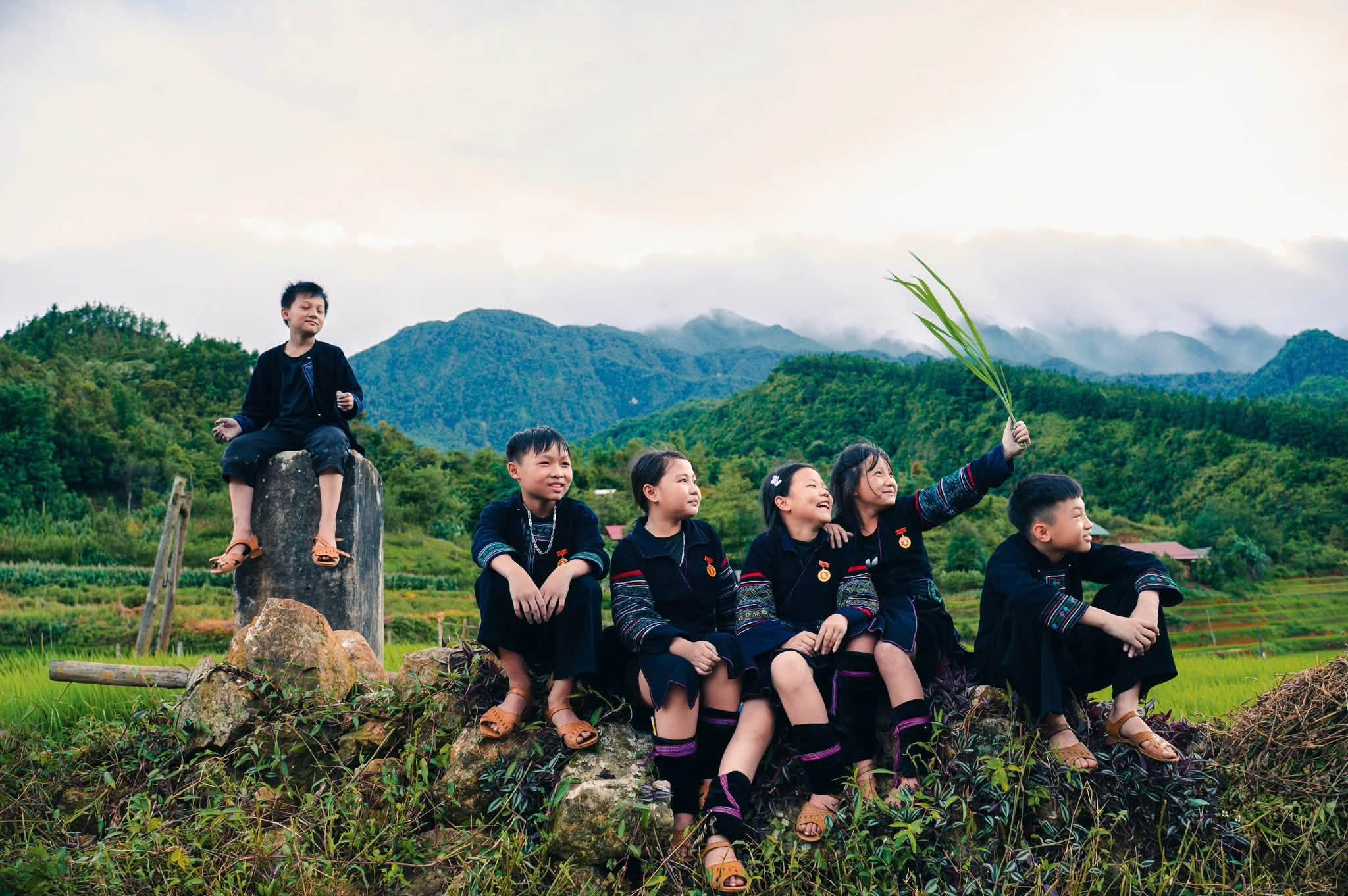
Sa Pa is the long-standing home of a large number of ethnic minority communities. (Source: Collected)
1.2. Cultural values preserved through generations
Through many changes over time, ethnic communities in Sa Pa have preserved many precious traditional customs. From wedding ceremonies, new rice celebrations, and prayer rituals for the harvest to daily living habits, all reflect the strong bond between humans and nature. Sa Pa currently possesses many recognized and preserved intangible cultural heritages. Folk songs, traditional handicrafts, and folk festivals not only carry spiritual value but also contribute to preserving identity for future generations.
2. Discovering the cultures of Sa Pa ethnic groups
2.1. H’Mong ethnic culture
When mentioning the cultures of Sa Pa ethnic groups, the H’Mong community leaves many outstanding impressions with an identity preserved through generations. The H’Mong people live concentrated in villages such as Cat Cat, Lao Chai, Y Linh Ho, or Sin Chai, where tourists can easily encounter traditional wooden houses, terraced fields, and a simple life amidst the mountains and forests.
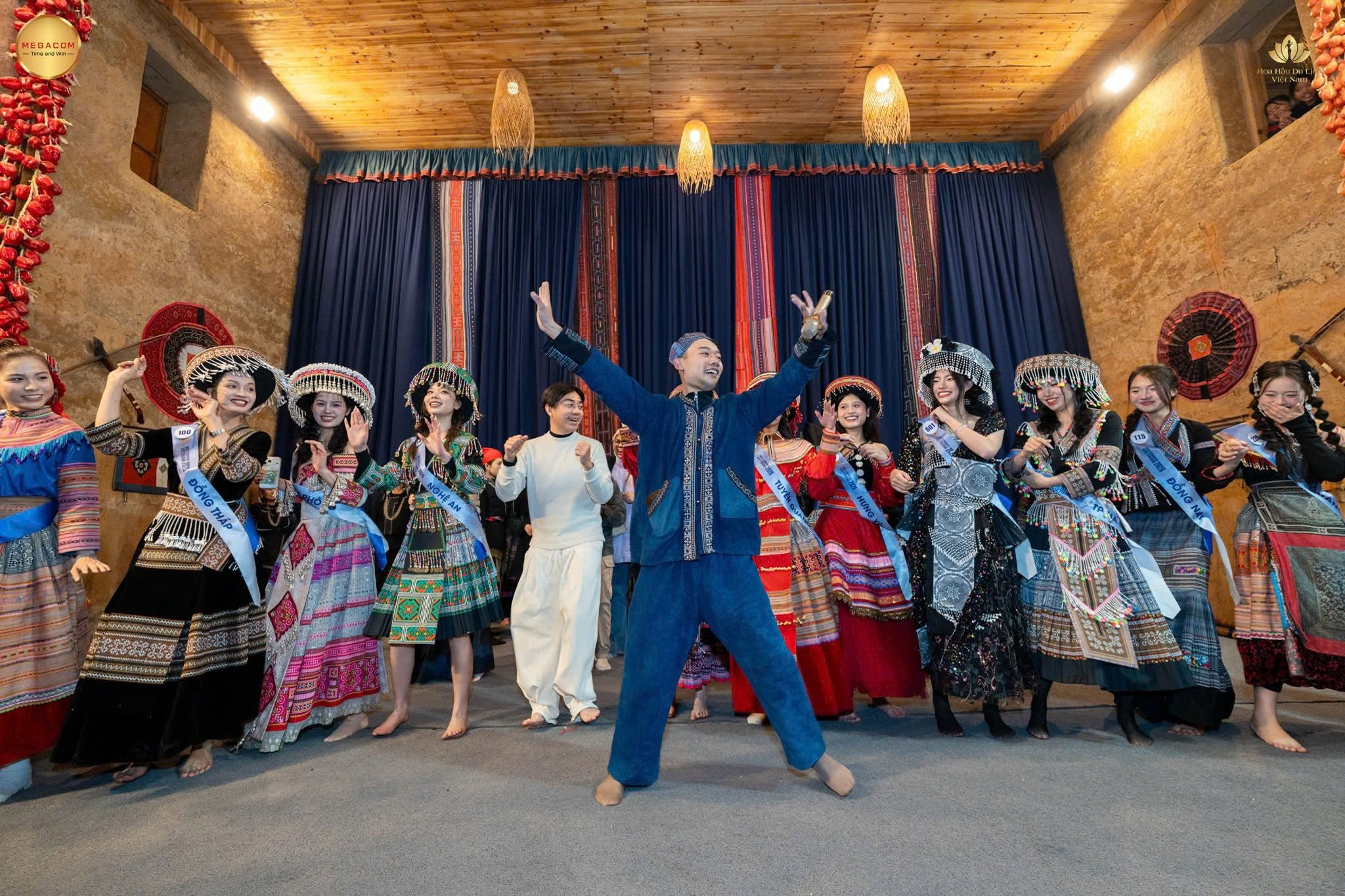
The culture of the Hmong people is preserved through traditional costumes, customs, and daily life. (Source: Collected)
One of the distinctive features of the culture of ethnic groups in Sa Pa is the traditional costume of the Hmong people. Most clothes are made from linen fabric grown, spun, woven, and indigo-dyed by the people themselves. Afterwards, the costumes are hand-embroidered with many intricate geometric patterns, reflecting concepts of nature and life.
Hmong women often wear open-chested shirts with V-necks combined with pleated flared skirts and aprons embroidered with vibrant patterns. Meanwhile, men wear loose short-sleeved shirts, fabric belts, and hats or headscarves adorned with traditional silver details. These costumes not only serve daily activities but are also used in festivals, markets, and community cultural events.
2.2. Culture of the Red Dao ethnic group
In the diverse picture of the culture of ethnic groups in Sa Pa, the Red Dao people stand out with many unique customs, beliefs, and traditional crafts. The Red Dao ethnic group mainly lives in villages such as Ta Phin, Nam Cang, Ban Ho... and still preserves many special cultural values in their daily lives.
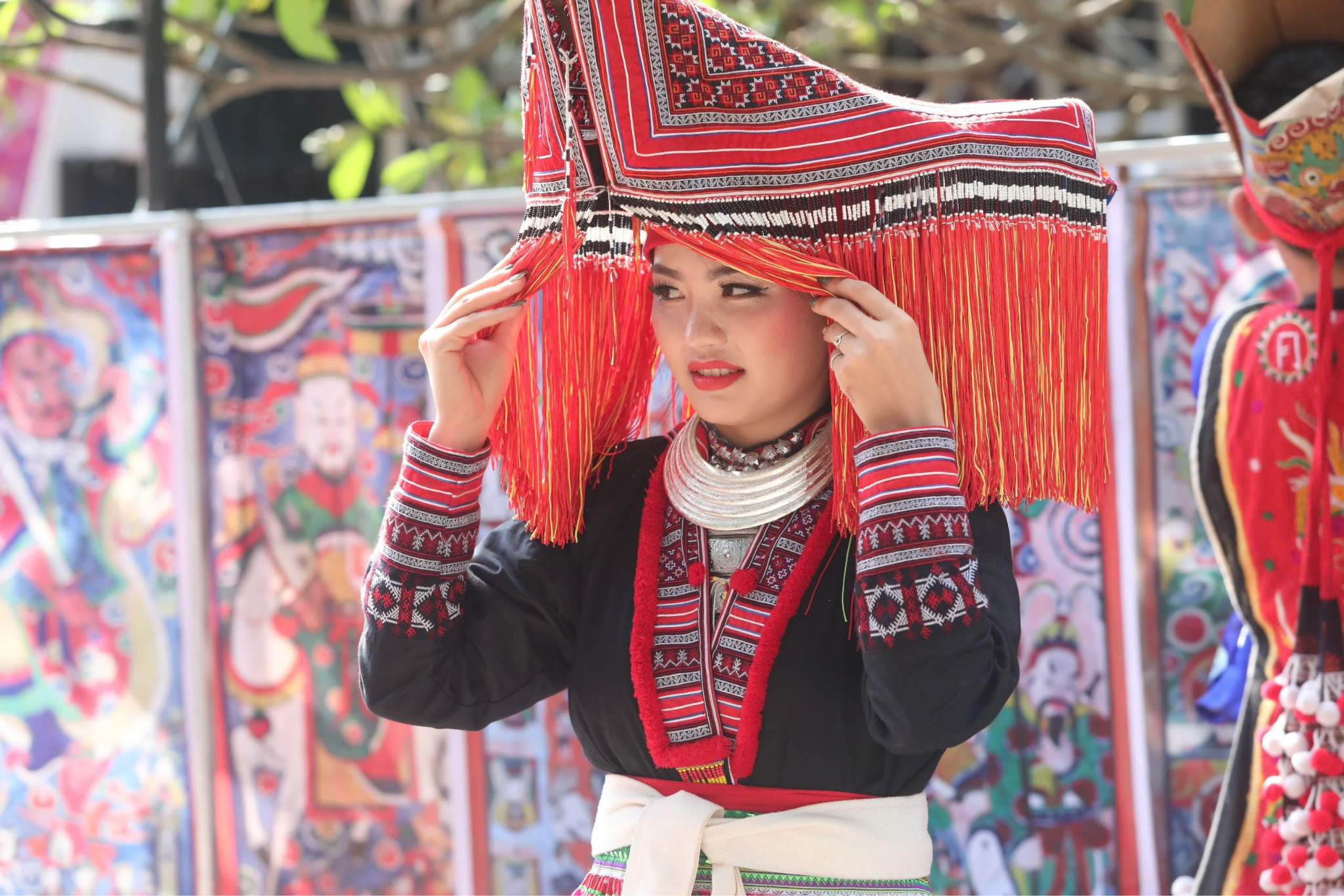
Traditional costume of Red Dao ethnic women. (Source: Collected)
The most recognizable feature is the traditional costume. Red Dao women always stand out with a red scarf or hat wrapped around their heads, combined with indigo shirts embroidered with red, yellow, and white threads along with elaborate patterns on the sleeves and body of the shirt. According to ancient customs, many Red Dao women also shave the hair on their forehead and eyebrows as a traditional beauty of the ethnic group.
When visiting Sa Pa, tourists also have the opportunity to experience the herbal bath of the Red Dao people. Dozens of forest herbs are combined according to traditional family recipes to help relax the body, restore health after the journey of exploration, and become one of the characteristic experiences of the culture of Sa Pa ethnic groups.
2.3. Culture of the Giay ethnic group
Speaking of the culture of Sa Pa ethnic groups, the Giay people are also a community with many unique beauties, living a gentle and close-to-nature lifestyle. The Giay people mainly live in Ta Van village, which is famous for its traditional stilt houses located in the poetic Muong Hoa valley.
Compared to the costumes of the H'Mong or Red Dao people, the Giay costume has a simpler design but still carries its own identity. Men usually wear indigo cross-collared shirts, straight-legged pants, and wrap a scarf around their heads. Women wear short shirts with armpit slits, wide sleeves, combined with rows of hand-knitted fabric buttons, a headscarf, and silver bracelets as accents.
2.4. Culture of the Ha Nhi ethnic group
In the diverse picture of the culture of Sa Pa ethnic groups, the Ha Nhi people bring very unique beauties with a life closely tied to the Northwest mountains and forests. The Ha Nhi people mainly live in high-altitude communes such as Y Ty, A Lu, Ngai Thau, where many customs, traditions, and cultural values have been preserved almost intact through generations.
One of the outstanding imprints of the culture of Sa Pa ethnic groups is the rammed earth houses of the Ha Nhi people. The houses are built with compacted earth with thick walls, roofs covered with thatch or earth tiles, helping to keep warm in winter and cool in summer. This unique architecture not only adapts to the high-altitude climate but also reflects the people's close-to-nature lifestyle.
The traditional costume of the Ha Nhi people also possesses a characteristic beauty with indigo or black as the main colors, hand-embroidered with exquisite patterns and adorned with colorful decorative details. Ha Nhi women often wear traditional scarves or hats, and wear silver necklaces and handmade jewelry on important festival occasions.
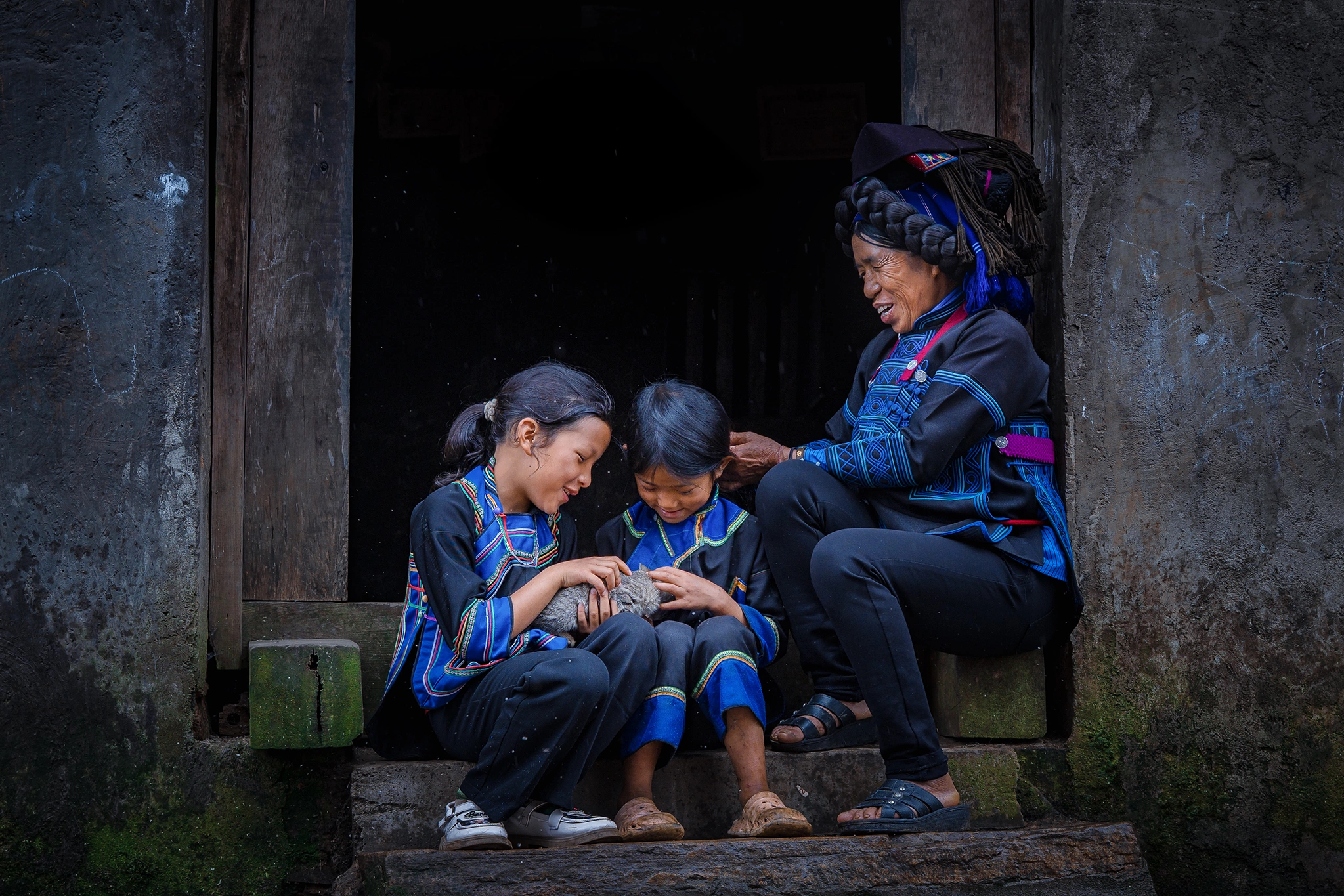
Traditional costume of the Ha Nhi ethnic group in Sa Pa. (Source: Collected)
3. Where to experience the culture of Sa Pa's ethnic groups?
3.1. Ban May at Sun World Fansipan Legend
If you want to fully explore the culture of the ethnic groups in the highlands in a short time, Ban May is a destination not to be missed. Located within Sun World Fansipan Legend, Ban May is built as a miniature cultural space, gathering the unique characteristics of the H'Mong, Red Dao, Tay, Giay, and Xa Pho communities living in Sa Pa.
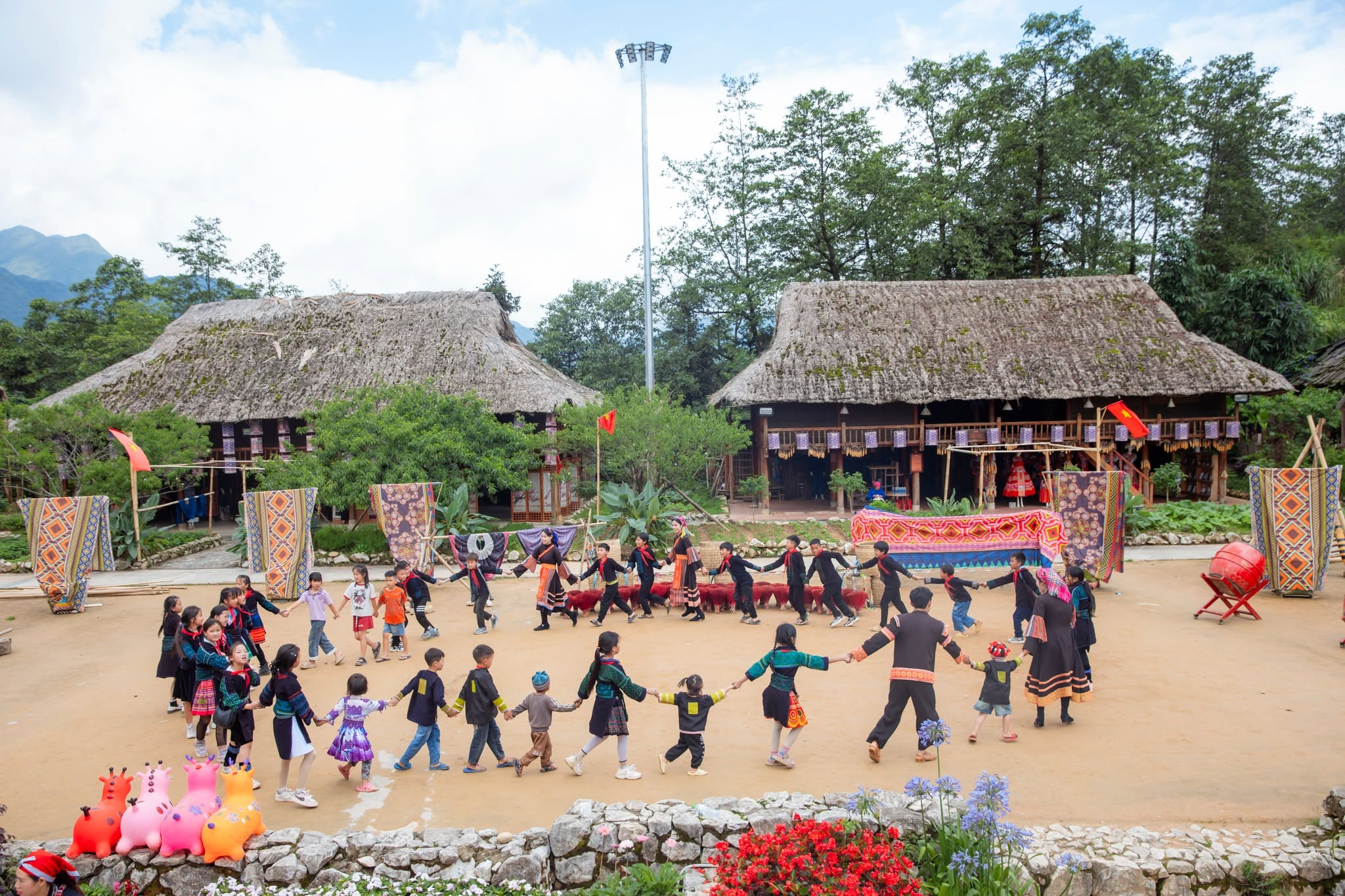
Tourists can explore the culture of ethnic groups in Sapa at May village. (Source: Collected)
Here, tourists can witness firsthand the process of making brocade, indigo dyeing, beeswax printing, incense making, or crafting traditional handicraft products. Under the guidance of artisans, each person also has the opportunity to personally perform some simple steps to feel the meticulousness and skill of the highland people.
Not only traditional crafts, May village also hosts many unique art performance programs every day. The melodious H'Mong flute, graceful folk dances, cultural exchange performances with Tay, Red Dao, or Xa Pho ethnic groups bring tourists the feeling of stepping into a real festival of the Northwest mountains.
After the cultural exploration journey, tourists can also enjoy specialty dishes such as five-colored sticky rice, smoked buffalo meat, local pigs, or traditional dishes prepared by the local people themselves.
3.2. Cat Cat Village
Located about 2 km from the center of Sapa, Cat Cat village is one of the most famous destinations to learn about Mong culture. The village nestles at the foot of Hoang Lien Son mountain with traditional wooden houses, winding stone paths, and terraced fields stretching along the mountainside.
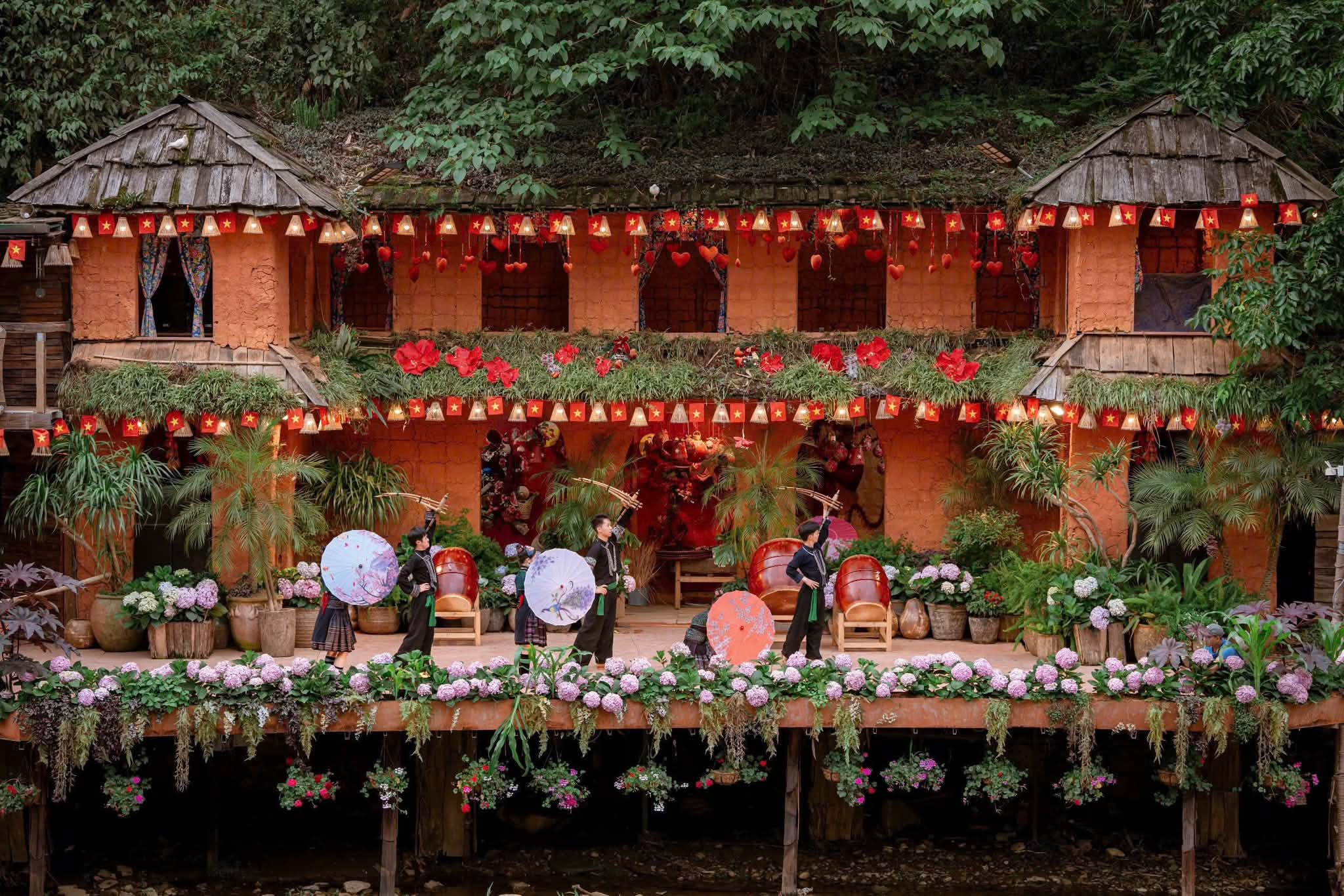
Lively festival atmosphere at Cat Cat village. (Source: Collected)
Coming to Cat Cat, visitors can learn about linen weaving, indigo dyeing, silver crafting, and many other crafts that have been associated with the H'Mong people's lives for hundreds of years. Regularly maintained traditional craft demonstration areas help visitors better understand the process of creating handicrafts that bear the strong imprint of local culture.
In addition, folk art performances featuring khen dances, o dances, and community life reenactments are also highlights that attract many visitors when visiting this village.
3.3. Ta Van Village
Ta Van, located in the famous Muong Hoa valley, is the long-standing home of the Giay community. Unlike the bustling town center, Ta Van captivates visitors with the peaceful beauty of traditional houses, lush green fields, and the slow pace of life of the local people.
Community tourism is developing strongly in Ta Van, allowing visitors to experience living, eating, and participating in daily activities with local residents. Family meals made with ingredients from home gardens, everyday stories by the fireplace, or daily labor activities offer an authentic perspective on the lives of ethnic minorities in the highlands.
3.4. Ta Phin Village
When mentioning the culture of the Red Dao people in Sa Pa, Ta Phin is always a name chosen by many tourists. The village is nestled among rolling mountains and is famous for its traditional brocade weaving, which has existed for a very long time.
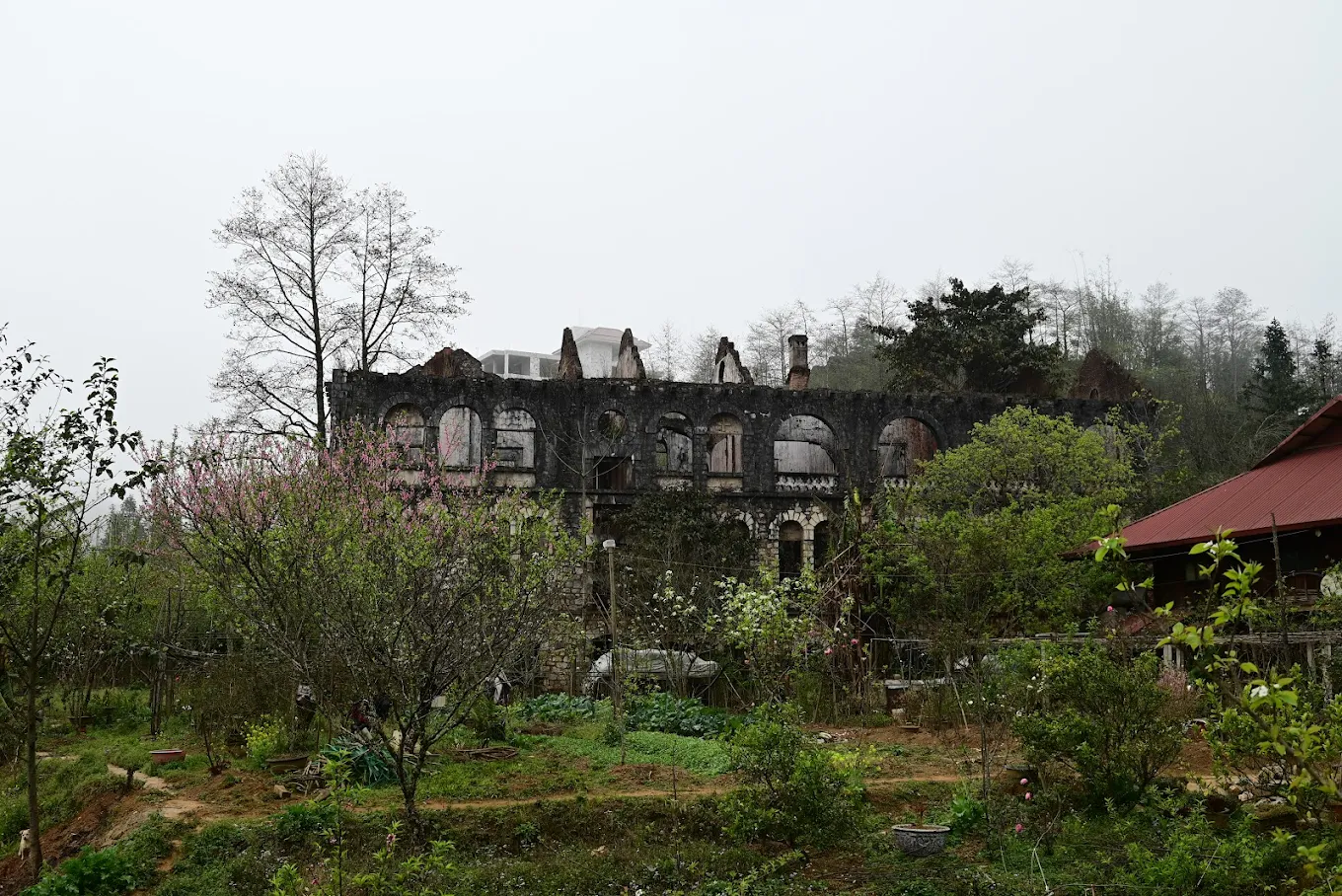
Ancient monastery in Ta Phin village attracts tourists to explore. (Source: Collected)
Walking along the paths in the village, tourists can easily encounter images of Red Dao women diligently embroidering by their doorways, creating brocade products with intricate patterns and vibrant colors. This is also a place where tourists can directly participate in indigo dyeing, pattern embroidery, and learn about the process of making a complete brocade product.
Besides weaving, Ta Phin is also famous for the medicinal bath service of the Red Dao people. The traditional remedies passed down through generations not only contribute to health care but also reflect the rich folk knowledge of the community here.
4. Unmissable Experiences When Exploring Sa Pa Ethnic Cultures
4.1. Directly Experience Traditional Handicrafts
One of the most interesting ways to explore Sa Pa ethnic cultures is to directly participate in the traditional handicraft activities of the local ethnic groups. In many villages such as Cat Cat, Ta Phin, or Ta Van, tourists have the opportunity to observe and try their hand at brocade weaving, indigo dyeing, pattern embroidery, or crafting items from bamboo, wood, and silver.
Each motif on the fabric, each stitch carries its own meaning, reflecting the life, beliefs, and identity of each ethnic group. Not only do visitors get to perform traditional tasks themselves under the guidance of the locals, but they also gain a deeper understanding of the dexterity, patience, and cultural values passed down through generations. This experience makes the journey of exploring Sa Pa ethnic cultures more intimate and meaningful.
4.2. Enjoy Unique Ethnic Cultural Performances
Cultural performance programs are unmissable highlights when learning about Sa Pa ethnic cultures. Amidst the resonant sound of Mong flutes, the lively beat of drums, or the simple melodies of folk songs, tourists will enjoy traditional dances of the Mong, Red Dao, Tay, Giay, and Xa Pho ethnic groups.
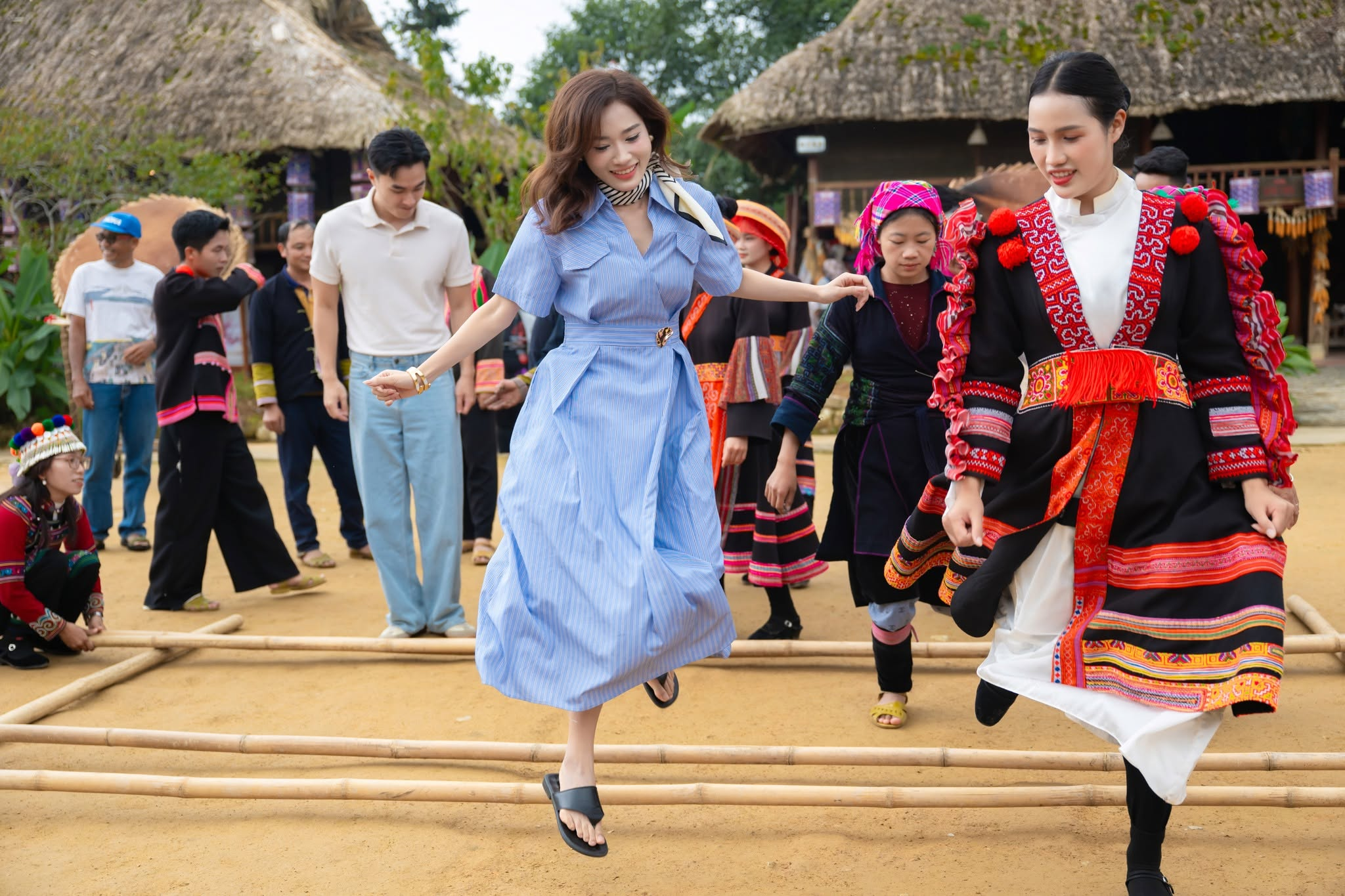
Tourists experience bamboo pole dancing with ethnic people in the highlands of Sapa. (Source: Collected)
Many programs also recreate characteristic rituals, festivals, and community activities, helping tourists better understand the spiritual life of the highland ethnic groups. Besides enjoying, tourists can also join the locals in round dances, bamboo pole dancing, or cultural exchanges in a vibrant atmosphere, creating memorable moments and fully feeling the vitality of the culture of Sapa ethnic groups .
4.3. Experience highland meals with local people
Enjoying traditional meals at local homes or homestays is an experience that helps tourists clearly feel the culture of Sapa ethnic groups through daily life. In the cozy space of stilt houses or earth-walled houses, meals are prepared from local ingredients such as mountain pigs, black chickens, stream fish, wild vegetables, sticky rice cooked in bamboo tubes, or other characteristic highland vegetables.
Not only enjoying the culinary flavors, tourists also have the opportunity to chat with the hosts to listen to stories about harvests, festivals, wedding customs, beliefs, and the beauty in the lives of the ethnic people. It is these sincere encounters that make the journey to discover the culture of Sapa ethnic groups more profound, bringing emotional and unforgettable experiences.
5. Combine ethnic cultural exploration with conquering Fansipan
5.1. Travel by Muong Hoa mountain train
After spending time learning about the unique cultural values of the highland ethnic groups at May Village, tourists can continue their journey to explore Fansipan by the Muong Hoa mountain train.

The Muong Hoa train carriage with its vibrant red design, takes tourists through the poetic valley. (Source: Collected)
From the train carriage with its wide windows, the panoramic view of Muong Hoa valley unfolds like a giant painting. The terraced rice fields winding along the mountainside, small villages nestled in the valley, and lush green forests create the characteristic landscape of the Northwest. During the green rice season or the ripe rice season, this journey becomes even more impressive as tourists can admire endless stretches of color amidst the majestic mountains.
5.2. Conquering Fansipan Peak by Cable Car
From the cable car station, tourists will begin their journey above the clouds to reach the summit of Fansipan, 3,143 meters high. The Fansipan 3-rope cable car is famous for its ability to take tourists close to the mountain peak in just about 15 minutes, significantly shortening the time to conquer the roof of Indochina.
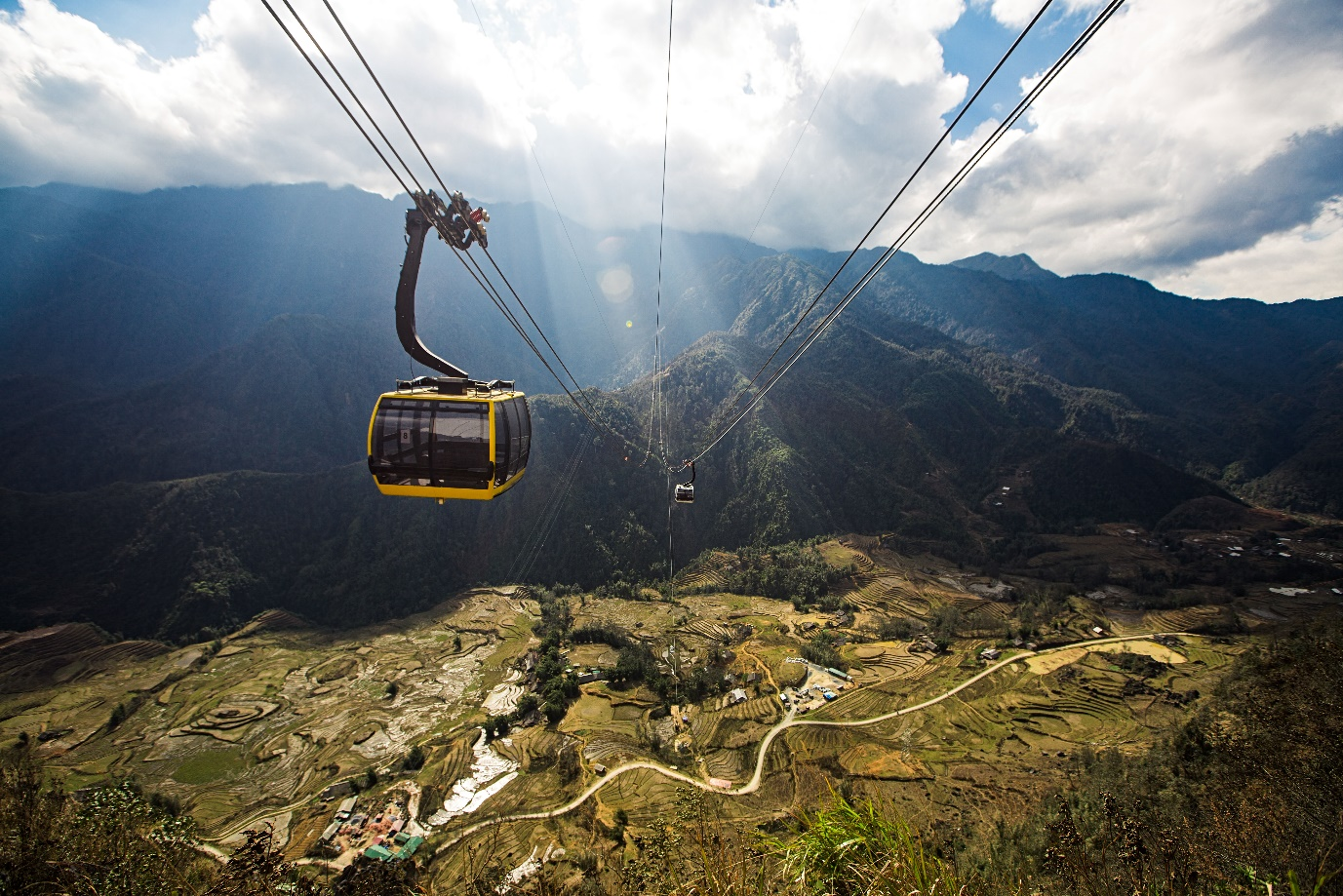
Fansipan Cable Car offers a scenic experience of the majestic Hoang Lien Son mountains. (Source: Compilation)
Throughout the journey, the cabin glides gently through the air, revealing spectacular views of the Hoang Lien Son range. Below are vast primeval forests, deep green valleys, and villages nestled amidst clouds and mountains. On clear days, visitors can gaze upon dozens of large and small mountains stretching out, creating a magnificent natural panorama rarely found elsewhere.
👉 BOOK FANSIPAN CABLE CAR TICKETS NOW!
5.3. Visiting the spiritual cultural complex on the mountaintop
After reaching the Fansipan summit area, visitors can explore a large-scale spiritual cultural complex located amidst the clouds and skies of the Northwest. This is a place where the majestic natural beauty harmoniously blends with the ancient cultural and spiritual values of the Vietnamese people.
The journey typically begins from the Arhat Path, with 18 imposing bronze statues lining the path through the mountains. Stone steps lead visitors deeper into the serene space of Kim Son Bao Thang Pagoda, a temple with architecture deeply imprinted with Vietnamese Buddhism, situated at an altitude of over 3,000 meters.
The most prominent highlight of the entire complex is the 21.5-meter-tall bronze Great Buddha Statue of Amitabha, located amidst a sea of clouds. On cloudy days, the Buddha statue appears majestic against a white sky, creating a scene that is both sacred and magnificent. Many visitors choose to stop here to pay homage, pray for peace, and enjoy a sense of tranquility amidst the serene landscape of the Hoang Lien Son mountains.
The culture of ethnic groups in Sapa is one of the most unique values that make this land, where heaven and earth meet in the Northwest, so attractive. From traditional costumes, handicrafts, cuisine, festivals, to daily life, each cultural aspect holds its own story, preserved through generations. Combined with the journey to conquer Fansipan, visitors will have the opportunity to fully explore the most distinctive cultural, natural, and spiritual values of Sapa.


