




1. Phu Quoc Prison: A glimpse into the island’s wartime history
1.1. What is Phu Quoc Prison?
Phu Quoc Prison, also known as Coconut Tree Prison, is a national level historical relic in An Thoi, southern Phu Quoc. Unlike the island’s beaches and modern entertainment attractions, this site offers visitors a chance to learn about a difficult chapter in Phu Quoc’s wartime history. The prison once held more than 32,000 prisoners across different periods, with reconstructed areas and exhibits illustrating the harsh conditions they experienced. Today, the site serves as a place of remembrance while also offering visitors a deeper understanding of the island beyond its tropical scenery.
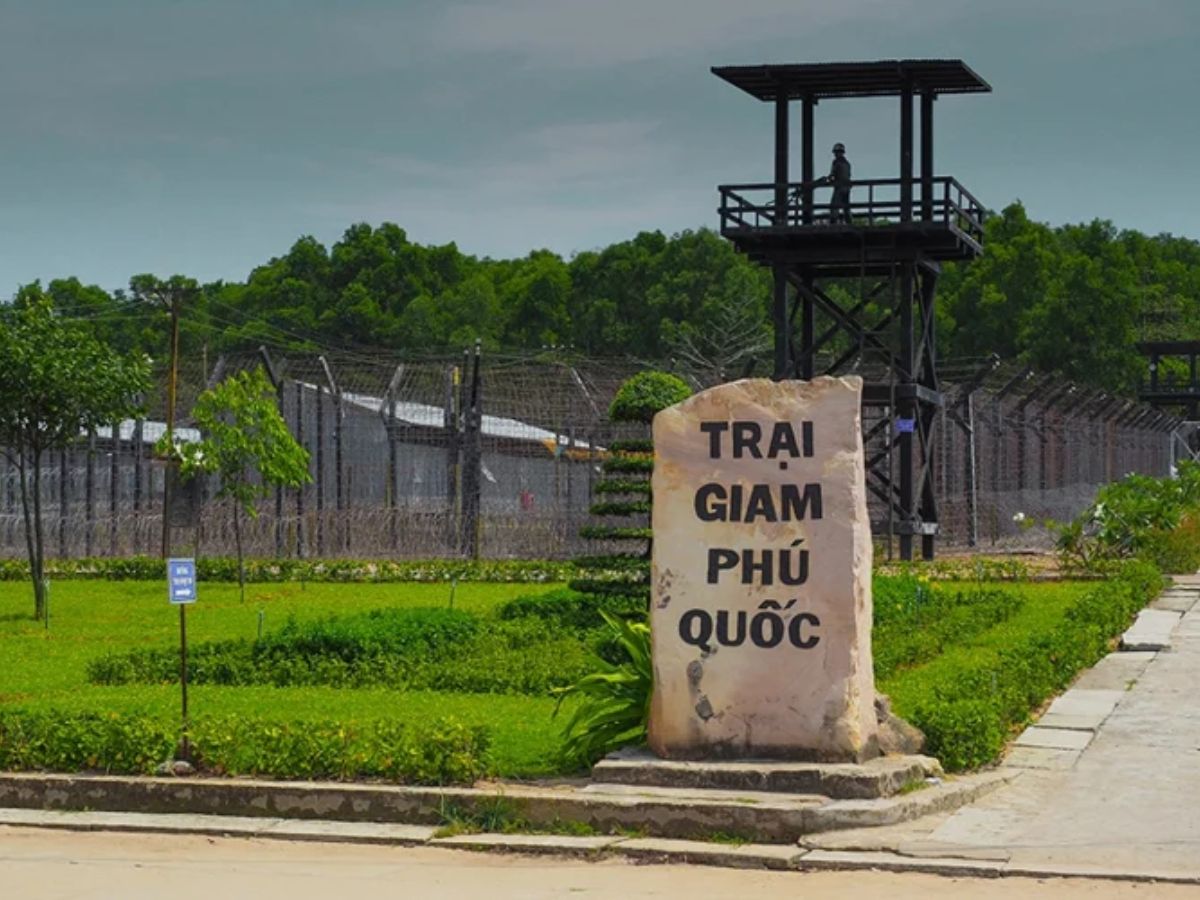
Phu Quoc Prison – a historic site that preserves memories of a significant period in Vietnam’s wartime history. (Source: Collected)
1.2. Where is Phu Quoc Prison located?
Phu Quoc Prison is located at 350 Nguyen Van Cu Street in An Thoi, about 28 km south of Duong Dong and around 2 km from Bai Khem. Its location makes it relatively easy to include in a South Phu Quoc sightseeing itinerary, especially if visitors are already planning to explore the beaches and attractions around An Thoi. From Duong Dong, visitors can travel south along DT47 before turning onto DT46, with the prison located on the left side of the road.
1.3. Why is Phu Quoc Prison worth visiting?
Visiting Phu Quoc Prison adds a different dimension to a holiday on the island. After enjoying beaches, island experiences and modern entertainment, travelers can spend one to two hours exploring a site that preserves reconstructed prison areas, historical exhibits and scenes depicting the experiences of prisoners. The visit is particularly worthwhile for those who want to understand more about Phu Quoc’s past rather than seeing the island only as a beach destination. Because the site can be explored in a relatively short time, it is also easy to combine with other attractions in southern Phu Quoc during the same day.
2. How to get to Phu Quoc Prison
2.1. From Duong Dong to Phu Quoc Prison
For international travelers staying around Duong Dong, getting to Phu Quoc Prison is a straightforward journey to the southern part of the island. The prison is about 28 km from Duong Dong, and the drive usually takes around 40–50 minutes depending on traffic and road conditions. The route follows DT47 south before connecting to DT46 toward An Thoi, with the historical site located on Nguyen Van Cu Street. Since most visitors will likely combine the prison with other South Phu Quoc attractions, it is convenient to plan the visit as part of a full day exploring the southern area rather than making a separate trip just for the prison.
2.2. Getting around by taxi or motorbike
For international travelers, taxis are one of the easiest options, especially for those who are unfamiliar with Phu Quoc’s roads or prefer not to drive themselves. A taxi can take visitors directly from their hotel to the prison and can also wait while they explore the site before continuing to another attraction. Renting a motorbike is another option for confident riders who want more flexibility and plan to visit several places in the south. However, travelers should make sure they are legally permitted to ride in Vietnam and are comfortable with local traffic conditions before choosing this option.

Taxis offer a convenient way for international travelers to get from their hotels to Phu Quoc Prison and nearby attractions. (Source: Collected)
3. Phu Quoc Prison opening hours, entrance fee and visiting time
3.1. Opening hours
Phu Quoc Prison is open to visitors in the morning from 8:00 AM to 11:30 AM and in the afternoon from 11:30 AM to 5:00 PM. For international travelers, it is worth planning the visit outside the lunchtime period if they would like to learn more from the on site guide, as guide services are not available at lunchtime. Visiting in the morning or later in the afternoon can also make it easier to combine the prison with other South Phu Quoc attractions in the same day.
3.2. Entrance fee and tour guide service
Entrance to Phu Quoc Prison is free, making it an easy addition to a South Phu Quoc itinerary without adding to the sightseeing budget. Visitors can explore the site independently using the explanatory signs placed around different areas. For those who want more context about the exhibits and reconstructed scenes, an on site guide is available for an optional fee of approximately VND 100,000–200,000. The guide service can be especially useful for international travelers who want a clearer understanding of what they are seeing rather than simply walking through the historical site.
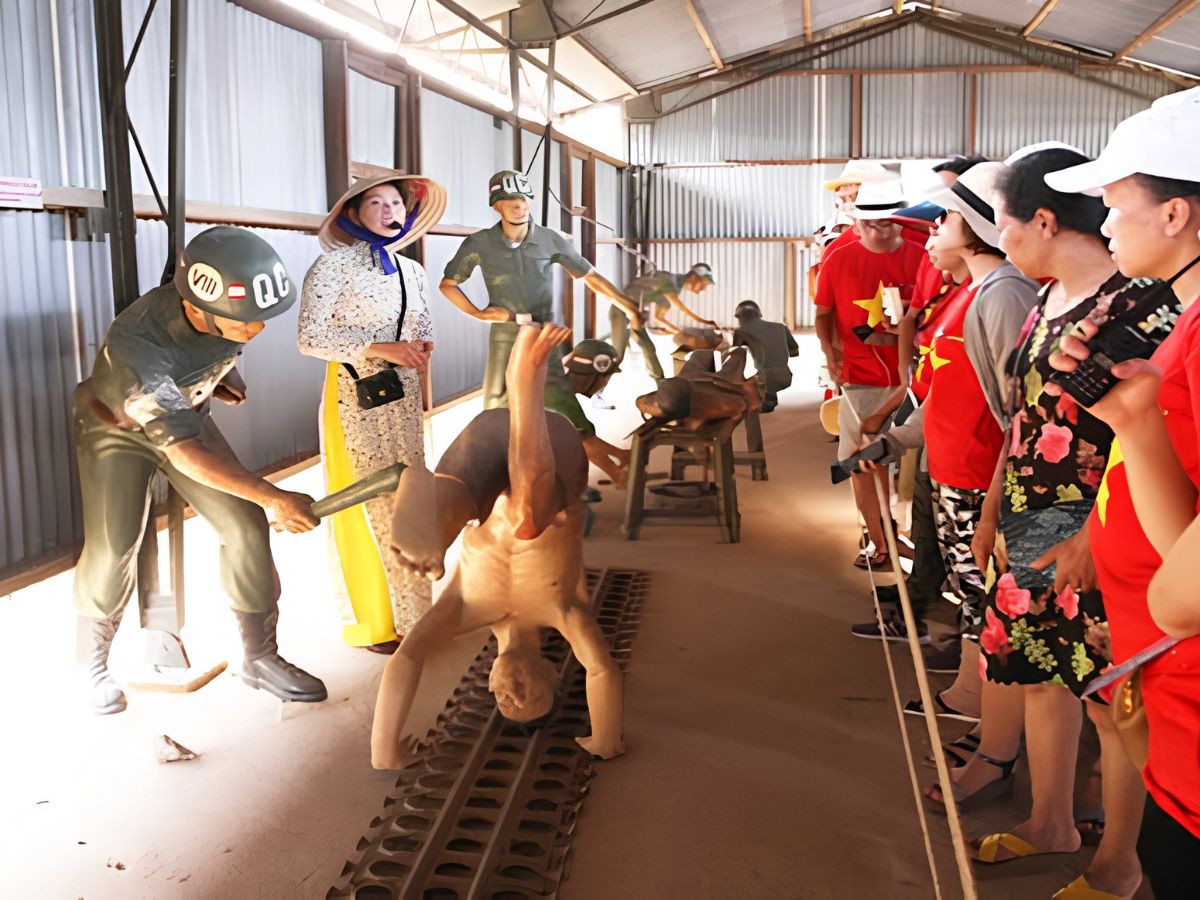
Visitors explore the exhibition area featuring realistic reconstructed scenes at Phu Quoc Prison. (Source: Collected)
3.3. How long does it take to visit Phu Quoc Prison?
Most visitors can allow around 1–2 hours to explore Phu Quoc Prison at a comfortable pace. This gives enough time to walk through the main areas, read the explanatory information and view the reconstructed scenes without having to rush. If travelers are interested in the historical details and choose to use a guide, allowing closer to two hours would be more comfortable. The relatively short visiting time also makes the prison easy to combine with nearby attractions such as Bai Khem or other destinations in southern Phu Quoc.
4. What to see at Phu Quoc Prison
4.1. B2 Subdivision
The B2 Subdivision is one of the main areas to explore at Phu Quoc Prison, featuring reconstructed interiors with life size figures of prisoners and soldiers. The scenes are arranged to illustrate the conditions and experiences associated with the prison during wartime, giving visitors a more visual sense of what life inside the site was like. For international travelers, this area can make the historical stories easier to understand because the reconstructed setting provides more context than written information alone.
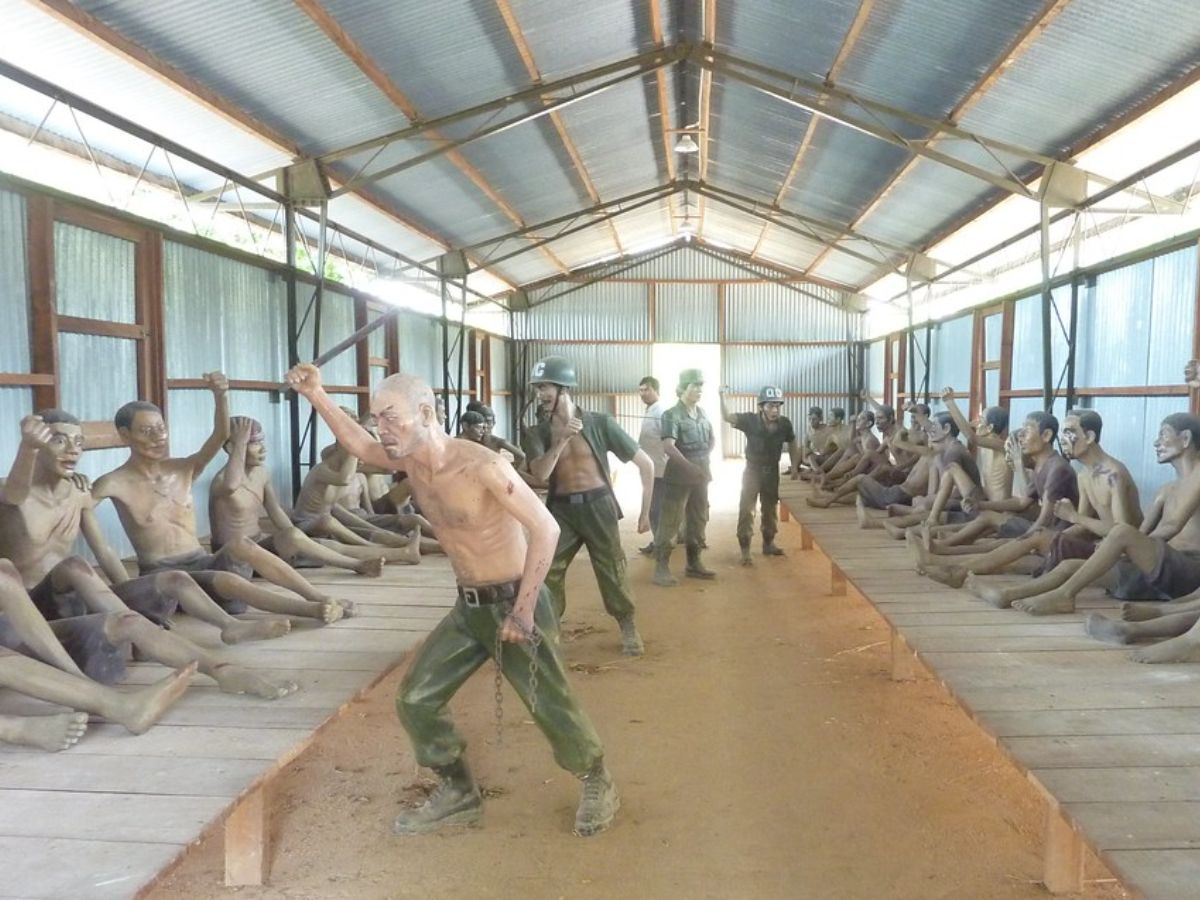
The interior of Subdivision B2 is realistically reconstructed, helping visitors better understand the prisoners’ living conditions. (Source: Collected)
4.2. Barbed wire tiger cages
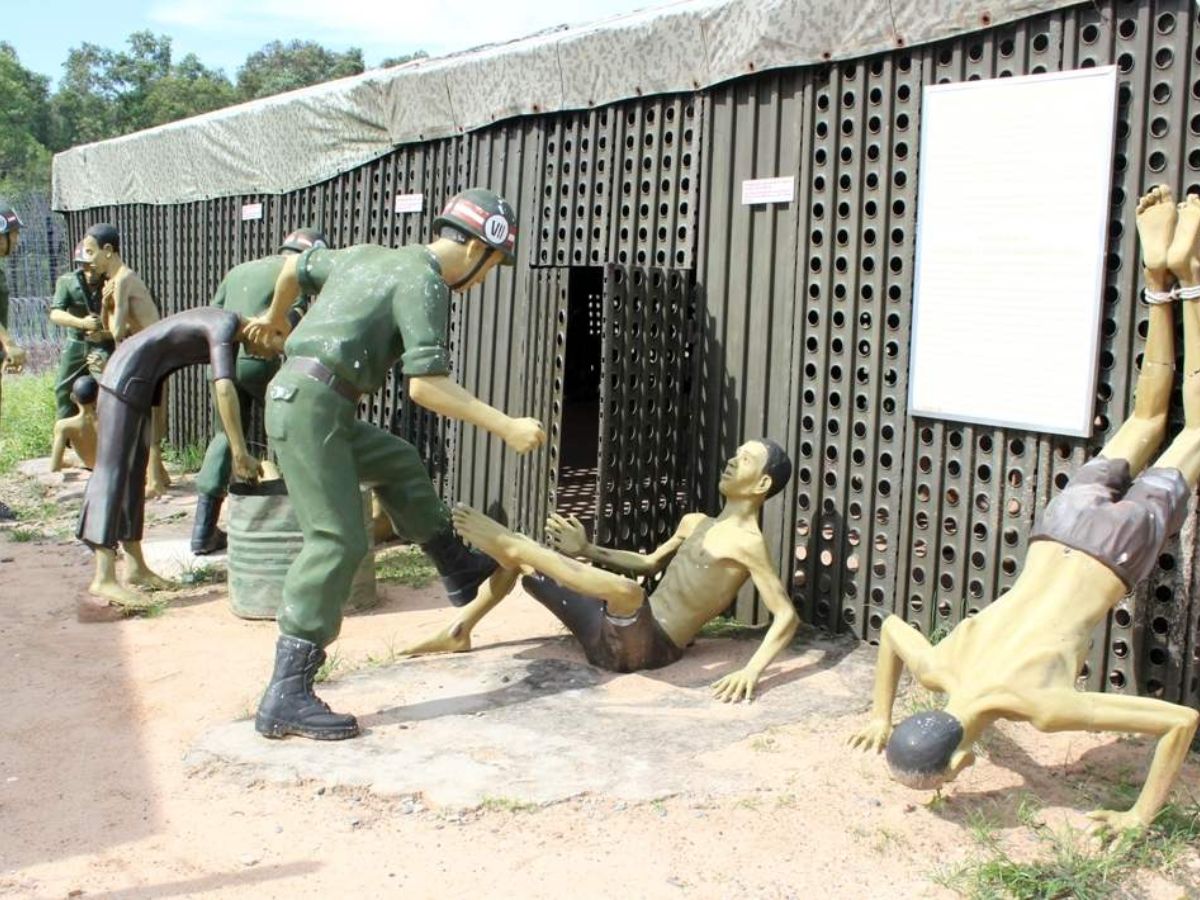
The barbed wire tiger cages are among the most striking parts of the site. These narrow cages, described in the historical exhibits as spaces used to confine prisoners, measure around 2 m long and 0.5 m wide and are surrounded by barbed wire. Seeing the cramped reconstruction gives visitors a tangible impression of the severe conditions prisoners endured. This is a particularly sobering part of the visit, so travelers may want to take time to read the accompanying information and understand the historical context rather than simply viewing the reconstruction as an exhibit.
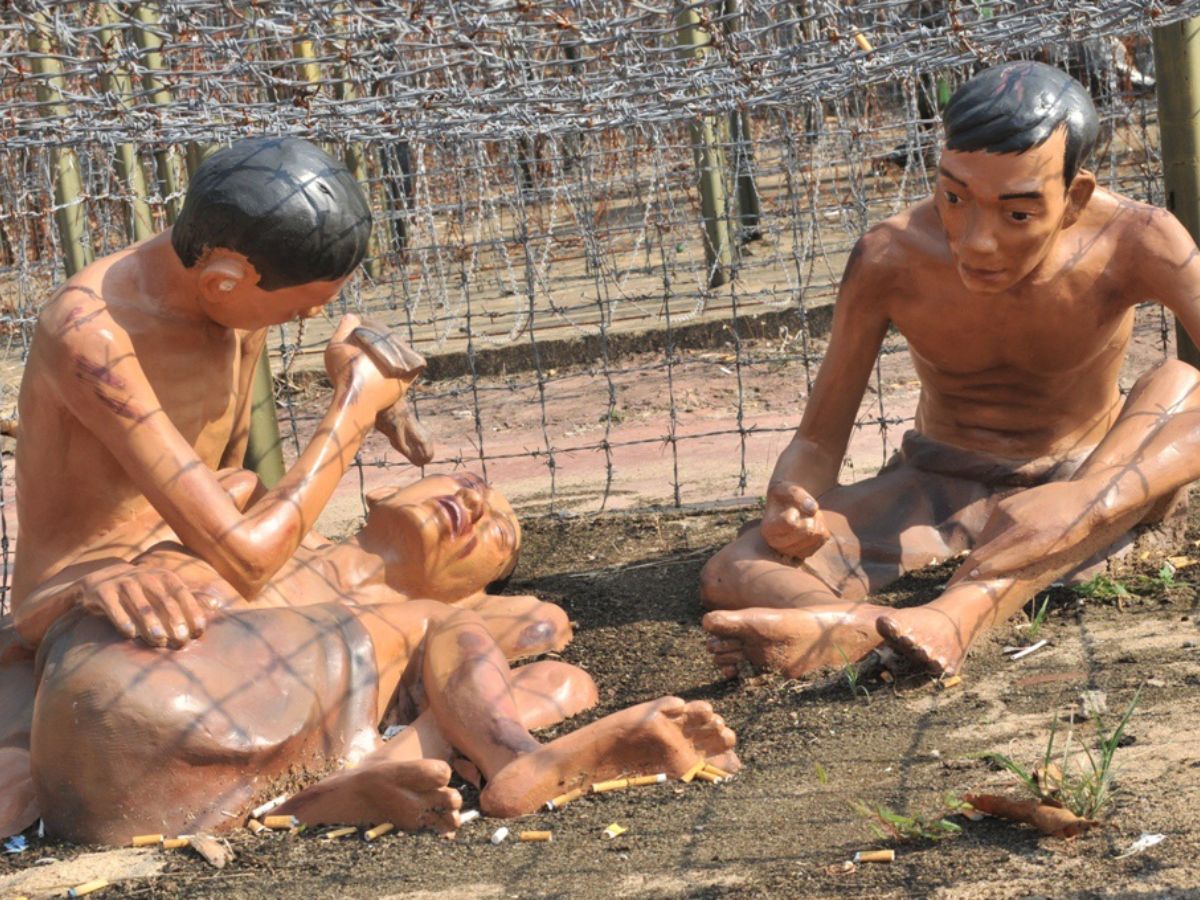
A reconstructed scene depicting prisoners confined in barbed-wire tiger cages at Phu Quoc Prison. (Source: Collected)
4.3. Solitary confinement rooms
The solitary confinement rooms offer another glimpse into the harsh conditions inside the former prison. The reconstructed spaces depict different forms of punishment and include scenes illustrating tunnel escape attempts. Rather than being a conventional sightseeing attraction, this section encourages visitors to pause and reflect on the difficult experiences of those who were held here. Travelers who are sensitive to depictions of wartime suffering may prefer to explore this area at their own pace.
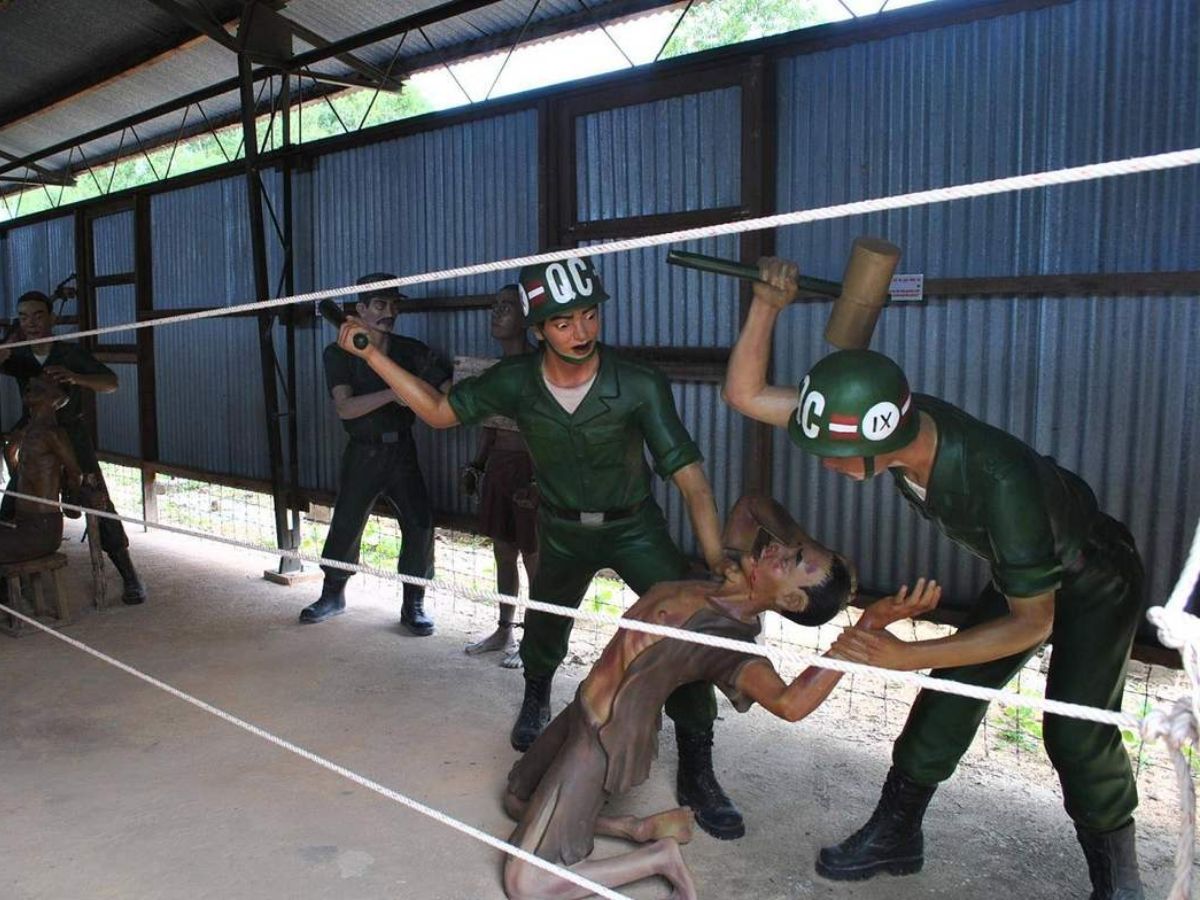
Models depicting punishments that were once inflicted at Phu Quoc Prison. (Source: Collected)
4.4. Historical exhibits and reconstructed scenes
Throughout Phu Quoc Prison, visitors can find explanatory signs and reconstructed scenes that help tell the story of the former prison. Some original elements remain, including door frames and stone foundations, while other areas have been reconstructed to illustrate the former layout and living conditions. These exhibits make the visit more accessible for international travelers, particularly when combined with an on site guide who can provide additional context. Taking time to read the signs and observe the details can turn a short visit into a more meaningful historical experience.
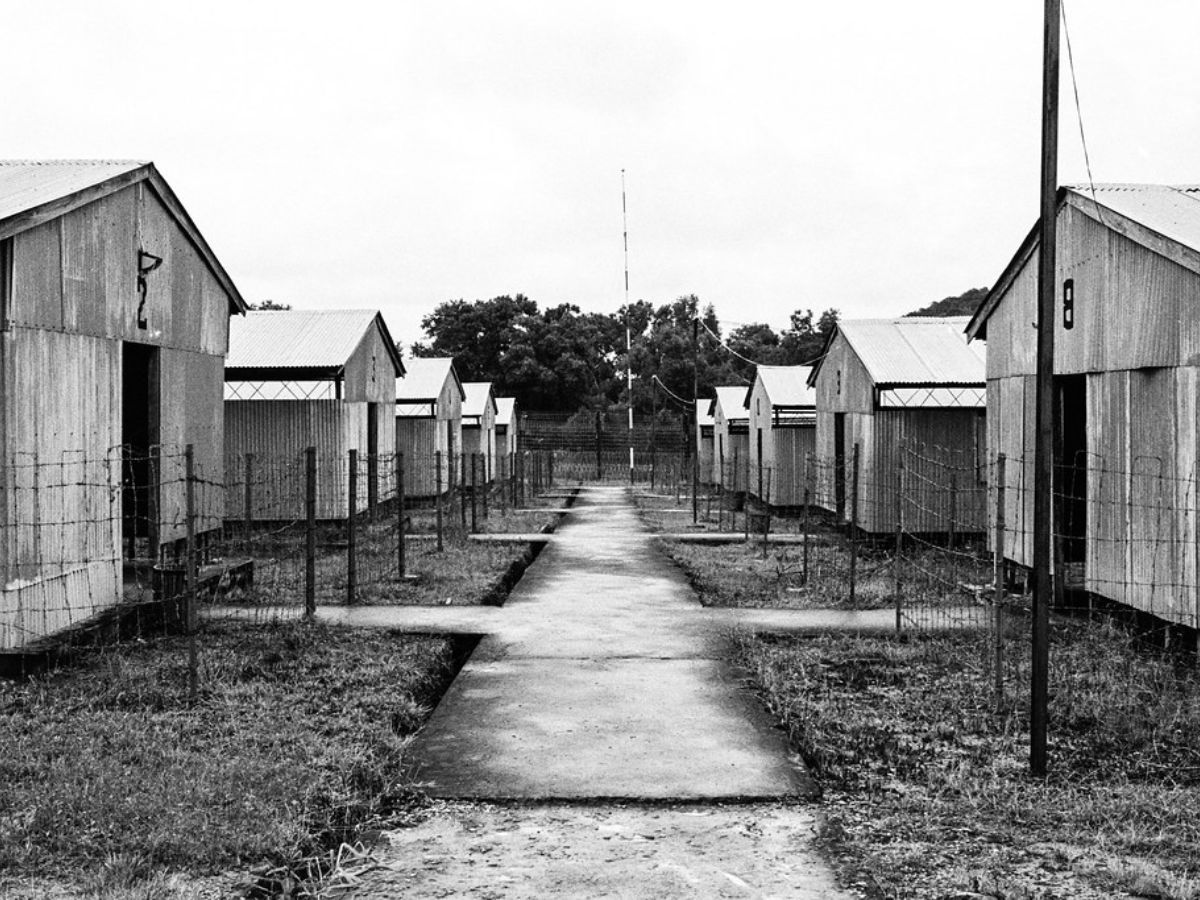
Historical photographs documenting Phu Quoc Prison during the wartime years. (Source: Collected)
5. Tips for visiting Phu Quoc Prison
5.1. Choose a suitable time to visit
For a more comfortable visit, international travelers should consider visiting Phu Quoc Prison between November and June, when the weather is generally cooler and there is less rain. Since much of the experience involves walking between different areas of the historical site, choosing a dry and comfortable day can make the visit more enjoyable. Travelers should also avoid the lunchtime period if they want to use the on site guide service, as guides are not available at that time.
Travelers are advised to visit Phu Quoc Prison on dry days for a more comfortable experience exploring its outdoor areas. (Source: Collected)
5.2. Wear respectful clothing
As a historical site associated with wartime suffering and remembrance, Phu Quoc Prison is best visited in respectful, appropriate clothing. Comfortable clothes and walking friendly footwear are recommended, particularly for travelers planning to explore several sections of the site. Dressing appropriately also helps maintain a respectful atmosphere for other visitors who come to learn about and remember the history preserved here.
5.3. Consider using the on site guide service
International travelers who want to understand the historical context in greater depth may find the on site guide service particularly helpful. While explanatory signs are available throughout the prison, a guide can provide additional context as visitors move between reconstructed areas and historical exhibits. The optional guide service costs approximately VND 100,000–200,000 and is not available during lunchtime. For first time visitors who are unfamiliar with the history of Phu Quoc Prison, having a guide can make the experience easier to follow and more meaningful.
6. Combine Phu Quoc Prison with other South Phu Quoc attractions
Phu Quoc Prison can easily be combined with other attractions in South Phu Quoc for a varied day trip. Travelers can start the morning at Sun World Hon Thom, ride the Hon Thom cable car and enjoy attractions such as Aquatopia Water Park and Exotica Village before returning to the mainland. In the afternoon, spend around one to two hours exploring the prison and learning about its wartime history, then continue to Sunset Town. Travelers can stroll through the Mediterranean style streets, enjoy a sea view coffee or drink, take photos around the waterfront and watch the sunset before the evening entertainment begins.
👉 BOOK YOUR HON THOM CABLE CAR TICKETS HERE!

Travelers enjoy stunning sea views from the Hon Thom Cable Car cabin while exploring southern Phu Quoc. (Source: Collected)
For the evening, travelers can choose from several entertainment experiences in Sunset Town. Kiss of the Sea combines water, light, music and multimedia effects in a spectacular sea stage, while Symphony of the Sea brings together lights, lasers, music and fireworks for a lively nighttime performance. After the shows, VUI-Fest is a convenient place to continue the evening with food, drinks, shopping and entertainment. This combination creates a well balanced South Phu Quoc itinerary, moving from island adventures and historical discovery during the day to sunset views, spectacular shows and a lively evening atmosphere.
Phu Quoc may first capture travelers with its turquoise waters, golden beaches and spectacular sunsets, but there is another side of the island waiting to be discovered. Stepping into Phu Quoc Prison offers a chance to pause from the excitement of a tropical getaway and connect with the stories, memories and difficult chapters that have shaped the island’s past. It is an experience that adds depth to a journey, especially when combined with the beaches, Sun World Hon Thom, Sunset Town, VUI-Fest and spectacular evening shows of South Phu Quoc. For travelers who want to return home with more than beautiful photographs, make Phu Quoc Prison part of the itinerary and discover the history behind the island you see today.


