




In May 2015, 6,400 employees of China’s Tiens Group lined the beach in Nice, forming the longest human image visible from the air and setting a Guinness World Record. The world remembers the photograph. Event planners, however, remember the figures behind it: 84 flights, 7,600 high-speed TGV train tickets, 4,760 rooms spread across 140 hotels from Cannes to Monaco, and 147 buses deployed simply to take guests from their hotels to the beach.
That trip revealed a paradox of large-scale MICE: the hardest part is not finding a beautiful destination, but ensuring that thousands of people can move in sync. Every half-hour of waiting, multiplied across 2,000 people, means 1,000 guest-hours lost. A true MICE destination must therefore answer two questions: how easily can guests get there, and once they arrive, is everything close at hand? Phu Quoc is preparing to answer both.
A 20-kilometre artery from aircraft door to convention hall
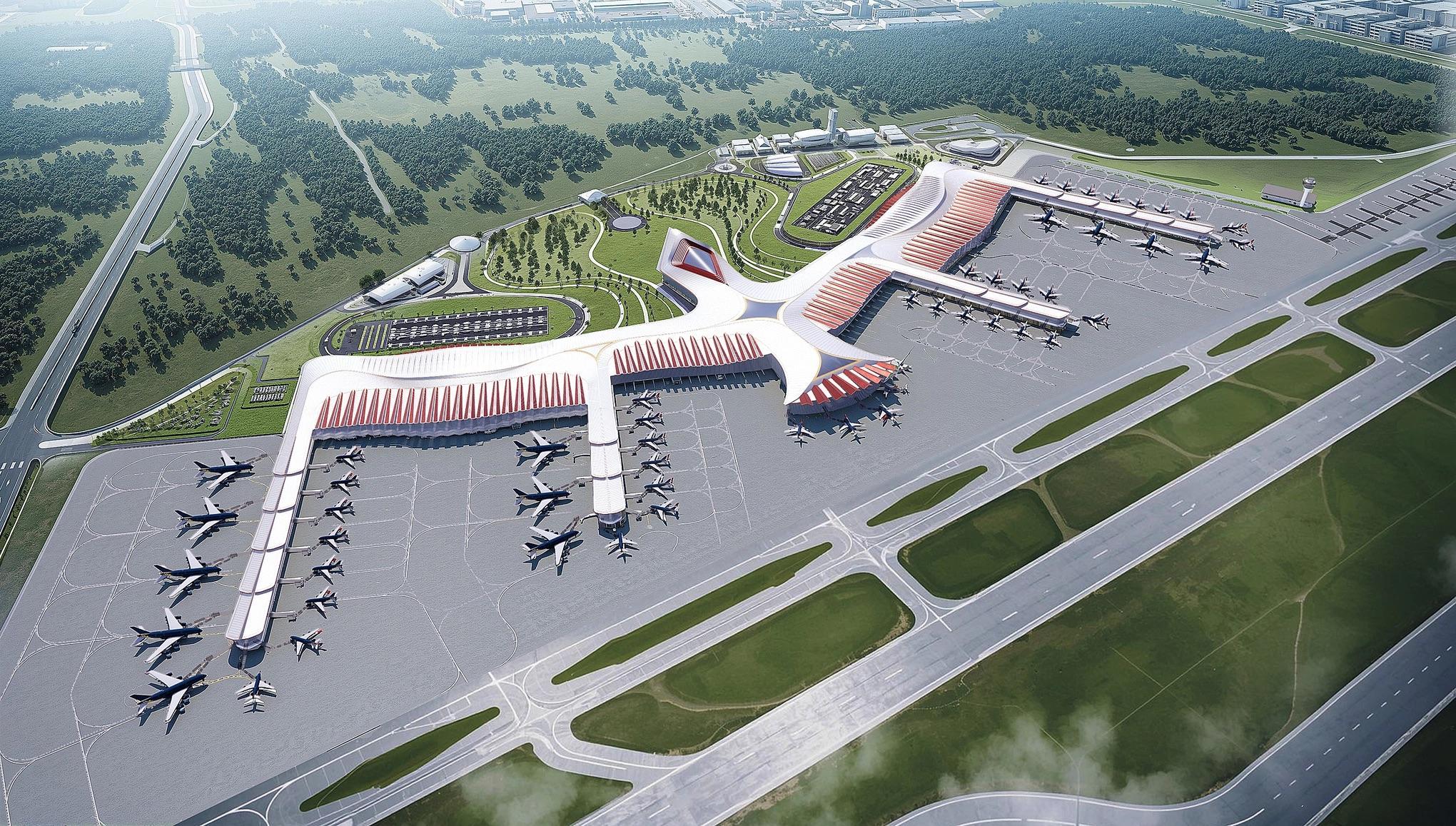
Terminal 2 is the “left wing” of Phu Quoc International Airport.
The journey begins at the airport. Terminal 2, inspired by the image of a phoenix, is part of Phu Quoc International Airport and is scheduled to open in April 2027, with a planned annual capacity of 20–24 million passengers. For large groups, the first bottleneck often lies at baggage handling. T2’s nearly 8-kilometre conveyor system is designed to process 6,300 arriving bags an hour — almost two suitcases every second.
A major gateway needs wings powerful enough to carry it. Less than a year after its first commercial flight on 1 November 2025, Sun PhuQuoc Airways was named “Asia’s Best Leisure Airline 2026” by Skytrax. With a fleet of 21 aircraft, the airline is connecting the Pearl Island directly with Seoul, Taipei, Hong Kong, Singapore, Kuala Lumpur, Bangkok, Chengdu and other destinations.
Where the Tiens event once required the coordination of 84 flights and thousands of train tickets, a group travelling from Seoul or Singapore can now land directly in Phu Quoc, without a connecting stop.
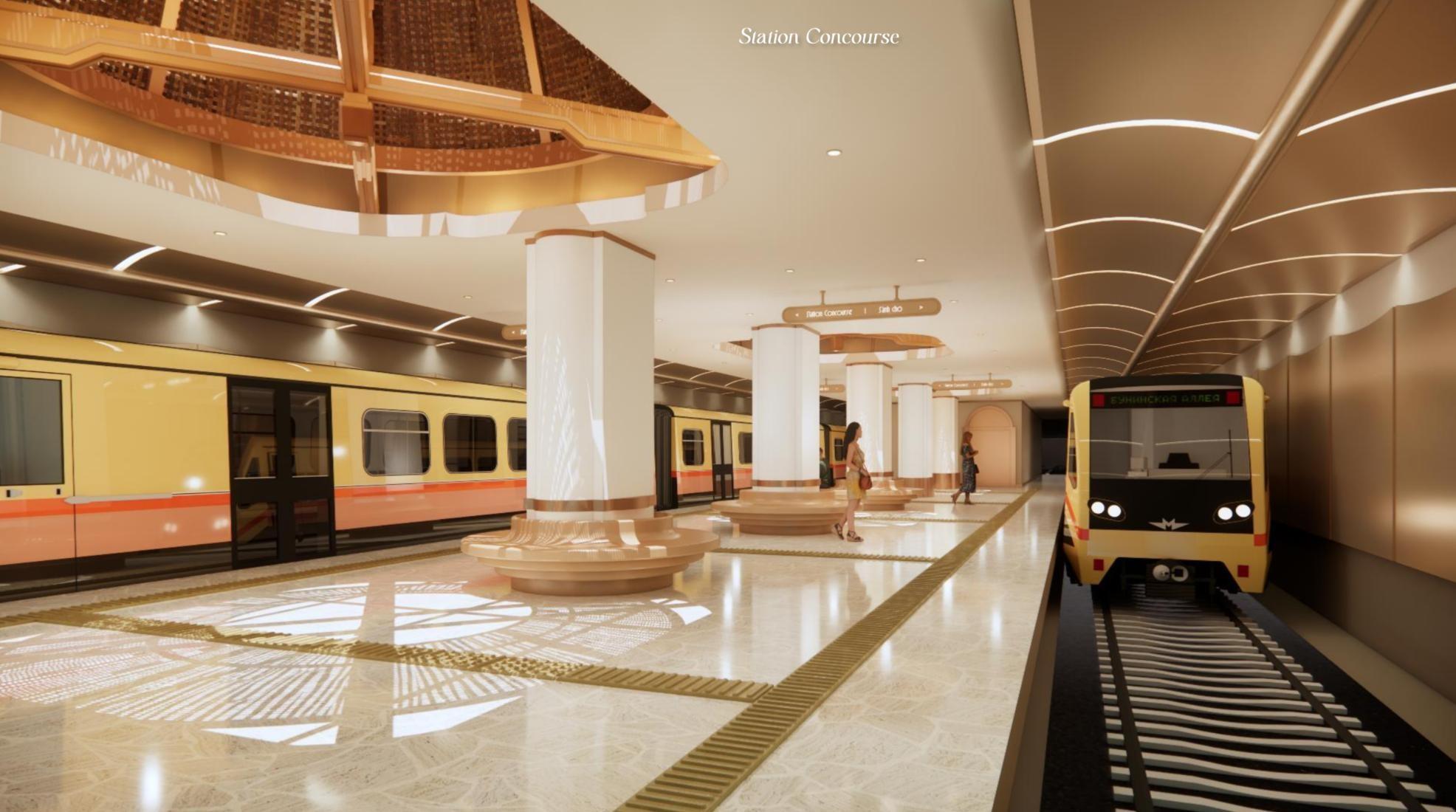
Artist’s impression of Dao Ngoc Station, providing a direct connection to the APEC Convention and Exhibition Centre.
From the airport, guests will board the 17.59-kilometre Light Rail Transit (LRT) line, which will connect the airport directly with the APEC Convention Centre in the island’s south. The journey will take just around 20 minutes, comparable to the distance from Singapore Changi Airport to Marina Bay. With a maximum capacity of approximately 4,500 passengers an hour — equivalent to the capacity of 100 buses with 45 seats each — the line will also eliminate concerns about road congestion.
Meetings and entertainment along the same boulevard
While direct flights and the urban rail line will shorten the journey to Phu Quoc, the endpoint of this “artery” is designed so that guests will barely need to travel any further: accommodation, meetings and entertainment are brought together in one place, much as Singapore brings hotels, convention facilities and leisure attractions together within the Marina Bay Sands complex.
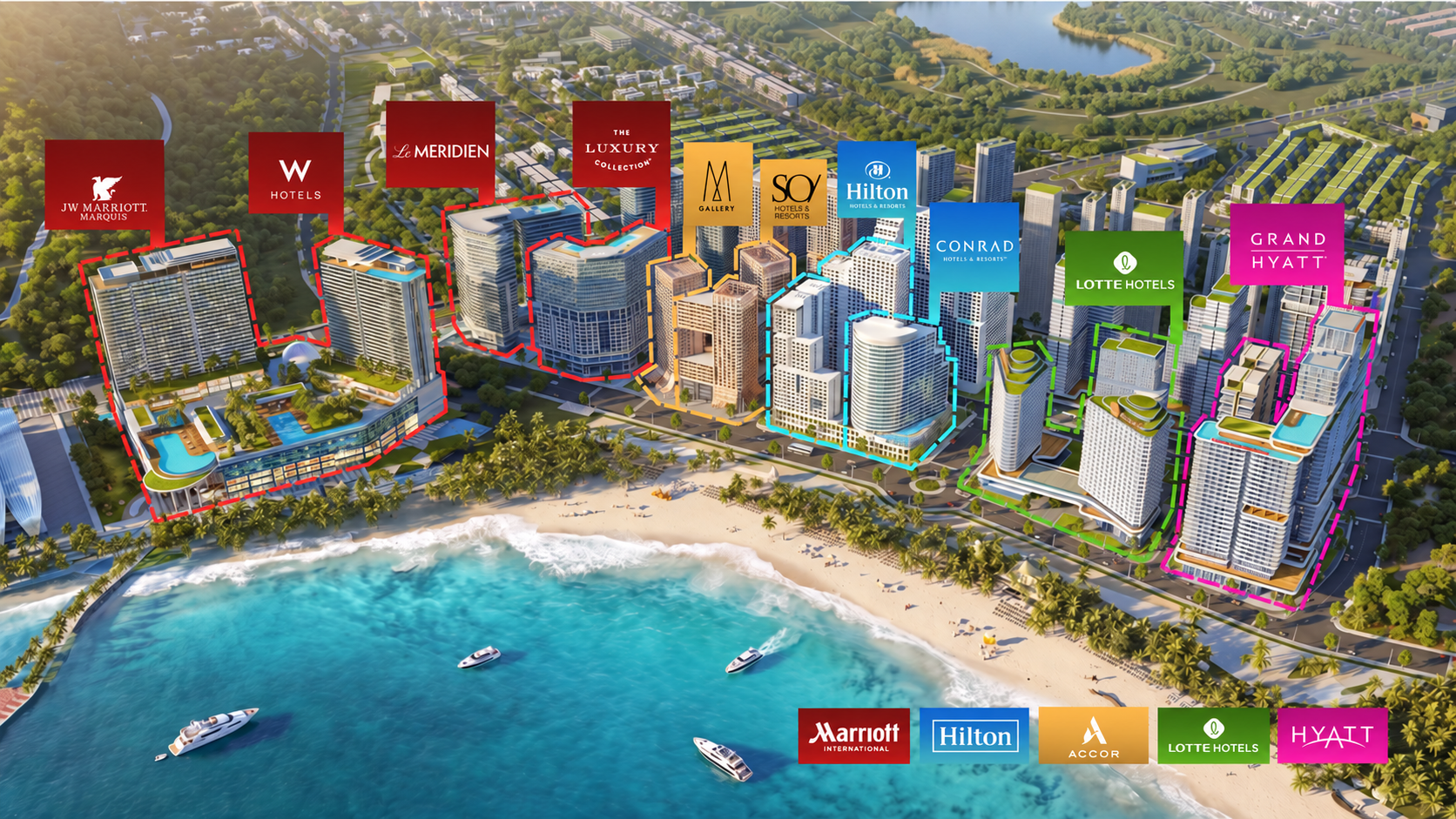
Many of the world’s leading hotel management brands are set to arrive at Ruby Beach.
At the heart of this destination is the “hotel boulevard” at Bai Dat Do (Ruby Beach), where 17 seafront towers will provide nearly 7,000 rooms in the first phase, operated under 13 international hotel brands. These include names making their debut in Vietnam, such as SO, Conrad and W Hotels.
At this scale, an entire group of thousands can stay along the same waterfront boulevard, rather than being split among resorts scattered far apart. For guests, that means waking up together beside the same beach, opening the curtains to a sea view and walking just a few minutes to the event venue.
Adjacent to the “hotel boulevard” is the APEC Convention and Exhibition Centre, whose layered roof sweeps like ocean waves. Inside, its 11,050-square-metre ballroom spans 81 metres without a single column. It is larger than the column-free ballroom at Caesars Forum in Las Vegas and can accommodate more than 10,000 people. At a gala for several thousand guests, no one will have to lean around a pillar to see the stage.
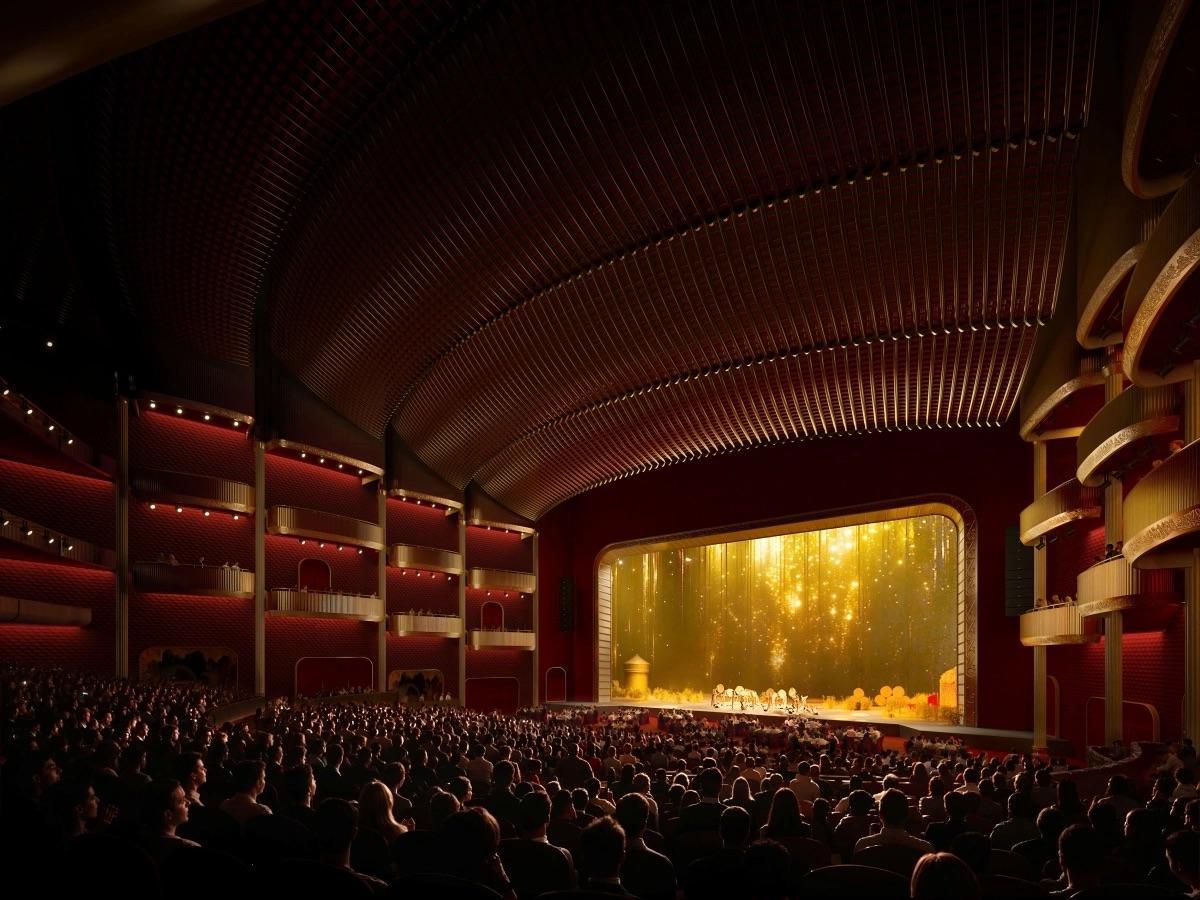
Inside the auditorium of the Multi-purpose Performance Hall.
Next door, the Multi-purpose Performance Hall will have 4,030 seats, exceeding the approximately 3,400 seats at the Dolby Theatre, home of the Academy Awards. An awards night or closing ceremony can therefore take place in an international-standard auditorium just steps from where guests are staying. The interiors of both venues are scheduled for completion by 31 March 2027.
And when the main programme comes to a close — whether it is a customer conference, an industry seminar or an incentive trip for outstanding employees — the festivities will still be within easy reach. Sunset Town, with its Mediterranean-inspired architecture, the Kiss Bridge, nightly fireworks and the sea-crossing cable car to Hon Thom, is all located in the island’s south. Guests can spend the morning in meetings, take the world’s longest three-rope cable car across the sea to Hon Thom for an afternoon of fun, then stroll to Sunset Town in the evening, dine at Sun Bavaria GastroPub, the world’s largest beer restaurant, and round off the day with the Kiss of the Sea show.


