


1. An Overview of Quan Am Hall at Bai Dinh Pagoda
1.1. Where Is Quan Am Hall Located Within the Pagoda Complex?
Quan Am Hall is located in the new Bai Dinh Pagoda area, within the Bai Dinh Pagoda complex in Ninh Binh. After passing through the Tam Quan Gate and the bell tower, visitors continue along stone steps surrounded by spacious courtyards, lawns and greenery before reaching the worship hall. The structure stands on elevated ground, backed by a mountain and opening onto a broad space in front, creating a solemn atmosphere that remains harmonious with the surrounding natural landscape. Its location makes Quan Am Hall a prominent stop along the route through the inner temple grounds.

Panoramic view of Quan Am Hall at Bai Dinh Pagoda. (Source: Reference image)
Along the sightseeing and pilgrimage route at Bai Dinh Pagoda, Quan Am Hall serves as an important link between the architectural complex and visitors’ spiritual journeys. Many people stop here to offer incense and pray for peace before continuing to other major worship halls within the complex. The hall not only provides a dedicated place to worship Avalokitesvara Bodhisattva but also offers a moment of spiritual rest, allowing visitors to find tranquillity amid the vast pagoda grounds.
1.2. The Origins and Purpose of Quan Am Hall
Quan Am Hall at Bai Dinh Pagoda was established around the worship of Avalokitesvara Bodhisattva, a figure in Buddhism who symbolises compassion and the saving of sentient beings from suffering and danger. For generations, the image of Quan Am has been deeply rooted in Vietnamese spiritual life, associated with the belief that the Bodhisattva offers protection, hears the cries of those in distress and bestows peace. Therefore, the construction of a dedicated hall for Quan Am within a major pagoda complex reflects not only the traditions of Mahayana Buddhism but also the widespread desire among Buddhist followers and visitors to pray for peace and blessings.
Within the overall Bai Dinh Pagoda complex, one of Vietnam’s major Buddhist centres, Quan Am Hall holds an important spiritual and symbolic role. While halls dedicated to the Buddha often emphasise solemnity and grandeur, the hall dedicated to Avalokitesvara Bodhisattva highlights compassion and a close connection with everyday human life. The structure was established to complete the pagoda’s system of worship and create a more fulfilling pilgrimage experience, where visitors can not only admire the scenery but also express their wishes for health, peace and inner tranquillity.
2. Architecture and Spiritual Atmosphere of Quan Am Hall at Bai Dinh Pagoda
2.1. Traditional Buddhist Architecture
Quan Am Hall at Bai Dinh Pagoda is a large-scale structure that makes a strong impression with its framework constructed entirely from precious tu thiet hardwood. The building stands nearly 15 metres high, measures more than 40 metres in length and is approximately 17 metres wide. It comprises several main and secondary sections arranged in a balanced layout, creating an imposing yet harmonious overall appearance. Massive main and secondary columns rest on sturdy lotus-shaped stone bases. Combined with solid-wood trusses and horizontal and vertical beams, these elements give the hall both a majestic appearance and lasting structural strength.
Architecturally, the hall reflects the distinctive style of traditional Vietnamese pagodas, with multi-tiered curved roofs, gently upturned roof corners and Bat Trang glazed tubular roof tiles. Details such as interlocking wooden beams, projecting brackets, supporting columns and connecting beams demonstrate the sophistication of traditional Vietnamese craftsmanship. At the same time, the space has been carefully designed to optimise natural lighting and ventilation, creating an airy interior that harmoniously combines traditional architectural values with modern construction principles within a large-scale pagoda complex.
2.2. The Avalokitesvara Bodhisattva Statue and Distinctive Details
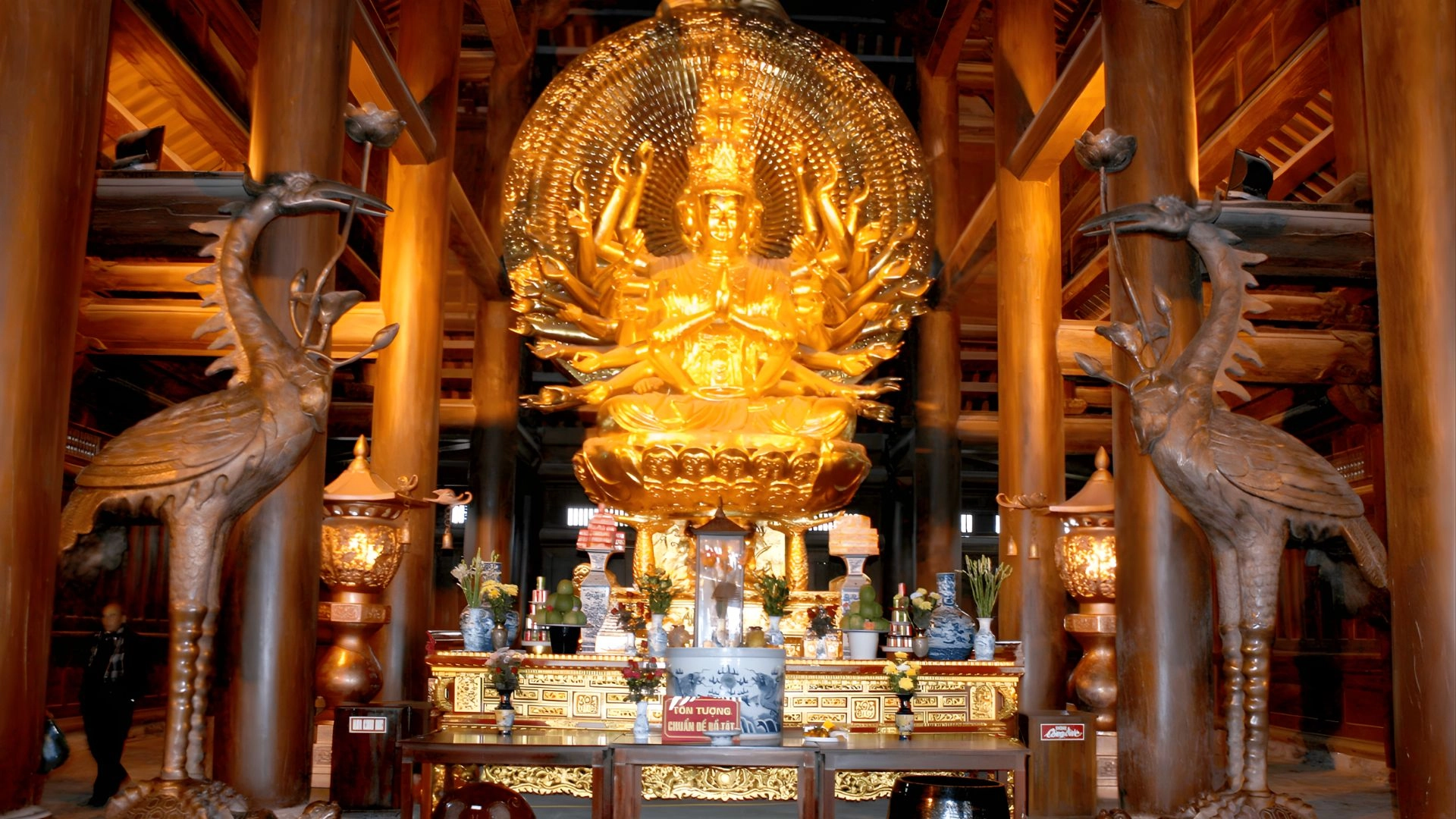
At the centre of Quan Am Hall stands the Thousand-Armed, Thousand-Eyed Avalokitesvara Bodhisattva statue. The imposing figure conveys a compassionate and benevolent expression. Positioned in the most revered part of the hall, the statue serves as the spiritual focal point of the entire space. The many arms of Quan Am symbolise the ability to hear and rescue sentient beings everywhere, embodying the essence of compassion in Buddhism.

The Thousand-Armed, Thousand-Eyed Avalokitesvara Bodhisattva statue. (Source: Reference image)
Surrounding the hall are intricately carved horizontal plaques, decorative altar screens, worship platforms and bronze ritual objects featuring traditional motifs such as the Four Sacred Creatures, the Four Seasons and floral patterns. The deep relief and openwork carvings on the wooden surfaces add artistic depth to the structure, giving each detail a distinctive character while enhancing the hall’s sacred atmosphere and aesthetic value.
2.3. A Solemn and Serene Place of Worship
Upon entering Quan Am Hall at Bai Dinh Pagoda, visitors can readily sense the contemplative and tranquil atmosphere that fills the space. Natural light filters through the roof and ventilation openings, blending with wisps of incense smoke to create an ethereal environment separated from the noise outside. The gentle fragrance of incense and the soft sound of footsteps on the stone floor further enhance the sense of sacredness.

The solemn interior of Quan Am Hall at Bai Dinh Pagoda. (Source: Reference image)
Although spacious, the hall remains quiet and peaceful. Standing before the statue of Quan Am, visitors often find themselves slowing down, turning inward and offering prayers for peace. The combination of traditional wooden architecture, natural light and spiritual ambience transforms the act of worship into more than a sightseeing activity: it becomes a reflective journey that allows visitors to reconnect with their inner tranquillity.
3. The Spiritual Significance of Visiting Quan Am Hall at Bai Dinh Pagoda
3.1. Quan Am Hall: A Place to Pray for Peace and Blessings
In Vietnamese spiritual beliefs, Avalokitesvara Bodhisattva symbolises compassion and is believed to hear the cries of sentient beings. Therefore, many visitors to Quan Am Hall at Bai Dinh Pagoda sincerely pray for peace for their families, good health for their parents, success at work and smoother progress in life. For those facing difficulties, the hall can also serve as a source of spiritual comfort, offering a place to express hopes of overcoming challenges and finding peace of mind.
According to folk beliefs combined with Buddhist teachings, worshipping Quan Am is not merely about asking for blessings. It is also an opportunity to remind oneself to live peacefully, show compassion and do good deeds. Many believe that prayers become more meaningful when they come from a kind and virtuous heart. This connection between spiritual faith and moral values has made Quan Am Hall a destination for visitors seeking serenity amid the challenges of everyday life.
3.2. What to Do When Visiting Quan Am Hall
When entering Quan Am Hall at Bai Dinh Pagoda, the most important thing is to maintain a respectful and peaceful state of mind. Visitors should dress modestly, walk calmly and avoid speaking loudly so as not to disturb the solemn atmosphere of the worship space. Before offering incense or saying prayers, they may take a few moments to quiet their minds, set aside daily concerns and focus on peace and goodwill.
Appropriate behaviour in a spiritual setting demonstrates respect for Avalokitesvara Bodhisattva and other visitors. Do not touch worship statues, offerings or artefacts inside the hall without permission. If taking photographs, visitors should observe the pagoda’s regulations and avoid using flash photography where possible. Keeping the area clean and refraining from pushing or crowding also help preserve the tranquillity of Quan Am Hall.
3.3. Quan Am Hall During Major Religious Festivals
During important occasions, such as the Bai Dinh Pagoda Festival in early spring or Avalokitesvara Bodhisattva’s commemorative days, Quan Am Hall becomes one of the busiest places of worship within the pagoda complex. Pilgrims gather to offer incense and pray for peace, good health and protection for their families. The rising incense smoke, the sound of bells and Buddhist chanting, and the surrounding mountain scenery combine to create a deeply spiritual and moving atmosphere.

The solemn worship space inside Quan Am Hall at Bai Dinh Pagoda during a festival. (Source: Reference image)
During peak periods, particularly after the Lunar New Year, the area around the hall becomes lively while retaining its inherent solemnity. Visitors are advised to arrive early to avoid the busiest hours, remain patient when moving through the grounds and maintain a respectful attitude throughout their visit. The harmony between the devotion of Buddhist pilgrims and the tranquil surroundings makes visiting Quan Am Hall during festival periods a particularly memorable spiritual experience.
4. Travel Tips for Visiting Quan Am Hall at Bai Dinh Pagoda
4.1. The Best Time to Visit and Worship
The best times to visit Quan Am Hall at Bai Dinh Pagoda are early in the morning or in the early afternoon. In the morning, the air is cool, the sunlight is gentle and the surroundings are peaceful, allowing visitors to worship in a more relaxed and meaningful atmosphere. Crowds are also generally smaller at this time, making it easier to walk around, offer incense and admire the architecture in the characteristic tranquillity of this sacred destination.
For afternoon visits, it is advisable to arrive after 2 p.m. rather than close to sunset. The softer light and the surrounding mountain scenery create a particularly peaceful atmosphere. Regardless of the time chosen, visitors should consider avoiding major festivals, peak weekends and the mid-morning period, when large crowds can cause congestion and diminish the worship experience.
4.2. Appropriate Clothing and Important Notes for Visitors
When entering Quan Am Hall, visitors should prioritise modest and respectful clothing suitable for a spiritual setting. Clothing should cover the shoulders and extend below the knees. Tight-fitting, transparent or excessively short garments should be avoided. Comfortable, easy-to-walk-in footwear is also recommended, as the pagoda grounds are extensive and require considerable walking while maintaining an appropriate level of respect during worship.
Visitors should also behave respectfully, speak softly and avoid loud laughter or running inside the hall. When offering incense, they should proceed calmly without pushing or crowding. Photography and filming should be limited in the main worship area if signs prohibit them. Visitors should never touch worship statues or religious objects, helping preserve the sanctity of the space.
4.3. Other Ninh Binh Attractions to Combine with a Spiritual Journey
After visiting Quan Am Hall at Bai Dinh Pagoda, travellers can explore several other notable destinations to make their journey more complete. Trang An is an ideal choice, with winding waterways flowing between magnificent limestone mountains, creating a peaceful and relaxing atmosphere. Tam Coc – Bich Dong is also well worth a visit, particularly during the rice harvest season, when golden fields stretch along both sides of the river.
In addition, the ancient capital of Hoa Lu offers considerable historical value and helps visitors learn more about Vietnam’s former capital. Mua Cave attracts visitors with its spectacular panoramic views from above, making it suitable for those who wish to combine spiritual exploration with nature discovery. In the evening, visitors can stroll around Times Square, where spacious surroundings, water music performances and modern lighting create a fresh experience in the heart of Ninh Binh.

Enjoy the spectacular water music performance at Times Square. (Source: Reference image)
A journey to Vietnam’s former imperial capital becomes even more fulfilling when visitors take time to worship at Quan Am Hall at Bai Dinh Pagoda, a place where impressive architecture, a tranquil atmosphere and profound spiritual values come together. Rather than simply sightseeing, take a moment to slow down, embrace the serenity and offer heartfelt wishes for yourself and your family in this special sacred space during your visit to Ninh Binh.