



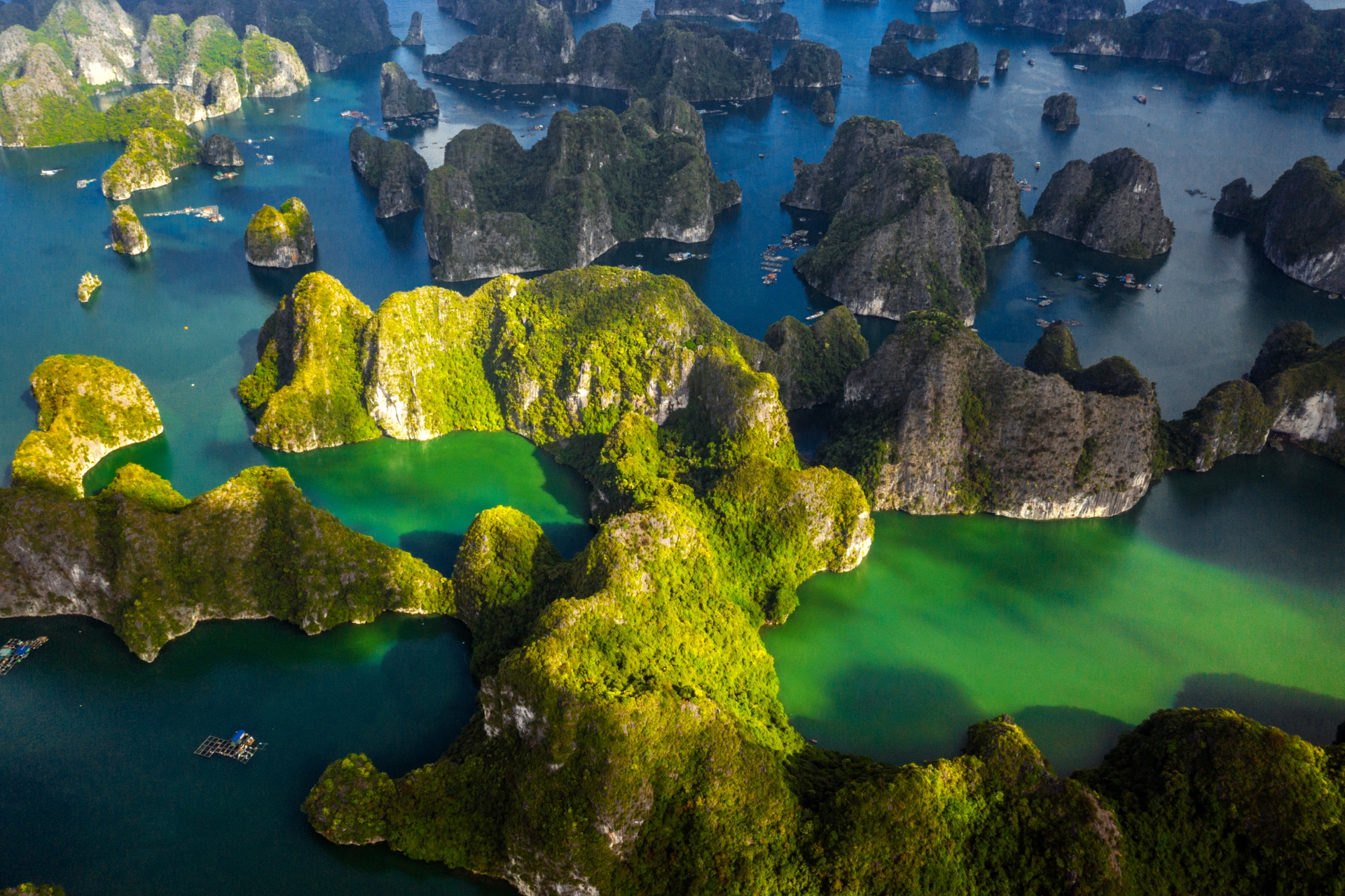
1. Marine Karst Landforms of Outstanding Universal Value
Marine karst formations are among the core features that have established the reputation of Ha Long Bay – Cat Ba Archipelago as a UNESCO World Natural Heritage Site. According to UNESCO, the heritage site covers 65,650 hectares and includes 1,133 islands and islets across Quang Ninh Province and Hai Phong City. Limestone towers of varying shapes and sizes rise from the sea, creating a distinctive landscape shaped by geological processes over millions of years.
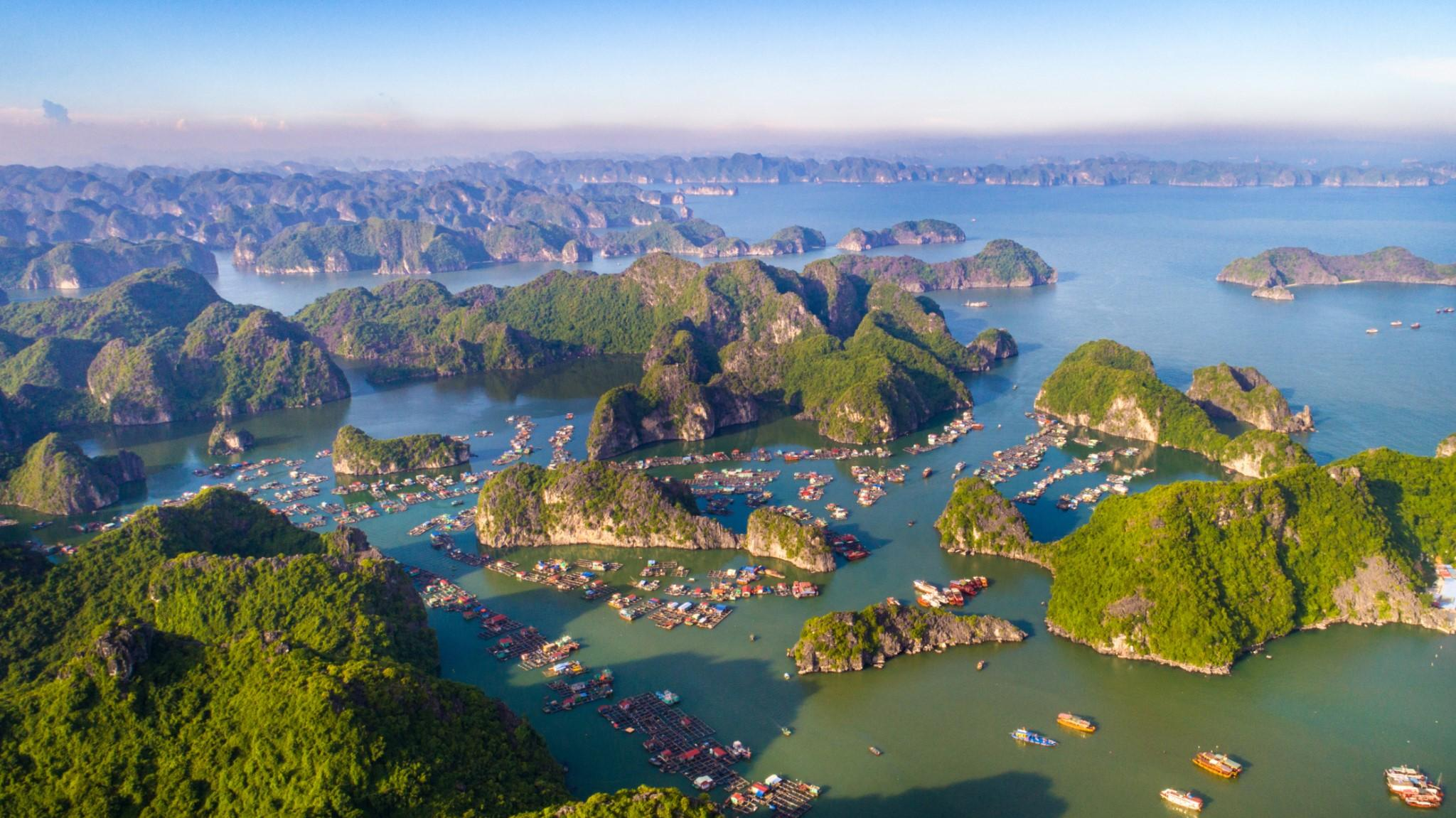
More than 1,100 islands and islets shape the distinctive landscape of Ha Long Bay – Cat Ba Archipelago. (Photo: Collected)
One of the area's defining features is the diversity of tropical karst landforms. Fengcong formations consist of clusters of cone-shaped limestone peaks, while fenglin formations comprise isolated limestone towers. The dissolution of limestone, combined with changes in sea level and coastal erosion caused by waves, has created shoreline cliffs, lakes enclosed by limestone formations, and cave systems of different origins.
According to UNESCO, the caves within the heritage site fall into three main categories: remnant caves formed from ancient cave systems, foot caves at the base of limestone hills, and wave-cut notch caves created by marine erosion. These landforms provide evidence of how tropical karst evolved through multiple stages, from terrestrial environments to landscapes gradually inundated by the sea.
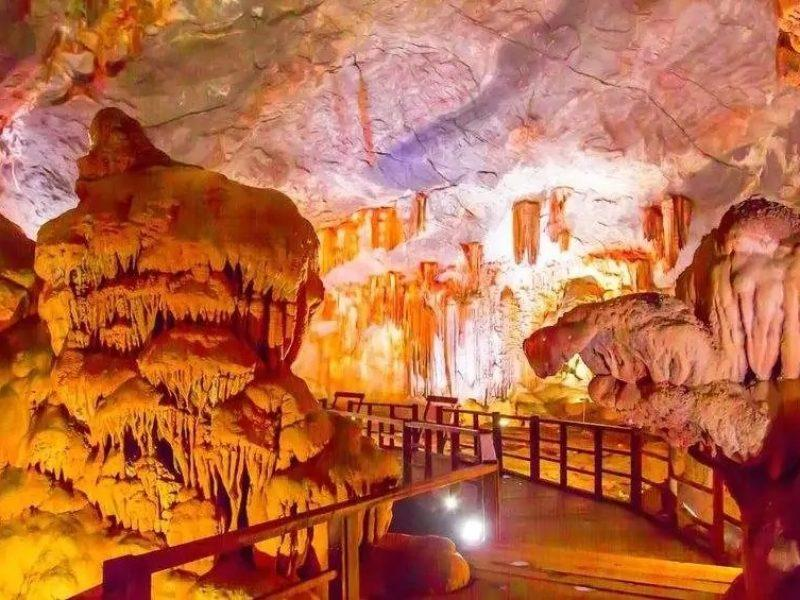
The cave systems reflect geological formation and transformation processes spanning millions of years. (Photo: Collected)
The inclusion of the Cat Ba Archipelago allows the heritage site to represent the stages of marine inundation in tropical karst landscapes more comprehensively, while expanding the range of geological and geomorphological processes showcased in the area. This provides an important basis for UNESCO's recognition of the site's value under criterion (viii), which concerns Earth's history and geological features of global significance.
2. Biodiversity from Tropical Forests to Marine Ecosystems
Beyond its geological significance, the heritage site is also home to rich ecosystems, supported by a variety of terrestrial and aquatic habitats. Limestone mountains, enclosed valleys, and coastal waters around the islands provide habitats for numerous plant and animal species. Representative ecosystems include tropical forests on limestone mountains, mangrove forests, seagrass beds, and coral reefs.
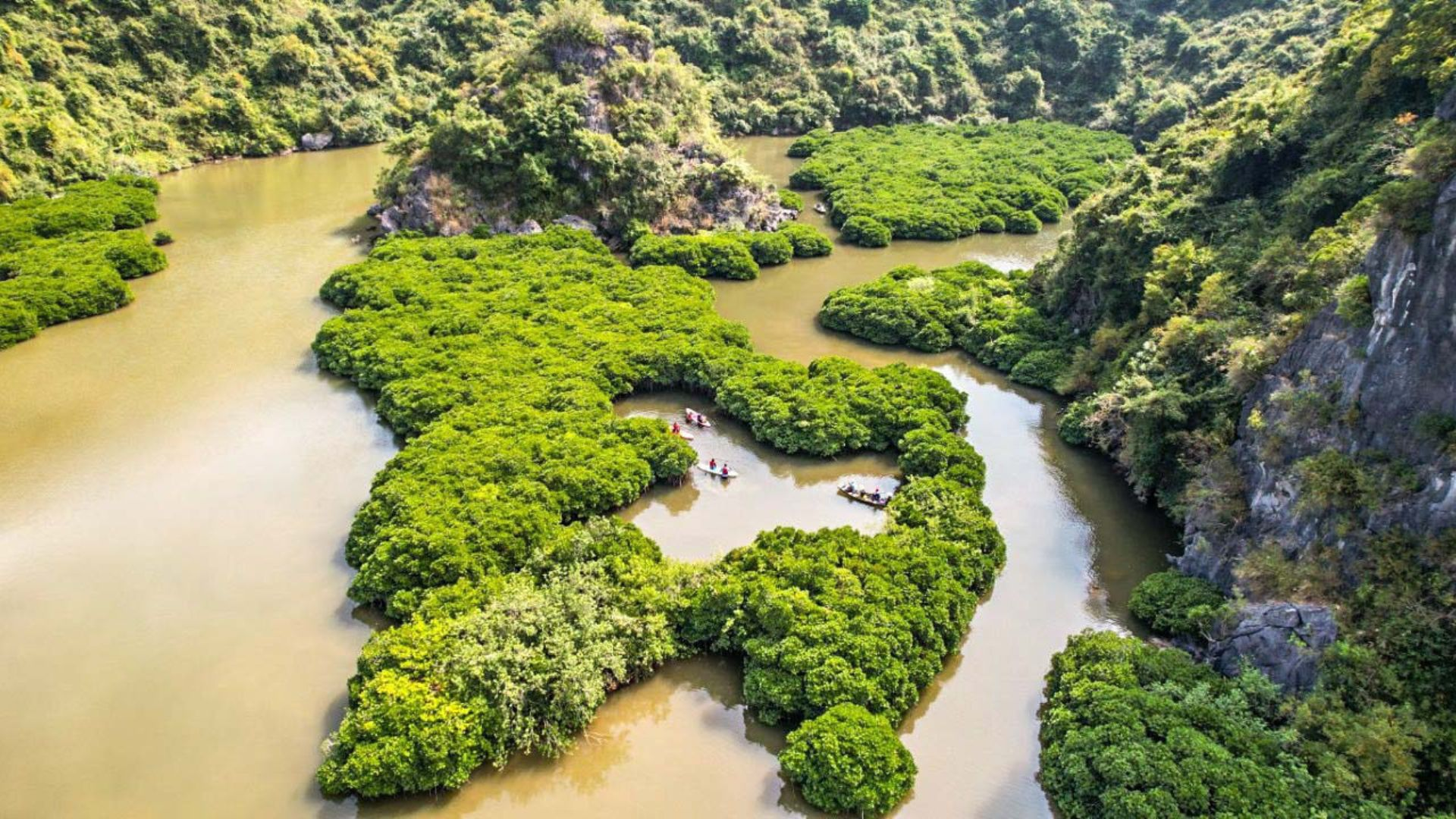
Mangrove forests act as a natural shield protecting coastal ecosystems within the heritage site. (Photo: Collected)
According to the 2023 nomination dossier for the heritage site's extension, the area is home to 4,910 terrestrial and aquatic animal and plant species. Of these, 253 are listed on the IUCN Red List or Vietnam's Red Data Book. Notable species mentioned by UNESCO include Ha Long fan palm (Livistona halongensis), the Cat Ba gecko, box turtles, small-clawed otters, serows, and king cobras. These species highlight the area's ecological significance alongside its remarkable landscapes and landforms.
The Cat Ba langur is particularly noteworthy as a primate endemic to the archipelago and classified as Critically Endangered. Its wild population survives only on Cat Ba, with very few individuals remaining and habitats fragmented across the island. Factors such as habitat disturbance and limited movement between groups make species conservation a major priority in the area.
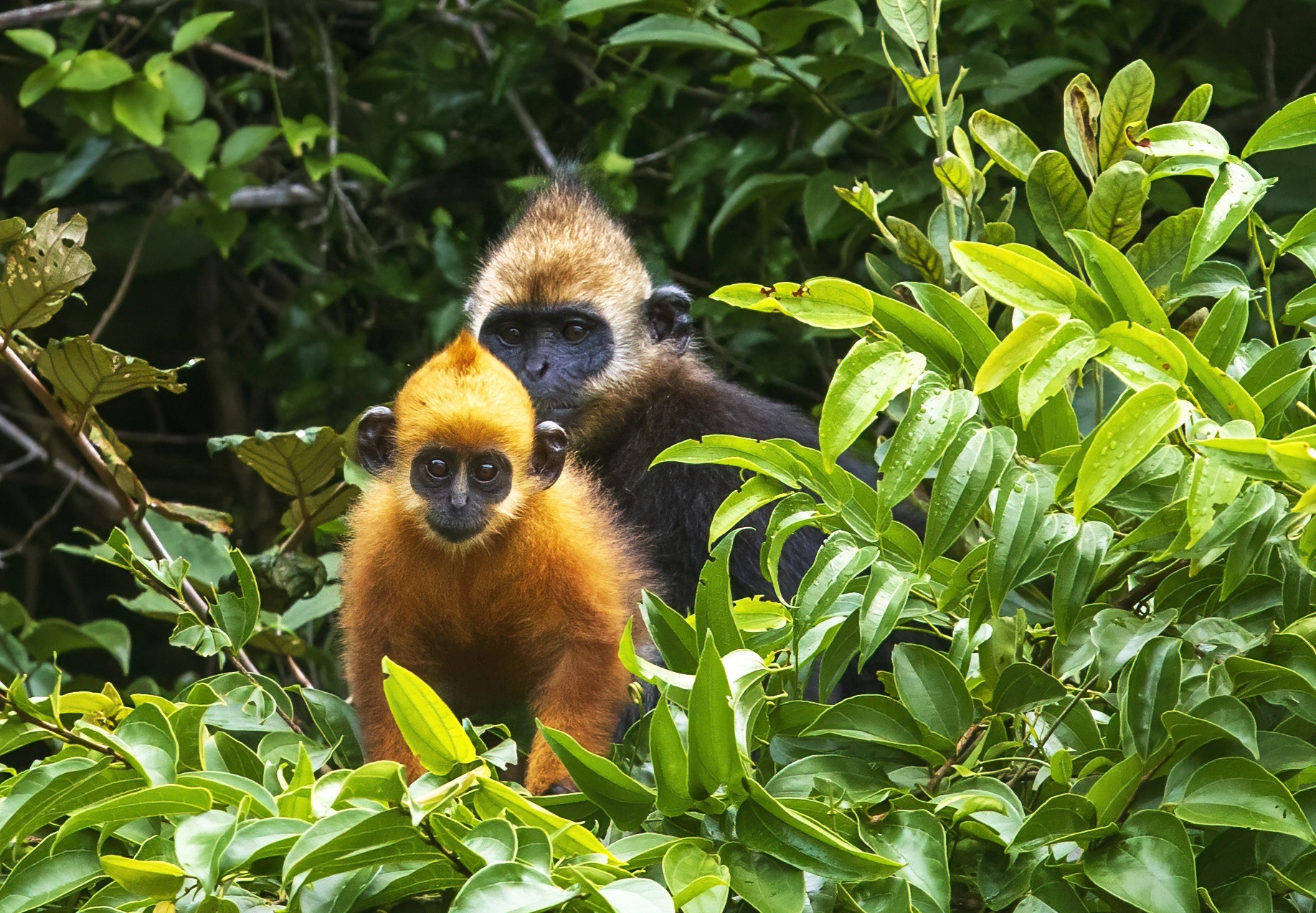
The Cat Ba langur is an endemic primate species facing a critical threat of extinction. (Photo: Collected)
The area's biodiversity value therefore lies not only in the number of recorded species but also in the presence of endemic and endangered species within highly sensitive habitats. Protecting forests, coastal waters around the islands, and the habitats of rare species is essential to maintaining the natural value of the entire heritage site.
3. A Seascape Where Limestone Mountains Meet Lush Forests
Natural beauty is one of the outstanding values that earned Ha Long Bay – Cat Ba Archipelago UNESCO recognition under criterion (vii). Thousands of limestone islands in varied shapes, towering cliffs, and coastal caves create an expansive landscape shaped by a long geological history.
In Ha Long Bay, successive layers of limestone islands rise from the water, interspersed with distinctive cliffs and caves. The Cat Ba Archipelago, meanwhile, adds another dimension to the scenery with forest-covered limestone ranges, small bays, and winding coastlines between the mountains. The interplay of limestone formations, vegetation, and sea creates a variety of distinctive views within the same heritage site.
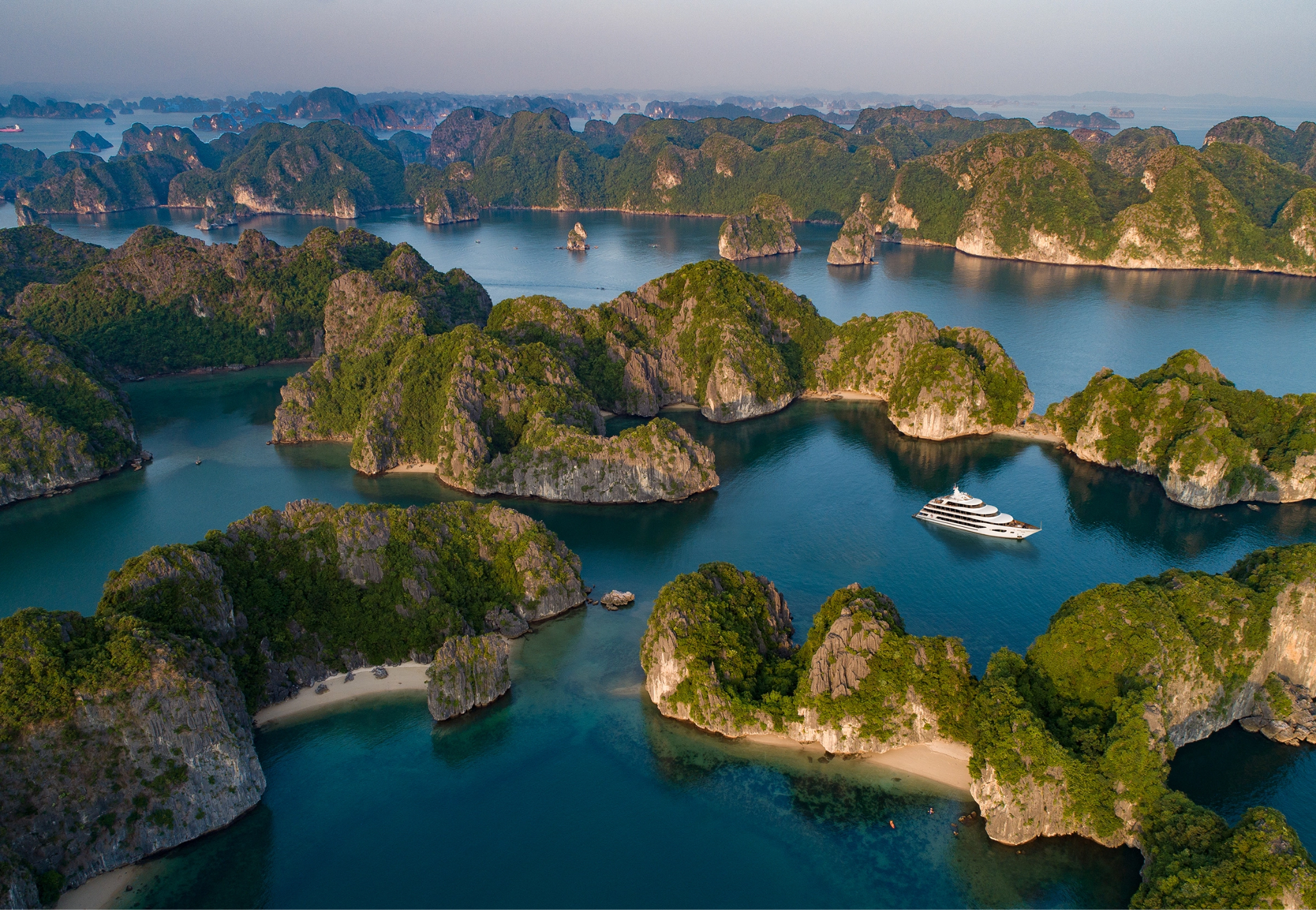
Steep cliffs, forest-covered islands, and small bays give Cat Ba its distinctive landscape. (Photo: Collected)
In Cat Ba, visitors can clearly see the transition between forest-covered mountain ranges, waterways extending deep into the islands, and open stretches of sea framed by cliffs. This landscape not only enhances the appeal of exploring the archipelago but also reflects the relationship between geological formation and ecosystem development.
4. Heritage Conservation and Sustainable Tourism Development
The expansion of the heritage site has increased the need for closer conservation coordination between Quang Ninh and Hai Phong. Both localities have made progress in establishing coordination mechanisms, but UNESCO continues to call for a joint management body and an integrated management plan covering the entire heritage site to protect its Outstanding Universal Value.
Pressures from tourism, waterway transport, marine resource exploitation, and development projects highlight the need to manage ecological carrying capacity, monitor water quality, and control waste throughout the heritage site. In Cat Ba in particular, protecting habitats and preserving the living environments of endemic species must go hand in hand with tourism development, with local communities playing an active role.
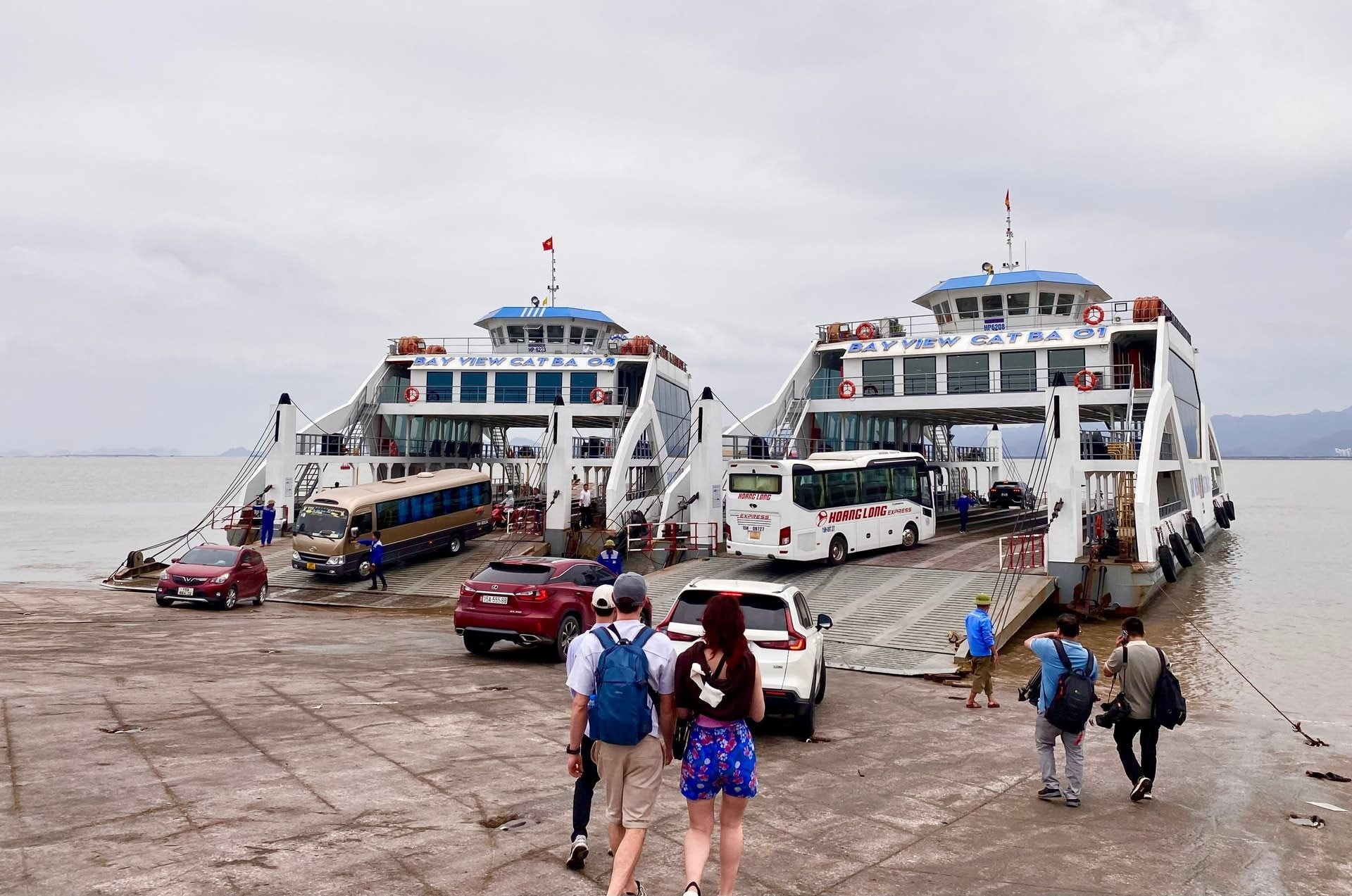
Managing tourism and waterway traffic is essential to protecting the heritage site's value. (Photo: Collected)
From a destination development perspective, the expanded heritage boundaries provide a basis for creating itineraries that combine a variety of activities. Beyond exploring limestone islands and caves in Ha Long Bay, visitors to Cat Ba can go trekking in Cat Ba National Park, kayak on Lan Ha Bay, or learn about local life. Developing convenient multi-destination tourism products will require coordination between destinations in terms of transportation, sightseeing schedules, and service quality.
Ha Long Bay – Cat Ba Archipelago, a UNESCO World Natural Heritage Site, brings together outstanding geological, geomorphological, and scenic values, alongside rich ecosystems that support numerous rare species. Protecting these values is not only a responsibility to preserve the heritage site for future generations but also a foundation for sustainable tourism development across Northern Vietnam's coastal and island areas.


