




1. General introduction to Thanh Hoa banh rang thua
In the colorful culinary treasure trove of Thanh Hoa region, Thanh Hoa banh rang thua is special for its simplicity yet holds profound meaning. This cake is not only a product of traditional craftsmanship but also a symbol of local culture and history. Each time you savor a piece of the chewy cake, infused with the flavor of dong leaves, you are transported back to the cherished childhood days in the familiar North Central region.
1.1. Origin of the name "banh rang thua"
Thanh Hoa banh rang thua is said to originate from Xuan Lap commune, Thanh Hoa province. The cake is associated with the story of King Le Dai Hanh who personally led a ceremony in the fields to encourage agricultural development.

The name "banh rang bua" originates from the cake's unique shape. (Source: Collected)
The name "banh rang bua" originates from the cake's unique shape: elongated, flat at both ends, slightly bulging in the middle, resembling the tooth of a hoe, a key farming tool indispensable in every family in the past. From its external appearance, the cake expresses gratitude to the king, while also honoring the rice cultivation culture characteristic of the gentle North Central region.
1.2. Outstanding Features
The distinctiveness of banh rang bua Thanh Hoa lies in the skillful combination of selected ingredients and traditional processing secrets. The cake's crust is made from delicious, glutinous rice, carefully selected after the harvest, soaked and ground very finely. The filling is a harmonious blend of minced pork belly or shoulder, mixed with shredded wood ear mushrooms, fried shallots, and a little pepper, salt, and fish sauce for a rich flavor.
The special feature is that banh rang bua is wrapped in dong leaves or banana leaves, which have been lightly heated to soften them and impart a characteristic aroma. The cake is small, flat at both ends, with a delicate rounded bulge in the middle, a distinctive shape unlike other cakes. When cooked, the cake is ivory-colored, with a smooth, slightly glossy crust, exuding the aroma of dong leaves and fresh rice, creating an appealing sensation when enjoyed.
1.3. Why Banh Rang Bua Becomes a Simple Rustic Gift Loved by Tourists
Banh rang bua Thanh Hoa captivates tourists with its unique values. The cake reflects deep historical culture, linked to the legend of King Le Dai Hanh and the Tich Dien ritual, symbolizing the diligent labor spirit and creativity of the people of Thanh Hoa over generations.
In daily life, banh rang bua often appears at festivals, Tet holidays, ancestral anniversaries, or weddings, serving as a gift associated with countless childhood memories. The cake has a familiar flavor thanks to the use of common ingredients, is easy to eat, and not cloying. It is also popular because it is convenient to carry, reasonably priced, and easy to store for 1 to 2 days, making it suitable as a gift for relatives and friends near and far.
2. Traditional Method of Making Banh Rang Bua
The art of creating banh rang bua Thanh Hoa has been passed down through generations, requiring meticulousness, care, and years of experience to produce a chewy, fragrant cake that retains its traditional flavor. Every step, no matter how small, plays an important role in preserving the unique characteristics of this local specialty.
2.1. Main Ingredients
The quality of banh rang bua Thanh Hoa largely depends on the ingredient selection process. Delicious rice, usually from the new harvest, with chewiness and plump grains, is an indispensable component. Pork is preferably shoulder or belly, with a balanced lean-to-fat ratio, for a fragrant, sweet, and tender filling.
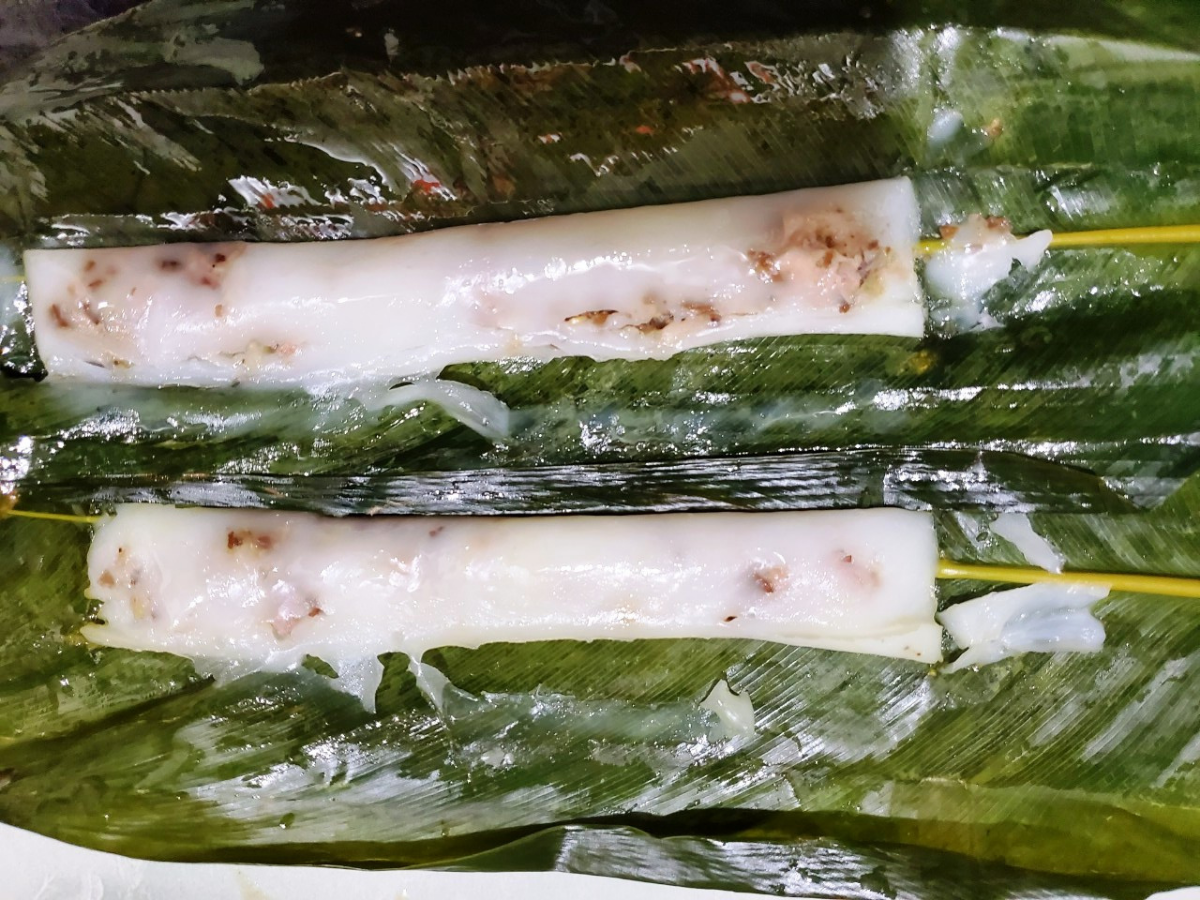
The quality of Thanh Hóa's 'rang bừa' cake depends heavily on the ingredient selection process. (Source: Collected)
Soaked wood ear mushrooms, finely chopped, will create a chewy texture. Choose large shallots, fried until golden to release their aroma. Simple seasonings include pepper, salt, and fish sauce, true to the Thanh Hóa region's taste. Finally, fresh dong leaves or banana leaves are washed, lightly heated to soften them, making them easy to wrap and enhancing the cake's natural aroma.
2.2. Processing Procedure
The process of making 'rang bừa' cake begins by soaking rice in clean water for 5 to 7 hours to ensure it softens evenly. After rinsing, the rice is finely ground into a smooth liquid batter. Next, the batter is placed on the stove, stirred continuously over low heat until it forms a smooth, thick mixture, then cooled.
The filling is prepared by mincing or grinding pork, mixing it with wood ear mushrooms, fried shallots, and seasonings. Next, the filling is stir-fried until cooked through, firm but not too dry. When wrapping, the dong leaf is spread out, coated with a thin layer of batter, the filling is added in the middle, rolled into a long shape, the ends are folded neatly, and then gently shaped to resemble the characteristic 'rang bừa' (harrow tooth). The cakes are placed in boiling water or steamed for 20 to 30 minutes until cooked, fragrant, and smooth.
2.3. Secrets to achieving soft, chewy cakes with the aroma of dong leaves and rich filling
To make Thanh Hóa's 'rang bừa' cake delicious, pay attention to a few small secrets. The best rice to use is new rice, soaked long enough to be ground very finely. When cooking, stir constantly to prevent lumps, ensuring the finished cake wrapper is smooth and chewy, not dry or hard.
Dong or banana leaves must be clean and heated properly so they don't crack when wrapping, and the cake retains its aroma longer. For the filling, choose meat with a little fat to make the cake soft, stir-fry it just enough to retain moisture, and mix seasonings evenly to taste. When wrapping, press firmly but not too hard, ensuring the filling doesn't leak and the cake doesn't crack. Boiling or steaming should be for the right amount of time. Before removing the cakes from the pot, open the lid for a few minutes to let the cakes drain, preserving their chewy aroma for a long time.
3. Price of Thanh Hóa 'Rang Bừa' Cake and Preservation Methods
For those visiting Thanh Hóa and wanting to buy 'rang bừa' cake as a gift, understanding the price and how to preserve it will help ensure its quality during travel. This helps tourists choose the right place, the right product, and fully preserve the taste of home.
3.1. Reference Price
Thanh Hóa 'rang bừa' cakes are usually sold by the dozen or in packs, each containing 10 to 20 cakes. In traditional markets or reputable production facilities, the price ranges from approximately 30,000 to 50,000 VND per dozen cakes. Prices may vary depending on the seller, the quality of rice and meat, and the time of year.
Facilities with OCOP 3-star certification sell 'rang bừa' cakes at slightly higher prices but guarantee origin and quality. Tourists should consult multiple points of sale to make a reasonable choice. During holidays, Tet, or peak tourist seasons, prices may increase slightly due to higher demand.
3.2. How to Preserve Thanh Hóa 'Rang Bừa' Cake
How Thanh Hóa's 'rang bừa' cake is preserved greatly affects its deliciousness. It is best to keep the cakes intact within their wrapping leaves, placed in a cool, airy place, away from sunlight or high temperatures. The wrapping leaves also help prevent the cakes from drying out, maintaining their necessary softness.

Store Thanh Hoa gear cakes in a cool, airy place, away from sunlight or high temperatures. (Source: Collected)
When it's hot, you can put the cakes in the refrigerator's cool compartment. Before eating, just steam them again for a few minutes, and the cakes will be soft and chewy as if freshly made. However, it's best to consume the cakes within 1-2 days of purchase to ensure the filling remains fresh and fragrant, without affecting your health.
3.3. Notes when buying to avoid low-quality products
To choose delicious Thanh Hoa gear cakes, you should prioritize reputable stores or stalls with OCOP certification (OCOP products are goods and tourism services of local origin, branded, and characteristic of the locality's culture and advantages) or complete labeling information. A clear production origin helps ensure food safety and hygiene, as well as the origin of the ingredients.
When buying, pay attention to the cake's crust, which should have a natural ivory white color, not be watery, and have no strange smell or signs of fermentation. The wrapping leaves should still be green, not wilted, and not slimy. The cake filling should not be too dark; this could be a sign that it has been kept for a long time or made with non-fresh ingredients. Ask carefully about when the cake was made and check the taste before deciding to buy.
4. Suggestions for enjoying and combining with travel
Enjoying Thanh Hoa gear cakes is an opportunity not only to savor the specialty flavor but also to immerse yourself in the culinary cultural space, combined with a trip to experience the colorful Thanh Hoa region. Some suggestions below will help your trip leave you with wonderful memories.
4.1. Serve with sweet and sour fish sauce dip, authentic rich flavor
The traditional way to eat Thanh Hoa gear cakes is to cut them into bite-sized pieces and dip them in sweet and sour fish sauce. This dipping sauce is a combination of fragrant fish sauce, lime, a little sugar, garlic, and chili in reasonable proportions, creating a harmonious, gently fragrant, and refreshingly sweet taste. The chewiness of the cake combined with the rich sweet and sour taste creates special layers of flavor.
To enhance the appeal, many people also like to add a little ground pepper to the dipping sauce bowl to enhance the flavor. The meticulousness in dipping also reflects the subtlety in the culinary culture of the people of Thanh Hoa.
4.2. As a gift, a rustic dish but containing hometown affection
Thanh Hoa gear cakes are a reasonable choice as a gift for a visit home or when you want to send a bit of hometown flavor to relatives and friends. The cakes are neatly packaged in small bags, easy to transport for short trips. Although rustic, the cakes carry the affection of the Thanh Hoa region and distinct cultural significance.
If you are looking for a place to buy delicious, authentic Thanh Hoa gear cakes, you cannot miss the two famous craft villages in Linh Toai commune and Xuan Lap commune. Ha Lai leaf cakes in Linh Toai commune are nổi bật with their soft, chewy crust, fragrant with natural dong leaves, and a rich filling, priced from only 3,000 to 5,500 VND/piece. This is a familiar stop for tourists who want to enjoy or buy Thanh Hoa specialties as gifts.
Meanwhile, the gear cakes in Xuan Lap commune are considered the cradle of the cake offered to kings, retaining the traditional recipe with a chewy crust and fragrant filling. The entire commune has over 200 households producing, supplying about 13-15 million cakes annually, achieving the provincial OCOP standard. These two locations are ideal choices for those looking for authentic, traditional Thanh Hoa gear cakes.
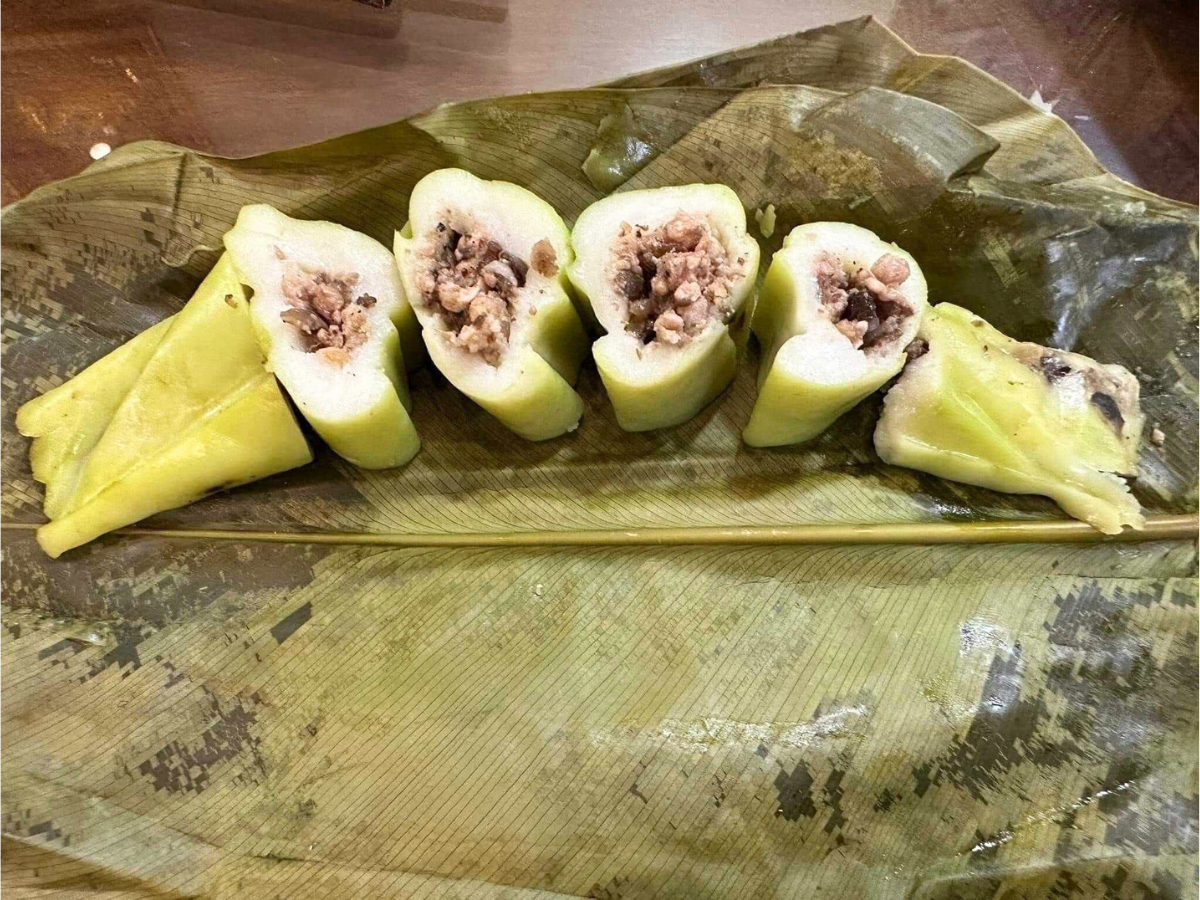
Banh rang bua is a rustic dish but full of rural affection. (Source: Collected)
Giving banh rang bua shows thoughtfulness, carefully selecting a gift that contains traditional and practical value. Recipients will feel not only the delicious taste but also, to some extent, the soul of the cuisine, the culture of Thanh Hoa, and the accompanying historical stories. This contributes to further promoting the tourism image and preserving local beauty.
4.3. Integrating the Journey
Exploring Thanh Hoa banh rang bua is an indispensable part of a rich experience journey in Thanh Hoa. The first destination is the center of Thanh Hoa, where you can visit markets, traditional craft villages, enjoy the cake on-site, and observe the preparation process right at the oven.

An extremely fun and unique entertainment experience at Sun World Sam Son
Next, experience the Sun World Sam Son entertainment area, immerse yourself in the sea atmosphere, enjoy seafood at Sam Son beach, and continue your visit to Ho Citadel, a prominent cultural relic here. Many restaurants and tourist stops also serve banh rang bừa in a buffet style, combined with bánh-making experience tours, allowing tourists to participate directly and gain a deeper understanding of the traditional banh rang bừa making craft, creating a complete trip, rich in both taste and cultural experiences.
Banh rang bừa Thanh Hoa is not simply a dish, but also a bridge
between ancient traditions and modern life today. The journey to explore this specialty opens up interesting perspectives on the cuisine, history, and people of this place, preserving it forever in the memory of every visitor to the Thanh Hoa region.


