




The mist-covered town of Sapa serves as the gateway to one of Southeast Asia’s most iconic landmarks. Whether you are looking for a world-class aerial experience or a rugged path through the forest, the journey to the summit is now more accessible than ever. With modern engineering and traditional trails both available, your trip to the top can be tailored to fit your personal style of adventure.
Before you begin your mountain escape, you can book your Sun World Fansipan Legend tickets online to ensure a smooth start to your high-altitude experience.
1. Where is Fansipan?
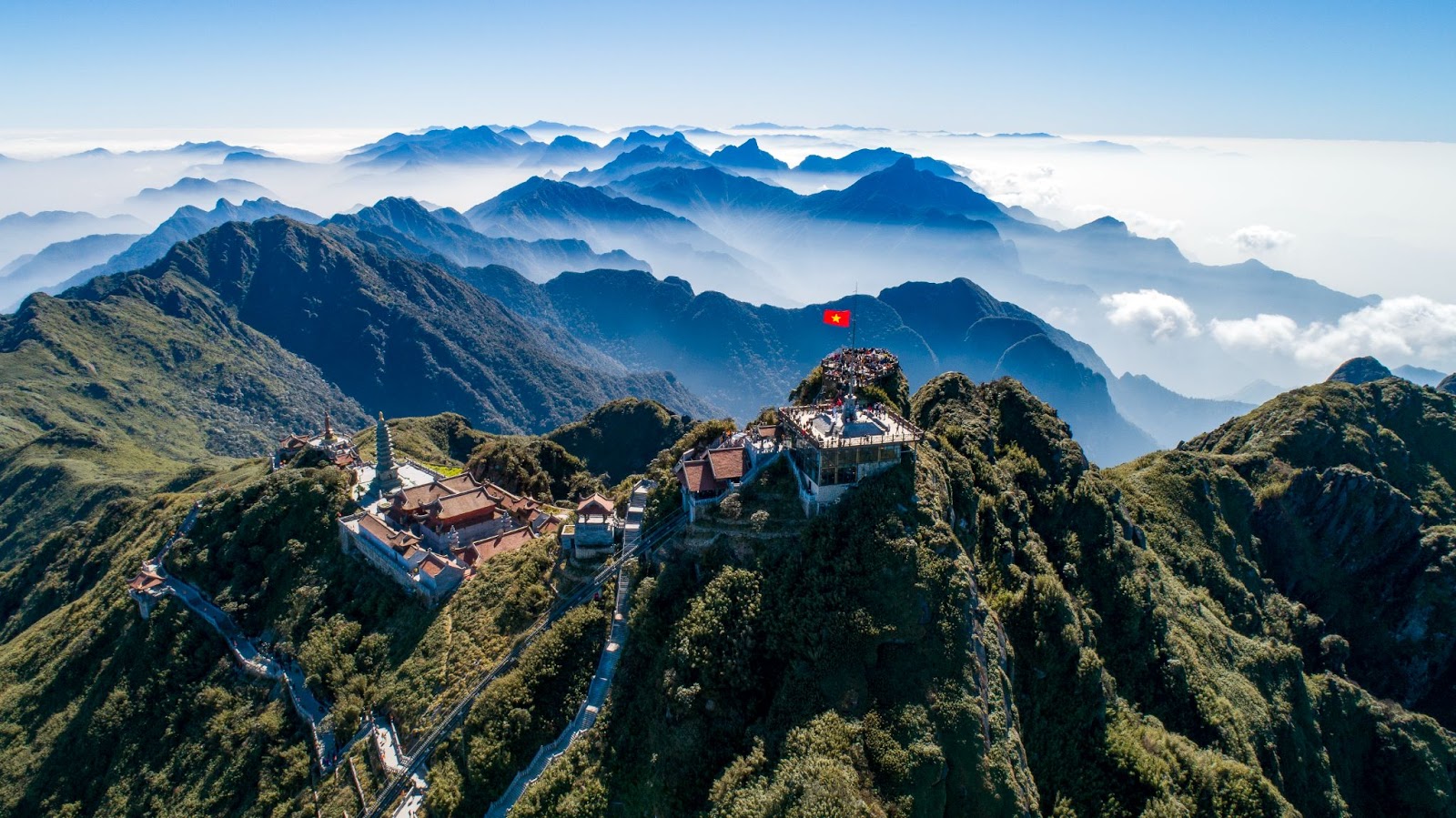
This is the highest point in all of Indochina, a true challenge for any visitors to conquer. (Photo: Collected)
Fansipan is famously known as the Roof of Indochina, standing as the highest mountain in Vietnam, Laos, and Cambodia at an elevation of 3,143m. It is located within the Hoang Lien Son mountain range in the Lao Cai Province of Northwest Vietnam. The mountain sits approximately 9km southwest of Sapa town center, nestled within the protected boundaries of the Hoang Lien National Park. Its unique geographical position means the peak often pierces through the clouds, offering visitors a rare chance to stand above a vast white horizon.
2. How to get to Fansipan from Hanoi?
The journey to the peak usually begins in the capital city of Hanoi. Most travelers choose to travel to Sapa first as their base of operations before attempting the final ascent. There are several reliable methods to bridge the 320km distance between these two points.
2.1. By sleeper bus or luxury limousine

Passengers can choose single or double pods to enjoy the trip with friends or alone. (Photo: Collected)
The most common and efficient way to reach Sapa in 2026 is via the Noi Bai to Lao Cai Expressway. Modern sleeper buses and smaller limousine vans depart from Hanoi daily, offering a travel time of approximately six hours. This is the most direct route, as most buses drop passengers off in the center of Sapa town, just a short walk from the major hotels and the main square.
2.2. By the overnight train
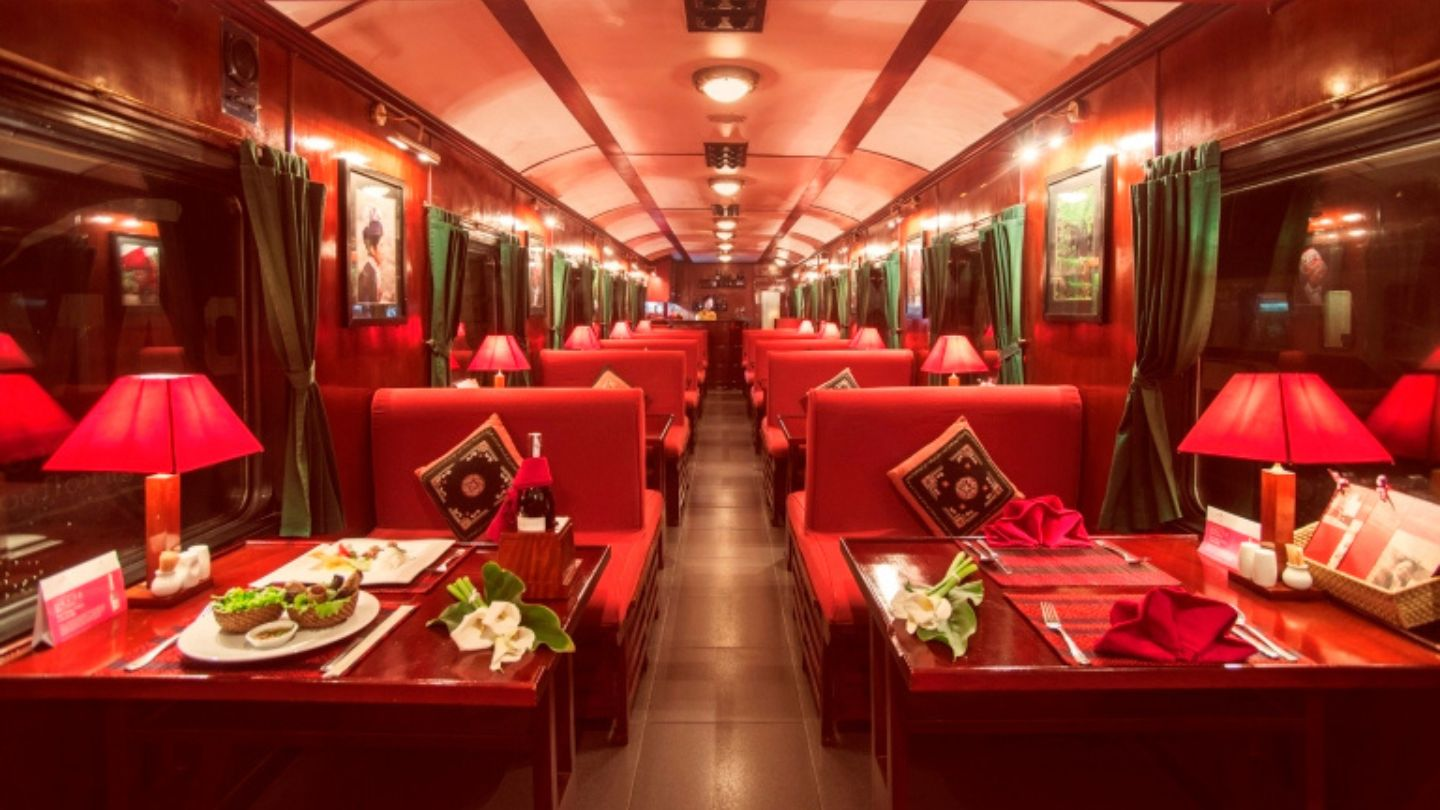
Expect the train ride from Hanoi to Sapa to last about 8 hours. (Photo: Collected)
For those who enjoy a more classic and atmospheric journey, the overnight train from Hanoi to Lao Cai remains a favorite. The train ride takes about eight hours and offers various cabin classes, including luxury sleeper options. Upon arriving at the Lao Cai railway station in the early morning, you will need to take a final 45-minute shuttle or taxi ride up the winding mountain roads to reach Sapa town.
2.3. By private car or self-driving
Traveling by private car offers the ultimate level of flexibility and privacy. This option allows you to set your own schedule and make stops along the way to admire the changing landscape. The drive usually takes between five and six hours depending on traffic and weather conditions. It is a popular choice for families or small groups who prefer to have their own vehicle for exploring the areas surrounding Sapa after they arrive.
3. How to get from Sapa town to Fansipan?
Once you have arrived in Sapa, you are only a short distance from the base of the mountain. There are two very different ways to complete the final leg of the journey to the summit marker.
3.1. By cable car
The journey to the peak through the Sun World Fansipan Legend complex is an all-encompassing travel experience that has been refined over a decade of operation. This is not just a ride to a mountain top; it is a meticulously designed day trip that transitions you from the bustling streets of Sapa into a realm of clouds and legends. To make the most of your visit, you should plan for at least four to six hours to explore the various stations, restaurants, and cultural landmarks that dot the slopes of the Hoang Lien Son range.
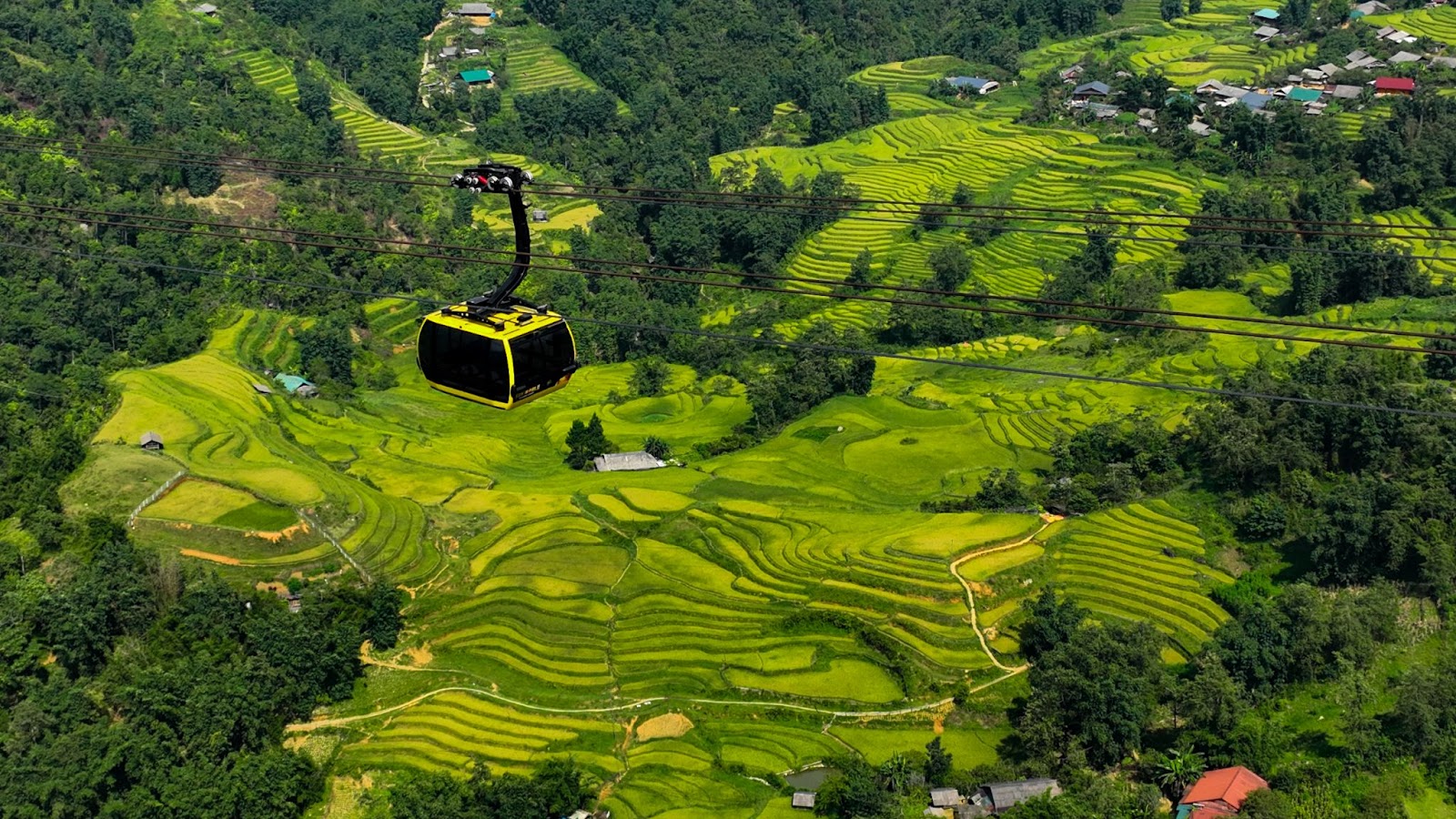
The Sun World Fansipan Legend cable car glides over a breathtaking sea of clouds, offering passengers a 15-minute journey through the Hoang Lien Son range. (Photo: Collected)
Your adventure begins at Sun Plaza, an architectural landmark in the center of Sapa town that echoes the elegance of classic European design. Inside this station, you board the Muong Hoa mountain train, a vibrant red funicular that serves as the first leg of your ascent. During the 6-minute journey, the train glides across a massive viaduct, offering panoramic views of the valley below. In 2026, this ride remains the most scenic way to bypass local traffic, providing an immediate visual feast of the terraced rice fields and rolling hills that lead toward the base of the main mountain.
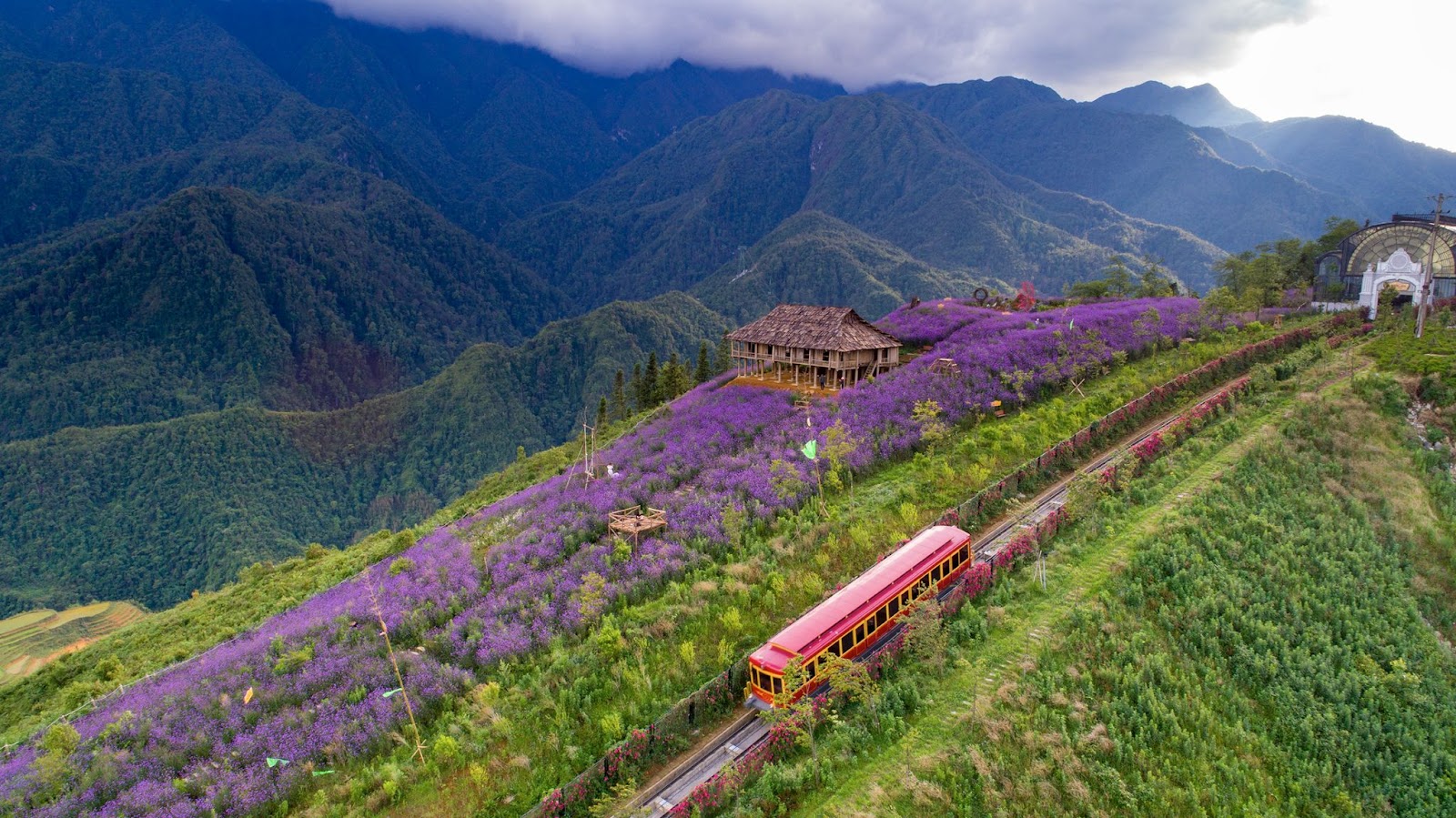
The iconic red Muong Hoa mountain train departs from the Sun Plaza station, providing a vintage-style six-minute ride over the emerald rice terraces of the Muong Hoa Valley. (Photo: Collected)
Upon arriving at the Hoang Lien station, you step into May Village, a living museum that showcases the authentic architecture and traditions of five local ethnic groups. Here, you can walk through traditional Hmong Sa Pa, Hmong Dien Bien, Dao, Tay, Giay, Xa Pho, Ha Nhi houses, where local artisans demonstrate weaving and silver-making. A major highlight in 2026 is the daily performance of "the dance on the clouds," a world-class outdoor show that combines folk music, traditional costumes, and modern choreography to tell the story of Sapa’s heritage. This cultural immersion provides a meaningful context to the landscape before you continue your journey to the higher peaks.
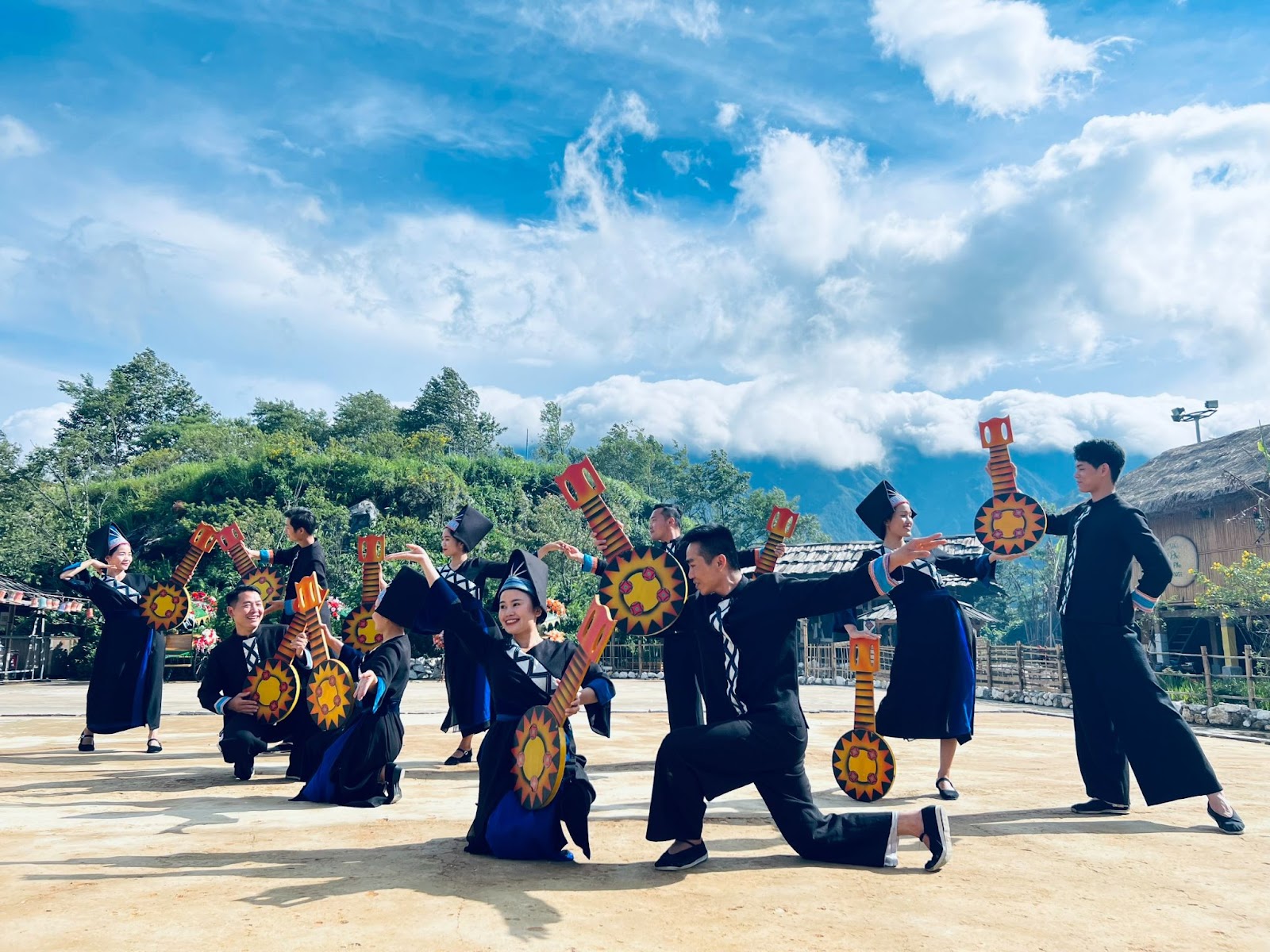
Local ethnic artisans at May village demonstrate traditional dances and rituals, offering travelers a deep immersion into the heritage of Sapa’s highland communities. (Photo: Collected)
From May village, you transition to the main cable car system, a marvel of modern technology that holds several world records for its vertical ascent. The 15-minute flight takes you nearly 1,410 meters higher into the atmosphere. For those seeking an extra thrill in 2026, the updated crystal cabins feature reinforced glass floors, giving you a transparent view of the primary forests and cascading waterfalls directly beneath your feet. As the cabin rises, it often pierces through a thick layer of fog, suddenly emerging into the brilliant sunshine of the upper peaks where a literal "sea of clouds" stretches as far as the eye can see.
Upon reaching the high-altitude station, you enter a magnificent spiritual complex built in the classical Vietnamese architectural style of the Tran Dynasty. This "Zen path in the clouds" is home to the Great Buddha Statue, the tallest bronze Buddha statue in Vietnam, standing at an impressive height of 21.5 meters. As you wander further, you can explore the Arhat Path, where 18 bronze Arhat statues stand amidst the mist, or visit the graceful Statue of Quan Am (Goddess of Mercy) and the Kim Son Bao Thang Pagoda. These sacred monuments offer a profound sense of peace and provide a unique cultural depth to your mountain adventure.
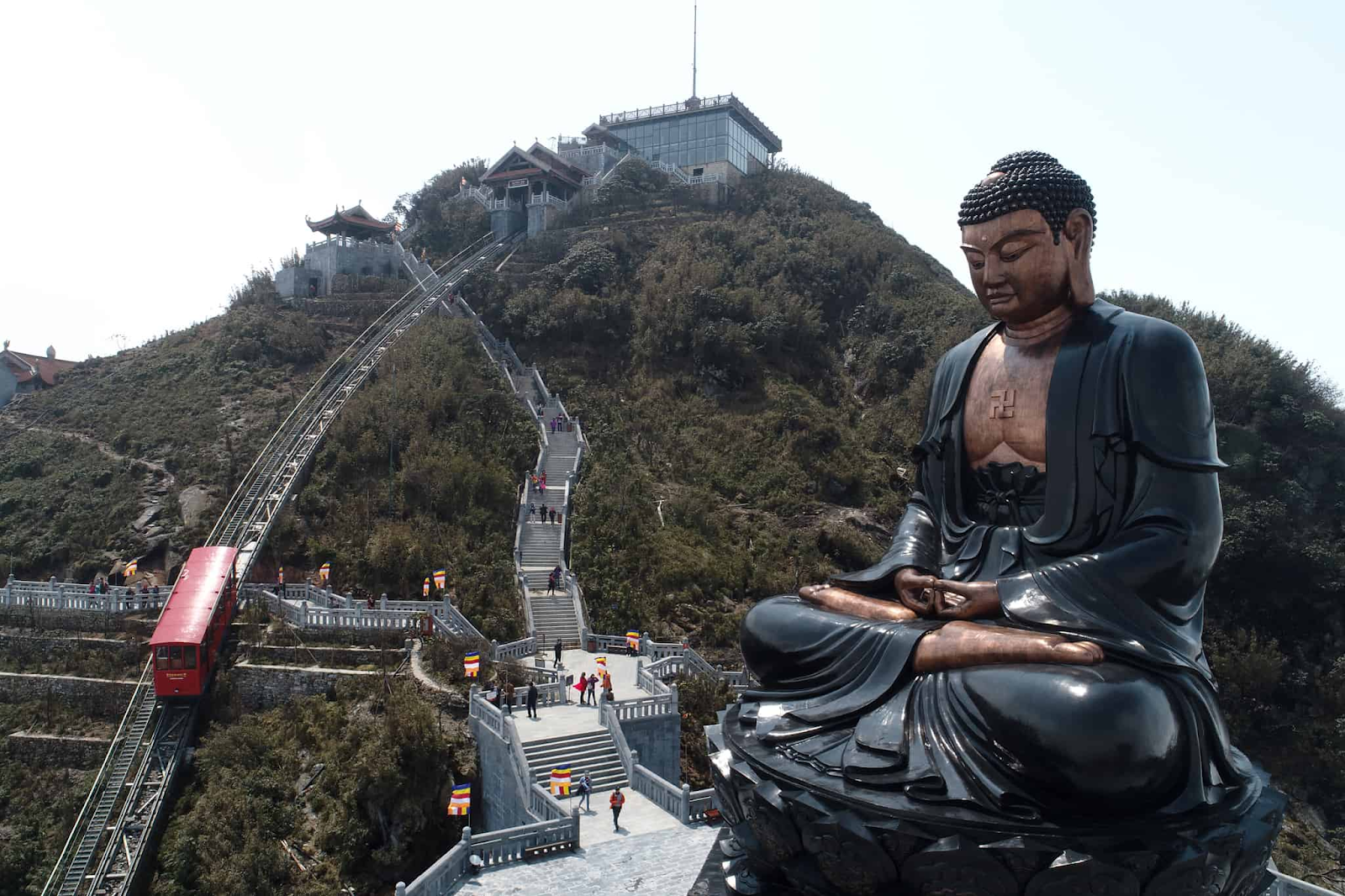
The Great Buddha Statue at Fansipan stands as a spiritual landmark amidst the mist, offering a breathtaking view of the sacred Hoang Lien Son range. (Photo: Collected)
Feeding your appetite is an essential part of the Fansipan experience, and the resort offers several distinct dining options at different altitudes. At the base station, Van Sam restaurant serves a massive buffet featuring over 50 traditional dishes, including local favorites like grilled mountain pork and five-colored sticky rice. For a more modern treat, you can stop at the Starbucks located at 3,063 meters. In 2026, this remains officially the highest Starbucks in Asia. Sipping a hot beverage at this elevation is a bucket-list experience, allowing you to enjoy a world-class coffee while peering through floor-to-ceiling windows at the jagged mountain peaks and swirling sea of clouds below.
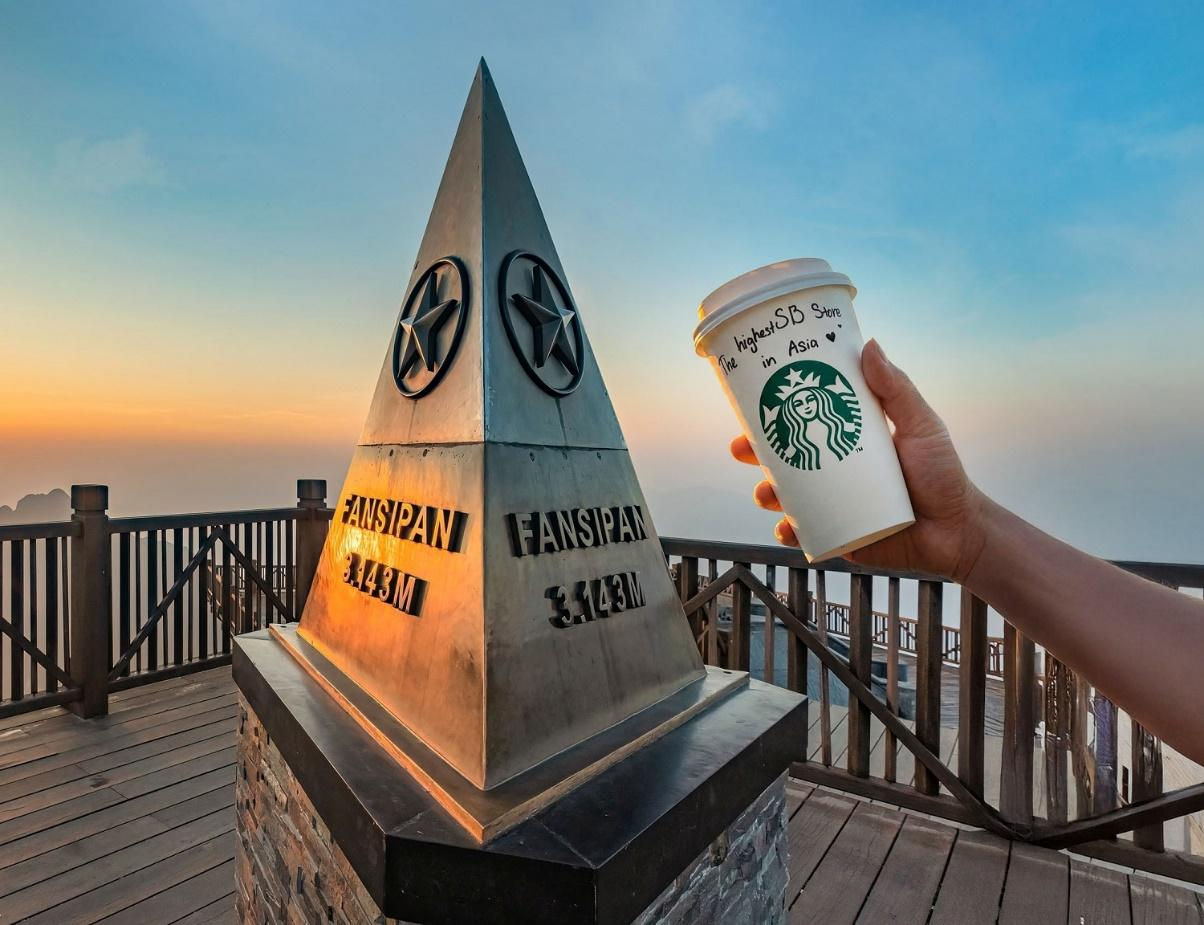
Starbucks Fansipan at 3,063m is the highest coffee shop in Asia, providing a cozy sanctuary for travelers to enjoy the panoramic mountain views. (Photo: Collected)
To reach the absolute highest point in Indochina, you have one final choice to make. You can choose to climb the 600 stone steps through the spiritual complex, which takes about 20 minutes and allows for a slow, meditative transition to the top. Alternatively, you can board the Do Quyen peak funicular, a short but incredibly steep train ride that delivers you directly to the national flagpole and the stainless steel summit marker at 3,143 meters. One of the most patriotic and moving experiences on the mountain is the daily flag-raising ceremony at the Grand Flagpole near the summit. Usually taking place in the early morning, the ceremony features the national anthem playing as the flag rises against a backdrop of swirling clouds: a moment that often leaves visitors with a deep sense of pride and emotion.

Travellers stand at the 3,143-meter summit of Fansipan, the legendary Roof of Indochina, celebrating a successful journey above the clouds in Northern Vietnam. (Photo: Collected)
Additionally, if you are visiting in April, you will witness one of nature's most vibrant displays. This is the peak blooming season for the Rhododendron flowers, the "Queen of Northwest blossoms." These ancient trees, some hundreds of years old, burst into shades of red, yellow, and purple along the stone paths and cliffs, transforming the mountain into a colorful floral masterpiece.
3.2. By trekking through the national park
For adventure seekers who prefer a physical challenge, trekking to the summit remains a rewarding alternative. Most treks begin at the Tram Ton Pass, which is the highest mountain pass in Vietnam at 1,900m. The hike typically takes one to two days and involves navigating through bamboo forests and rocky ridges. It is important to note that by 2026, all trekkers are required to be accompanied by a licensed local guide and must possess a valid permit to ensure safety and the protection of the mountain's delicate ecosystem.
4. Tips for getting to Fansipan
To make the most of your trip to the Roof of Indochina, timing and preparation are essential. The weather at 3,143m is famously unpredictable and can be significantly colder than in Sapa town, so dressing in layers is highly recommended. It is also wise to check the live weather cameras located at the Sun Plaza station before you buy your tickets to ensure the views are clear. Since the air is much thinner at the summit, remember to move slowly and stay hydrated to help your body adjust to the altitude as you enjoy the unparalleled panorama of Northern Vietnam.
Reaching the pinnacle of Vietnam is more than just a checkmark on a travel itinerary; it is an immersion into the spiritual and natural heart of the Northwest. Whether you choose the grace of the Sun World cable car or the grit of a mountain trek, standing at 3,143m offers a perspective that few other places in Southeast Asia can match. As the infrastructure in Sapa continues to evolve in 2026, the mountain remains a timeless symbol of grandeur, inviting every traveler to rise above the mist and touch the sky.
The journey to the Roof of Indochina represents the perfect harmony between modern convenience and ancient wilderness. By following this guide, you are well-prepared to navigate the logistical steps from the bustling streets of Hanoi to the tranquil, high-altitude sanctuary of the Hoang Lien Son range. No matter which path you take, the moment you step onto the summit and look out over the vast horizon, you will realize that the effort to get there was worth every second of the journey.


